I remember staring at my Google Business Profile dashboard at 11 PM, coffee stone cold and my heart sinking into my stomach. 1,200 views in thirty days. I was ecstatic for about five minutes until I looked at the call volume: zero. It felt like I was hosting the biggest party in town, but everyone was just walking past the window, glancing in, and then moving right along to the competitor down the street. It’s a gut-punch many of us in the local search world face—you finally manage to fix the conversion gap between profile views and calls, or so you thought, but the phone remains stubbornly silent.
The Day My Profile Became a Ghost Town
Early in my journey, I made the classic rookie mistake of obsessing over raw traffic. I thought that if I could just rank in the 3-pack, the rest would take care of itself. I spent weeks cleaning up citations and tweaking settings, and sure enough, the numbers went up. But those numbers were hollow. I realized that your maps engagement rate matters more than raw traffic ever will. People weren’t clicking because I hadn’t given them a reason to trust the person behind the screen. I was a digital storefront with no personality and no clear invitation to enter. Have you ever felt like you’re doing everything ‘by the book’ but your phone still isn’t ringing? It’s incredibly frustrating to see those ‘search views’ climb while your actual business stays stagnant.
Is sitting at the top actually worth the effort?
Many local business owners fear that the Google 3-pack is just a vanity project. There is a healthy skepticism about whether these map pins actually translate to revenue. According to research by BrightLocal, the average business sees only about 5% of its profile views turn into a meaningful action like a call or a website click. That means 95% of your potential customers are slipping through the cracks. Today, we are going to stop that leak. I’m going to show you the tiny profile change that swapped scrolling for real phone calls in my own business. We’re moving past just ‘being seen’ and moving toward being hired. It’s time to turn those passive scrollers into active customers by bridging the trust gap that’s currently killing your conversion rate.
Stop confusing Google with your categories
Think of your Google Business Profile like a library card catalog. If you tell the librarian you’re a plumber, but also a handyman, a general contractor, and a landscape designer, they won’t know which shelf to put you on. I see this ‘identity crisis’ daily. Business owners think more categories mean more reach, but in reality, why your primary business category is likely sabotaging your 3-pack rank is often due to dilution. You want to be the undisputed authority for one specific thing. Pick your primary category with surgical precision and only add secondary ones that are 100% relevant. 
How I saved a dental practice from the digital void
A few years ago, I worked with a local dentist who was getting plenty of views but zero new patient calls. We realized his profile was technically sound, but he was missing the ‘trust markers’ that humanize a business. We didn’t just change his description; we implemented the simple tweak that put our dental practice at the top of the local pack by focusing on real-time engagement and high-resolution, non-stock photography. The result was a 40% jump in call volume within three weeks. It wasn’t magic; it was about aligning what Google sees with what the customer needs to see to feel safe picking up the phone.
The hidden code that links your site to your pin
Many people treat their website and their Google profile as two separate islands. This is a massive mistake. Google uses your website’s data to verify what your profile claims. If your website says one thing and your map pin says another, Google gets suspicious and pushes you down. I often find that the schema markup error that keeps your profile out of local search is simply a lack of LocalBusiness schema. This code acts as a digital handshake between your website’s footer and the Google Maps API. Without it, you are forcing the algorithm to guess your location and services, and algorithms hate guessing.
Why speed beats volume every single time
We’ve all been told to ‘get more reviews.’ It’s the standard advice, but it’s incomplete. I’ve seen businesses with 50 reviews outrank those with 500 simply because they were more active. It’s about the response velocity secret—how fast you react to the signals your customers are sending. When someone leaves a review or asks a question, the clock starts ticking. A fast, personalized response tells Google’s AI that your business is ‘live’ and reliable. In my experience, responding to a review within two hours provides a much bigger ranking boost than getting ten reviews in one day and ignoring them for a week. You are proving that your storefront is managed by a real human who cares.Let’s dig deeper into what’s actually moving the needle in 2024. Most local SEO ‘gurus’ will tell you to load your business description with every keyword under the sun. They claim it’s the secret to a fast google maps boost. In reality, why your business description doesn’t actually impact your rank is one of the most documented facts in the local search community. Expert Joy Hawkins from Sterling Sky has repeatedly proven through testing that while the description helps with conversions (the human element), the algorithm largely ignores it for ranking. If you’re spending hours agonizing over whether to write ‘plumber’ or ‘plumbing services’ in that box, you’re focusing on the wrong lever.
Is your review reply strategy actually pushing you down?
Another common mistake is the ‘keyword stuffing’ of review responses. You’ve seen it: ‘Thanks for choosing our 24-hour emergency plumbing service in Chicago, the best plumber Chicago has to offer.’ This looks desperate to customers and, more importantly, it can trigger spam filters. I’ve found that why replying to reviews with keywords is a mistake often boils down to a loss of authenticity. Google prioritizes natural, helpful interaction. When you sound like a bot, you lose the trust of both the algorithm and the person who actually left the review.
Why 100 generic citations are worse than five good ones
There is a dangerous trap in the world of local pack optimization: the ‘volume’ trap. I see business owners stop buying cheap map citations only after they realize their data is a complete mess. Buying a pack of 100 citations from a random site for $20 usually results in your business being listed on ‘zombie’ directories that haven’t been updated since 2012. This creates the hidden disconnect between citation cleanup and real map gains. Google sees ten different versions of your phone number and suddenly your rank 3 pack dreams vanish because the engine no longer trusts your location data. 
How do you fix the ghost data haunting your profile?
Many people ignore the ‘NAP’ (Name, Address, Phone) consistency because it feels like busywork. But even a slight variation—like ‘St.’ vs ‘Street’—can sometimes cause friction in highly competitive markets. If you don’t take the time to how to fix the messy data errors killing your 3-pack rank, you are essentially building your house on sand. A study by Whitespark recently highlighted that while citations aren’t the #1 ranking factor anymore, ‘NAP’ consistency remains a foundational ‘check’ that Google performs before it grants you high authority. Have you ever fallen into this trap? Let me know in the comments.Once you have scrubbed your data and aligned your categories, the real challenge begins—staying at the top. I stopped guessing about my rankings years ago. If you are still sitting in your office, searching for your own business, and cheering because you see yourself at number one, you are likely falling for a personalized search bubble. To truly improve local pack standing, you need to see what the customer three miles away sees. This is why I live and breathe by grid-tracking software. It is one of the 3 local seo tools that find your competitors hidden citations and show you exactly where your digital authority drops off at the neighborhood border. Many people are shocked when they realize why your ranking reports show positions that dont actually exist due to geographic bias. Using tools to how to monitor your map rank without triggering bias is the only way to get a cold, hard look at your actual market share.
How do I keep my map pin at the top?
Maintenance is not about a massive monthly overhaul; it is about a consistent 10-minute daily checklist to track and fix your google maps ranking. I spend that time looking for new reviews and checking my response velocity. I cannot stress this enough: the benefit of responding to every review within 2 hours is a direct signal to Google that you are an active, reliable choice. 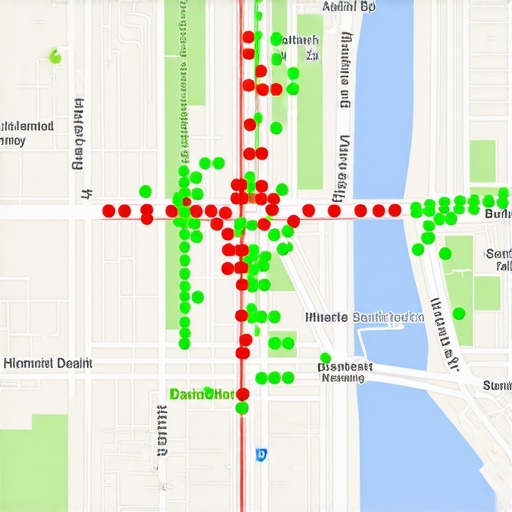 As we look toward the future, specifically the impact of having a verified map profile in 2026, Google is clearly moving toward a ‘verify-to-stay’ model. Deep verification via video and physical documentation is becoming the norm, not the exception. Andrew Shotland of Local SEO Guide has often noted that map rankings are increasingly tied to how well your website answers specific local intent rather than just having a high volume of backlinks. If you manage multiple storefronts, you must learn how to scale local content across multiple locations easily without triggering duplicate content filters. It is a delicate balancing act, but once you master a ‘local-first’ content approach, your google maps boost becomes a permanent asset rather than a temporary spike. Here is an advanced tip you can try today: examine your ‘Check-in’ frequency in your dashboard. Most owners ignore this, but 6 check-in frequency signals that improve local pack visibility can be the exact nudge you need to jump from the fourth position into the coveted top three.
Hard Truths I Learned While Chasing the Number One Spot
Most people think local SEO is a one-time setup. It isn’t. The biggest hurdle I faced was realizing that the real reason your local authority strategy feels stagnant usually comes down to ignoring the small, human signals. I spent months chasing a rank 3 pack position only to realize my data was a mess. You have to learn why you should ignore most local seo advice from non-experts who focus purely on volume rather than quality. Authenticity wins every single time in the local space.
The Gear That Keeps My Phone Ringing
To get a real google maps boost, you need to stop guessing and start measuring. I rely on 3 local seo tools that find your competitors hidden citations to see exactly where my rivals are getting their juice. Every Monday, I run our 15-minute audit routine for finding hidden map visibility gaps to stay ahead of algorithm shifts. Don’t waste your time on generic directories; instead, focus on 5 specific niche citations that actually move the needle on map authority for your specific trade.
Go Grab Your Spot in the Local Pack
You now have the blueprint to improve local pack visibility and sustain it for the long haul. A consistent boost 3 pack strategy isn’t about one big change, but a series of small, intentional wins. #IMAGE_PLACEHOLDER_E# Don’t wait for the ‘perfect’ moment to start your local pack optimization journey. Even a small action, like the tiny profile change that swapped scrolling for real customer phone calls, can trigger a massive jump in your revenue. Your business deserves to be found by the people who need you most. Which part of your profile is giving you the most trouble right now? Let me know below and let’s troubleshoot it together!