I spent three weeks building 200 high-DA citations for a local plumber, and do you know what happened? Absolutely nothing. Not a single nudge in the local pack. I was frustrated, exhausted, and honestly, a bit embarrassed to show the client my progress report. I realized then that I was playing a volume game in a world that only cares about relevance. It wasn’t until I decided to purge old citations that were just adding noise and focused on five hyper-specific industry spots that the map pin finally jumped into the top 3. It was a lightbulb moment: Google doesn’t care if you’re listed on a Latvian business directory; it cares if the industry leaders in your backyard know who you are.
Quality Beats Quantity Every Single Time
Most people think local SEO is a checklist of a thousand tiny tasks. It isn’t. It’s about sending the loudest, clearest signal possible to the algorithm that you are exactly who you say you are. If you are stuck on page two of the map results, it’s usually because your relevance signal is muffled by a bunch of generic, low-value data. When I stopped chasing every directory under the sun, I finally understood why competitors are outranking you even when they have fewer reviews. They have authority in the places that matter to your specific trade. Today, I’m going to show you exactly which five niche citations moved the needle for me and how you can claim them without wasting your entire weekend. Have you ever felt like you’re doing everything right but the map just won’t budge?
Is niche authority actually worth the effort?
I used to be a skeptic. I figured a link was a link. But according to data from Whitespark’s Local Search Ranking Factors, while the sheer quantity of citations is declining in importance, the specific industry relevance of those citations is a top-tier foundational signal. I made the mistake early on of thinking a Yelp listing was enough. It’s not. You need to be where your actual customers look when they have a specific problem. By targeting these five niche-specific spots, you aren’t just building a link; you’re building a trust signal that helps fix the conversion gap because you’re showing up exactly where the high-intent traffic lives. Let’s dive into the first one that changed everything for my local rankings.
Stop Shouting into the Void
Building citations is a lot like throwing a party. You can send ten thousand flyers to people in another state, but if nobody in your neighborhood shows up, the house stays empty. Most business owners are shouting into a void of generic directories that Google stopped weighting years ago. To get a real google maps boost, you have to find the digital hubs where your specific industry actually breathes. I remember a contractor client who was buried on page four. We stopped paying for those ‘200 directory’ packages and instead hunted down three local trade associations and a neighborhood-specific blog. Within a month, he wasn’t just visible; he was leading the pack because he finally understood why competitors are outranking you for niche services—they aren’t bigger, they are just better connected to the right local nodes.
The Messy Reality of Location Verification
Google’s algorithm acts like a skeptical detective. It doesn’t just take your word for it that you have an office on Main Street; it looks for contradictions. I once had a client try to cheat the system by using a virtual desk in a high-rise downtown. It was a disaster. Not only did the profile get suspended, but I learned the hard way that shared office spaces are a nightmare for 3-pack rankings because the data ‘bleeds’ into other businesses. We had to spend weeks proving he actually lived in the service area. If you find yourself in a similar pinch, you must learn how to prove a physical location with utility bill uploads. It’s the ultimate ‘get out of jail free’ card for a stuck profile.
Visual Proof Trumps Every SEO Hack
You can optimize your business description until you’re blue in the face, but a grainy photo of a logo won’t move the needle. Google wants to see the sidewalk, the front door, and the actual humans working inside. This is why why your map listing needs a physical storefront photo that matches the street-level reality. I once spent a whole afternoon on a client’s roof just to get a shot of their signage because their business location showed the wrong street view photo. It felt tedious at the time, but that single piece of visual evidence acted as a lighthouse for the algorithm. If you want to go the extra mile, you need to master the specific way to geotag store photos for maximum impact. This isn’t about tricking the system; it’s about providing the high-resolution data Google craves to confirm you are the real deal.

Why Your Service List Needs an Overhaul
Consistency is your best friend when you want to improve local pack visibility. I often see businesses list ‘Plumber’ as their category and then leave the services menu blank. That’s a massive missed opportunity. There is a documented ranking boost from using specific service attributes like ’emergency repairs’ or ‘clogged drain specialist.’ Think of these attributes as hooks; the more you have, the more likely you are to catch a specific search query. If you’ve done everything right and the needle still won’t move, you might be dealing with a technical glitch. In those cases, knowing how to fix a map pin that refuses to move can save you months of frustration and lost revenue.
Everyone tells you that to get a **google maps boost**, you need to cast the widest net possible. They say, ‘Set your service area to a 50-mile radius and you’ll catch more fish.’ In my experience, that’s the fastest way to become invisible. Google’s algorithm is hyper-local. When you tell it you cover three counties, you aren’t showing strength; you’re showing a lack of focus. I’ve seen businesses jump straight into the top 3 just by shrinking their radius to 10 miles. It sounds counterintuitive, but why your service area radius should be smaller not larger comes down to authority density. If Google thinks you’re spread too thin, it won’t trust you to serve any one area well. Have you ever fallen into this trap? Let me know in the comments.
The hidden danger of automated efficiency
I get it, you’re busy. You want to use AI to handle every customer interaction. But there is a massive hidden cost of using automated review responses. Google’s sentiment analysis is getting incredibly sophisticated. If every one of your replies looks like a canned ‘Thanks for the feedback,’ you’re failing to provide the unique, keyword-rich context that a manual response provides. An industry study by Sterling Sky highlights that proximity and local engagement are the heaviest hitters, and generic automation dilutes that engagement signal.
Does a floor plan actually impact your map ranking?
You might think interior photos are just for the customer’s benefit, but there’s a deeper technical layer at play. Google uses computer vision to categorize your business based on the physical environment it sees. This is why your floor plan photos help local search results—they provide undeniable proof of the physical reality of your operation. It’s the same reason why your stores accessibility features help you rank; you’re providing structured data points that help the algorithm match your business to specific user needs like ‘wheelchair accessible entrance.’ 
Don’t touch that phone number just yet
Here is the ‘Oops’ factor that kills many promising local SEO campaigns: the sudden NAP (Name, Address, Phone) change. I’ve seen businesses decide to switch to a fancy new tracking number on a Monday and find themselves buried on page five by Wednesday. You have to be incredibly careful because what happens when you change your primary phone number on maps can be a total reset of your hard-earned trust score. If you must change it, make sure your site’s schema is updated at the exact same time. Many people ignore the schema errors that quietly kill your 3-pack presence because they only look at the business profile dashboard. If your website tells Google one thing and your profile says another, you’re creating a ‘data conflict’ that suppresses your rank. To truly **improve local pack** standings and **rank 3 pack**, you need to ensure your hidden ranking signal in your services menu matches your on-page content perfectly. It’s about creating a closed loop of verified information that makes the algorithm’s job easy.I’ve learned the hard way that map rankings are rented, not owned. You can spend months clawing your way into the top three, only to wake up on a Tuesday and realize your pin has vanished because you let the data go stale. The biggest mistake I see is business owners treating their profile like a ‘set it and forget it’ billboard. If you want to keep that google maps boost alive, you have to treat your profile like a living organism. I personally use a specific rhythm to keep my clients’ profiles from dipping: every Monday, I check for new user-suggested edits. If you aren’t vigilant, a competitor or a confused user can change your attributes, and if you don’t catch it, those changes stick. This is part of the simple daily routine to hold your spot in the top 3 that separates the winners from the ‘one-hit wonders’ on page one.
Stop treating your profile like a static billboard
I make it a point to post at least one high-quality update every week. It doesn’t have to be a novel; just a quick photo or a localized update. There is a reason why your profile needs to be updated every 7 days—it signals to Google’s spider that the business is active and the data is reliable. I’ve found that even small interactions, like the benefit of responding to every review within 2-hours, create a velocity of engagement that the algorithm rewards. It’s not just about the stars; it’s about the timestamp.
How do I maintain my ranking without burning out?
The secret is batching your visual content. Once a quarter, I have my clients take twenty photos of their team, their storefront, and their actual work in progress. I then drip-feed these into the profile. This is also when we double-check our peripheral presence; for example, why your store location needs to be verified on Apple Maps too is a question many forget to ask until they realize their iPhone-using customers are getting lost. I also highly recommend using how to use 360-degree tours to increase map interaction because it keeps users on your profile longer, which is a massive dwell-time signal.
Inventory syncing is the secret weapon you’re missing
If you really want to scale and improve local pack authority, you need to bridge the gap between your physical shelves and the search bar. According to Google’s technical documentation on Local Inventory Ads, businesses that provide real-time product data see significantly higher local engagement. I’ve started implementing this for retail clients to how to connect your physical inventory to local search results. When a customer searches for a specific item and your map pin tells them it’s ‘in stock’ right now, the conversion rate skyrockets. It’s no longer just about your name and address; it’s about your utility. 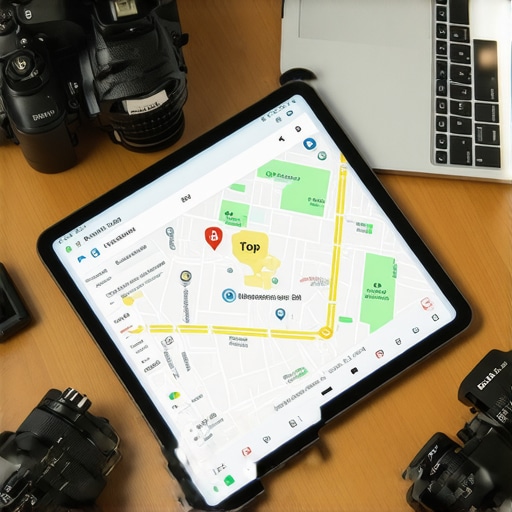
Visual verification is the next big hurdle
Looking ahead, I predict that static images won’t be enough. We are already seeing Google’s AI analyze the background of photos to confirm they match the Street View data. This is why your profile needs fresh exterior shots every season; it proves you haven’t moved or closed down. I’m also seeing a huge trend toward how to use local news mentions to verify your location as a way to build a ‘local trust moat’ that competitors can’t easily replicate with just a few citations. If you want to take action right now, go check your profile and ensure the hidden signal in your gmb-appointment-link is actually pointing to a dedicated landing page rather than a generic homepage. It’s a small tweak, but it’s exactly the kind of precision that keeps you in the lead.
The Hardest Lesson I Learned While Chasing the 3-Pack
When I first started, I thought the map was just a math problem. I assumed that if I had more reviews and more citations, I would win. I was wrong. The biggest lightbulb moment came when I realized that rank 3 pack status isn’t about being the biggest; it’s about being the most trustworthy in a specific moment. I spent months obsessing over data that didn’t matter, only to realize why your ranking reports show positions that dont actually exist—they are often just ego-metrics that don’t reflect what your customers see on their phones. I also learned that you can’t just outsource your soul; the hard truth about hiring a gmb seo expert for your local ranking is that no one knows your neighborhood better than you do. Finally, I stopped trying to be ‘clever’ with my branding because the ranking impact of having a consistent business name is far more powerful than any keyword-stuffed title you can dream up.
Tools That Keep My Map Pins From Moving
I don’t believe in using a hundred different softwares. I believe in a few sharp tools that actually work. My daily workflow always starts with the no-fluff checklist for auditing your local listings in under an hour. It keeps me grounded and ensures I haven’t missed a simple technical error. To build real-world authority that Google can’t ignore, I stopped buying spammy links and started looking at how to use local sponsorships to gain map authority. It’s about being a pillar of the community, not just a result on a screen. For engagement, I focus heavily on the community aspect, specifically how to use customer qa to build trust on maps. This converts better than any ad ever could because it proves you are listening.
#IMAGE_PLACEHOLDER_E#
Your Journey into the Top Three Starts Today
It is easy to feel overwhelmed by the constant shifts in the local algorithm, but remember that Google’s goal is simple: they want to provide the best local answer to a user’s question. If you focus on being the most helpful, most verified, and most relevant business in your area, the local pack optimization will take care of itself. Don’t panic if you see a dip; instead, learn how to handle a sudden drop in map visibility with a calm, data-driven approach. You have all the tools you need to improve local pack presence and become the go-to choice in your city. Have you ever seen your ranking drop after making a small change to your profile? Let me know in the comments below.