I spent three years obsessing over backlinks and keyword density, only to realize I was ignoring the guy in the wheelchair right outside my front door. It was embarrassing. I had the ramp, I had the wide aisles, but I hadn’t told Google a thing about it. My map pin was buried on page three, and I couldn’t figure out why. Then it hit me: Google wants to send people to places they can actually enter and navigate. When I finally updated my profile to reflect my real-world accessibility, the change was almost immediate. It wasn’t just about being a good neighbor, although that mattered most to me personally. It was about feeding the algorithm the specific data points it craves to verify that my business is a high-quality destination for everyone. I learned the hard way that ignoring these ‘minor’ attributes is just as bad as picking the wrong primary business category. [image_placeholder_1]
How a Simple Ramp Can Rocket Your Rank
Most shop owners treat accessibility as a legal checkbox or a moral obligation. I used to be one of them. But Google sees it as a trust signal. When you mark your business as having a wheelchair-accessible entrance, restroom, or seating, you aren’t just helping a specific demographic; you are increasing your ‘completeness’ score in the eyes of the local algorithm. Think about it. Google’s entire goal is to provide the best user experience. If two coffee shops are equal in every other way, but one has verified accessibility features and the other doesn’t, Google will hedge its bets and promote the inclusive one. I found that combining these updates with the ranking benefit of having a clear storefront sign created a powerful visual and data-driven signal that I was open for business and ready for anyone. According to the World Health Organization, roughly 16% of the world’s population lives with a significant disability. That is over 1 billion people. If your digital presence ignores that reality, you are effectively closing your door on a massive chunk of the market and telling Google you aren’t the best local option.
Is focusing on accessibility actually worth your time?
You might be thinking that your specific niche doesn’t get many customers with mobility issues. I thought the same thing until I looked at my analytics. The truth is, these attributes act as ‘micro-conversions’ for the algorithm. It is a small move that can fix a stuck map pin because it differentiates you from the lazy competitors who haven’t updated their profiles since 2019. Have you ever checked your own Google Business Profile to see which accessibility boxes are actually checked? It might surprise you how much you’ve left on the table. My biggest mistake was assuming Google already knew I was accessible because I had photos of my entrance. They don’t assume. They need you to tell them explicitly. In the next section, I’ll show you exactly which attributes move the needle the most and how to verify them so they stick.Think of your Google Business Profile (GBP) like a legal contract. If you leave a line blank, the algorithm views it as a liability, not an oversight. I remember working with a boutique gym downtown. They had an incredible facility, but their ranking was stuck behind a dusty old YMCA three blocks away. When we looked at their backend, they hadn’t touched their accessibility attributes in years. They assumed ‘everyone knows we have a lift.’ Google didn’t know. We spent twenty minutes checking boxes for wheelchair-accessible seating and restrooms. Within nine days, they weren’t just showing up for ‘gym near me’; they were winning the 3-pack for highly specific, high-intent searches.
Feed the Machine the Data It Expects
You can’t just hope Google notices your store layout; you have to spoon-feed it. Start by logging into your dashboard and navigating to the ‘Edit Profile’ section. Look for the ‘More’ tab under attributes. This is where most people fail because they think these details are ‘extra credit.’ They aren’t. They are foundational. If you ignore these, you’re dealing with why missing on-site attributes are killing your 3-pack rank. It is like trying to bake a cake without telling the oven the temperature—you are just guessing and hoping for the best.
Prove Your Claims With Visual Receipts
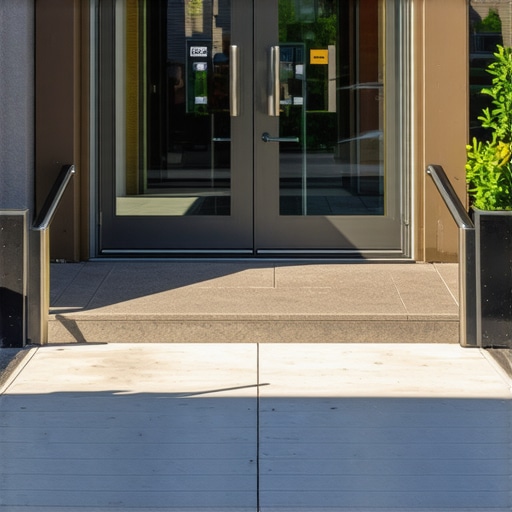
Google is cynical. It does not just take your word for it. If you check the box for ‘Wheelchair Accessible Entrance,’ you need to back it up with a photo. I learned this the hard way when a client’s profile kept reverting their changes. We finally realized Google’s AI could not verify the claim because their primary photo was just a logo. We swapped it for a wide-angle shot of the front door, including the ramp and the clear signage. This is why your floor plan photos help local search results; they provide the spatial context the algorithm needs to trust your data. 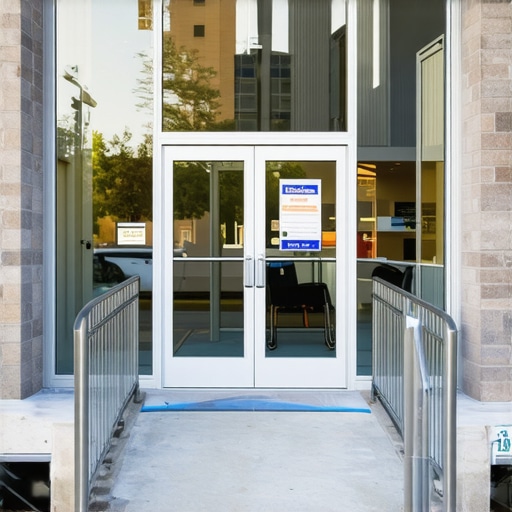
Sync Your Website with Your Map Pin
Your profile should not be an island. If your GBP says you are accessible, but your website’s contact page is a blank slab of text, you have got a data mismatch. To truly improve local pack rank, you need to ensure your local landing page mirrors every attribute you have claimed on Google. I always recommend that my clients explicitly mention their accessibility features in the footer or on the ‘About Us’ page. Then, you need to learn how to connect your local landing page directly to your map pin using schema markup. This creates a closed loop of information that makes it nearly impossible for Google to ignore your relevance.
Don’t Stop at the Big Three
While the entrance and restrooms are the heavy hitters, don’t ignore the niche attributes like ‘Assistive Hearing Loops’ or ‘Braille Signage’ if you have them. These are rare signals. When you provide data that 99% of your competitors are too lazy to provide, you are using specific 7 real-world data tweaks that improve local pack rank faster. It tells Google you are a premium, inclusive destination. I once saw a medical clinic jump three spots just by adding ‘Gender-neutral restroom’ and ‘Wheelchair accessible parking.’ It was not magic; it was just becoming the most complete answer to the user’s unstated questions.
Let’s dig deeper into the actual mechanics of why profiles get stuck. Everyone tells you to keep tweaking your profile daily, but in my experience, constant tinkering with core data is a recipe for disaster. Most people treat their Google Business Profile like a social media feed. It isn’t. It’s a database entry. If you are constantly changing your service area or category, you’re telling the algorithm you don’t know who you are. This leads to why most profile updates actually trigger a stealth ranking drop rather than a boost. I’ve seen businesses lose 40% of their visibility just because they tried to ‘optimize’ their name during a holiday sale. It’s a classic case of why keyword stuffed descriptions lead to invisible profiles and bans. Stability is a high-level ranking signal that beginners often ignore in favor of ‘freshness.’
Your constant tinkering might be killing your rank
The nuance lies in what you touch. Adding photos or responding to reviews is ‘safe’ activity that signals a healthy business. But if you’re messing with your address or phone number format, you’re playing with fire. According to local search expert Darren Shaw, ‘NAP consistency’ isn’t just about the web—it’s about the internal trust score Google assigns to your specific pin. Have you ever fallen into this trap of over-optimizing until your ranking tanked? Let me know in the comments. I once worked with a lawyer who thought he was being clever by using a ‘virtual’ address in the city center. It was a disaster. He fell right into the map ranking danger of using a virtual office, and it took us four months of paperwork to get him back on the map.
Does updating your profile daily actually help or hurt?
If you are looking to improve local pack performance, the daily routine should focus on user engagement, not data manipulation. Another advanced mistake is ignoring your ‘neighbors’ in the building. If you share a floor with five other businesses, why ghost profiles in your building are dragging down your 3-pack rank becomes a critical problem.  Google’s ‘possum’ filter might hide your listing if it thinks you’re just a duplicate of another business in the same category and address.
Don’t let ghost profiles steal your traffic
To fight the filter, you need a 10-minute daily checklist to track and fix your google maps ranking that focuses on external signals and technical health rather than just cosmetic changes. You should also look at how to build city landing pages that do not look like robotic spam to widen your reach without breaking the physical location rules. True 7 real-world data tweaks that improve local pack rank faster involve subtle technical shifts, not brute-force keyword stuffing. Stop chasing the ‘new’ tricks and start solidifying the core proof of your existence.
Winning the 3-pack is a rush, but keeping it is a job. I’ve seen too many business owners treat their map ranking like a trophy they can just put on a shelf. In reality, it is more like a high-performance engine that needs constant tuning. If you stop, you’ll quickly notice the real reason your map pin disappears during peak business hours: your competitors didn’t stop when you did. I personally rely on a very specific set of tools because I’ve learned that outdated tools will lie to you. I don’t trust standard SEO dashboards that give a single ‘city-wide’ rank. They are useless. I use grid-tracking software that shows me my rank block-by-block. This is the specific software features needed to track local keywords without map bias, and without it, you are flying blind.
The software I actually use to track real wins
I stopped looking at generic ranking reports years ago. Why? Because why your ranking reports show positions that dont actually exist is usually due to the ‘proximity bias’ of the person running the report. Instead, I focus on the health of my data. I use tools that audit my citations every thirty days. If you think you’re safe, you probably haven’t seen the messy citation errors that keep your business from ranking. Even a single suite number error can be the anchor that drags you down. I make it a point to check for why a single suite number error kills your map visibility at least once a month because third-party data aggregators are notorious for overwriting your correct info with ‘zombie’ data from 2012.
How do I keep my map pin from sinking over time?
Maintenance isn’t about massive overhauls; it’s about the simple daily routine to hold your spot in the top 3. For me, that means a strict rule of responding to every review within 24 hours. But there is a catch: why generic review responses are tanking your local pack visibility is because they provide zero context to Google. I mention specific services and locations in my replies. Also, I never let a profile sit for more than a week without a new photo or a post. This is why your profile needs to be updated every 7 days; it signals to Google that the business is active and the data is fresh. I even go as far as looking at the exact metadata we add to store photos to jump the 3-pack because those hidden geotags are the final proof of your physical location.
Why metadata is the secret language of the algorithm
If you want to boost 3 pack performance, you need to understand that Google is moving toward ‘Visual Search.’ According to the latest Local Search Ranking Factors study by Whitespark, the relevance of ‘on-site’ signals is only growing. This means your photos aren’t just for people; they are for the AI. When I upload a photo, I make sure the filename isn’t ‘IMG_402.jpg.’ I rename it to reflect the service and the city. I’ve seen this simple photo tweak actually improve local pack visibility in as little as 48 hours. Looking forward to 2026, I predict that ‘Search Generative Experience’ (SGE) will rely almost entirely on these verified physical signals. The AI won’t trust your text, but it will trust the specific image metadata that proves you were actually there. If you want a quick win today, go into your profile right now and rename your top five photos with descriptive, location-based filenames before re-uploading them. It is the easiest way to google maps boost your relevance without spending a dime.
The Local SEO Reality Check That Finally Moved My Pin
If I could go back to my first year of trying to improve local pack results, I’d tell myself to stop looking at the screen and start looking at my shop. The biggest lesson I learned is that Google isn’t just a search engine; it’s a reflection of the physical world. I realized that my digital claims meant nothing without physical verification. This is why I started obsessing over the exact metadata we add to store photos to jump the 3-pack, as it provides the hard proof the algorithm needs to verify my location and services. I also discovered that ‘more’ isn’t always ‘better’ when it comes to dashboard activity. I saw firsthand why most profile updates actually trigger a stealth ranking drop when they are done sporadically and without a clear data strategy. Lastly, I learned to trust my own eyes over generic reports by learning how to fix the data-gaps in your google maps analytics-2. It’s about the small, consistent signals that build a wall of trust around your business.
[image_placeholder_2]
My Personal Toolkit for Maintaining a 3-Pack Win
I don’t believe in magic bullets, but I do believe in having the right gear to boost 3 pack performance over the long haul. To keep a google maps boost from fading, I rely on a few specific resources that prioritize data accuracy. First, I use grid-tracking tools because they reveal the specific software features needed to track local keywords without map bias. If you aren’t seeing your rank block-by-block, you’re essentially flying blind. I also make it a monthly ritual to audit for the messy citation errors that keep your business from ranking. Even a small address discrepancy can confuse the algorithm and suppress your visibility. For keeping my day-to-day operations tight without over-optimizing, I follow the simple daily routine to hold your spot in the top 3. These tools and systems provide a safety net that catches small errors before they become expensive ranking disasters.
Your Journey to the Top of the Maps Starts Today
The local market is only getting more competitive, but most of your neighbors are still using outdated tactics. By focusing on accessibility, verified metadata, and physical signals, you are positioning yourself as the most reliable choice for both users and the algorithm. You now have the blueprint to rank 3 pack effectively—now you just need to execute it with consistency. Don’t wait for a slow month to start optimizing; the momentum you build today is what will carry you through the peak seasons. Remember, every checked box and renamed photo is a step toward making your business the undeniable authority in your neighborhood. Have you ever noticed your ranking drop after making a seemingly simple update to your profile? Let me know your experience in the comments below!