I remember sitting at my desk at 11 PM, staring at a dashboard that made absolutely no sense. My client’s phone was ringing off the hook, but Google Business Profile was telling me they had zero calls for the week. I felt like I was losing my mind. Was the tracking broken? Was Google just being its usual, enigmatic self? That moment of sheer frustration was when I realized that most of us are flying blind when it comes to local search performance. We spend hours trying to track and fix our rankings, but the data we get back is often riddled with holes that lead to bad decisions. If you have ever felt like your reports are just a collection of random numbers rather than a true reflection of your business health, you are in the right place. today, I am going to show you how to finally bridge that gap.
Stop Trusting Your Dashboard Without Question
The gap between what you see in your monthly reports and what is actually happening on the streets of your town can be massive. Early on in my journey, I made a huge mistake. I relied solely on the ‘Insights’ tab in the old dashboard and told a local plumber he was absolutely crushing it because his impressions were up 400%. Only later did I find out those impressions were coming from people searching for his name specifically, not from any real map visibility improvements. It was an incredibly awkward conversation. The truth is that most ranking tools report fake map positions because they do not account for the user’s specific physical location. If you want to grow, you have to find the signal in the noise. We are going to look at how to identify which clicks are genuine leads and which ones are just bot traffic or accidental taps. Have you ever seen a sudden, unexplained ‘dip’ in your analytics that did not match the number of customers walking through your door?
Is This Just Another Technical Rabbit Hole?
You might be thinking, ‘Look, I just want more customers, do I really need to care about data gaps?’ The answer is a resounding yes. If you do not know which keywords are actually driving phone calls, you are likely wasting your time on strategies that will not move the needle. According to an industry study by BrightLocal, nearly 74% of local search experts agree that accurate reporting is the biggest hurdle to proving ROI. When you fix these gaps, you stop guessing and start making moves that actually boost your 3-pack presence without needing to throw money at a problem you do not understand. In the next few minutes, I will walk you through the exact routine I use for finding hidden map visibility gaps so you can stop flying blind and start dominating your neighborhood.
Fix Your Primary Category Before You Do Anything Else
Picking your primary business category feels like a five-second task, but it is actually the foundation of your entire local pack optimization strategy. I once spent three months trying to boost 3 pack rankings for a boutique dental office that just wouldn’t budge. We did the citations, we got the reviews, and we wrote the content, but they stayed stuck on page two. It turned out they had selected a primary category that was slightly off from what their local competitors were using. Once we realized why your primary business category is likely sabotaging your 3-pack rank, we made one small change. Within ten days, they leaped into the top three. Think of your category as the ‘aisle’ Google puts you in; if you are a hardware store sitting in the ‘garden center’ aisle, nobody looking for a hammer is ever going to find you. This is the simple tweak that put our dental practice at the top of the local pack, and it works because it aligns your profile with how Google’s algorithm categorizes intent.
Prove You Actually Exist Where You Say You Do
Google is increasingly skeptical. They don’t just want to see a pin on a map; they want digital proof that your business is physically present. One of the most effective ways to improve local pack visibility is to feed the algorithm ‘visual coordinates.’ Every time you take a photo of your storefront or your team in action, that file contains hidden data. If you aren’t using this to your advantage, you are leaving money on the table. You can actually how to prove your physical store location using specific image metadata by ensuring your GPS coordinates are baked into the photos you upload to your profile. This acts like a digital lighthouse, signaling to Google that you are a legitimate entity in that specific neighborhood.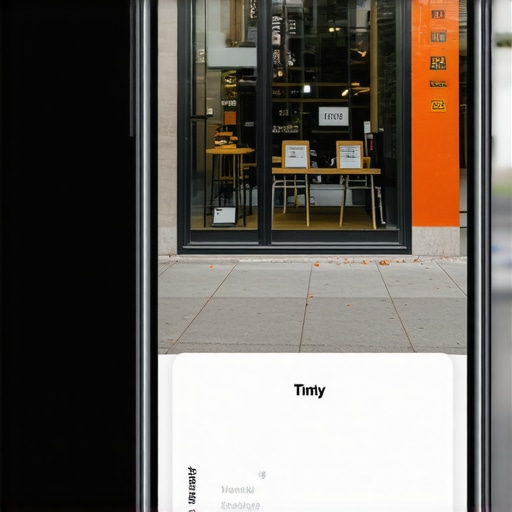
Stop Letting Your Service Radius Kill Your Visibility
One of the most common data gaps happens when you try to reach customers in the next town over. Your dashboard might show you are ‘ranking,’ but your phone isn’t ringing. This usually happens because your reach is artificially throttled. You need to identify the service area page blunder keeping you invisible in nearby towns before it drains your budget. I remember a landscaping client who thought they were visible across the whole county, but when we checked the actual map pins, they were only appearing in a two-mile radius of their home office. To rank 3 pack for those distant neighborhoods, you have to create location-specific signals that don’t look like robotic spam. You must learn how to fix the data gaps in your google maps analytics to see where your ‘blind spots’ are. If you don’t see your pin appearing in a specific suburb, it’s not because the customers aren’t there—it’s because your profile hasn’t earned the authority to ‘travel’ that far yet. By tightening up these specific data points, you provide the google maps boost your business needs to outperform competitors who are still relying on outdated, generic SEO tactics.
Ditch the Review Volume is King Mentality
The standard advice is simple: more reviews equals a better rank 3 pack. But here is the nuance that most people miss: Google is obsessed with ‘velocity’ and patterns. If you suddenly go from zero reviews to twenty in a single weekend because you ran a promotion, you aren’t just getting feedback; you are potentially triggering a spam filter. I have seen business owners lose months of progress because they went too hard, too fast. In my experience, stop asking every customer for a review and focus on a steady, natural drip instead. It is far better to have two reviews a week for a year than fifty in a month followed by total silence. This consistency signals a living, breathing business rather than a manipulated profile.
Why does keyword stuffing my replies backfire?
It is incredibly tempting to reply to a five-star review with something like, ‘Thanks for choosing our 24-hour plumber service in Chicago!’ Most ‘experts’ will tell you this helps your SEO. However, Joy Hawkins and the team at Sterling Sky have noted through extensive testing that why replying to reviews with specific keywords is a local pack mistake is because the algorithm has caught on. Over-optimizing your replies can actually make your profile look like it is managed by a bot, and in some cases, it can lead to a filter that hides those reviews entirely. Instead of templates, use how personalized review replies outperform keyword-stuffed templates to build real trust with both Google and the customer.
The Citation Trap That Wastes Your Budget
If you are still paying for packages of 100+ generic directory listings, you are essentially buying digital junk mail. Five years ago, NAP (Name, Address, Phone) consistency across the whole web was the gold standard. Today, the hidden disconnect between citation cleanup and real map gains is wider than ever. Google trusts local, relevant signals far more than it trusts a mention on a random web directory from the 90s. This is why buying 100 generic citations is a waste of your marketing budget. If you want to boost 3 pack authority, your time is better spent securing a mention on a local high school sports blog or a neighborhood association site. 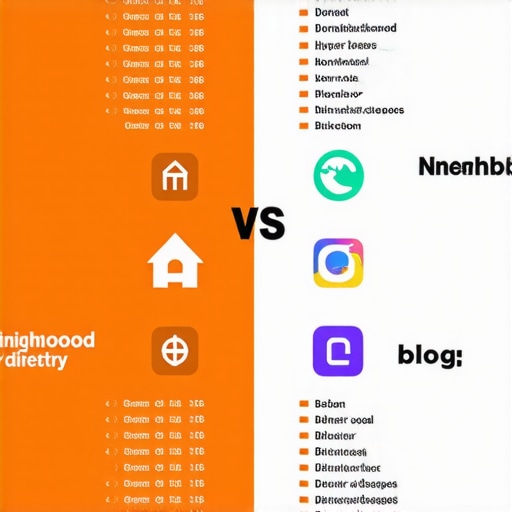 I have consistently seen that why local backlinks from neighborhood blogs outperform generic high-authority pr when it comes to shifting a map pin. One hyper-local mention is worth more than fifty ‘high DA’ links that have nothing to do with your zip code. Finally, be careful with your edits. Even well-intentioned changes can be risky, and you need to understand why most profile updates actually trigger a stealth ranking drop before you start tweaking your hours or descriptions. Have you ever fallen into this trap? Let me know in the comments.I have spent thousands of dollars on software, but the only tools that actually matter are those that show me the ‘why’ behind a ranking drop. If you are still looking at a single number for your position, you are essentially looking at a polaroid of a moving car. To stay in that coveted rank 3 pack, you need a dynamic view. I personally rely on grid-based tracking software like Local Falcon or BrightLocal because they highlight the ‘proximity cliff’—that exact point where your business disappears from the map. This is why the specific software features needed to track local keywords without map bias are non-negotiable for anyone serious about a google maps boost. When I see a sea of red dots on my map grid, I do not panic. I look for the nearest green dot and figure out what is different about that specific neighborhood’s signals. It is often a matter of localized relevance that requires a practical approach to fixing overlapping service areas in your profile so you are not fighting your own listings for the same zip code.
How do I keep my map pin from sliding down?
It is not about doing a massive overhaul every month; it is about consistency. Every morning, while I am drinking my first cup of coffee, I spend exactly ten minutes on the 10-minute daily checklist to track and fix your google maps ranking. I check for ‘suggested edits’ from competitors—who love to change your phone number or website link when you aren’t looking—and check the Q&A. In fact, why answering obscure qa questions is the fastest google maps boost is a secret most of your competitors are too lazy to exploit. By engaging with these small signals daily, you prove to Google that your business is the most active and reliable choice for their users. This is a simple daily routine to hold your spot in the top 3 that actually works over the long haul.#IMAGE_PLACE_HOLDER_D#Looking ahead, the game is shifting toward real-time engagement and AI-driven summaries. We are already seeing essential google business profile tips for the 2026 local search cycle focusing heavily on ‘Visual Search’ and ‘Video Updates.’ If you are not already, you should start learning how to use video updates to stand out in the local pack result. Google wants to see what your business looks like right now, not just what it looked like three years ago. Local search expert Mike Blumenthal has noted that Google’s algorithm is increasingly prioritizing ‘openness’ and real-time availability, often shifting rankings based on your actual business hours. To improve local pack visibility in this new era, the response velocity secret how fast replies actually improve local pack visibility will become your primary weapon. My advice? Go into your profile right now and record a 30-second video of a recent project. It is the fastest way to signal you are the local authority before the next algorithm update hits.
What I Discovered After Managing Hundreds of Map Pins
Over the years, I have realized that local pack optimization isn’t a set it and forget it task. One of the biggest lightbulb moments was realizing that the hard truth about hiring a gmb seo expert for your local ranking is that no one cares about your business as much as you do. You have to be the one to spot when a competitor is playing dirty or when your data looks off. Another lesson? Stop chasing every trend. I spent way too much time on things that didn’t matter before I saw how we turned 3 local blog posts into a map ranking surge by simply focusing on hyper-local relevance. Finally, remember that your profile is a living entity. If you treat it like a static billboard, you will eventually see your rank 3 pack status slip away to someone more active.
The Tools That Keep My Business on the Map
I don’t believe in overcomplicating things, but you do need a few reliable sidekicks. For tracking, I swear by grid-based tools because why your ranking reports show positions that dont actually exist is usually due to a lack of geographic precision. #IMAGE_PLACEHOLDER_E# I also recommend keeping a close eye on your rivals using 3 local seo tools that find your competitors hidden citations so you can match their authority without the guesswork. Lastly, never underestimate the power of a clean site structure; many people ignore the schema errors that quietly kill your 3 pack presence, but fixing them is like clearing the fog for Google’s crawlers.
Your Path to Dominating the Neighborhood
Starting this journey can feel overwhelming, but every small adjustment builds momentum. You don’t need a massive budget to improve local pack visibility; you just need a commitment to accuracy and local engagement. I have seen the tiny profile change that swapped scrolling for real customer phone calls happen for businesses in the toughest niches, and it can happen for you too. Focus on being the most helpful, most transparent, and most present business in your zip code, and the google maps boost will follow naturally. You have the tools and the knowledge—now it is time to put them to work and boost 3 pack results for your own brand. Have you ever noticed your map pin suddenly disappear during certain hours of the day? Let me know your experience in the comments below!