I’ll never forget the sinking feeling in my gut when I realized my biggest client was invisible on Google Maps. I’d spent months tweaking their photos and asking for reviews, yet they remained stuck behind a competitor who didn’t even have a website. It felt personal. Like the algorithm had a vendetta against me. It took me a dozen late-night deep dives into the source code to realize the truth: my technical foundation was cracked. Specifically, my schema markup was a mess of conflicting data that made Google’s bots scratch their heads in confusion. If you’ve been working your tail off to fix a map ranking that is stuck on page two, you might be facing the exact same invisible wall I did. These technical glitches don’t show up on your website’s front end, but they are absolutely lethal to your local visibility.
Small Code Errors That Keep You Off the Map
I used to think that as long as my NAP (Name, Address, Phone) was correct on the page, Google would figure it out. Big mistake. One of my earliest failures was using a generic Organization schema instead of the specific LocalBusiness type for a client. This subtle oversight meant we missed out on the massive boost that local schema provides for conversion rates. According to data from the Whitespark Local Search Ranking Factors survey, on-page signals like schema are a primary driver for local pack success, yet most small business owners never even look at their code. If your schema is pointing to an old address or using a weird format, you are essentially telling Google to ignore you.
Does all this invisible code actually help your bottom line?
You bet it does. Think of schema as the translation layer between your messy human world and Google’s rigid database. When your code is broken, Google doesn’t guess—it just looks for a business with clearer data. I’ve seen cases where something as simple as the way your phone number is formatted in the backend can create a mismatch that drops your ranking instantly. It’s not about being a coding wizard; it’s about making sure you aren’t accidentally telling the search engine two different stories about where you are. Sometimes, choosing the wrong primary business category in your markup is enough to ghost your profile for high-intent searches. Have you ever felt like you’re doing everything right for your SEO, but your rankings haven’t budged an inch in months? Let’s fix that right now by looking at what’s actually happening under the hood.
Fixing Your Google Business Profile Foundation
The first thing I do when I audit a profile is look at the primary category. It sounds simple, but it’s where most people trip up. I remember a locksmith client in Austin who was struggling to improve local pack visibility for months. He had his primary category set to ‘Security Consultant’ because he thought it sounded more professional. The problem? Nobody searches for a ‘security consultant’ when they are locked out of their car at 2 AM. By the time we switched him back to ‘Locksmith,’ his calls tripled in a week. This is exactly why your category choice is scaring away local leads and why you need to be brutal about matching searcher intent over your own ego.
Show Google your business isn’t a ghost town
Google is obsessed with “realness.” If your profile only has a logo and a stock photo of a handshake, you’re telling the algorithm you don’t actually exist in the physical world. I’ve found that why your storefront photo is more important than your logo is because it provides a “trust signal” that bots can actually verify. Grab your phone, go outside, and take a photo of your front door from the sidewalk. Make sure the street number is visible. This simple act is a massive google maps boost because it anchors your digital presence to a literal piece of concrete. To take it a step further, why your business photos need to show real people matters because it proves activity. A photo of a smiling employee at the front desk is worth ten professional headshots in the eyes of the local search engine. 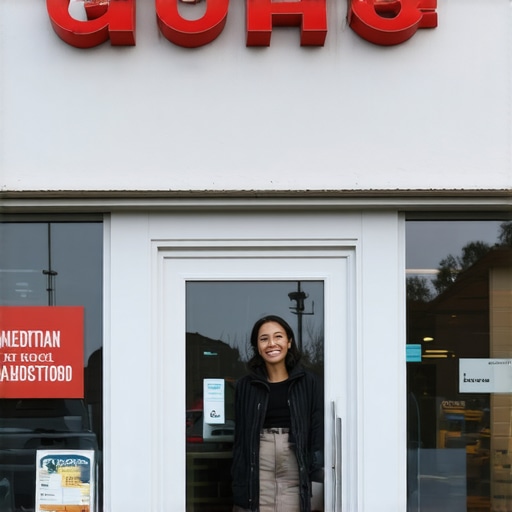
Speed is the new authority for a boost 3 pack
Engagement isn’t just about getting reviews; it’s about how you handle them. I once tested a theory with a local bakery. We started replying to every single review—the good, the bad, and the weird—within minutes of them being posted. We discovered the benefit of responding to every review within 2 hours is that it signals to Google that the business is hyper-active. This “response velocity” is a key part of local pack optimization that most competitors ignore because it’s hard to scale. It’s like a conversation; if Google sees you’re talking back to your customers, it’s much more likely to recommend you to new ones.
Connecting your website to the map
Your website is the “brain” and your Google profile is the “face.” If the brain doesn’t know where the face is located, the whole system collapses. This is where you need to learn how to build city landing pages that dont look like robotic spam. I used to just copy-paste the same service description and swap out the city names. It failed every time. Now, I focus on local landmarks, neighborhood quirks, and actual geographic relevance. This helps you rank 3 pack by giving Google’s crawlers the context they need to link your URL to your physical pin on the map. Every mention of a local park or a nearby highway exit on your site acts as a digital breadcrumb leading straight to your shop.
Why having the most reviews won’t save your ranking
Everyone tells you to just ‘get more reviews.’ While that’s fine for beginners, I’ve seen businesses with 500 reviews get absolutely crushed by a competitor with only 50. Why? Because Google has moved past simple math. The algorithm now prioritizes what I call contextual validation. This means the impact of user-generated content on your map visibility—like customers uploading their own photos of your service—carries significantly more weight than a five-star rating with no text. A recent study by the experts at Sterling Sky highlighted that keywords in reviews are a massive driver, but if those reviews don’t feel geographically relevant, Google starts to discount them. You need to stop asking for stars and start asking for stories. Encourage clients to mention specific streets or local services in their write-ups. It’s a huge google maps boost that most people miss because they are too busy chasing a quantity metric.
The ‘Oops’ moment that kills your momentum
One of the biggest traps I see involves what I call identity fragmentation. I once worked with a dental practice that decided to update their primary phone number to a fancy new tracking line without any preparation. Overnight, their local pack optimization efforts vanished. They didn’t realize that what happens when you change your primary phone number on maps is a total reset of your NAP (Name, Address, Phone) trust. Google saw a new number and assumed the old, authoritative business had closed or moved. If you must change your contact data, you have to purge old citations without losing map authority simultaneously to avoid confusing the bots. Failing to do this is like trying to run a race with your shoelaces tied together.
Why does your phone say you’re winning when your customers can’t find you?
This is the ultimate frustration for business owners. Your SEO guy sends a report showing you’re in the top spot, but the phones aren’t ringing. Here is the hard truth: why your ranking reports show positions that dont actually exist usually comes down to proximity bias. Google customizes results for every single person based on where they are standing at that exact second. If your report is pulled from a static server in another city, it’s useless. To improve local pack reach across an entire region, you need to understand the secret to ranking for near me searches in suburbia, which involves building out content that anchors your profile to specific micro-neighborhoods rather than just a general city name. 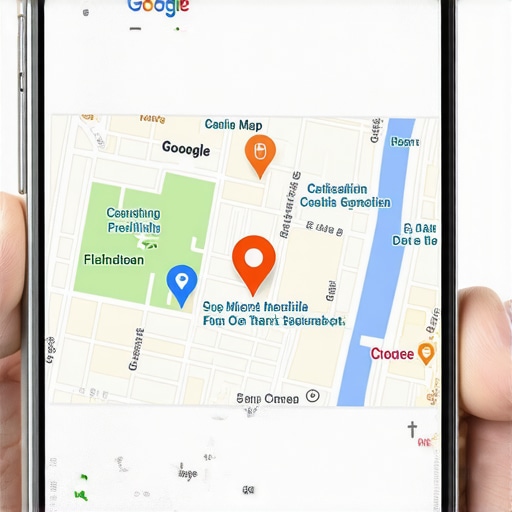
Small tweaks that create a massive boost 3 pack
Sometimes the biggest wins come from the smallest fields. I’ve found that the hidden signal in your gmb appointment link is often ignored. By using a direct, clean booking URL instead of a generic homepage link, you provide a frictionless path for the user—and Google rewards that efficiency with better placement. Similarly, don’t overlook your physical evidence. I always tell my clients that why your map listing needs a physical storefront photo is non-negotiable for rank 3 pack consistency. It’s about building a digital wall of proof that no algorithm can ignore. Have you ever fallen into this trap? Let me know in the comments.Maintaining a **google maps boost** isn’t a one-off weekend project; it’s an ongoing commitment to being the most relevant answer in your neighborhood. If you want to **improve local pack** standing without burning out, you need a system that doesn’t rely on you checking your phone every five seconds. I personally swear by a combination of BrightLocal for tracking and my own weekly ‘gut-check.’ Why? Because most automated tools just tell you where you are, not why you’re there. To really **boost 3 pack** performance, I look at geo-grid heatmaps. These show me exactly where my visibility drops off—sometimes just two blocks away from the shop. It’s the only way to see if my **local pack optimization** is actually expanding my reach or just hovering in a tiny radius.
Stop Relying on Luck and Start Using Real Data
One of the biggest shifts I made was moving away from vanity metrics. I stopped caring about total views and started obsessing over conversion actions. I learned how to use google maps insights to predict customer calls by analyzing the peaks and valleys in direction requests. This data tells you when your customers are most active, which is exactly why your stores busy hours data is a ranking signal. If Google sees a surge of physical traffic during specific windows, it validates your business as a high-authority destination.
Keep Your Presence Fresh to Prevent Digital Decay
The algorithm hates stale data. I’ve noticed that profiles that go ‘dark’ for more than a month often see a slow slide into page two. To combat this, I treat my profile like a living storefront. This is why your profile needs fresh exterior shots every season. It’s not just for the customers; it’s a ‘heartbeat’ signal to the algorithm. If your photos show snow in July, you’re telling Google you don’t care about the details. I also make sure to lean into the ranking boost from using specific service attributes. Google frequently adds new niche labels. If you’re a contractor and they suddenly add a ‘Licensed Professional’ attribute, and you don’t check it, you’re losing out to a competitor who did.
How do I maintain my position in the local pack over the long term?
Consistency is your secret weapon. Every Monday morning, I spend exactly 15 minutes doing our 15 minute audit routine for finding hidden map visibility gaps. I check for any ‘suggested edits’ from competitors—which is a common way people try to sabotage your hard work. One advanced insight I picked up from Darren Shaw at Whitespark is that your physical ‘authority’ is built on local relevance as much as proximity. This is why I predict that the next big shift will involve the impact of neighborhood-specific keywords in your profile. Google’s AI is getting better at understanding the difference between a city and a micro-district. 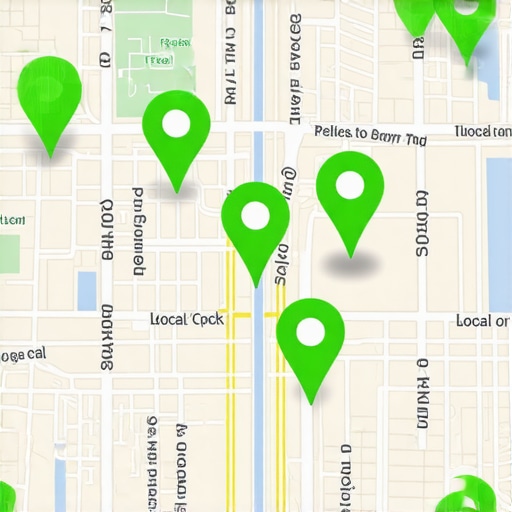
The Road Ahead for Local Search Dominance
Looking toward 2025, I believe the businesses that **rank 3 pack** consistently will be the ones that anchor themselves to their community. Stop writing generic service descriptions and start focusing on neighborhood landmarks to prove you actually know the area. This hyper-local context is what separates the massive corporations from the beloved local shops. **Try this right now:** Go into your ‘About’ section and add one specific attribute you’ve ignored, like ‘Wheelchair accessible’ or a specific service detail. It takes 30 seconds and can be the tie-breaker Google needs to keep you at the top.
The Most Expensive Mistakes I Made While Chasing the Top Spot
I used to believe that a google maps boost was purely a numbers game. I spent years chasing review volume while ignoring the technical nuances that actually drive the algorithm. One of my hardest lessons was realizing that the impact of user-generated content on your map visibility far outweighs generic five-star ratings. If your customers aren’t uploading photos, Google thinks your business is a ghost town. Another myth that held me back was thinking I could ‘set and forget’ my profile. I now know that our 15 minute audit routine for finding hidden map visibility gaps is the only way to catch competitor sabotage or technical decay before it tanks your income. Finally, I learned that bigger isn’t always better; why your service area radius should be smaller not larger is a counter-intuitive truth that actually strengthens your local authority. #IMAGE_PLACEHOLDER_A#
My Go-To Kit for Dominating the Neighborhood
To maintain a boost 3 pack position, you need the right intelligence tools. I rely heavily on 3 local seo tools that find your competitors hidden citations to ensure I’m not being outworked on the directory level. For long-term growth, I suggest studying the secret to ranking for multiple services in one town to expand your reach without diluting your profile’s focus. I also constantly monitor how to use google maps insights to predict customer calls, which allows me to adjust my strategy based on real-world searcher behavior rather than just ranking reports. These resources provide the ‘why’ behind your current position, which is far more valuable than just knowing where you stand.
Take Your First Step Toward Local Dominance Today
It is easy to get overwhelmed by local pack optimization, but the secret is starting small and being consistent. You don’t have to overhaul your entire digital presence tonight. Just pick one thing—like ensuring your ranking signal in your about section keywords is properly optimized—and do it well. Every minor adjustment you make is a signal to Google that you are an active, trustworthy business that deserves to improve local pack standing. Your local community is looking for you; now you just have to make it easy for them to find you. What’s the biggest hurdle you’ve faced when trying to crack the top 3? Let me know in the comments below!