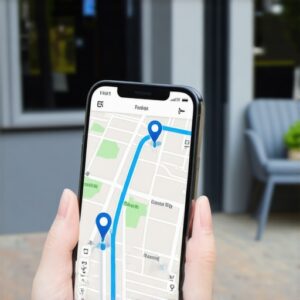
I remember staring at my Google dashboard last July, feeling like a marketing genius because my profile views had spiked by 40%. Then I looked at my call history. Three calls. In a month. It was like shouting into a crowded room and having everyone stare at me, then immediately turn around and walk away. I realized that while I’d mastered the art of being seen, I was failing miserably at being chosen. This conversion gap is the silent killer of local businesses, and if you are seeing thousands of impressions but your phone isn’t ringing, you are essentially paying for a billboard in the middle of a desert. Today, we are going to bridge that gap. I am going to show you exactly how I stopped obsessing over the data gaps in my analytics and started focusing on what actually makes a human being reach out.
Stop Chasing Vanity Metrics and Start Booking Clients
I made a classic mistake when I first started: I thought SEO was just a math problem. I figured if I could just get my business name right and stack up enough citations, the money would follow. I was so focused on the technical side of a google maps boost that I forgot I was marketing to people, not algorithms. The hard truth is that showing up in the Local Pack is only half the battle. If your profile does not build immediate trust, users will bounce to the guy ranked number two or three without a second thought. I once lost a full week of rankings because I thought my primary business category was set correctly, only to find I was attracting people looking for a different service entirely. That is a mistake that costs real money. According to research by BrightLocal, 60% of consumers say that high-quality images are a primary factor in their decision-making process. We are going to look at the friction points—from your questions section responses to your choice of photos—that are quietly telling your customers to call someone else. Have you ever felt that sinking feeling when your traffic goes up but your bank account stays the same?
Does local SEO really justify the time investment?
It is easy to feel skeptical when you are putting in hours of work for a map pin. You might wonder if responding to reviews quickly or hunting for niche citations actually translates to profit. The answer is a resounding yes, but only if you align your profile with human psychology. We are not just trying to rank 3 pack for the sake of it; we are trying to create a digital storefront that is more inviting than the physical one down the street. We will start by stripping away the fluff and fixing the core elements that cause people to click away before they ever see your phone number.
Choose the Category That Matches the Calls You Want
I learned the hard way that Google’s categories aren’t just labels; they are filters for intent. If you pick a broad category because it has more search volume, you might get the traffic, but you’ll also get the wrong customers. I once consulted for a high-end boutique that accidentally listed itself as a ‘clothing store’ generally, rather than focusing on their specific niche. They were getting calls for t-shirt printing and budget jeans. This is exactly why your category choice is scaring away local leads. You need to be surgical. Beyond just the primary category, ensure you are utilizing the ranking boost from using specific service attributes. These small tags—like ‘on-site services’ or ‘locally owned’—act as micro-conversions. They answer the customer’s silent questions before they even click ‘call.’ While you are at it, make sure you are using the right way to name your business on Google without getting banned. Stuffing keywords into your name might give you a temporary boost 3 pack, but it’s a house of cards that will eventually collapse on your conversion rate when customers realize your real name is different.
Humanize Your Visuals or Prepare to Be Ignored
The biggest mistake I see in local pack optimization is a profile full of sterile stock photos or, worse, nothing but a logo. People buy from people. A few years ago, I worked with a local landscaper who was stuck at number four. We didn’t buy more citations; we just swapped his generic ‘grass’ photos for pictures of his actual team on a job site. It turns out why your business photos need to show real people is rooted in basic psychology—trust is built through faces, not brand marks. We also prioritized his exterior shot, because why your storefront photo is more important than your logo comes down to the user’s need to visually ‘find’ your business before they arrive. To get the most out of these images, don’t just dump them onto the profile. Use the specific way to geotag store photos for maximum impact to ensure Google connects the visual data to your physical coordinates. This creates a cohesive story for the algorithm and the user alike.
Tighten Your Service Radius to Dominate Your Immediate Neighborhood
Greed is the enemy of a successful google maps boost. Most business owners try to set their service area to cover every suburb within a 50-mile radius, thinking more area equals more leads. In reality, Google often penalizes this ‘shotgun’ approach. I’ve seen profiles instantly gain more visibility when they narrowed their focus because why your service area radius should be smaller-not-larger is tied to local relevance. If you try to rank 3 pack for a city 40 miles away where you have no physical presence, your conversion will tank because your ‘estimated arrival time’ is too high for the user. Instead of spreading thin, focus on technical trust signals like the impact of local schema on your 3 pack conversion rate. This code tells search engines exactly where you are and what you do, reinforcing your authority in that tight, high-converting radius. By narrowing your focus, you aren’t losing customers; you are winning the ones who are actually ready to hire you right now.
Let’s dig deeper into why simply showing up isn’t enough. Most business owners treat a local pack optimization project like a leaky bucket: they just keep pouring in reviews and citations until it overflows. But here is the contrarian truth that most consultants won’t tell you: Google is getting incredibly good at spotting ‘manufactured’ authority. In my experience, a profile with 15 reviews where customers mention specific neighborhoods and services will outrank a profile with 100 generic ‘Great service!’ reviews every single time. This is why you must avoid the hidden cost of using automated review responses. When you use a bot to say thanks, you are missing the chance to naturally weave in the local keywords that users actually type into search bars. Worse, you are ignoring the response velocity secret that signals to the algorithm your business is active and attentive. Whitespark’s Local Search Ranking Factors study confirms that behavioral signals—how you interact and how users engage—are becoming more dominant than traditional backlink counts.
Why Automated Responses Are Actually Killing Your Reach
The ‘Oops’ factor that I see most often? It’s not your content; it’s the invisible technical plumbing. I have seen businesses lose their 3-pack spot simply because of the schema errors that quietly kill your 3 pack presence. If your website code tells Google you are in one suite and your profile says another, the algorithm gets confused and defaults to your competitor. Even something as small as why your phone number format is quietly hurting your local pack rank can cause a mismatch in data across the web, eroding your authority. It is the digital equivalent of a flickering ‘Open’ sign—it just doesn’t inspire confidence and leads to a massive conversion gap.
The Invisible Plumbing That Sabotages Your Rank
How can you rank for different services without confusing the algorithm?
Many owners worry that if they focus on one primary category, they will lose out on others. The trick is not to spam your description with keywords, but to master the secret to ranking for multiple services in one town through dedicated service pages and properly tagged photos. Also, stop obsessing over your ranking software. I have found that why your ranking reports show positions that dont actually exist is often due to the software using a static IP, while your real customers are searching from moving cars or neighborhood cafes. To really push your profile over the edge, pay attention to the impact of site speed on your 3 pack placement. If your landing page takes five seconds to load on a mobile device, Google will stop showing your map pin because it knows the user experience will be poor. Finally, don’t overlook how to link local news mentions to your map profile. True expertise involves proving to Google that you are a pillar of the community by connecting your profile to local press and events. This creates a level of trust that no amount of cheap citations can replicate. Have you ever fallen into the trap of thinking your rankings were better than they actually were? Let me know in the comments.Maintaining a Rank 3 Pack position isn’t a one-and-done deal; it’s more like keeping a vintage car running. You can’t just change the oil once and expect it to cruise forever. I personally live by our 15-minute audit routine every Tuesday morning. I don’t just look at the raw numbers; I hunt for discrepancies that suggest a competitor is trying to muscle in on my territory. If a rival suddenly jumps ahead, I immediately use local map data to identify new competitors and see if they’ve found a niche keyword I’ve overlooked. Keeping your presence clean is just as important as building it, which is why I periodically learn how to purge old citations without losing map authority. Inconsistent data from a move five years ago can still haunt your rankings today if you aren’t vigilant.
The Tech Stack That Actually Moves the Needle
I’m often asked what ‘secret’ software I use for a consistent Google Maps boost. While there are dozens of shiny tools out there, I stick to a lean stack. I use a geo-grid tracker like Local Falcon because it shows me exactly where my visibility drops off—down to the street corner. This helps me realize why your service area pages are being ignored by Google if the content doesn’t match those specific high-loss zones. For tracking phone leads, I rely on using Google Maps insights to predict customer calls based on seasonal trends. Expert Joy Hawkins from Sterling Sky has frequently noted that Google’s algorithm is increasingly sensitive to ‘real-world’ signals, such as how many people actually ask for directions to your shop. This is why I focus heavily on how to optimize your profile for voice search directions, ensuring the ‘Near Me’ crowd can find me with a hands-free command.
How do I keep my map rankings stable for the long haul?
Stability comes from redundancy and freshness. You can’t rely on a single source of authority. I make it a point to get my store mentioned on local blog directories every quarter to keep the backlink profile diverse. Furthermore, I’ve noticed a shift in the landscape: the future of local search is leaning toward hyper-verification. By looking at the impact of having a verified map profile in 2026, it’s clear that Google will soon require more ‘proof of life’ than ever before. This means regularly uploading fresh exterior shots every season to prove your business is still active and thriving. If you want to scale to multiple locations, you must avoid the problem with having too many service area cities on a single profile; instead, build dedicated local landing pages that feel human, not like robotic placeholders. Take a moment today to check your dashboard: if your ‘Directions’ requests are dipping while your ‘Impressions’ stay high, your profile probably needs a visual refresh to regain that user trust.
Hard Truths I Learned While Fighting for the Top Spot
Looking back at my first few attempts at a google maps boost, I realized I was treating the algorithm like a math equation and ignoring the human on the other side of the screen. One of the biggest shifts in my strategy happened when I stopped trying to ‘trick’ the system and started focusing on signals of real-world activity. I learned the hard way that quality always trumps volume. A single review with a photo and a detailed description of your service is worth more than ten one-word ‘good job’ posts. I also realized that you have to be your own detective; I spent weeks wondering why my traffic dipped only to find I should have been checking for 3 red flags before hiring a profile expert to help me navigate the mess. Trust is your primary currency, and if you don’t protect it, even a number-one ranking won’t save your conversion rate.
Another ‘lightbulb moment’ came when I stopped being afraid of the technical side. I used to think local pack optimization was just about keywords, but then I saw how much weight Google puts on behind-the-scenes data. For instance, I ignored my file exports for months before realizing why your images need specific file names to help Google’s vision AI understand what you actually do. It’s these tiny, overlooked details that separate the businesses that stay in the rank 3 pack from those that disappear after every minor update. Finally, I learned to keep a cool head. When I faced my first negative SEO attempt, I didn’t panic; I just learned how to reclaim your profile authority after a review spam attack and came back stronger.
The Only Stack You Need for Consistent Visibility
If you want to maintain a boost 3 pack position without losing your mind, you need a reliable set of resources. First, I highly recommend using a geo-grid tool like Local Falcon or BrightLocal; seeing your rankings block-by-block is the only way to truly see the ‘shield’ of your visibility. Second, focus on your social proof strategy. I found that my conversion rates skyrocketed once I mastered how to get more reviews without being annoying to my best clients. Third, stay educated on the ‘why’ behind the search results. I often point my colleagues toward Joy Hawkins’ research or the Whitespark blog, as they provide the data-backed evidence needed to ignore the ‘gurus’ and focus on what works.
Stop Waiting for Customers to Find You
The local search landscape is more competitive than ever, but it is also more rewarding for those who put in the work to be truly helpful. You don’t need a massive budget or a team of twenty to achieve a significant improve local pack result; you just need consistency and a focus on the customer’s journey. Your profile is the digital front door of your business—make sure it’s open, inviting, and clearly labeled. Remember, every small tweak you make today is a seed planted for a lead you’ll get three months from now. Don’t be discouraged by temporary fluctuations; even the most stable pins move. Have you ever noticed that your map pin disappears when you zoom out and wondered why? Let me know about your weirdest ranking quirks in the comments below!