I remember the gut-punch I felt when I realized my shop was effectively a ghost to Google. I had the keys, the lease, and a fresh coat of paint, but for everyone searching on their phones, I simply didn’t exist. I was buried under a pile of competitors who hadn’t updated their websites since 2012. My mistake was a classic one: I focused on the perfect corporate logo and ignored the raw, messy reality of a physical location. I assumed my clear storefront sign was enough to satisfy the algorithms. It wasn’t. Google wants to see life. It wants to see movement. Most importantly, it wants to see that other humans have actually walked through your door. Today, we are going to fix that invisibility by leveraging the most powerful tool in your marketing arsenal—your customers’ own cameras. We are going to turn their snapshots into a Google Maps boost that no amount of keyword stuffing can touch.
The Moment I Realized Pretty Pictures Weren’t Enough
It’s embarrassing to admit now, but early on, I spent a small fortune on professional photography. I had these high-resolution, sterile shots of my office that looked like they belonged in a catalog. I thought that would improve local pack visibility instantly. Instead, my rankings stayed flat. I eventually learned that Google’s AI is actually quite skeptical of professional shots because they can be bought or faked easily. The real needle-mover happened when a regular customer posted a grainy, slightly-tilted photo of their coffee on my counter. Suddenly, my profile saw more activity in 48 hours than it had in a month. This is because your map listing needs a physical storefront photo that feels authentic to the neighborhood. If you have ever felt like you are doing everything right but still getting ignored by the local pack, have you checked what your customers are actually uploading lately?
Will people really take photos for me?
It sounds like a lot to ask, but people love to share their experiences when prompted the right way. The skepticism usually comes from a fear of being ‘pushy,’ but in reality, most customers are happy to help a local business they enjoy. You don’t need a thousand photos; you just need a steady stream of proof. This isn’t just about vanity; it’s about signals. According to research, 79% of people say user-generated content highly impacts their purchasing decisions, far outweighing professional imagery. This is why local check-ins are more valuable than generic stars. When a customer snaps a photo, they are providing a geo-tagged, time-stamped piece of evidence that your business is exactly where you say it is.
Bridging the Gap Between Digital and Physical Reality
The biggest hurdle for most small businesses is proving ‘existence’ to a machine. Google uses these photos to cross-reference your location with street view data and other local landmarks. When I started paying attention to the exact metadata we add to store photos, I realized that customer photos do this work for us automatically. They provide the ‘local flavor’ that tells the algorithm you are a pillar of the community. We aren’t just trying to rank 3 pack for the sake of a number; we are trying to build a digital footprint that is impossible to ignore. In the next section, I’ll show you the exact routine I use to encourage these uploads without feeling like a salesperson.
Turn Your Happy Customers into Search Engine Signals
Think of your Google Business Profile like a digital campfire. If you don’t keep tossing logs onto it, the light starts to fade, and the algorithm moves on to the next bright thing. The best logs aren’t the ones you buy; they are the ones your customers bring with them. I found this out the hard way when I was obsessing over my own uploads while ignoring what was happening in the ‘Photos by Visitors’ tab. To truly google maps boost your visibility, you need to create a environment where snapping a photo feels like part of the experience. I once tried to ‘force’ this by putting up a sign that said ‘Please Review Us,’ and it failed miserably. It felt like asking for a favor before the first date was even over. The shift happened when I started asking for specific ‘visual proof’ instead. I asked a regular customer to snap a photo of our new outdoor seating because I wanted to show off the ‘neighborhood vibe.’ That single, non-professional photo did more for my improve local pack efforts than three months of generic posting.
Ground Your Business in Real Physical Space
Google is obsessed with verifying that you exist exactly where you say you do. This is why why your business description should focus on neighborhood landmarks. When a customer takes a photo that includes a hint of the street corner or the shop next door, it provides a ‘triangulation’ signal that no software can fake. These 5 simple photo tweaks that actually improve local pack visibility often revolve around capturing the transition from the sidewalk to your front door. 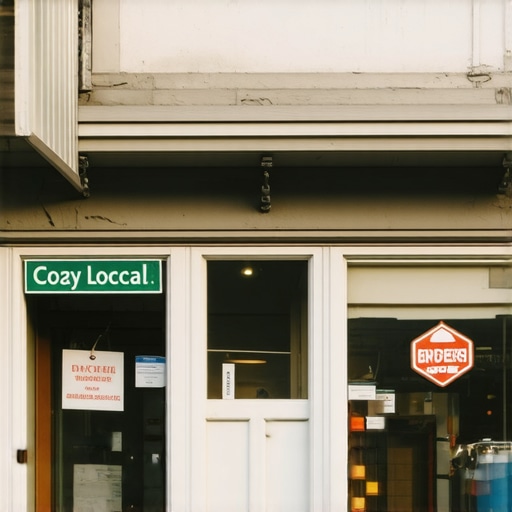
Master the Art of the Metadata Handshake
While we can’t control what a customer does with their phone, we can control how we handle the data they give us. Every time someone uploads a photo, Google looks at the hidden data attached to it. When I’m working on a client’s profile, I make sure the exact metadata we add to store photos on our end complements the organic signals being sent by customers. It’s like a digital handshake. If the customer’s phone says they are at your coordinates and your own uploads confirm those same coordinates, the ‘trust score’ of your pin skyrockets. This is a core component if you want to rank 3 pack in a competitive city.
Maintain a High Velocity Profile
Search engines hate a stagnant pond. You need movement. I realized that my rankings were dipping every time I went on vacation and stopped engaging. You need to realize the response velocity secret how fast replies actually improve local pack visibility applies to photos too. When a customer uploads a shot, thank them immediately. Mention a specific detail in the photo. This engagement tells Google the profile is active and monitored. This is why your profile needs to be updated every 7 days at a minimum. If you let a customer photo sit there without a ‘like’ or a response, you are leaving ranking points on the table. I remember a time when I ignored a photo of a slightly messy shelf a customer posted; by the time I responded two weeks later, my ‘near me’ rankings had already started to slip to the second page. Don’t let your profile go cold.Now that we have talked about the power of user-generated content, let’s peel back the curtain on why most businesses hit a plateau. I see it all the time: a business owner does everything ‘right’ on paper, but they are still stuck at position #4 or #5. The hard truth is that why your primary business category is likely sabotaging your 3-pack rank is usually because you chose what you do instead of what your customers actually search for. Everyone tells you to cast a wide net, but in my experience, being a ‘specialist’ in Google’s eyes is what actually triggers that google maps boost.
Can you really rank without a massive citation list?
The short answer is yes. In fact, deciding to stop buying cheap map citations a better way to outsource local seo is my number one piece of advice for businesses in competitive niches. We have moved into an era where quality and local relevance beat quantity every single time. According to the annual Local Search Ranking Factors study by Whitespark, the weight of local citations has decreased significantly compared to behavioral signals and on-site local content. I have seen profiles tank simply because they were listed on hundreds of irrelevant directories, creating a ‘noise’ that confused the algorithm rather than helping it.
The Ghost Office Trap
One of the biggest ‘oops’ moments I encounter involves the desire for a prestigious downtown address. I once worked with a law firm that could not understand why they were not in the 3-pack despite having hundreds of five-star reviews. It turned out they were using a coworking space with a shared suite number. You need to understand the map-ranking danger of using a virtual office. Google’s AI is incredibly good at spotting these, and if you share an address with dozens of unrelated businesses, your visibility will be throttled. It is a silent killer. This is often tied to why a single suite number error kills your map visibility—if your data does not perfectly match the physical reality of the building, your trust score drops to zero.
Fix the Hidden Code No One Sees
While you are busy replying to reviews, there is likely a technical mess happening on your website. I am talking about the schema errors that quietly kill your 3-pack presence. If your website’s backend code does not explicitly tell Google that this specific website belongs to that specific map pin, you are making the search engine guess. And Google hates guessing. When we audit profiles, we often find that why buying 100 generic citations is a waste of your marketing budget becomes obvious once we fix the local schema; the rankings jump almost overnight without adding a single new directory listing. Have you ever fallen into this trap of focusing on quantity over quality? Let me know in the comments.
Getting to the top of the 3-pack is a rush, but staying there is a chess match. I have seen countless businesses hit that coveted #1 spot, pop the champagne, and then vanish from the first page three weeks later because they thought the work was finished. The algorithm is a living, breathing thing that rewards consistency over sporadic bursts of effort. To truly sustain a google maps boost, you have to transition from a ‘setup’ mindset to a ‘maintenance’ mindset. I swear by the simple daily routine to hold your spot in the top 3. It takes less than ten minutes a day, but it tells Google that your business is more reliable than the competitor who hasn’t logged into their dashboard since the Bush administration.
Stop Trusting the View from Your Own Desk
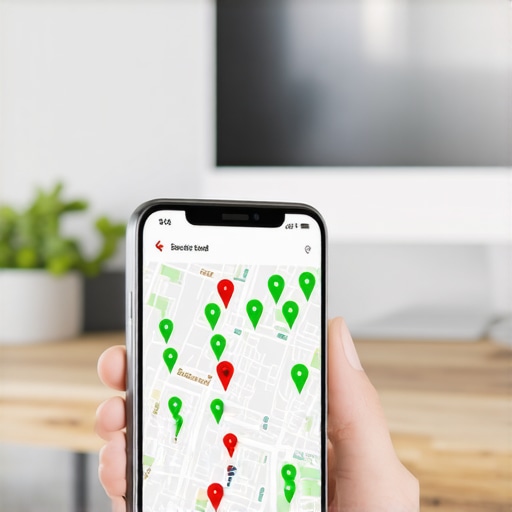
One of the biggest mistakes I see is the ‘office bias.’ You open your phone, search for your service, and see your business at the top. You feel great, right? Wrong. You are likely seeing that result because you are physically standing at your own coordinates. To get an honest look at your rank 3 pack status, you need to see what the customer five miles away sees. This is where professional-grade tracking becomes mandatory. I always look for the specific software features needed to track local keywords without map bias. If your tracking tool doesn’t show you a grid of your city with individual ‘pins’ for each neighborhood, you are flying blind. You might be winning on your street but losing the battle for the lucrative zip code next door.
How do I keep this momentum going for the long haul?
Maintenance is about refreshing signals. If you serve multiple areas, you cannot rely on your homepage alone to carry the weight. I often see the service area page blunder keeping you invisible in nearby towns, where owners create generic, thin pages that Google ignores. Instead, you need to learn how to build city landing pages that do not look like robotic spam. Each page should feel like a local portal, mentioning local landmarks and community-specific needs. This creates a web of authority that makes it impossible for the local pack optimization to ignore you as you scale into new territories.
Prepare for the Visual-First Future of Maps
If I had to predict the biggest shift in the next 24 months, it is the move toward immersive, ‘vibe-based’ search. Google’s AI is getting incredibly good at analyzing video content. This is why I have started advising all my clients on how to use video updates to stand out in the local pack result. A 10-second clip of your team working or a quick walk-through of your storefront provides a trust signal that a static photo simply cannot match. According to Joy Hawkins of Sterling Sky, a leading voice in the local SEO community, these ‘behavioral signals’ and the freshness of your profile content are becoming the dominant factors in staying ahead of the ‘Vicinity’ update filters. It’s no longer just about who has the most reviews; it’s about who is providing the most current, relevant data to the user. Don’t let your profile go stale. Run our 15 minute audit routine for finding hidden map visibility gaps this afternoon and find one thing to refresh. Your future rankings depend on it.
Hard Lessons from the Local SEO Trenches
One thing I learned the hard way is that Google favors a messy, active profile over a static, ‘perfect’ one. I spent years trying to polish every word, only to realize that local pack optimization is really about momentum. If you stop moving, you start sinking. I also discovered that your physical storefront matters more than any backlink you could buy. If the street view doesn’t match your uploaded photos, the algorithm gets suspicious. Finally, don’t ignore the ‘boring’ data—things like your phone number format or your services menu are often the silent rank 3 pack killers that no one talks about. Every small detail acts as a coordinate for Google to find you.
The Toolkit I Use to Stay Ahead of the Algorithm
I don’t do this alone, and neither should you. First, I always keep essential google business profile tips for the 2026 local search cycle bookmarked because the rules change faster than most people realize. For technical health, I rely on our 15 minute audit routine for finding hidden map visibility gaps to catch errors before they become ranking penalties. I also highly recommend looking into software that tracks neighborhood-level rankings, as it provides the data needed to fix 7 hidden signal errors that keep you out of the local pack. Finally, prioritize actual human feedback; I’ve seen time and again why local check-ins are more valuable than generic stars when it comes to building real-world trust signals.
Take the Lead in Your Local Neighborhood
It is easy to get overwhelmed by the technical details, but the most important thing is to simply begin. Whether it is refreshing a single photo or tweaking a service description, every small action contributes to a significant google maps boost over time. You have the tools and the roadmap; now it is time to show Google—and your neighborhood—that you are the most relevant choice in town. Don’t wait for the ‘perfect’ moment to start your simple daily routine to hold your spot in the top 3. The sooner you begin, the sooner you’ll see those customer calls coming in. Which part of your Google profile has been your biggest headache lately? Let me know in the comments below!