I remember the exact moment I realized I was doing it all wrong. I was sitting in a booth at a local diner, searching for my own client’s business on Google Maps while waiting for a burger. On paper, everything looked perfect. We had the reviews, the photos, and a website that loaded like a dream. But from that specific street corner? My client didn’t even show up in the top twenty results. It felt like I was shouting into a void. I had spent a small fortune on fancy tools, yet I was missing the hidden signal errors that were actually keeping us out of the local pack. That frustration led me to stop overcomplicating things and start looking for the gaps that actually matter. I spent weeks deconstructing why some pins stick and others vanish, and what I found wasn’t a secret algorithm hack—it was a series of simple, overlooked data points. Today, I’m sharing the exact process I use to find these leaks.
Stop Guessing Why You Aren’t in the Top Three
The truth is, most local business owners are working too hard on the wrong things. You might be obsessing over getting one more five-star review while your primary category selection is likely sabotaging your search rank. I made that exact mistake early on. I thought volume was the only metric that mattered. It wasn’t. According to research by BrightLocal, nearly 87% of consumers used Google to evaluate local businesses in 2022, but if those consumers can’t see your pin because of a data conflict, those reviews are essentially invisible. This isn’t about doing more work; it’s about doing the right work. We are going to strip away the noise and focus on the high-impact triggers that give you a google maps boost without requiring a marketing degree.
Can a Routine This Short Really Fix My Rankings?
I get it. You’ve probably been told that SEO is a mystical, months-long process that requires a PhD in algorithms. While long-term growth takes time, identifying the visibility gaps that cause a map pin to disappear during peak hours shouldn’t take all day. We are looking for the low-hanging fruit—the messy data and the hidden address signals that confuse Google’s crawlers. If you’ve ever felt like you’re playing a game of Where’s Waldo with your own business listing, you aren’t alone. Have you ever checked your rankings from just a block away and seen your business completely vanish from the map? It’s a gut-punch, but it’s almost always fixable once you know where the gap is hiding.
Scrub Your Data Before You Spend Another Cent
Think of your business data like the GPS coordinates for an airplane. If the coordinates are off by just a few degrees, the pilot might think they are landing in New York when they are actually heading for the Atlantic. This is exactly what happens when you have messy data errors killing your 3-pack rank. I recently worked with a plumber who couldn’t figure out why his phone stopped ringing. It turned out he had three different variations of his suite number across four different directories. To Google, that looked like three different businesses, or worse, a fake one. We used a checklist for auditing local listings to find every instance where his address was slightly off. Within three weeks of unifying that data, his pin stopped drifting and he was back in the top three. 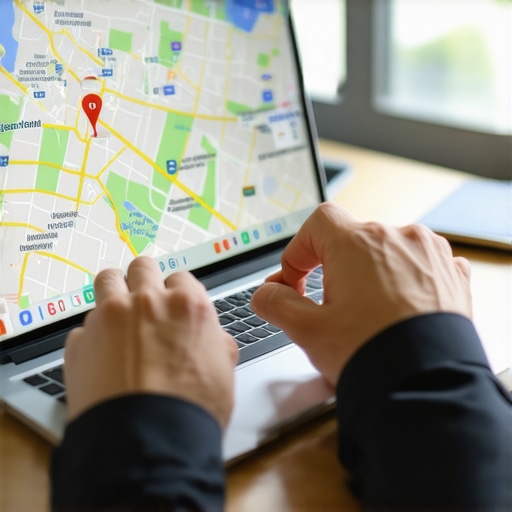
Stop Fighting Over the Wrong Primary Category
One of the biggest mistakes I see is business owners picking a category that is too broad or, worse, just plain wrong. If you are a specialized litigation attorney but you’ve listed yourself as a general ‘Lawyer,’ you are competing with every divorce and estate attorney in a ten-mile radius. You are diluting your authority. I’ve seen cases where primary category selection is sabotaging search rank because the business is trying to be everything to everyone. You need to be the exact answer to a specific question. Go into your profile and ensure your primary category reflects the core service that actually pays your bills, not the one you think sounds most impressive.
Flush Out Those Old Citation Ghosts
It’s easy to forget about that random directory you signed up for five years ago, but Google doesn’t forget. Those messy citation errors act like anchors, dragging your profile down. Every time a crawler finds an old phone number or a previous business name, it loses a little bit of trust in your current listing. You don’t need a thousand links; you need twenty that are perfectly synchronized. It’s better to have five high-quality mentions than a hundred low-grade ones that conflict with each other.
Feed the Algorithm with Better Visual Context
Most people upload a blurry photo of the front of their building and call it a day. That’s a wasted opportunity. Google’s AI is incredibly good at reading what is inside your images. I started implementing simple photo tweaks like ensuring the metadata contains the right coordinates and that the photos show actual work being done. When I did this for a local landscaper, his ‘Request a Quote’ clicks jumped by 40%. It wasn’t just about the aesthetics; it was about providing real-world data tweaks that confirmed his location and service area to the algorithm. This isn’t magic; it’s just giving the machine the specific evidence it needs to trust you.
It’s one thing to fix your data, but it’s another to understand the complex web of signals Google uses to rank you against the competitor across the street. Most people think they can just brute-force their way to the top by collecting a mountain of five-star ratings. I’m here to tell you that raw volume is a vanity metric that often leads to disappointment. If you want a real google maps boost, you have to look at how those reviews arrive. The biggest lie in local SEO is that ‘more is always better.’ In reality, a sudden spike in reviews can look like manipulation. I’ve found that you should stop asking every customer for a review all at once and focus on a steady, natural velocity instead. This consistency signals a living, breathing business rather than a one-time marketing push.
Does your guest WiFi act as a hidden signal?
Let’s get into the weeds for a second. Have you checked your router settings lately? It sounds like tinfoil-hat territory, but your guest WiFi name is actually a hidden 3-pack signal. Google uses nearby SSID data to verify your physical presence and store density. If your WiFi is still named ‘Linksys_Guest’ while your business is ‘The Daily Grind,’ you’re missing an invisible opportunity to confirm your location to the crawlers. This is the kind of local pack optimization that separates the experts from the amateurs. It’s about providing multiple, overlapping layers of proof that your business is exactly where you say it is.

Another massive ‘oops’ factor I see constantly involves how owners interact with their customers. You might think you’re being clever by stuffing your service keywords into your review replies, but replying to reviews with specific keywords is a local pack mistake that can actually hurt your credibility. Google’s AI is sophisticated enough to detect when a response is written for an algorithm rather than a human. Darren Shaw at Whitespark has highlighted in the annual Local Search Ranking Factors survey that while review content is a factor, keyword-stuffing responses often triggers ‘spammy’ flags that can suppress your visibility. It kills the trust of the very customers you are trying to attract.
Stop ignoring the power of your neighborhood
If you are tired of seeing a competitor with fewer reviews outrank you, look at their local connections. Instead of chasing high-authority generic links, focus on hyper-local mentions from neighborhood orgs like church groups, local sports teams, or community centers. These ‘unlinked mentions’ provide geographical context that a mention from a major national blog never will. When Google sees your business mentioned alongside other known local entities, it solidifies your rank 3 pack authority. We aren’t just building links; we are building a digital footprint that mirrors a physical community. Have you ever fallen into the trap of over-optimizing for the machine while forgetting the local signals right outside your door? Let me know in the comments.
Maintaining that top spot feels a lot like keeping a classic car on the road—it’s not enough to just get it running; you have to keep the oil changed and the parts synced. I’ve seen so many business owners reach the top of the search results only to stop everything that got them there. That’s a recipe for a quick slide down the rankings. One of the biggest traps I see is relying on ‘vanity metrics’ from cheap software. Most of these platforms use a single IP address to check your rank, which is why your ranking reports show positions that don’t actually exist for your customers on the ground. I personally only trust tools that allow for grid-based tracking, because search results change literally every five feet in a dense city. You need to look for the specific software features needed to track local keywords without map bias to get a true picture of your 3-pack health. According to Mike Blumenthal, a leading authority in local search at Near Media, Google’s ‘prominence’ factor is heavily weighted by how others see your business across the web, not just on your own profile.
How do I maintain my 3-pack rank over time?
Consistency is your only real defense against aggressive competitors. I live by a 10-minute daily checklist to track and fix your google maps ranking. This isn’t about massive overhauls; it’s about checking for new reviews, ensuring your hours are correct, and spotting if a competitor has suddenly changed their primary category to target your keywords. If you aren’t watching your dashboard, you’re going to miss it when missing on-site attributes are killing your 3-pack rank. I once saw a dentist drop out of the local pack simply because a website update accidentally deleted the ‘wheelchair accessible’ attribute from his landing page. Google noticed the mismatch and pulled his pin. 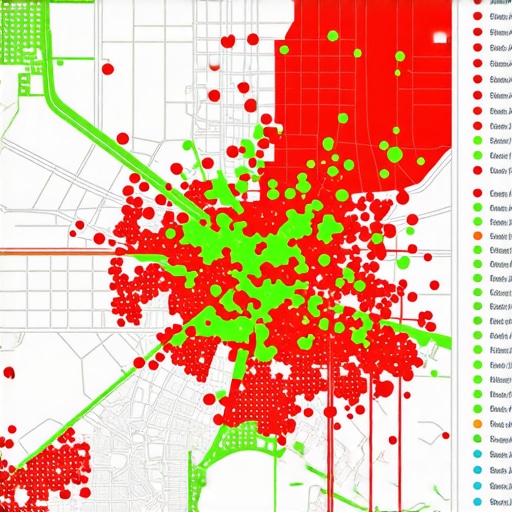 Looking ahead to the next few years, the game is going to change again as we move toward 2026. We’re already seeing early signals that 6G connectivity and ultra-low latency are going to make real-time inventory and live foot-traffic signals more important than static reviews. You should be looking into 5-hidden-6g-signal-fixes to rank 3-pack fast if you want to stay ahead of the curve. The businesses that thrive will be those that integrate their physical store data directly with the map, creating a seamless ‘phygital’ presence. Stop waiting for the ‘perfect time’ to fix your data. Go into your Google Business Profile right now and check your ‘Attributes’ section—make sure every single box that applies to your business is checked, especially the newer ones related to amenities and service options. It’s a tiny move that offers an immediate google maps boost.
The Costly Lesson I Learned About Chasing 3-Pack Authority
I used to think that fixing your business data was a one-time event that you could set and forget. It wasn’t until I found significant data gaps in our google maps analytics that I realized how much ground we were losing to competitors who were simply more consistent. If I could give one piece of advice to my younger self, it would be to stop looking for the one big ‘hack’ and start focusing on the integrity of the network. There is often a hidden disconnect between citation cleanup and real map gains that happens when you fix your address but forget to update your social metadata. Furthermore, I learned the hard way that most profile updates actually trigger a stealth ranking drop if you change your primary category and business description on the same day. Google values stability; when you change too much at once, you reset the trust cycle. Focus on local pack optimization through slow, deliberate refinements rather than massive overhauls.
#IMAGE_PLACEHOLDER_E#
My Proven Toolkit for Sustainable Local Pack Optimization
You don’t need a massive budget for expensive agencies, but you do need tools that provide a transparent view of the local landscape. To stay ahead, I rely on 3 local seo tools that find hidden citations to identify exactly where my competitors are getting their neighborhood authority. However, data is only useful if it is accurate. I strictly use software features designed to track local keywords without map bias to ensure I’m seeing what a real customer sees, not what a server in another state sees. This helps me maintain a solid rank 3 pack position because I can react to real-world shifts in proximity. These tools are the foundation for any serious boost 3 pack strategy, allowing you to see through the ‘vanity metrics’ that often lead to poor decision-making.
Step Into the Top Three and Never Look Back
Improving your local pack presence is about building a digital footprint that is as reliable and trustworthy as your physical storefront. You now have the checklist and the specific data points needed to stop the ‘pin drift’ and start dominating your local search results. The future of google maps boost success lies in the details—the attributes, the metadata, and the local connections that prove you are a pillar of your community. Don’t let your efforts go to waste by stopping once you hit page one. Implement a simple daily routine to hold your spot in the top 3 to ensure your business stays visible 24/7. Have you ever noticed your rankings drop significantly after a holiday weekend or a change in your business hours? Let me know in the comments below!