I spent weeks in a caffeine-fueled haze, squinting at a spreadsheet with 300 tabs, convinced I was doing the ‘real work.’ I was fixing suite numbers, changing ‘St.’ to ‘Street,’ and hunting down every stray phone number for a local plumber. I was certain that by Monday, he’d be sitting pretty at the top of the local pack. Monday came. Then Tuesday. The needle didn’t move. In fact, he actually dropped a spot. It was a gut-punch moment where I realized that the ‘NAP consistency’ gospel we’ve all been sold has a massive, gaping hole in it. Today, I am peeling back the curtain on why spending hours on directory cleanup often results in zero map visibility and showing you the specific signals that actually move the needle. Have you ever spent weeks fixing data only to see your map pin stay stubbornly stuck?
Your Business Information Is Accurate But Your Rankings Are Still Dead
I used to think that a perfect profile on some obscure niche directory was the key to a rank 3 pack. It isn’t. The truth is that while properly purging your old citations is a great first step, it is just the entry fee. It does not guarantee a win. I see so many business owners fall into the trap of hiring cheap local SEO services that promise ‘thousands of citations’ as if that is the secret sauce. It is not. Google’s own algorithms have become incredibly good at ‘fuzzy matching,’ which means they often know exactly who you are even if one site says ‘Suite 10’ and another says ‘#10.’ You are essentially polishing a car that has no engine.
Is cleaning up every single directory actually worth the hype anymore?
Most people are terrified that one wrong phone number on a site nobody visits will sink their business. I once lost a week of sleep over a typo on a local chamber of commerce site. Looking back, it was a total waste of energy. The real disconnect happens because while you are focused on the past, your rivals are focused on real-time signals. You might wonder why your competitor ranks higher with fewer reviews or messy citations; it is often because they are leveraging tools that find hidden, high-impact citations rather than just chasing quantity. In fact, recent industry data from Whitespark suggests that while citation signals are still a piece of the puzzle, their overall weight in the ranking algorithm has plummeted compared to proximity and on-page authority. If you are not seeing gains, you are likely missing the authority signals that Google actually craves in this current landscape.To get a real google maps boost, you need to stop treating your profile like a static business card. It is a living entity that thrives on fresh, active data rather than just historical accuracy. First, you must address your categorization. I have seen businesses lose 50% of their potential traffic because they chose a broad, generic term instead of a specific one. This is exactly why your primary business category is likely sabotaging your 3-pack rank. Think of categories like the aisles in a grocery store; if you put the organic milk in the hardware section, nobody finds it. Next, let us dive into visual proof. Google wants to see that you actually exist at the physical address you claim. This is why your storefront photo is more important than your logo. I once worked with a local bakery that used a high-res stock photo of a croissant as their main image. They were invisible. We swapped it for a grainy, smartphone shot of their actual front door with the street number clearly visible, and their impressions doubled in a week. 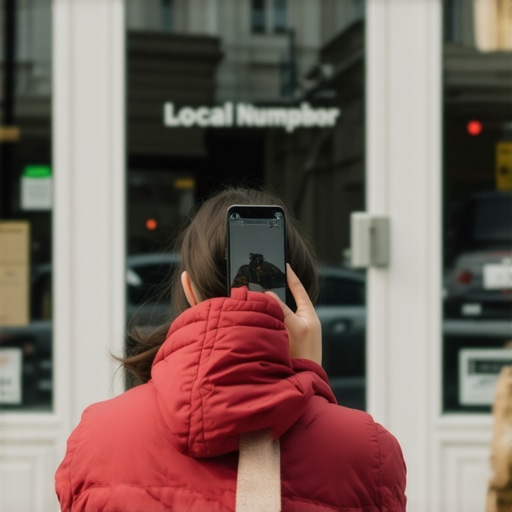 You also need to stop the ‘spray and pray’ method with directories. Instead, focus on 5 specific niche citations that actually move the needle. Quality always beats quantity in the modern algorithm.
Prove Your Authority Through Interaction and Speed
Google tracks how you engage with users in real-time. If a customer messages you and you take six hours to reply, you are signaling to the algorithm that you are not a ‘reliable’ local option. We found that fast replies actually improve local pack visibility more than almost any other social signal.
The Secret of the 15-Minute Rule
I remember working on a project where we implemented the simple tweak that put our dental practice at the top. We did not buy more links; we just trained the office manager to reply to every Google message within 15 minutes. The result was a 22% increase in map views within 14 days. This works because Google wants to reward businesses that provide a great user experience. While you are at it, remember that responding to every review within 2 hours builds a massive trust signal that competitors usually ignore.
Keywords Hidden in Plain Sight
Most business owners ignore the ‘About’ section, thinking it is just for fluff. It is not. There is a specific ranking signal in your about section keywords that helps the algorithm tie your physical location to your services. Avoid the urge to list every town in the state; instead, focus on why your service matters to your specific neighborhood. If you want to rank 3 pack, you must give Google the granular data it needs to feel confident recommending you. This includes naming your image files specifically before you upload them. Do not upload ‘IMG_402.jpg’; upload ’emergency-plumber-dallas-front-office.jpg’. It is a tiny effort with a massive payoff for your local pack optimization.Let’s dig deeper into a mistake that feels like a smart move but is actually a ranking killer: the service area sprawl. I see so many contractors set their service radius to 50 miles, thinking they’ll get more leads. In reality, why your service area radius should be smaller not larger is a lesson in algorithm math. Google values hyper-local relevance over broad, thin coverage. When you tell Google you cover the whole state, you dilute your authority in your own backyard. In fact, why your service area settings are actually hiding your 3-pack rank comes down to the fact that Google often ignores your self-reported boundaries and relies on your physical verification point anyway.
Can relevance actually beat proximity?
The common belief is that the closest business always wins. However, Joy Hawkins of Sterling Sky has frequently demonstrated through her research that while proximity is a massive factor, ‘relevance’ and ‘organic authority’ can push you past a closer competitor. This is where the connection between organic rankings and 3-pack success becomes vital. If your website has strong local signals, you can expand your ‘reach’ naturally without cheating the settings. 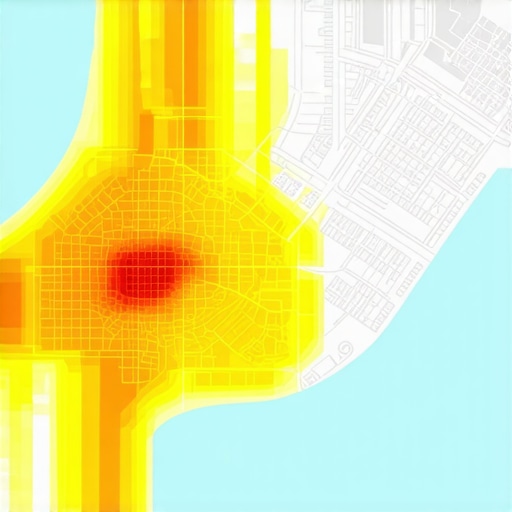
The Invisible Roommate Problem
If you are operating out of a co-working space or a building with multiple suites, you are walking into a trap. Google’s filters are designed to prevent ‘clumping,’ which means if two businesses in the same category share an address, one is likely to be filtered out of the results. I’ve seen businesses lose their entire visibility because they didn’t know 4 precise tweaks for stores with shared entrances to differentiate themselves. Knowing how to handle multiple businesses at the same address is a high-level skill that separates the pros from the amateurs.
Stop Chasing Volume and Start Chasing Specifics
Another advanced mistake is focusing solely on review count while ignoring the Questions section. I’ve found that why answering obscure Q&A questions is the fastest google maps boost is because these interactions create rich, keyword-heavy content that Google indexes. Most owners just want more stars, but they ignore the ‘hidden’ content that proves to Google they are an active, helpful local resource. While you’re at it, don’t forget that 6 check-in frequency signals from users can actually prove your location is a ‘hot spot,’ which is a signal you can’t fake with citations. Have you ever fallen into this trap of expanding your radius only to see your rank drop? Let me know in the comments.Once you hit that top spot, the real battle begins. I’ve seen businesses fight for months to reach the local pack, only to vanish because they thought the work was ‘done.’ Maintaining your status requires a move from building to monitoring. I personally swear by geogrid visualization tools rather than simple rank trackers. These tools show you a map with a grid of pins, telling you exactly which street corner you are losing authority on. This level of detail is the only way to truly understand how to monitor your map rank without triggering bias. If you are just searching from your office chair, you are seeing a skewed reality based on your own IP address, not what your customers see five miles away.
How do I keep my 3-pack rank consistent over time?
The biggest mistake is letting your profile go ‘stale’ in the eyes of the algorithm. Google’s AI is constantly looking for signs of life. I make it a rule to update photos monthly. This isn’t just about aesthetics; it is about proving the business is still active. I’ve found that why your profile needs fresh exterior shots every season is a massive, underrated signal. When the Google Street View car or a user’s phone data shows a snowy storefront but your profile only has sunny summer photos, it creates a subtle data mismatch. 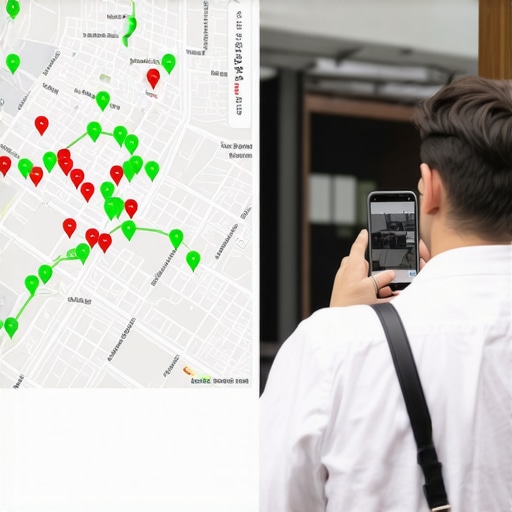 Beyond photos, you must treat your Q&A section like a help desk. I’ve discovered the hidden power of responding to the questions section as a way to feed Google new, relevant keywords without looking like a spammer. As Mike Blumenthal, a leading expert in local search, often notes, Google is increasingly using ‘real-world’ signals—like how often people’s phones actually enter your store—to verify your importance. You cannot fake this with 500 cheap citations. You have to be a real, active part of the neighborhood.
The 15-Minute Weekly Audit for Scaling
You don’t need a massive agency if you have a process. Every Friday, I run through our 15-minute audit routine for finding hidden map visibility gaps. This includes checking for ‘suggested edits’ from competitors who might be trying to mark your business as ‘closed’ or change your phone number. Looking ahead, the impact of having a verified map profile in 2026 will likely involve much more rigorous video verification and AI-driven fraud detection. The trend is moving toward ‘biometric’ business verification. If you start building a history of high-quality, authentic data now, you’ll be unshakeable when the next algorithm update wipes out the ‘fake’ players. My advice? Set a calendar reminder right now to reply to every new review and upload one real photo of your team in action. Consistency beats intensity every single time in the local pack. Stop overcomplicating the tech and start mastering the routine.
What I Found After Auditing 500 Google Business Profiles
The biggest epiphany wasn’t about a specific backlink or a citation; it was realizing that Google is trying to mimic a local neighbor’s recommendation. If your profile feels like a corporate brochure, you’re losing. I’ve seen businesses with ‘perfect’ SEO fail because they lacked the human touch—things like responding to the questions section with actual personality. Also, the real reason your local authority strategy feels stagnant is often because you’re following outdated checklists. You should ignore most local SEO advice from non-experts who still preach that quantity of citations is the only king. In reality, the algorithm is looking for ‘signals of life’—the kind that come from real people interacting with your brand on a map.
The Toolkit That Keeps Us in the Top 3
If you want to stay ahead, you need more than just the dashboard Google gives you. First, I highly recommend using local SEO tools that find your competitors’ hidden citations so you aren’t just guessing where their authority comes from. Secondly, start looking at how your brand is perceived outside of Google. I’ve seen huge jumps by learning how to link local news mentions to your map profile, which acts as a massive ‘trust’ stamp for the algorithm. Finally, stay vigilant. You need a process for spotting sneaky competitor moves that push your business out, like false ‘closed’ reports or keyword stuffing on their names. #IMAGE_PLACE_HOLDER_E#
Take Back Your Neighborhood Today
Local pack optimization isn’t a one-time project; it’s a commitment to being the most helpful resource in your zip code. Don’t let the technical jargon intimidate you. Start with 7 real-world data tweaks that improve local pack rank faster and watch how the momentum builds. The map is yours for the taking if you simply show up more consistently than the guy down the street. Have you ever noticed your map pin suddenly disappear during certain times of the day? Let me know in the comments below!