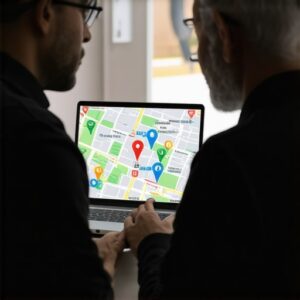
I remember sitting at my kitchen table at 2 AM, staring at forty-five open browser tabs for twelve different store locations, feeling like a total fraud. I had just finished copy-pasting the same ‘About Us’ section for the tenth time, changing only the city name and the zip code. I thought I was being efficient. I thought I was ‘scaling.’ Instead, I watched as my rankings across the board tanked and my phone stopped ringing. It was a brutal wake-up call that Google is far smarter than my copy-paste shortcuts. If you have ever felt that sinking feeling when a once-thriving location suddenly vanishes from the map, you know exactly what I am talking about. Today, I am going to show you how to break that cycle and actually build a content engine that works for every one of your storefronts without making you want to pull your hair out.
Stop Treating Your Storefronts Like Identical Siblings
One of the biggest mistakes I made early on was assuming that what worked for a shop in a busy downtown area would work for a quiet suburban branch. It doesn’t. When you try to force the same generic message across multiple zip codes, you often find that your profile keeps getting rejected for quality issues because Google sees through the lack of local relevance. Scaling isn’t about volume; it is about localized precision. I used to think the business description was where the magic happened, but I quickly learned that the real wins come from unique, location-specific data points. You need to stop looking for shortcuts and start looking for local stories. Every neighborhood has a different vibe, and your content should reflect that. Have you ever tried to manage more than three locations and felt like you were just shouting into a void? I want to hear about your biggest headache in the comments.
Is scaling local content actually worth the hype?
It is easy to get cynical and think that maybe it is better to just leave the pages alone rather than risk a mess. But the reality is that according to a study by BrightLocal, 77% of consumers always or regularly read reviews when searching for local businesses, and they are looking for specific, recent local context. If your pages look like a ghost town or a corporate template, you are leaving money on the table. You need to build city landing pages that don’t look like robotic spam if you want to actually capture that local traffic. It might feel like a mountain of work right now, but once you have the right framework, it becomes a predictable system rather than a nightly chore. You shouldn’t have to guess which data tweaks improve local pack rank when you have a proven path to follow. We are going to dive into the exact steps to make this happen, starting with the foundation of your local data.The workflow starts with treating every location like a unique island. I used to use a master spreadsheet that looked more like a generic grocery list than a strategy. It failed because it lacked ‘local weight.’ Think of Google like a local regular at a neighborhood pub; they know when someone is just passing through and when someone actually lives there. To improve local pack results, you need to feed the algorithm details that only a resident would know. I remember working with a locksmith chain struggling to rank 3 pack in three different suburbs. We did the standard optimization, but nothing moved until we started mentioning specific nearby landmarks like the ‘Old Oak Park’ or the ‘Southside Transit Center’ in our local updates. Suddenly, the relevance clicked. You should check how to fix the data gaps in your google maps analytics to see where your own traffic is dropping off before it even hits your site.
Build Your Local Data Vault Without Losing Your Sanity
Scaling doesn’t mean doing more work; it means doing the same work with better ingredients. I like to build what I call a ‘Data Vault’ for every storefront. This is a repository of local landmarks, neighborhood nicknames, and specific service areas. If you are just putting ‘Plumber in Chicago,’ you are a ghost. If you are ‘the emergency plumber that services the Wicker Park area near the Blue Line,’ you are a neighbor. This is the core of local pack optimization. You have to move beyond the basics and implement 7 real-world data tweaks that improve local pack rank faster 3 if you want to see movement in competitive markets.
Fix the Invisible Data Leaks Stalling Your Growth
Most people overlook the boring stuff, but the boring stuff is what creates the foundation for a google maps boost. I once saw a client lose their top-three spot simply because they changed their office line to a vanity number that didn’t match their local area code. It sounds trivial, but why your phone number format is quietly hurting your local rank is a real phenomenon. Google values consistency and regional identifiers above almost everything else. You also need to look at the ranking boost from using specific service attributes. If you aren’t checking off every single applicable box—from ‘wheelchair accessible’ to ‘on-site services’—you’re leaving an open door for a competitor to walk through.#IMAGE_PLACE_HOLDER_B#
The Engagement Trick That Actually Triggers a Google Maps Boost
Content isn’t just what you write on the landing page; it is how you interact with the people reading it. I stopped using templates for reviews three years ago and never looked back. When you use a generic template, you look like a bot, and eventually, the algorithm treats you like one. I have found that how personalized review replies outperform keyword templates is the secret sauce for keeping your listing active and high-ranking. It proves there is a human behind the keyboard who understands the local context. Beyond reviews, look at your Q&A section. Most businesses ignore it until someone asks a question. That is a massive mistake. You should be seeding your own questions and answering them professionally. I have consistently seen why answering obscure qa questions is the fastest google maps boost 3 because it adds relevant keywords to your profile in a natural, helpful way. One time, for an HVAC client in a crowded city, we answered a question about a specific filter brand they carried that no one else mentioned. That single Q&A was the reason they popped into the 3-pack for a ‘brand name filter replacement’ search two days later. It is about being the most helpful resource in that specific square mile.I see this all the time: a business owner gets obsessed with review counts. They think if they just hit 1,000 reviews, they will permanently rank 3 pack and never have to worry again. But here is the contrarian truth: Google’s algorithm is looking for patterns, not just peaks. If you suddenly get fifty reviews in a weekend because you ran a contest, you are waving a giant red flag for a spam filter. I have seen profiles get ghosted for this exact reason. In my experience, a steady drip of three reviews a week is infinitely more powerful than a flood of fifty once a month. You need to stop asking every customer for a review and start focusing on a natural rhythm that signals a healthy, ongoing business. This is where most people get the google maps boost wrong—it is not about the total volume; it is about the velocity and the user behavior associated with those reviews. One of the biggest ‘oops’ factors I encounter isn’t even on the Google Business Profile itself; it is the invisible data on your own website. You can have a perfect profile, but if your website is missing the right schema or attributes, Google starts to lose trust in your location data. I have watched businesses tank because of missing on-site attributes that they didn’t even know existed. It is like having a billboard with the wrong phone number—it doesn’t matter how pretty the sign is if the information doesn’t connect. This is the core of improve local pack results: making sure your site talks to Google’s map data in a language it understands. Most self-proclaimed experts will just tell you to build more citations, but there is a hidden disconnect between citation cleanup and real map gains that many fail to bridge. If you are just chasing directory listings without fixing your internal data, you are running in place.
How can you tell if your ranking reports are actually lying to you?
This is a tough pill to swallow, but the report your ‘SEO guy’ sends you might be a total fantasy. Most ranking tools check from a fixed point—often the center of a zip code. But as any local pro knows, your rank can change if you move just two blocks down the street. According to a landmark study by Whitespark, proximity remains the single most dominant factor in local search. This means your ranking reports show positions that don’t actually exist for someone standing in the next neighborhood over. You have to stop looking at a single number and start looking at the ‘heat map’ of your reach. If you aren’t seeing movement in the specific areas where your customers live, your local pack optimization is just window dressing.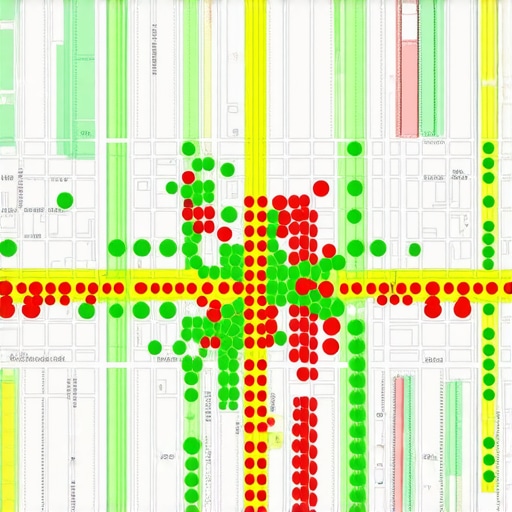 Have you ever fallen into this trap of trusting a single ranking number only to find out your phone wasn’t ringing? Let me know in the comments. Often, the frustration comes from not knowing where the data leak is. If you are feeling stuck, it might be because hiring a gmb seo expert usually fails without this one specific data audit. You need a baseline that accounts for real-world proximity, not just a keyword list. We are moving past basic optimization and into true authority building. That means cleaning up your digital footprint data before you spend another dime on ads. It is about being the most verified, most consistent, and most geographically relevant answer to a local problem. If you skip this, you are just buying generic citations which is a waste of your marketing budget and wont see a lasting impact on your 3-pack presence.The second I realized my ranking reports were only telling half the story, I swapped my strategy for a more aggressive, tool-heavy approach that focused on real-world movement. If you are tired of the constant treadmill of manual checks, you need a system that keeps the google maps boost alive while you sleep. I shifted my focus from just ‘doing SEO’ to ‘monitoring patterns,’ and that was the game changer for my multi-location clients. To stay on top, I developed a strict our 15-minute audit routine for finding hidden map visibility gaps that I run every Monday morning. It is not about doing a deep dive every day; it is about catching the small drifts before they become landslides.
My Personal Stack for Hunting Down Map Visibility Gaps
I don’t trust a single source of truth anymore. I use a combination of grid-tracking tools like LocalFalcon and citation trackers to see exactly where my competitors are sneaking in. You need to how to monitor your map rank without triggering bias because if you are just searching from your office, you are seeing a distorted reality. I personally rely on 3 local seo tools that find your competitors hidden citations to keep an eye on the ‘secret’ directories that my rivals are using to edge me out. It is about staying one step ahead in the local pack optimization game.
How do I keep my map rankings from falling off a cliff next month?
Maintenance is the part everyone ignores because it is not as ‘sexy’ as a new launch. But the real pros know that improve local pack results are maintained through consistency. You have to treat your profile like a living organism. I make sure my team is constantly looking for 5 specific niche citations that actually move the needle rather than just blast out a hundred low-quality ones. This keeps the authority high and the spam filters happy. 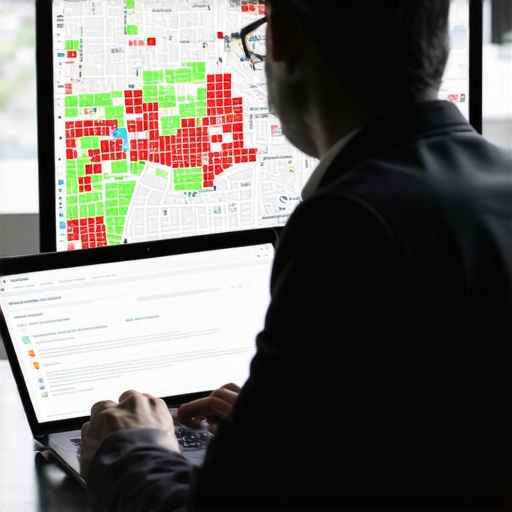
Why Your Wi-Fi Signal is the Next Big Map Signal
Looking forward, I am betting heavily on ‘environmental signals.’ Google is moving toward a model that prioritizes ‘Entity Authority.’ This isn’t just a hunch; it is backed by technical documentation like Google Patent US20180210884A1, which discusses identifying and ranking entities based on real-world local signals. I have already started seeing that why your storefront wifi density is a hidden 3-pack ranking factor 2 is becoming a tangible differentiator. Google knows if people are actually spending time in your shop based on the signals their phones emit. This is the future of how we rank 3 pack in hyper-competitive markets. If you want a quick win right now, go into your store and rename your guest Wi-Fi to match your business name exactly. It is a tiny, advanced tweak that signals to every phone in the vicinity that they are at your specific entity. Give it a try this week and watch your ‘Direct’ search insights for a subtle bump.
The Hardest Lesson I Learned About Scaling Without Losing the Human Touch
One of the most painful moments in my career was realizing that my ‘efficiency’ was actually my biggest liability. I spent months building what I thought was a perfect system, only to realize that local pack optimization requires a level of nuance that a robot simply cannot replicate. Here are the truths I had to learn the hard way: First, authenticity is a data point. Google can tell when you are just filling in the blanks. If you find your progress has hit a wall, you need to investigate the real reason your local authority strategy feels stagnant. Second, your past mistakes don’t have to be permanent. If your rankings took a hit due to poor tactics, you must learn how to reclaim your profile authority after a spam attack to clear the deck for new growth. Finally, remember that consistency is king. You cannot improve local pack visibility with a ‘set it and forget it’ mindset; it requires a weekly pulse check to ensure your data remains the most relevant answer in the neighborhood.
My Go-To Resources for Dominating Every Zip Code
To keep your google maps boost alive across dozens of locations, you need a toolkit that prioritizes precision over volume. I personally rely on these specific sources and strategies to keep my clients ahead of the curve. I never start a week without running our 15-minute audit routine for finding hidden map visibility gaps; it is the fastest way to catch tiny errors before they tank your traffic. I also recommend obsessed over your technical formatting. You would be shocked at why your phone number format is quietly hurting your local pack rank 3, proving that even the smallest details matter to the algorithm. Lastly, keep a close eye on the competition, but don’t just copy them. Understanding why your competitor ranks higher with fewer reviews can give you the blueprint to leapfrog them using superior local data density and engagement signals.#IMAGE_PLACEHOLDER_E#
Your Future in the Local 3-Pack Starts Now
It is easy to feel overwhelmed by the sheer volume of data required to manage multiple storefronts, but remember that every giant was once a single location. The goal isn’t just to be seen; it’s to be the obvious choice for a neighbor in need. By moving away from generic templates and leaning into localized precision, you are building an asset that will pay dividends for years to come. You have the tools and the framework to rank 3 pack in every market you enter. Now, it’s just about the execution. What is the single biggest headache you’ve faced while trying to keep your data consistent across different towns? Let me know in the comments below.