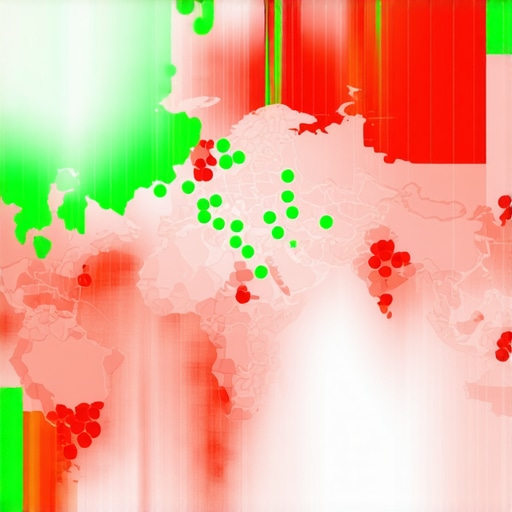
I sat at my desk two years ago, staring at a heat map that looked like a crime scene. Red dots everywhere—meaning I was nowhere to be found. I had my service area set to cover three counties, thinking I was being ambitious. In reality, I was just being invisible. It is a gut punch when you realize your growth strategy is actually the real reason your service radius is shrinking your visibility on Google Maps. I thought I was casting a wide net, but all I did was dilute my authority until I did not rank anywhere at all. My own ambition was the anchor dragging my business down, and I knew something had to change before the phone stopped ringing entirely.
Stop Trying to Be Everywhere at Once
Most of us fall into the same trap: we want the phone to ring, so we tell Google we serve everyone within a two-hour drive. I did exactly that. I figured if I did not claim those neighboring towns, I would lose out on valuable leads. But Google’s algorithm does not reward ambition; it rewards relevance and proximity. By trying to cover such a massive area, I was effectively telling the system that I did not have a home base of authority. I realized my service area and physical location settings were fighting each other, and my rankings suffered for it. Today, I am going to show you how we stopped the bleeding and why shrinking our radius actually led to a massive local pack optimization surge.
Won’t a Smaller Radius Kill My Lead Flow?
This is the fear that kept me awake at 2 AM. If I stop telling Google I work in the next city over, won’t I disappear? Paradoxically, the opposite happens. According to the Whitespark Local Search Ranking Factors survey, proximity remains the single most important factor for the local pack. When you tighten your borders, you stop diluting your ranking power. You go from being maybe relevant in fifty towns to being the undisputed king of three. We found that hiding your 3-pack rank behind too many zip codes is a recipe for failure. Have you ever felt like you are fighting a losing battle against competitors who are not even as good as you, but they just seem to own the map? I am going to walk you through the exact audit we used to reclaim our local authority and fix the service area page blunders keeping you invisible. Trust me, if I could fix my red map of death, you can definitely fix yours.
Audit the Mess Before Adding New Data
When I first started trying to improve local pack rankings, I thought I just needed more of everything—more reviews, more citations, and more photos. But you cannot build a skyscraper on a swamp. I had to face the reality that messy data errors were telling Google my business was unreliable. Think of your NAP (Name, Address, Phone) data as your digital fingerprint. If your phone number format varies across the web, Google gets confused. It is a silent killer, and your phone number format is quietly hurting your local rank more than you think. Start by using a tool to find every instance of your business online and make them identical to your Google Business Profile.
Ditch the Generic Citations
I used to buy those fifty-dollar packages of one hundred generic citations. It was a disaster. Google does not care about a link from a random directory in a different country. In fact, buying 100 generic citations is a waste of your marketing budget. Instead, focus on niche citations that actually move the needle. If you are a plumber, getting listed on a local trade association site is worth a thousand generic links. I remember spending a whole weekend manual-cleaning my listings after a cheap SEO service created duplicates everywhere. It was tedious, but that cleanup alone moved my pin from page three to the bottom of page one.
Narrow Your Focus to Claim the Crown
Here is the hard part: you have to stop lying to yourself about how far you can actually rank. To get a real google maps boost, you need to go into your settings and delete every zip code where you do not have a physical presence or a strong history of jobs. I once worked with a landscaper who claimed a sixty-mile radius. His map was a sea of gray. We cut it down to a twelve-mile radius centered around his actual shop. Within three weeks, he went from #14 to #2 for his main keywords in that twelve-mile circle. By reducing the noise, we helped Google understand exactly where he was most relevant. This is why shrinking your service radius is often the fastest way to rank 3 pack listings.
Fix the Service Area Page Blunder
Do not just set the radius in your profile and call it a day. Your website has to back it up. A common mistake is having one giant Areas We Serve page with a list of fifty cities. That looks like spam to a bot. You need to structure your service pages for a map boost by creating dedicated, high-quality pages for your top three locations. Use neighborhood mentions to fast track your authority. Talk about the local landmarks, the specific streets you work on, and the local events you sponsor. This creates a local scent that Google picks up on.
Align Your Categories Before You Lose Your Rank
Your primary category is the strongest signal you have for local pack optimization. If you pick the wrong one, you are invisible for your most profitable terms. I have seen businesses where business categories are fighting each other because the secondary categories are too broad. If you are a Dental Clinic, do not add Emergency Room as a secondary just to catch extra traffic. It dilutes your authority. We found the exact category mix that works best is one primary and only two or three highly specific secondaries. This keeps your profile focused and tells the algorithm exactly what you do best, helping you boost 3 pack visibility effectively.
I see it every single day: a business owner obsessing over their review count like it is a high score in a video game. They assume that if they hit 500 reviews, the local pack optimization will magically sort itself out. But here is the contrarian truth that most SEO gurus won’t tell you: having the most reviews does not guarantee a top spot. In fact, I have watched competitors with 50 reviews outrank giants with 500 because their review velocity and sentiment were more consistent. It is a frustrating reality when you realize why your competitor with fewer reviews is outranking you. It is not about the total volume; it is about the relevance and the steady pulse of activity that tells Google your business is alive and well right now.
Stop Treating Your Description Like a Keyword Bucket
One of the biggest ‘oops’ moments I see during audits is the desperate attempt to cram every city and service into the business description. I used to do this too, thinking I was being clever. Here is the nuance: your business description matters less than you think for actual ranking power. Google’s AI reads it for context, but stuffing it with keywords actually lowers your conversion rate because it reads like a robot wrote it. Real customers want to know what you do and why you are different, not see a list of twenty zip codes. If you want a real google maps boost, stop writing for the algorithm in your description and start writing for the human being holding the phone.
How Do You Signal Authority When Your Map Pin is Stuck?
If your ranking has plateaued, you are likely missing the secondary signals that verify your physical presence. Modern local pack optimization relies heavily on user behavior. A study by Sterling Sky recently highlighted that while proximity is a core pillar, engagement signals—like how many people click for directions or call from the map—act as a tie-breaker. This is where your maps engagement rate matters more than raw traffic. Google even looks at technical indicators you might not expect, such as the hidden relationship between store wi-fi and map proximity signals. When customers connect to your guest network, it confirms they are physically at your location, creating an ironclad proof of service that no citation can match.
The Personalized Response Trap
Another major mistake is the use of keyword-stuffed templates for review replies. I have seen businesses lose visibility because they replied to every review with the same ‘Best plumber in Dallas’ line. This is a massive red flag. We have found that personalized review replies outperform keyword templates every single time. Google’s algorithm is sophisticated enough to recognize canned responses, and it devalues the engagement signal they provide. Instead, mention a specific detail about the job. It proves you are a real local entity providing real services.
Have you ever fallen into the trap of thinking a huge surge of reviews in one week would fix your ranking, only to see no change? Let me know in the comments. To truly rank 3 pack listings, you need to focus on response velocity and genuine interaction. It is time to stop chasing vanity metrics and start building actual local authority that the algorithm can’t ignore.
Once you have built that authority, the real battle begins: defending it. I have seen businesses claw their way to the #1 spot only to disappear a month later because they thought the work was finished. Local SEO is not a trophy you win; it is a garden you have to water. To keep your google maps boost from fading, you need a system that detects shifts before they become disasters. I rely on a specific stack of tools because I cannot afford to be blind to the competition. I personally use Local Falcon for grid-based tracking. If you are only checking your rank from your office chair, you are lying to yourself. You need to know how you rank three blocks away versus three miles away to truly improve local pack consistency. This is the only way to monitor your map rank without triggering bias that skews your results.
The Tools That Actually Do the Heavy Lifting
I do not waste time with bloated enterprise software. For my daily operations, I stick to PlePer for auditing categories and GMB Everywhere to see what my competitors are actually doing behind the scenes. These are the best tools for auditing your local search presence fast without getting bogged down in useless data. I also follow the 15-minute audit routine for finding hidden visibility gaps every Monday morning. It is a quick check of the core vitals: mobile responsiveness, NAP consistency, and pending edits. If you let a ‘suggested edit’ sit on your profile for a week, you are practically begging for a ranking drop.
How do I keep my map pin from sinking back to page two over time?
Maintenance is about fresh signals. I make it a non-negotiable rule to upload three to five original photos every week. Why? Because adding photos weekly actually improves your local rank by proving your business is active and physically present. I also keep a close eye on technical health. One of the most common reasons for a sudden drop is a backend conflict. You must check your site for the schema error that keeps your profile out of local search. If your website code and your profile data do not shake hands perfectly, Google will default to a competitor who looks more technically sound. This also prevents the dreaded scenario where you have to learn how to stop your map pin from drifting into the wrong neighborhood because of bad location data.
The Visual AI Shift is Coming Fast
Looking ahead, the game is changing from text-based relevance to visual recognition. Joy Hawkins from Sterling Sky has frequently highlighted how Google’s AI can now identify objects within your uploaded photos to verify your service offerings. In the next eighteen months, local pack optimization will rely heavily on whether your photos match the keywords people are searching for. If someone searches for ‘braid services’ and your profile has five clear, high-res photos of braids, you will outrank the shop with 500 reviews but no visual proof. This is why you need to rank 3 pack listings by thinking like a camera, not just a copywriter. It is about creating a dense web of proof that spans from your website’s code to the very images on your profile. My advice? Stop overthinking the perfect paragraph and start auditing your categories today—I guarantee you will find a conflict you didn’t know existed.
Lessons from My Hard-Fought War with the Red Map
One of the biggest breakthroughs I had during my own journey was realizing that more is not always better. I used to beg everyone I met for a rating, but I eventually learned that you should stop asking every customer for a review and focus on timing instead. A steady flow of feedback over months beats a sudden spike that looks like a bot attack to the algorithm. I also discovered that your secondary categories might be diluting your primary rank if they are not perfectly aligned with your core service. It is better to be a master of one specific niche than a ‘maybe’ for ten. Do not overlook the technical nuances either; missing on-site attributes are killing your 3-pack rank because Google needs those granular data points to feel confident about your business. Finally, pay attention to user-generated content; the impact of user-uploaded videos is massive for building the kind of authentic trust that modern local algorithms crave.
The Toolkit That Keeps My Map Pin in Place
You do not need a thousand expensive subscriptions to succeed, but you do need the right eyes on your data. I personally rely on Local Falcon to see the reality of my proximity ranking and GMB Everywhere for deep competitive intelligence. For your own technical health, I highly recommend using the no-fluff checklist for auditing your local listings fast to catch minor errors before they sink your visibility. Also, make sure you double-check your website code for the schema errors that quietly kill your 3-pack presence. These tools aren’t just for techies; they are the essential signals that allow you to see what Google sees and stay ahead of the curve.
Stop Letting Competitors Steal Your Customers
The local map is not just a search result; it is the virtual front door to your physical business. Every day that your pin remains buried on the second page is a day your competitors are feasting on the leads and phone calls that should rightfully be yours. You have the map, the tools, and the proven strategy now. It is time to stop waiting for ‘someday’ and start the work to improve local pack visibility today. Your community is actively looking for the services you provide—you just need to make sure they can actually find you when it matters most. Which part of your Google Business Profile do you think is holding you back the most right now? Let me know in the comments below!