I’ll never forget the Tuesday afternoon I realized I was invisible. I had just spent a small fortune on what I thought was a “bulletproof” local strategy, yet when I searched for my own services from the coffee shop next door, I wasn’t even on the map. I was buried under three competitors who didn’t even have better reviews than me. It was a gut-punch that made me realize I had fallen into the trap of thinking “more is better” when it came to citations, without actually checking if the data I already had was working for me or against me. That’s the day I stopped guessing and started building a lean auditing machine that cuts through the noise. Today, I am going to share that exact process with you so you can stop wondering why your phone isn’t ringing and start seeing real results.
Stop Wasting Time on Metrics That Do Not Put You in the 3-Pack
Most of the advice you see online tells you to go out and buy hundreds of links, but I’ve learned the hard way that buying generic citations is usually a massive waste of your budget. Early in my journey, I made the mistake of thinking quantity trumped quality. I ended up with dozens of listings that had slightly different phone number formats, and Google’s algorithm basically threw its hands up in frustration. It turns out that messy digital footprint data is a silent killer for your local pack visibility. If you want a real google maps boost, you need to look at what’s actually broken before you try to add anything new. According to a study by BrightLocal, while citation signals are evolving, inaccuracies in your core business data remain a top reason for losing local ranking positions. I wasted months ignoring the basics, but once I implemented our 15-minute audit routine, the gaps became obvious. We aren’t just looking for typos; we’re looking for the hidden data errors that prevent Google from trusting your location.
Is a 15-minute audit actually enough to move the needle?
You might be skeptical. I get it. We’ve been conditioned to think that SEO has to be this grueling, months-long process involving complex spreadsheets. But here is the truth: most of your competitors are lazy. They set up their profiles once and never look back. By using a sharp, focused checklist, you can spot the messy data errors they are ignoring. Have you ever felt like you’re doing everything right but your map pin just won’t budge? I’ve been there, and usually, the culprit is a single inconsistent listing on a high-authority site that you forgot existed. Tell me, have you checked your core NAP (Name, Address, Phone) consistency across your top five directories in the last month?
Identify the Critical Gaps Before Your Competitors Do
The goal here isn’t just to “have listings” for the sake of it. The goal is to rank in the 3-pack and stay there. When I finally fixed my own address formatting issues—something as small as using “Suite 100” on one site and “#100” on another—my visibility didn’t just crawl up; it leaped. This wasn’t magic; it was simply giving the search engine the confidence it needed to recommend my business to local searchers. We are going to dive into the specific points you need to check right now to ensure your profile isn’t working against your local pack optimization goals. By the end of this, you’ll have a clear path to cleaning up your digital presence and reclaiming your authority on the map.
Fix the Foundation Before Adding More Bricks
Think of your business data as GPS coordinates for a rescue ship. If those coordinates are even slightly off, the ship—Google’s algorithm—simply isn’t going to find you. I remember working with a local plumber who was pulling his hair out because his rankings had cratered. We found that a third-party aggregator had his old landline listed, while his main profile had his new cell. It was a mess. By identifying why your phone number format is quietly hurting your local rank, we were able to sync his footprint and get him back on the map within weeks.
Stop the NAP Bleeding Now
Consistency isn’t just about spelling your street name right; it’s about making sure every digital mention of your business is an exact mirror of your Google Business Profile. If you use ‘St.’ on your website and ‘Street’ on Yelp, you’re creating a friction point. I’ve seen 7 real-world data tweaks that improve local pack rank faster than any backlink campaign ever could. It’s about removing the doubt from the algorithm’s mind and ensuring your local pack optimization efforts aren’t sabotaged by basic clerical errors.
Pick the Right Lane with Your Business Category
If you put a premium steakhouse in the ‘Fast Food’ section of a directory, you aren’t going to get the customers you want. This is exactly why your primary category selection is likely sabotaging your search rank right now. Many business owners try to be everything to everyone, selecting five or six categories that only tangentially relate to their core service. This confuses the proximity and relevance signals that drive a boost 3 pack strategy. 
Don’t Let Secondary Categories Dilute Your Authority
When you add too many secondary categories, you’re effectively telling Google you’re a ‘jack of all trades, master of none.’ This is a classic mistake. I once saw why your secondary categories might be diluting your primary rank firsthand when a client added ‘Consultant’ to their ‘Real Estate Agent’ profile. Their visibility for the main term dropped because the relevance score was split. Focus on one primary category that defines 80% of your revenue and be extremely selective with the rest.
The Real Impact of Authenticity in Your Photos
If I see one more stock photo of a group of models smiling in a boardroom for a local roofing company, I might scream. Google’s AI is incredibly good at identifying stock imagery, and stopping the use of stock photos is the quickest way to gain trust. Real photos of your truck, your team, and your actual office build a layer of ‘local-ness’ that an algorithm can feel. In fact, we discovered that 5 simple photo tweaks can drastically change how often your profile is shown to nearby users.
Make Your Image Files Talk to the Algorithm
Before you upload that photo of your new storefront, rename the file. Don’t leave it as ‘IMG_1234.jpg.’ Learn why your images need specific file names before you upload to ensure the search engine knows exactly what it’s looking at. It’s like labeling the boxes before a move; it makes everything easier for the search engine to sort and place. This simple habit is part of the 10-minute daily checklist to track and fix your google maps ranking that separates the winners from the also-rans.
Respond Like Your Business Depends on It
Think of your Google Profile as a live storefront. If a customer walked in and said, ‘Great job!’, and you just stared at them in silence, they’d never come back. That’s what happens when you ignore reviews. We’ve discovered that the response velocity secret is a massive ranking signal. The faster you reply—ideally within two hours—the more ‘alive’ your business looks to the system. Don’t use templates either; how personalized review replies outperform keyword templates is a lesson in building actual community trust, which inevitably leads to a sustainable rank 3 pack result. Speed and personalization tell Google you are an active, reliable local entity.Let’s dig deeper into why some businesses seem to have a permanent lease on the top spot while you’re fighting for scraps. You’ve probably heard that the key to a boost 3 pack result is simply getting as many citations as possible. I’m here to tell you that is a dangerous oversimplification. In fact, many people experience a hidden disconnect between citation cleanup and real map gains because they focus on quantity over contextual relevance. Most experts claim citation volume is the primary driver, but in my experience, five mentions from local neighborhood blogs or industry-specific guilds are worth more than 500 directory listings on sites nobody visits. According to the Whitespark Local Search Ranking Factors study, the importance of citation volume has actually declined as Google’s AI gets better at identifying the 5 specific niche citations that actually move the needle for your specific business type.
Why do your ranking reports show positions that don’t actually exist?
This is a question that keeps business owners up at night. You look at a report from a cheap SEO tool and it says you are #1, but then you check from your phone and you are nowhere to be found. This happens because your ranking reports show positions that don’t actually exist due to personalization and proximity biases. If you aren’t auditing your results using a clean, non-biased search environment, you are essentially flying blind. I’ve seen dozens of entrepreneurs celebrate ‘ghost rankings’ while their actual customer call volume remains flat. Have you ever fallen into this trap? Let me know in the comments.
The Tracking Number Trap That Resets Your Progress
One of the most common ‘advanced’ mistakes I see is the improper use of call tracking numbers. Business owners want to know exactly where their leads are coming from, so they slap a different phone number on every directory. This is an absolute nightmare for your local pack optimization. If Google sees five different numbers for one business, it loses trust in your data instantly. We’ve studied the impact of using tracking numbers on your google maps authority and found that without proper Dynamic Number Insertion (DNI) on your website, you are effectively nuking your own progress. 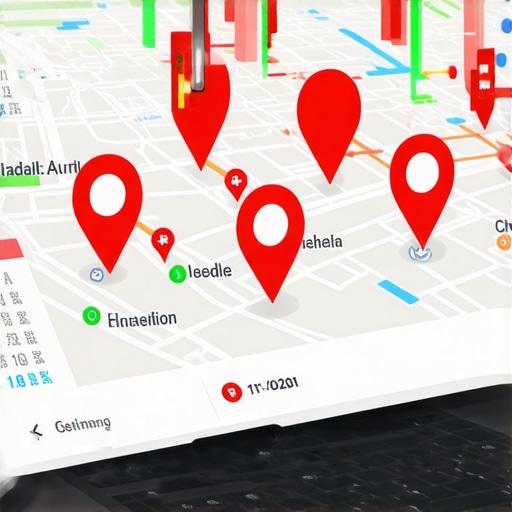
Break Through the Stagnation Wall
If you feel like you have checked all the boxes but your growth has hit a plateau, it is likely because your strategy has become too generic. The real reason your local authority strategy feels stagnant is usually a lack of ‘geo-signals.’ Google doesn’t just want to know what you do; it wants to see proof that you are an active participant in your local community. Instead of just another backlink, look for a local news mention or a sponsorship of a neighborhood event. These are the signals that move you from the middle of the pack to the rank 3 pack winners circle. Stop following the basic checklists that were written in 2018 and start focusing on the nuanced data points that the algorithm actually rewards today.I’ve seen too many people celebrate a #1 ranking on Monday only to find themselves on page two by Friday. The ‘set it and forget it’ mindset is a death sentence in local SEO. To maintain a real google maps boost, I treat my profile like a living organism that needs constant feeding. I personally rely on a few specialized tools to keep me sane. While many people use generic software, I use 3 local SEO tools that find your competitors hidden citations because it allows me to see exactly where my rivals are getting their local juice. If they suddenly jump ahead, I can see the exact directory or local blog that gave them the edge.
Don’t let a one-time win become a long-term loss
One of the biggest mistakes I see is business owners checking their own rank from their office computer every morning. You are seeing a biased version of reality. I always tell my clients how to monitor your map rank without triggering bias by using incognito windows or geo-grid trackers like Local Falcon. This gives you the ‘street-level’ truth. If you see a cluster of red dots just three blocks away, it means your proximity signal is weak, and you need to work on your hyper-local relevance. 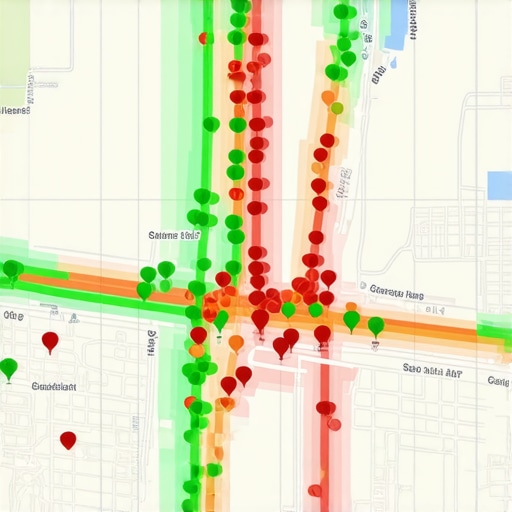
How do I keep my map ranking high month after month?
Consistency is the only way to survive. I have integrated a 10-minute daily checklist to track and fix your google maps ranking into my morning coffee routine. This isn’t about massive overhauls; it’s about responding to that one new review, checking for ‘suggested edits’ from competitors, and ensuring I’m hitting those 6 check-in frequency signals that improve local pack visibility. Google rewards businesses that are active and responsive. If you go dark for three weeks, don’t be surprised when your phone stops ringing.
The tools I use to peek behind the curtain
I also keep a close eye on what the ‘other guys’ are doing. There are 4 sneaky competitor moves that push your business out of the local pack, such as keyword-stuffing their business names or using fake office addresses. By using a tool like PlePer’s Chrome extension, I can quickly audit their primary and secondary categories to see if they’ve made a strategic shift that I need to counter. According to Mike Blumenthal, a titan in the local search space, Google’s ‘Near Me’ filter is becoming increasingly sensitive to real-world behavioral signals. This means that in the very near future, your rank won’t just depend on your citations, but on how many people actually use their GPS to navigate to your door. I predict that ‘foot traffic validation’ will soon be the single most important ranking factor for the 3-pack. Try this today: Go into your Google Business Insights and look at your ‘Direction Requests.’ If they are trending down while your views are up, you have a conversion problem, not a ranking problem. Fix that, and you’ll see your map authority skyrocket.
Hard Truths That Finally Fixed My Invisible Map Presence
Over the years, I’ve realized that the biggest barrier to a google maps boost isn’t the algorithm itself, but our own desire for instant gratification. I used to think I could outsmart the system with sheer volume, but I’ve learned that every local business needs verified physical signage and real-world proof to stay relevant. One lightbulb moment for me was realizing that my profile wasn’t just a static listing; it was a conversation with the community. If you treat it like a chore, the results will reflect that. Another hard truth is that chasing every tiny keyword often backfires. It is far better to be the absolute authority for your main service than a generic option for twenty others. Finally, don’t ignore the “unseen” data; I’ve seen more rankings restored by fixing hidden technical errors than by adding new reviews.
The Toolkit I Use to Stay Ahead of the Algorithm
You don’t need a massive budget to succeed, but you do need the right information. I’ve found that the role of local news mentions is becoming more critical as Google looks for hyper-local signals that can’t be faked. While tools like Local Falcon help you see the street-level truth of your rankings, your best assets are often right in your neighborhood. I always prioritize backlinks from neighborhood blogs over generic high-authority PR because they carry more weight in the local ecosystem. I also recommend keeping the Whitespark Local Search Ranking Factors study bookmarked to stay updated on what actually moves the needle each year. Finally, always monitor your insights to fix the conversion gap before spending more on ads.
Take Action and Own Your Local Market
Your journey to improve local pack visibility doesn’t have to be an uphill battle. It starts with the small, consistent actions we discussed today—cleaning up your data, choosing the right categories, and engaging with your customers authentically. You have the tools and the knowledge; now you just need to apply them. Don’t wait for your competitors to move first. Start your audit, clean up those messy listings, and reclaim the authority your business deserves. Which part of your Google Business Profile do you think is currently holding you back the most? Let me know in the comments below!