I remember the exact Tuesday morning it happened. The steam was still rising off my black coffee when I pulled up our daily dashboard and felt my stomach drop into my shoes. We were gone. Not just pushed down a few spots, but completely erased from the local results. For months, I’d been obsessing over every tiny detail to reclaim our profile authority, only to find that a ‘suggest an edit’ report from a disgruntled competitor had wiped us off the map. It felt like being robbed in broad daylight. This wasn’t just a technical glitch; it was a targeted hit. But here is the good news: we fought back, and I am going to show you exactly how we did it.
I Watched Our Business Disappear Over My Morning Coffee
When you put in the work to put your practice at the top of the pack, you expect to stay there as long as you provide great service. Unfortunately, the local search world can be a bit like the Wild West. Competitors often use ‘spam reports’ as a shortcut to climb the ranks when they can’t beat you fairly. When this happened to me, I made the classic rookie mistake: I panicked. I immediately started changing our primary category and business hours, thinking I could ‘reset’ the system. Big mistake. That frantic fiddling is actually how many handle a sudden drop incorrectly, which only makes Google’s algorithm more suspicious of your legitimacy.
Is Google actually working against you?
It certainly feels that way when your profile gets suspended or suppressed because of a fake report. You start wondering if any amount of category mix optimization will ever be enough to keep the ‘spam bots’ at bay. The reality is that Google’s automated systems are designed to be better safe than sorry. According to research from Sterling Sky, a massive percentage of local edits are actually user-generated, and unfortunately, Google often trusts these edits more than the business owner’s own data—at first.
Why Your Biggest Rival Is Watching Your Every Move
If you have managed a google maps boost recently, you have a target on your back. It sounds cynical, but the more visible you are, the more likely a competitor is to scrutinize your profile for any tiny policy violation. In our case, they reported our address as ‘non-existent’ because our signage wasn’t clearly visible in the Street View image from three years ago. We had to prove our existence all over again. It was a grueling process, but it taught me that reclaiming your listing is as much about patience as it is about proof. Have you ever logged in only to find your business name changed or your hours marked as ‘permanently closed’ by someone else? Drop a comment and tell me your story—I’d love to hear how you handled the stress.The first thing I did after the panic subsided was gather my ‘war chest’ of documentation. If you want to improve local pack rankings after a hit, you have to prove your physical presence beyond a shadow of a doubt. I once spent three hours photographing a client’s lease agreement and a utility bill just to prove they weren’t a ghost location. You need to have the 3 specific documents for overturning a profile suspension ready to go before you even click the appeal button. Google isn’t looking for an apology; they are looking for a reason to trust that your business isn’t a lead-gen scam.
Gather the Hard Evidence Before You Talk to Google
Dealing with a suppressed profile is like being in court without a lawyer. You need to prove you are who you say you are. The last time I dealt with a ‘Permanently Closed’ flag from a competitor, I didn’t just tell Google we were open. I went out, took a high-resolution photo of our front door with the hours clearly visible, and cross-referenced it with our latest water bill. This is a crucial step in the no-fluff checklist for auditing your local listings fast because it bridges the gap between your digital profile and the real world. If your business shares a building, you might need to make 4 precise tweaks for stores with shared entrances to rank 3-pack faster to ensure the algorithm doesn’t confuse you with a neighbor.
Stop Letting Your Secondary Categories Fight Your Main Rank
Most people think adding more categories helps them show up for more searches. It’s actually the opposite. In my early days, I added ‘Consultant,’ ‘Marketing Agency,’ and ‘Web Design’ all at once. Our rank for our main service tanked because Google couldn’t figure out our true specialty. I learned that why your primary category selection is likely sabotaging your search rank often comes down to this ‘keyword dilution.’ Stick to one primary category that describes your core revenue driver and use secondary categories sparingly. 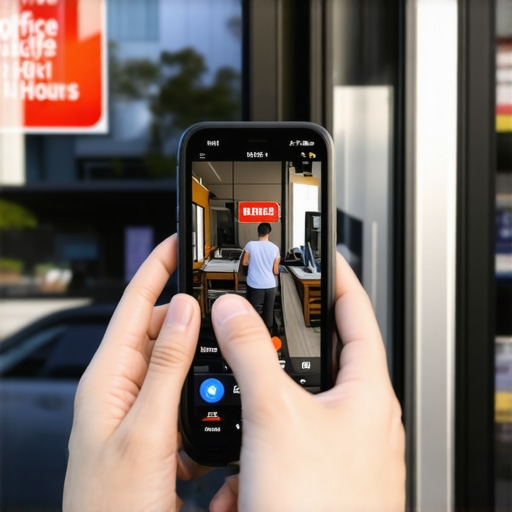
Clean Up the Messy Digital Footprint Dragging You Down
Google’s bots are constantly scanning the web to see if your information matches across the board. If your old office address is still on a random local directory from 2014, it creates a trust gap. We call these 7 messy NAP discrepancies that secretly tank your local pack position. I remember helping a local plumber who couldn’t break the top 10 despite having 200 five-star reviews. It turned out his suite number was missing on half of his citations. Once we fixed that tiny detail, his suite number error was resolved, and his pin finally moved into the 3-pack.
Show Google Your Business Actually Exists with Visual Data
Don’t just upload any photo. Use your phone’s GPS-enabled camera to take photos inside your office. This creates a data layer that Google uses to verify your location authority. When we started using the specific image metadata we use to prove location authority to google, our ‘unverified’ flags dropped significantly. It’s a small technical detail, but in a local pack optimization strategy, these micro-signals are what separate the winners from the also-rans. Make sure you also have verified physical signage in your photos. A sign on a door or a sandwich board isn’t just for foot traffic; it’s a non-negotiable trust signal for the algorithm.Most ‘experts’ will tell you that the secret to a google maps boost is simply getting more reviews than the guy down the street. It sounds logical, right? But here is the nuance: volume alone is a vanity metric. I have seen businesses with 500 reviews get buried by a competitor with 40. Why? Because the smaller profile had higher engagement and better ‘velocity’—the rate at which new reviews come in. This is exactly why your competitor with fewer reviews is outranking you today. According to the Whitespark Local Search Ranking Factors study, behavioral signals like click-through rate and directions requests are becoming just as influential as traditional citations.
Stop Chasing Review Volume at the Expense of Engagement
Another massive trap I see all the time is the ‘keyword reply’ myth. Many SEOs still advise stuffing your review responses with your city and service name. Please, stop. It looks spammy to customers, and Google’s modern AI is more than smart enough to see through it. In fact, why replying to reviews with keywords is a mistake often boils down to it negatively impacting the perceived authenticity of your brand. When you prioritize a human connection over a bot-friendly template, you increase the likelihood of a conversion.
Can those ranking heatmaps actually lie to you?
If you use specialized tools for local pack optimization, you have likely seen those colorful grids of green and red dots spread over a map. They are great for presentations, but they can be incredibly deceptive. These reports often don’t account for the searcher’s specific context or the ‘bias’ inherent in a browser’s history. This is why most proximity-based ranking reports are giving you false hope. You might see a ‘green’ dot on your screen while a real customer standing in that same spot sees your competitor because of their past engagement patterns. 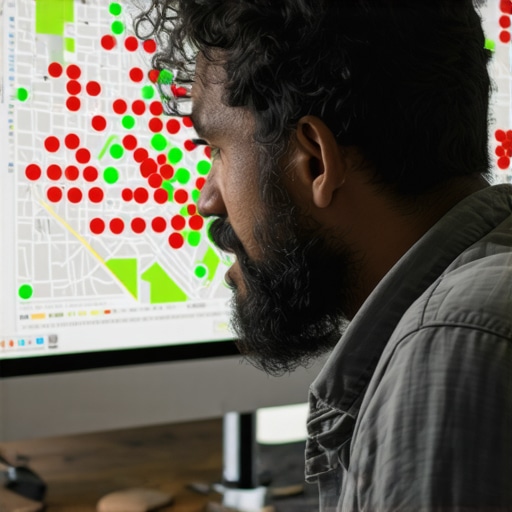
Stop wasting money on generic directory links
I often talk to business owners who just spent five hundred dollars on a ‘citation blast’ only to see their rank stay flat. The reality is that why buying 100 generic citations is a waste of budget is because Google prioritizes quality and relevance over sheer numbers. There is often a hidden disconnect between citation cleanup and real map gains if you aren’t focusing on hyper-local or industry-specific directories. Sometimes, even your internal tech setup can play a role you’d never expect; I’ve even seen cases where the hidden relationship between store wi-fi and map proximity signals helped Google verify a physical location more accurately. Have you ever fallen into the trap of buying massive citation packages or stuffing keywords into your replies? Let me know in the comments—I’d love to hear how you adjusted your strategy once you saw the results.
Why staying at the top is harder than getting there
Maintaining your spot in the 3-pack is a lot like keeping a high-performance car on the road; you do not just fill the tank once and hope for the best. I have seen businesses hit the top spot and then get lazy, only to find themselves on page two within a month. To keep that google maps boost alive, you need a recurring system. I personally swear by a recurring 15-minute audit routine that looks for new ‘suggested edits’ before they become permanent. It is much easier to reject a bad edit on a Tuesday than it is to reclaim a suspended profile on a Friday afternoon.
The specific toolkit I use for tracking every move
When it comes to software, I am incredibly picky. I use the best tools for auditing your local search presence fast, specifically looking for grid-based rank trackers like Local Viking or BrightLocal. These tools show you exactly where your ‘visibility bubble’ starts and stops. However, I always cross-reference these reports by monitoring our map rank without bias using a clean, location-spoofed mobile browser. Why? Because automated software can occasionally miss the map pin drift that happens when Google’s AI tries to ‘cluster’ your business with a competitor next door. 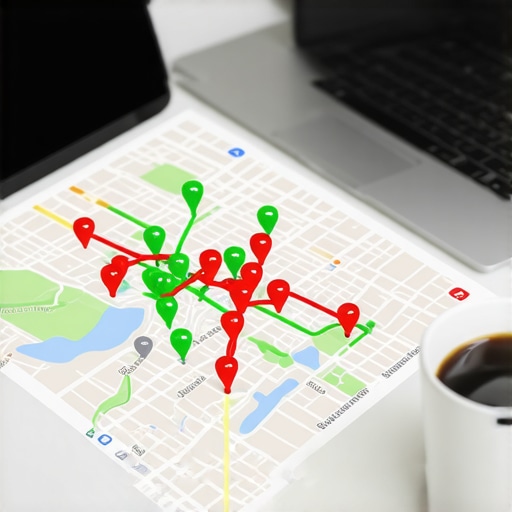 One of the weirdest but most effective things I have done lately for my clients is auditing their technical environment. We found that your guest Wi-Fi name is actually a hidden ranking signal that helps Google’s mobile ‘Ground Truth’ team verify you are exactly where you say you are.
How do I keep our local ranking from slipping away?
The answer isn’t doing more work; it’s doing the right things consistently. Every Monday morning, I recommend a 10-minute daily checklist to check for new Q&A questions and upload one fresh, geo-tagged photo. This isn’t just about ‘activity’—it’s about reinforcing relevance. As Google clearly states in their official documentation on local ranking, relevance, distance, and prominence are the three pillars of the algorithm. If you stop providing fresh data, your ‘prominence’ score begins to decay relative to the new guy in town who is posting every day.
The future of local search is visual
I predict that in the next eighteen months, we are going to see a massive shift toward ‘Visual Search AI’ for local results. Google will not just look at your text; they will analyze the background of your photos to verify neighborhood mentions and local landmarks automatically. To get ahead of this, start taking photos of your team at recognizable local spots or outside your office with clear street signs visible. Give this a shot right now: Go into your Google Business Profile and answer one ‘unanswered’ question in the Q&A section—even if you have to ask it yourself from a personal account first. It is a fast-track way to signal you are active and authoritative.
The Brutal Truth About Staying in the Top 3
Over the years, I have learned that a google maps boost isn’t a one-time trophy; it is a moving target. One of my biggest lightbulb moments was realizing that consistency beats intensity every single time. You cannot just optimize once and walk away. I have seen massive profiles crumble because they ignored minor technical issues like the schema markup error that quietly disconnected their website from their map pin. Another hard-earned lesson? Your data needs to be bulletproof. I spent weeks fixing messy data errors that were confusing the algorithm and suppressed our ranking for months without us even knowing why. Real local pack optimization requires being more precise than the guy trying to spam his way to the top.
The Arsenal I Trust for Real Visibility
If you want to maintain a dominant rank 3 pack position, you need better intel than your competitors. I rely heavily on specific strategies rather than generic software. First, I always look for ways to leverage local chamber of commerce links because Google treats these as high-trust signals that are nearly impossible for spammers to fake. Second, I stop worrying about broad city rankings and start using specific neighborhood mentions to capture high-intent traffic from the streets right outside our door. Finally, I make sure we aren’t sabotaging ourselves by letting our business categories fight each other, which is a silent killer of local relevance and can quickly tank your effort to improve local pack visibility.
The Map Is Yours for the Taking
It can feel overwhelming when a competitor tries to knock you off the board, but remember that the algorithm ultimately rewards transparency and authentic engagement. By focusing on smart boost 3 pack strategies and keeping your data clean, you build a foundation that is incredibly hard to shake. Do not let one bad report or a temporary dip discourage you. Take a breath, audit your profile, and start implementing these steps today to secure your placement. Have you ever noticed your ranking drop after making a simple change to your business hours or categories? Let me know in the comments below!