
I remember the exact moment my stomach dropped into my shoes. It was a rainy Tuesday morning, I had just sat down with a fresh coffee, and I opened my dashboard to find a bright red bar across my screen: “Your business profile has been suspended.” Just like that, the phone calls stopped. The ranking reports I had been obsessing over suddenly meant nothing. I felt like I had been erased from my own neighborhood. I spent the next three days frantically clicking every button I could find, sending desperate emails to support that went nowhere. It was a nightmare, but it taught me something vital about how Google actually views our businesses.
The Day My Business Vanished from Google
Local pack optimization is great until the pack doesn’t even know you exist anymore. When my profile went dark, I made the classic rookie mistake: I assumed a human would listen to my story. I thought if I just explained that I was a real person with a real shop, they would flip the switch back on. I was wrong. Early in my journey, I wasted weeks sending vague photos and a copy of my driver’s license, thinking that was enough. It wasn’t. Google’s reinstatement team isn’t looking for a conversation; they are looking for a specific trail of paper that proves your business is exactly where you say it is. According to data shared by Search Engine Land, nearly 10% of businesses will face some form of profile flag or suspension, often triggered by something as simple as a minor address tweak or a category change. You aren’t alone, but you do have to be precise.
Does This Proof Even Matter to the Algorithm?
It is easy to feel like the system is rigged against the little guy, and honestly, sometimes it feels that way. You might be wondering if gathering all this paperwork is even worth the headache. I am here to tell you that it is the only way out of the “Google jail” cell. Once I stopped venting and started focusing on the three specific documents that finally got our profile reinstated, things changed in less than 48 hours. We are going to solve this today. No more guessing, no more screaming into the void of support forums. I am going to walk you through the exact trio of evidence that satisfies the AI and the human reviewers alike.
Why Your First Appeal Probably Failed
My first appeal was a disaster because I didn’t understand that proving a physical location with utility bill uploads is a mandatory requirement, not a suggestion. I sent a photo of my business card and a link to my website. To an automated system, that looks like spam. You need to show that you are tied to the local infrastructure. Have you ever felt like you were talking to a wall when trying to fix your profile? It is incredibly frustrating, but there is a logic to the madness. We need to bridge the gap between your digital presence and your physical reality. By the time we are done here, you will have a toolkit that turns that red suspension bar back into a green ‘Verified’ checkmark. We are going to look at the utility bill, the business registration, and the physical signage proof that leaves no room for doubt. Let’s get your business back on the map where it belongs.Think of Google as a skeptical border agent. They do not care about your flashy website; they want to see your ‘papers.’ To get past the suspension, you need to provide the 3 specific documents you must upload to overturn a profile suspension. This is not a suggestion; it is a hard requirement. I once helped a local locksmith who tried to argue with support for months. He sent them selfies in front of his van. They did not care. The moment we uploaded a clean utility bill and his local business license, the ‘Verified’ badge returned in 24 hours.
Get Your Paperwork Right Before You Hit Submit
When you are proving a physical location with utility bill uploads, every character matters. If your bill says ‘St.’ and your profile says ‘Street,’ that is a potential red flag. Google uses automated optical character recognition (OCR) to read these files. If the OCR sees a mismatch, your appeal is often rejected before a human even sees it. Make sure your name, address, and phone number match your profile to the letter. 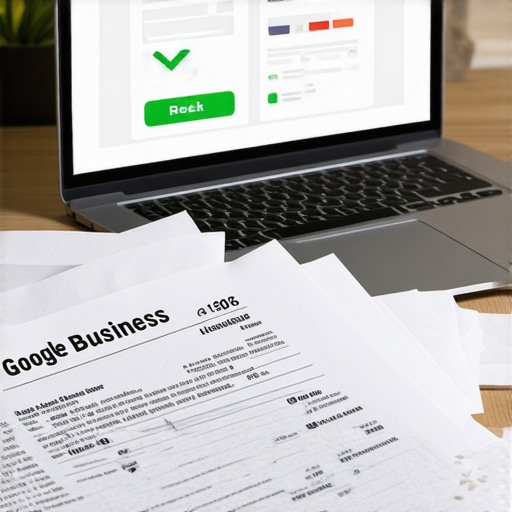
Stop Letting Messy Data Kill Your Visibility
Beyond just documents, your background data often has ‘leaks’ that confuse the algorithm. I have seen businesses drop out of the top three simply because their info was inconsistent across the web. You have to fix the messy data errors killing your 3-pack rank before you can expect stable growth. This involves checking your NAP (Name, Address, Phone) consistency across every directory.
The Silent Growth Killer in Your Settings
Most people pick a category because it ‘sounds right.’ But why your primary business category is likely sabotaging your 3-pack rank is usually due to picking a high-competition broad term when a specific one would trigger more local relevance. I remember a dental client who was struggling to even show up for ‘dentist.’ We realized their primary category was set to something too generic. We applied the simple tweak that put our dental practice at the top of the local pack by refining that one setting and cleaning up their secondary service attributes. The shift was immediate.
Refine Your Details for Faster Results
You also need to look at 7 real-world data tweaks that improve local pack rank faster, such as ensuring your hours are consistent and your map pin has not drifted into a nearby alleyway. These small technicalities are the difference between a thriving business and one that is ‘temporarily closed’ in the eyes of Google. Every tiny adjustment sends a signal that you are active, verified, and reliable.Let’s dig deeper. Most people treat Google Maps like a high school popularity contest where the person with the most votes (reviews) wins. I’m here to tell you that’s a dangerous oversimplification. In my years of troubleshooting these profiles, I’ve seen businesses with five times the reviews of their competitors get stuck on page three. Why? Because Google isn’t just counting; it’s measuring quality and behavior.
Stop Obsessing Over Review Totals
The common belief is that you should ask every single customer for a review the second they walk out the door. However, stop asking every customer for a review; timing matters more than volume. A sudden influx of fifty reviews followed by two months of silence looks suspicious to an algorithm tuned to spot manipulation. You want a steady, natural heartbeat of feedback. Furthermore, why your maps engagement rate matters more than raw traffic comes down to user intent. If people are clicking your phone number, asking for directions, or staying on your profile to read your Q&A, you are providing value. If they land on your page and bounce immediately, a thousand five-star reviews won’t save your ranking.
Why does your competitor rank higher with fewer reviews?
It’s incredibly frustrating to see a newer shop leapfrog over your established business. According to the 2023 Local Search Ranking Factors survey by Whitespark, ‘behavioral signals’ like click-through rate and mobile ‘clicks to call’ have seen a significant increase in importance as ranking factors. This is why the response velocity secret is so vital to your local pack strategy. If you reply to a review or a message within minutes, Google sees an active, helpful business. That activity signal often outweighs a static review count.
Don’t Fall for the Keyword Stuffing Trap
One of the biggest mistakes I see is business owners changing their name to include every service they offer. They change ‘Smith Plumbing’ to ‘Smith Plumbing Repair Drains Emergency Local Plumber.’ While you might see a temporary jump, this is the fastest way to get a hard suspension from the algorithm. You need to learn how to get your business name right without spamming keywords to ensure long-term stability. Google’s AI is getting better at cross-referencing your legal name with your digital presence, and once you’re flagged for name spam, it’s a long road back. 
Your Response Speed Beats Their Review Count
Finally, understand that why your competitor ranks higher with fewer reviews often boils down to their overall digital proximity and relevance. They might have better on-site local signals or more localized mentions in the community. It’s a holistic game, not a single-metric sprint. Have you ever fallen into the trap of thinking more reviews was the only solution, only to see your rank stay exactly the same? Let me know in the comments below, and let’s figure out which secondary signal you might be missing.
I used to think that reaching the top of the local pack was the finish line. I thought I could finally kick back, stop obsessing over dashboards, and just let the phone ring. I was wrong. The local pack isn’t a trophy case; it is a treadmill. If you stop moving, you start sliding backward. Your competitors are constantly tweaking their profiles, and Google’s algorithm is always looking for the most ‘fresh’ and ‘active’ entity to display. To stay at the top, you need a system that doesn’t eat up your entire day but keeps your data ironclad.
Your Daily Routine for Local Authority
I don’t spend hours on this anymore. Instead, I follow the 10-minute daily checklist to track and fix your google maps ranking. This simple habit has saved me from dozens of ‘ghost edits’ where a random user or a competitor suggested a change to my business hours or website link, and Google accepted it without a peep. You have to be the gatekeeper of your own data. If you aren’t looking, nobody is. According to Joy Hawkins from Sterling Sky, Google often relies on user-generated content to ‘verify’ facts, which means your profile is essentially a public wiki if you aren’t active in its management. That is a terrifying thought for any business owner.
How can I keep my profile in the 3-pack for the long haul?
Maintenance is about more than just checking for errors; it is about sending constant ‘life signals’ to the algorithm. I make it a point to use 3 local seo tools that find your competitors hidden citations so I can see where they are getting their mentions. If a new local blog or directory pops up, I want my business there first. I also keep a close eye on how to monitor your map rank without triggering bias. If you are just searching for your own business from your office chair every day, you are seeing a skewed version of reality. You need to see what the customer sees from three blocks away, and from the next town over.

Beyond the basics, I’ve started looking at more advanced signals that most people ignore. For instance, did you know that your shop’s connectivity might actually influence your rank? It sounds like sci-fi, but why your storefront wifi density is a hidden 3-pack ranking factor is becoming a very real conversation in high-level SEO circles. Google is increasingly using real-world signals—like the number of mobile devices staying in your shop—to verify that you are a popular, legitimate destination. This is why 5 foot traffic signals that actually improve local pack visibility are the future of local SEO.
Future-Proof Your Local Rankings
Looking ahead, I predict that Google will lean even harder into ‘spatial verification.’ We are moving away from simple text-based data and toward a world where your 3-pack rank is determined by real-time activity and environmental data. This means that staying active in your community and getting local backlinks from neighborhood blogs will be more valuable than any generic high-authority PR link you could buy. You need to be a part of the local digital fabric. I challenge you to try one thing today: go into your dashboard and perform our 15-minute audit routine for finding hidden map visibility gaps. You might be surprised at the small leaks you find in your current strategy that are draining your authority.
I spent years believing that the hardest part of local SEO was the setup. I thought that once the verification code arrived and the profile was live, the work was essentially over. I couldn’t have been more wrong. The true challenge is the mental game of staying consistent when the results don’t look like a straight line up.
The Brutal Lessons I Learned Fighting for Local Authority
- Activity is the ultimate currency: Google’s algorithm is biased toward businesses that show signs of life. If you haven’t touched your profile in a month, you are effectively invisible to the AI.
- Most metrics are just noise: I used to obsess over the character count of my description, only to realize why your business description doesn’t actually impact your rank in the way you think it does. Focus on the fields that actually move the needle, like categories and attributes.
- The Q&A section is a goldmine: Many owners ignore the questions asked by customers. I discovered the hidden power of responding to the questions section; it’s a direct way to build trust and feed the algorithm relevant keywords.
- SEO experts aren’t magic: I’ve seen people throw thousands at agencies without seeing a shift. You need to understand the hard truth about hiring a GMB SEO expert—they can’t fix a business that isn’t fundamentally active in its local community.
Build Your Own Local Dominance Toolkit
To keep my edge, I stopped guessing and started using a curated set of resources. First, I always keep a copy of a data-driven checklist nearby. Having a routine ensures that I don’t miss the ranking signal in your about section keywords, which is a subtle but powerful way to influence how Google categories your proximity. I also recommend following industry leaders like Mike Blumenthal or the team at Sterling Sky; their deep-dives into algorithm shifts are the only ‘news’ you really need. Finally, don’t ignore your own analytics. I’ve found that the tiny profile change that swapped scrolling for real customer phone calls was only possible because I was actually watching how users interacted with my ‘Click to Call’ button every week.
#IMAGE_PLACEHOLDER_E#
Claim Your Spot at the Top of the Neighborhood
You have all the pieces of the puzzle now. You know how to handle a suspension, how to clean up your data, and how to outpace your competitors through sheer engagement. The only thing left to do is to start. Don’t wait for a ‘perfect’ time or a bigger marketing budget. A massive google maps boost doesn’t happen overnight—it’s the result of small, 10-minute actions stacked on top of each other day after day. You have the tools to turn your business into a local landmark. Go out there and make it happen. Have you noticed a specific competitor in your area who seems to rank high despite having almost no reviews? Let me know in the comments, and let’s break down why that might be happening together.