
I still remember the night I nearly threw my laptop out the window. I had spent four hours—yes, four—using a clunky online tool to manually inject GPS coordinates into every single photo of my client’s HVAC shop. I was convinced this “secret sauce” would force a google maps boost overnight. I felt like a pro, carefully aligning every pixel with a specific street corner on a digital map while my coffee went cold. But when the dust settled? Nothing. Not a single spot gained in the local search results. I’d fallen for an SEO myth that is still, unfortunately, making its rounds in small business circles and keeping owners up late for no reason.
I Spent Hours Pinning Photos to a Map and Got Zero Results
We’ve all been there, looking for that one magic trick to improve local pack standings. The truth is, manual geotagging is a legacy tactic that Google’s sophisticated AI has largely outgrown. I used to think I was clever, but I was actually ignoring the messy data errors killing your 3-pack rank. Google is much smarter than we give it credit for; it knows where you are based on your phone’s actual GPS pings and your business’s verified address, not just a line of code you manually typed into a JPEG in your bedroom. According to the local SEO experts at Sterling Sky, there is no evidence that adding GPS coordinates to photos provides any ranking boost at all. In fact, Google often strips that data out the moment you upload it to protect user privacy. [image] I wasted weeks on this before I realized that adding photos weekly actually improves your local rank far more than the hidden metadata inside them. Today, we are going to stop the manual labor and focus on the local pack optimization that actually moves the needle and gets your phone ringing.
Is Manual Geotagging Actually Worth Your Time?
Short answer? No. If you’re still sitting there typing coordinates into an EXIF editor, you’re losing time you could spend on fixing the conversion gap between profile views and calls. The effort-to-reward ratio is completely broken here. I made the mistake of thinking busy work equaled progress. It didn’t. What actually works is proving your location through real-world activity and the specific image metadata we use to prove location authority through authentic, non-stock photography. Have you ever spent a whole afternoon on an SEO “hack” only to see your rankings stay exactly the same? It’s a frustrating cycle, but I’m here to help you skip the frustration and rank 3 pack efficiently. Google wants to see real engagement, not manipulated files. In the sections below, I will show you how to actually signal your location to Google without the tedious data entry.
Connect Your Website Directly to Your Map Pin
If you want a google maps boost, you have to treat your website and your Google Business Profile as two halves of the same coin. Google is essentially a detective trying to verify that your business actually exists where you say it does. One of the biggest mistakes I see is a website that mentions a city in the footer but nowhere else. You need to fix the schema markup error that keeps your profile out of local search. This is code that tells Google’s robots exactly where your latitude and longitude are, but in a language they actually trust, unlike those manual image tags I used to waste time on. Think of Schema as a digital birth certificate for your business location.
Fix the Digital Bridge Most Owners Ignore
Beyond just technical code, you need to show Google that your services are tied to your physical location. I recently helped a roofer who was stuck on page three. We didn’t change his photos; we changed how his site was built. By learning how to structure your service pages for a map boost, we created a clear path for Google to follow from his service area descriptions back to his main map pin.
Stop Looking Like a Ghost in Your Own City
Google’s Street View cars are constantly scanning for physical evidence. If your profile shows a generic office building but no sign with your name on it, you are fighting an uphill battle to improve local pack visibility. This is why why every local business needs verified physical signage for maps. I once worked with a locksmith who shared a small lobby with three other businesses. He was invisible on maps. We realized he had no permanent sign on the building exterior. After we added a professional plaque and updated his photos using 4 precise tweaks for stores with shared entrances to rank 3 pack faster, his rank jumped 10 spots almost instantly. 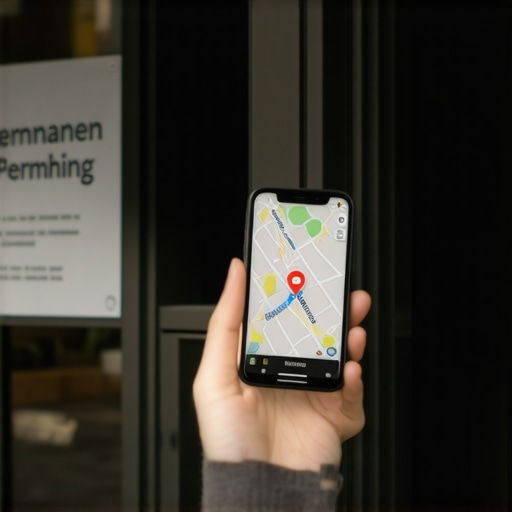
Why a Sign on the Door Outperforms a Metadata Hack
Authenticity is the new currency. Instead of spoofing data, take a high-resolution photo of your team standing under your actual business sign. This provides a visual anchor that Google’s AI can cross-reference with its own mapping data. It is far more powerful than any secret coordinate hack because it cannot be faked with a simple EXIF editor.
Broadcast Real World Signals That Google Can Not Ignore
The secret to local pack optimization often lies in the signals your customers’ phones send while they are at your shop. Google knows when people are physically in your building. Did you know that your internet setup plays a role? It sounds wild, but why your guest wi-fi name is actually a hidden ranking signal is a real factor. When a customer connects to your Wi-Fi, it is a massive handshake between their GPS and your business entity, proving you are a high-traffic, legitimate location. To make sure you are not missing these weird but effective signals, you should run through the no-fluff checklist for auditing your local listings fast. This ensures your foundation is solid before you try to rank 3 pack for the most competitive keywords in your city.Let’s dig deeper into why simply following the basic checklists often fails to move the needle. Most business owners are taught that whoever has the most five-star reviews wins the google maps boost race. In my early days, I was obsessed with the numbers game, thinking that if I just hit 100 reviews, I’d be untouchable. But the reality of local pack optimization is much more nuanced. You’ve probably noticed it yourself: that guy down the street with 12 reviews and a mediocre website is somehow sitting pretty at the top of the search. It feels personal, but it’s actually a matter of signal quality over quantity.
Why Your Competitor With Fewer Reviews Is Still Crushing You
It is a hard pill to swallow, but why your competitor with fewer reviews is outranking you often comes down to the relevance and timing of their feedback. According to the annual Local Search Ranking Factors study by Whitespark, the keywords used within reviews and the frequency of new reviews carry significant weight. Google cares more about a fresh, detailed review from a local guide mentioning a specific service than fifty generic ‘great job’ comments from three years ago. This is why you need to stop asking every customer for a review immediately and focus on the ones who can speak to your specific expertise. 
Stop Chasing Every Directory Under the Sun
Another common mistake is the ‘more is better’ approach to citations. I see owners spending hundreds of dollars on ‘Yelp alternatives’ that no one has visited since 2012. I call this the citation trap. In reality, why buying 100 generic citations is a waste of budget is because Google trusts a few high-authority sources far more than a sea of low-quality links. If you have rank 3 pack ambitions, you must understand the hidden disconnect between citation cleanup and real map gains. It isn’t just about being everywhere; it’s about being accurate on the sites that actually feed Google’s data ecosystem.
Is Your Service Area Radius Actually Choking Your Visibility?
Many service-based businesses make the mistake of setting a massive service area, thinking it will cast a wider net to improve local pack visibility. I once worked with a plumber who claimed a 50-mile radius. Paradoxically, this diluted his local authority so much that he couldn’t even rank for his own neighborhood. We found that the real reason your service radius is shrinking your visibility is that Google’s proximity filter prioritizes tight, logical service areas over unrealistic territories. Furthermore, why your primary category selection is likely sabotaging your search rank often stems from trying to be everything to everyone. When you select too many secondary categories, you confuse the algorithm. Lastly, keep in mind that why your physical proximity to the searcher is changing based on mobile data means your ‘fixed’ location is more fluid than you think. Have you ever fallen into one of these ‘more is better’ traps? Let me know in the comments.Achieving a top spot is one thing, but keeping it is where most business owners fail. I’ve seen countless profiles skyrocket after a few tweaks, only to vanish three months later because the owner thought the job was done. If you want to rank 3 pack consistently, you have to treat it like a garden, not a trophy. The algorithm is constantly re-evaluating the ‘freshness’ of your data and the consistency of your presence.
Stop Trusting Your Own Google Searches
One of the biggest traps I fell into early on was searching for my clients from my own office. I’d see us at number one and celebrate, not realizing that Google was showing me a personalized result based on my IP address. To truly improve local pack visibility, you must learn how to monitor your map rank without triggering bias. I now exclusively use geo-grid tracking tools. These tools don’t just give you one ranking; they show you a map of your city with ‘pins’ every half-mile, telling you exactly where you drop from the top three to the top ten. It’s eye-opening to see that you’re king of one street but invisible three blocks away.
How do I maintain my map position over the long haul?
Maintenance doesn’t have to be a full-time job. I’ve developed a rhythm that takes less than twenty minutes a day. It starts with the one daily task to keep your map pin glued to the top spot, which usually involves engaging with new customer signals or answering a quick question. Most people wait until their rank drops to act, but I prefer a proactive approach. I recommend implementing the 15-minute audit routine for finding hidden visibility gaps at least once a week. This helps you catch things like ‘suggested edits’ from competitors or random glitches in your service area before they tank your traffic. 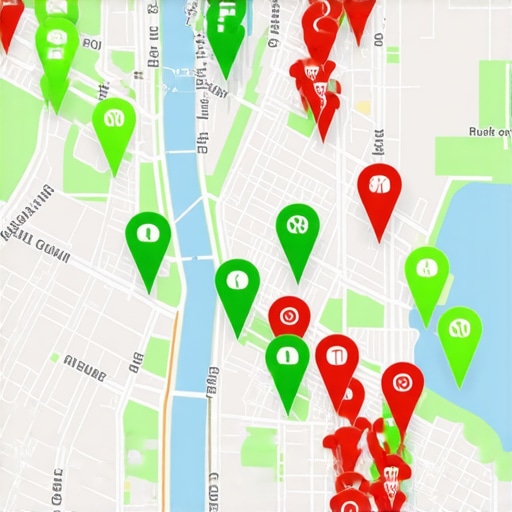
The Tools That Actually Move the Needle
If you’re looking for a google maps boost, stop wasting time on generic SEO plugins. You need specialized software that understands local proximity. I personally rely on the best tools for auditing your local search presence fast because they highlight NAP (Name, Address, Phone) inconsistencies that I’d never find manually. According to Darren Shaw of Whitespark, local citation consistency remains a foundational ‘table stake’ for local SEO. If your data is messy, your local pack optimization efforts are built on sand. For those of you managing more than one storefront, the complexity doubles, which is why learning how to scale local content across multiple locations easily is the only way to stay sane while growing.
What the Future of Local Search Looks Like
We are moving away from a world of static keywords and toward a world of ‘behavioral signals.’ In the next year, I predict Google will rely even less on what you say about yourself and almost entirely on what users do with your profile. This means things like ‘dwell time’ on your photos and how fast you respond to messages will become primary ranking factors. If you want to stay ahead, stop obsessing over metadata and start obsessing over user experience. Your Action Step: Stop searching for your business on your phone. Go sign up for a free trial of a geo-grid tracker today and see where your ‘weak spots’ actually are in your neighborhood. You might find you’re one mile away from doubling your lead flow.
The Hardest Lesson I Learned About Dominating the Map
After years of testing every “secret” hack, the biggest takeaway wasn’t a technical trick; it was the realization that Google prizes local pack optimization through authentic, verifiable data. I used to think I could outsmart the system with software, but I quickly learned that even the tiny error in your suite number that blocks your local pack entry can undo months of hard work. Real authority is built on the basics done exceptionally well every single day, rather than chasing ghosts in the algorithm.
- Shortcuts like buying bulk citations usually backfire, creating a “messy data” nightmare that takes months of manual labor to clean up.
- Engagement signals, like your response velocity to customer inquiries, are becoming more weighted than just having a high volume of legacy reviews.
- Your physical location isn’t a static point on a map; it is a living digital entity that Google needs to see verified through weekly fresh photos and store activity.
My Personal Checklist for Map Growth
I don’t believe in guessing when it comes to your livelihood. To truly improve local pack visibility, you need a data-driven approach that removes the emotion from the equation. I rely heavily on the best tools for auditing your local search presence fast because they reveal the hidden inconsistencies that are invisible to the naked eye. I also recommend setting a recurring calendar alert for the 15-minute audit routine for finding hidden visibility gaps. It keeps you proactive rather than reactive when a local competitor tries to jump ahead of you in the results.
[image]
Your Turn to Own the Neighborhood
You now have the roadmap to achieve a lasting google maps boost. The primary difference between the businesses that stay at the top and those that fall off the first page is simply the willingness to show up consistently. Start by mastering the one daily task to keep your map pin glued to the top spot and watch how your lead flow transforms over the next thirty days. You have the tools, the strategy, and the mindset—now it is time to rank 3 pack and dominate your local market for good. Have you ever noticed your ranking drop suddenly after making a small change to your profile? Let me know in the comments below!