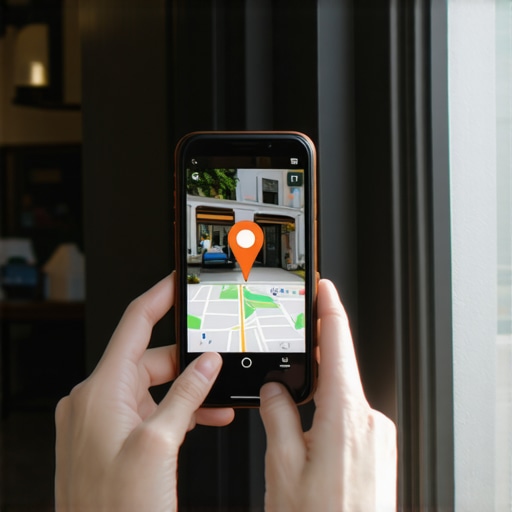
It was a rainy Tuesday when I realized my Google Business Profile was essentially a digital paperweight. I’d spent months chasing reviews and obsessing over my description, yet my visibility was tanking while a local competitor—who had half my reputation—was consistently cleaning up in the local pack. I felt invisible. I finally looked at their profile and saw something that made me feel like an amateur: they were posting a new, grainy, real-life photo every few days while my profile sat there with the same three professional headshots from 2019. That was my lightbulb moment. Google doesn’t just want to know who you are; it wants to know who you are *right now*. Today, I’m going to show you why the ‘set it and forget it’ mentality is killing your reach and how a simple weekly habit can give you a massive google maps boost without spending a dime on ads.
Stop Treating Your Profile Like a Static Business Card
I used to be the guy who thought a one-time upload of 50 high-res photos was the secret sauce. I was wrong. I fell into the trap of thinking quality beat frequency every time, but in the world of local pack optimization, ‘freshness’ is a ranking signal that most small business owners completely ignore. When you stop posting, your profile starts to look abandoned to the algorithm. I’ve seen firsthand how a profile can regain its footing simply by proving ‘proof of life’ through a smartphone lens. This is exactly why your competitor with fewer reviews is outranking you; they are giving the algorithm constant, updated data points to chew on. Have you ever felt like you’re doing everything right with your SEO, but your map pin just stays stuck on page two? It’s incredibly frustrating, but the fix is often more visual than you think.
Can a few simple snapshots really beat a massive review count?
It sounds a bit ridiculous, doesn’t it? You’d think years of five-star feedback would outweigh a photo of a new office chair or a clean lobby. However, research from industry leaders like BrightLocal has shown that businesses with more than 100 photos receive 520% more direction requests than those that don’t. That is a staggering gap. My biggest mistake early on was thinking I needed a professional photographer for every update. In reality, you must stop using stock photos because they carry zero local metadata and tell Google nothing about your actual location. Authentic, weekly uploads tell a story of a thriving, active business. Even something as basic as showing your storefront in different weather provides more trust and ‘localness’ than the most expensive logo ever could. By keeping the content stream moving, you aren’t just decorating; you are actively feeding the signals that boost 3 pack presence. Let’s look at how we can turn this into a 10-minute routine that actually sticks.I started by setting a calendar alert for Monday mornings at 9 AM. It wasn’t about being a professional photographer; it was about being a witness. Google’s algorithm acts like a hungry guard dog—if you don’t feed it regular, fresh data, it starts to assume the house is empty. This is the foundation of 7 real-world data tweaks that improve local pack rank faster. When I first tried this with a plumbing client, we didn’t use high-end gear. We just snapped a photo of the van parked in front of a recognizable local landmark near the job site. Within weeks, their visibility shot up because that photo contained invisible proof—the GPS coordinates and the time stamp embedded in the file. You don’t need to overthink the technical side when you use local image metadata to prove your store location.
Get Real With Your Camera Lens
Most business owners think they need to polish their brand to a mirror shine. In reality, Google prefers the grit of everyday operations. I remember a specific afternoon when I was working with a small cafe that was struggling to break into the top three. We had tried everything, but they were still stuck behind a massive chain down the street. I took a grainy, slightly out-of-focus photo of their daily special chalkboard and uploaded it directly from the Google Maps app. No filters, no cropping. That one ‘ugly’ photo got more engagement in forty-eight hours than their entire professional gallery had in a year. It proved they were open and active right then. This is a massive part of local pack optimization because it triggers a freshness signal that stale, ‘perfect’ profiles can’t replicate. It’s the digital equivalent of seeing smoke coming from a chimney—it tells the algorithm there is life inside. 
The Messy Reality That Actually Moves the Needle
Stop worrying about the perfect lighting and start focusing on the ‘where’. Every time you take a photo on-site, your phone attaches a GPS stamp to that file. When you upload that directly to your profile, you are handing Google a signed affidavit that you are exactly where you say you are. This is why your storefront photo is more important than your logo. If your physical location data is inconsistent, or if you only use stock imagery, you’re going to see a drop in reach. I’ve seen businesses lose their spot because of digital footprint data messing up your 3 pack placement. The fix is remarkably simple: take a photo of your front door, your lobby, or even your team working in the office once a week and hit upload.
Build a Metadata Trail Without the Headache
Think of your profile like a garden. If you don’t water it, it wilts. Regular uploads act as the water that keeps your ranking alive. To make this a habit, I follow a 10-minute daily checklist to track and fix your google maps ranking. It’s not just about the pictures, though; it’s about the context you provide with them. When you upload, don’t just dump the file. Give it a caption that mentions a local landmark or a specific service you performed. This creates a bridge between your physical location and the keywords people are searching for. It’s a key strategy to boost 3 pack visibility without diving into complex code. I once spent three hours trying to fix a client’s service area settings, only to realize that a single photo of them finishing a job in a specific neighborhood did more for their rank than any back-end tweak ever could. That’s the power of proof over promises.Let’s dig deeper into the nuances that separate the winners from the ‘also-rans’. The biggest lie circulating in the local SEO community is that you need to keyword-stuff your business description to see a significant google maps boost. I see business owners agonizing over every character in that 750-word box, but here is the cold truth: your business description doesn’t actually impact your rank. It is a tool for conversion, not a ranking lever. If you are spending hours on it thinking it will improve local pack standings, you are focusing on the wrong metric. It might convince a human to call you, but the algorithm essentially skips right over it when determining where your pin lands on the map.
The Review Response Mistake That Makes You Look Like a Bot
Many well-meaning entrepreneurs try to boost 3 pack visibility by stuffing phrases like ‘best emergency plumber in Brooklyn’ into every single customer reply. This is a classic ‘oops’ factor. Not only does this look incredibly desperate to a potential customer, but expert studies from teams like Sterling Sky have shown that replying to reviews with keywords is a mistake because it can trigger over-optimization filters. Google’s AI is sophisticated enough to understand your service context from the review itself and your overall digital footprint; you do not need to parrot your keywords like a broken record.
Does Keyword Stuffing Review Replies Help?
The short answer is no, and the long answer is that it might actually hurt your brand trust more than it helps your SEO. Real people want to see real conversations, not a technical manual masquerading as a ‘thank you’ note. Over-optimized responses often lead to a disconnect between the customer’s experience and your digital persona.
The Category Trap That Dilutes Your Authority
Another hidden nuance in local pack optimization involves your category selection. Most people think that adding ten secondary categories will help them show up for more searches. In reality, your secondary categories might be diluting your primary rank. Joy Hawkins, a leading voice in the industry, has noted that category dilution is a real phenomenon where the algorithm loses focus on your core service. Instead of a ‘more is better’ approach, you need to find the exact category mix that moves the needle in local search. If you are a specialized dental practice but you have listed yourself under every possible broad medical category, you are likely confusing the proximity signals that help you rank 3 pack for your most profitable keywords. #IMAGE_PLACE_HOLDER_C#
Why does your map pin vanish during rush hour?
Have you ever checked your ranking at 10 AM and been on top, only to find yourself invisible by 5 PM? This is not a glitch. It often boils down to how why your digital footprint data is messing up your placement and how Google calculates proximity based on real-time traffic and user density. There is a real reason your map pin disappears during peak hours, and it often involves how Google handles mobile vs. desktop signals in high-traffic areas when people are on the move. Have you ever fallen into this trap where your visibility seems to fluctuate wildly based on the clock? Let me know in the comments.I used to think that as long as I saw my business in the top spot while sitting at my desk, I was winning. I was dead wrong. Your office Wi-Fi is essentially a ‘bias bubble’ that gives you a false sense of security because Google knows your physical proximity to the router. To actually improve local pack standings across a whole city, you need to see the ‘grid’. I personally rely on tools like Local Falcon or BrightLocal because they show me exactly where my authority drops off—sometimes just two blocks away. This is the only way to effectively learn how to monitor your map rank without triggering bias and see the cold, hard truth of your google maps boost efforts.
Stop Guessing and Start Using a Search Grid
When you look at a geo-grid, you’ll often see a sea of green dots near your office and a wall of red just a mile away. That red wall is where your revenue is dying. To fix this, you need the best tools for auditing your local search presence fast. I use these maps to identify ‘weak zones’ where I can then deploy hyper-local content or images to boost 3 pack visibility in specific neighborhoods. 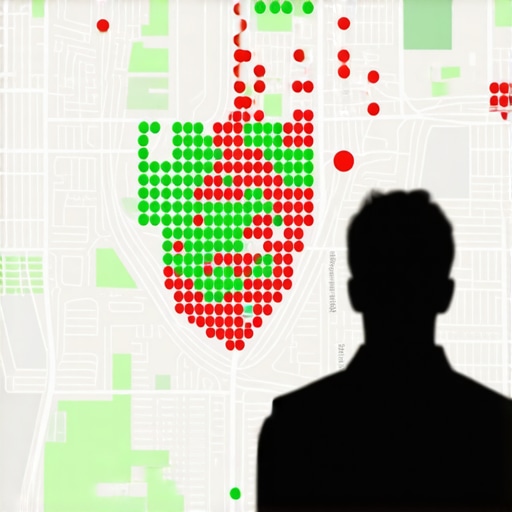 Once you have the data, you need a system to keep it clean. I don’t believe in marathon SEO sessions once a month; they lead to burnout and missed signals. Instead, I stick to our 15-minute audit routine for finding hidden map visibility gaps. This is where I check for the messy citation errors most local businesses overlook, such as old phone numbers or slight address variations that confuse the algorithm. I also look at the impact of using tracking numbers on your google maps authority, ensuring that my primary number remains the consistent ‘source of truth’ for Google’s crawlers.
How do I keep my map pin stuck to the top permanently?
Maintenance is about consistency, not intensity. Darren Shaw, the founder of Whitespark and a leading figure in local search, notes in his annual ‘Local Search Ranking Factors’ study that ‘on-page signals’ are now among the most critical drivers for a rank 3 pack position. This means your website needs to talk to your profile constantly. I’ve found that knowing how to structure your service pages for a map boost is the bridge that tells Google your website isn’t just a brochure, but a local authority. If you’re managing more than one spot, you must learn how to scale local content across multiple locations easily without triggering duplicate content filters. Looking ahead, I predict that ‘real-time inventory’ and visual AI will be the next major shifts in local pack optimization. Google is already moving toward ‘Search what you see,’ and soon, the depth of your visual data will outweigh your backlink count. My advice? Grab a geo-grid tool tonight and find your ‘red dots’—that’s where your next ten customers are hiding.
The Hard Truths That Finally Moved My Map Pin
I spent years thinking that more reviews were the only way to improve local pack standings. It was a painful realization when I saw that my activity levels mattered just as much as my reputation. One of the biggest shocks was discovering that your business description doesn’t actually impact your rank; it is strictly a tool for the humans reading it. I also learned that if your listing suddenly drops, there is usually a simple fix for a vanishing google maps business profile that doesn’t involve panicking. Real growth happens when you stop trying to game the system and start providing Google with ‘proof of life’ through your phone camera and consistent data updates.
Tools I Use Every Day to Win the Local Game
To keep my clients at the top, I rely on a few specific resources that go beyond the basic dashboard. First, I always check for technical glitches like the schema markup error that keeps your profile out of local search, as a single line of broken code on your website can tank your map authority. I am a huge fan of Local Falcon for its visual geo-grids, which help me spot exactly why your service area settings are actually hiding your 3 pack rank. I also keep a close eye on technical health by identifying why missing on-site attributes are killing your 3 pack rank before the competition even notices. These tools do not just provide data; they provide a roadmap for your next move.
#IMAGE_PLACEHOLDER_E#
Go Claim Your Top Spot Today
Local SEO isn’t a dark art; it is a game of consistency. If you want a permanent google maps boost, you have to show up every week with fresh photos and authentic interactions. Focus on your speed, too—learning the response velocity secret for better local visibility can be the edge that pushes you past a legacy competitor. Once you are in the top three, you can finally learn how to fix the conversion gap between profile views and actual calls to turn that traffic into revenue. You have got the knowledge; now it is time to take action. Have you checked your business’s geo-grid recently to see where your ‘red dots’ are? Let me know in the comments below!