
I remember sitting in my home office three years ago, staring at my phone and feeling a pit in my stomach. I had just finished my fiftieth five-star review, yet when I searched for my own services, my business was nowhere to be found on the map. I wasn’t even in the top ten. I was doing “everything right”—the keywords, the photos, the replies—but I was invisible. It felt like I was shouting into a void. Then, I stumbled upon a weird inconsistency: my old office phone number was still listed on a random local directory I’d forgotten about years ago. That one tiny ghost of a data point was telling Google I wasn’t who I said I was. It was the moment I realized that your digital footprint data is likely messing up your 3-pack placement more than any high-end marketing strategy.
Stop Blaming the Algorithm and Start Cleaning Your Data
Most of us treat Google Maps like a popularity contest, but it’s actually more like a background check. Google is paranoid. If it finds one address format on your website and another on a random niche blog, it gets confused. And a confused Google never recommends you to a customer. I spent months trying to improve local pack performance by stuffing keywords into my description, which was a huge mistake that led nowhere. I eventually learned that fixing messy data errors is the real secret sauce for a sustained google maps boost. Today, we’re going to look at exactly how to scrub those digital fingerprints so you can finally reclaim your spot.
Is a little bit of messy data really that big of a deal?
You might be thinking, “Surely Google knows it’s still me, even if the suite number is missing?” Honestly, I used to think the same thing. I thought I could skip the boring stuff. But according to data from local search experts like BrightLocal, nearly 80% of consumers lose trust in a business if they find incorrect or inconsistent contact details online. If humans lose trust, imagine how a literal machine feels. My biggest mistake early on was ignoring my primary business category selection, thinking I could just rank for everything. I was wrong. Your data footprint is the foundation of local pack optimization, and if the foundation is cracked, your rankings will eventually collapse.
How Your Past Online Activity Ghosted Your Current Ranking
It’s not just about what you’re doing now; it’s about the digital trail you’ve left over the last decade. Did you ever use a tracking number in a print ad? That might be hurting you. Even your store’s Wi-Fi signals can play a role in how Google perceives your physical location and verifies your legitimacy. We need to look at your business through Google’s eyes—as a collection of data points that either confirm or deny your existence. Have you ever felt like your business is a “ghost” on the map, even though you’re standing right there in the shop? Let me know in the comments, because you aren’t alone, and it’s usually just a data ghost haunting your rank 3 pack goals.
Find the Ghost Data Points Hiding in Plain Sight
To start your journey toward a sustained google maps boost, you have to act like a private investigator. Start by pulling a list of every version of your business name, address, and phone number (NAP) you have ever used. I once worked with a local plumber who had listed himself as ‘Dave’s Pipes,’ ‘Dave’s Plumbing & Heating,’ and ‘D.P. Services’ across various local directories. To Google, these were three different businesses competing for the same physical space. We used the no-fluff checklist for auditing your local listings fast to hunt down every variation and force them into one single, unified identity. This isn’t just busy work; it is about establishing a singular, unbreakable authority. When your data is fractured, your local pack optimization efforts are essentially building on quicksand. 
Stop Using Tracking Numbers That Confuse the Map
Another silent killer is the ‘convenience’ of tracking numbers. Marketing agencies love them because they prove their worth by showing you exactly where a call came from, but the impact of using tracking numbers on your google maps authority is often devastating. Google’s bots use your phone number as a primary identifier. If your profile has one number and your Yelp page has a tracking number, Google’s trust meter drops to zero. If you want to improve local pack performance, you must use your real, local number everywhere. Consistency is the only currency Google accepts when it comes to location data. I have seen businesses lose their entire rank 3 pack position simply because a third-party directory auto-generated a tracking number without their permission. You have to be vigilant.
Fix the Hidden Code Errors on Your Website
Your website and your Google profile are supposed to be in a constant, harmonious dialogue. Often, the reason you are invisible is found in the ‘fine print’ of your site’s code. This is frequently caused by the schema errors that quietly kill your 3-pack presence. Schema markup is the language Google speaks behind the scenes; if your site says you are in ‘Suite 201’ in English but the code says ‘Unit 2B,’ the machine gets confused. I remember a dental practice that was stuck on page four for months. We didn’t change their keywords or buy more ads; we simply aligned their on-site schema with their GMB data. The result was a boost 3 pack move that happened almost overnight. Ensure your contact page and footer are mirror images of your official profile.
Prove You Exist With Real Physical Evidence
Google is increasingly paranoid about ‘ghost’ businesses—entities that exist only on paper to capture leads. To combat this, they look for visual proof that you are a real person in a real building. This is why every local business needs verified physical signage for maps. I once saw a business jump five spots just by uploading a high-resolution photo of their permanent outdoor sign. It sounds simple, but it is a massive trust signal. When you combine this with 5 simple photo tweaks that actually improve local pack visibility, you are no longer just another data point in a database. You are a legitimate, verified destination that Google feels safe recommending to its users.While everyone else is obsessing over getting 100 new reviews by Friday, the seasoned pros are looking at something else entirely: velocity and sentiment. If you suddenly flood your profile with reviews, you might trigger a spam filter. I’ve seen businesses get their entire profile suspended because they ran a desperate marketing contest to improve local pack performance overnight. The truth is, timing matters more than volume. Google’s AI is smart enough to recognize a natural ebb and flow versus an artificial surge. According to the 2023 Whitespark Local Search Ranking Factors report, the consistency of review acquisition is a much more stable signal than a one-time spike that never repeats.
Why proximity isn’t the ‘get out of jail free’ card it used to be
A common belief among business owners is that the closest shop always wins the map pin. This is a myth that often leads to complacency. Google will frequently bypass a closer business to show one that has higher ‘prominence’—which is essentially a cocktail of data authority and user engagement. I have watched shops dominate the 3-pack for customers three miles away while the competitor right across the street remains invisible. Why? Because the closer business had fractured data and zero interaction signals. This is a core part of a successful google maps boost strategy: you must out-author the competition, not just out-locate them. If your data is messy, no amount of proximity will save you.
Does your engagement rate explain why you’re stuck at number four?
We often talk about visibility, but visibility without interaction is a death sentence for your rank. If 1,000 people see your profile but nobody clicks the ‘Call’ button, asks for directions, or looks at your photos, Google assumes you aren’t the right fit for that specific search. This is why your maps engagement rate matters more than raw traffic. You can have the highest-resolution images, but if they don’t lead to a conversion, your local pack optimization will eventually plateau. Most owners look at their dashboard and see ‘total views’ and feel a false sense of security, but the reality is that why your ranking reports show positions that dont actually exist is often down to a lack of real-world user validation to back up those numbers. 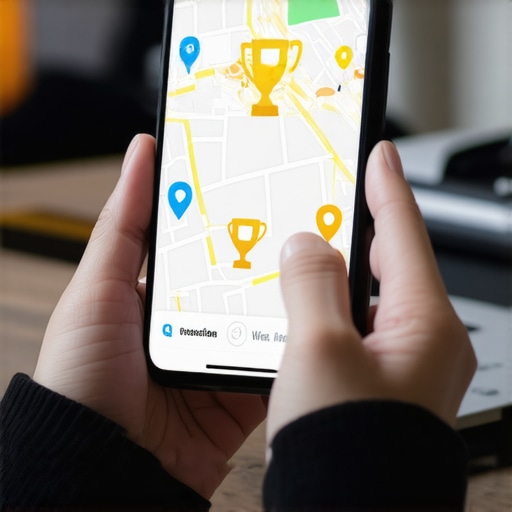
Avoid the keyword-stuffing trap in your replies
Here is the ‘oops’ factor I see even high-priced agencies get wrong. They tell you to reply to every review with keyword-heavy phrases like ‘Thank you for choosing the best electrician in Dallas.’ Please, don’t do this. Google has shifted away from valuing keywords in replies; in fact, why replying to reviews with keywords is a mistake is that it signals manipulation to the algorithm and looks robotic to potential customers. Instead, focus on authentic, helpful connection. We have consistently found that how personalized review replies outperform keyword templates is by building actual trust, which leads to the high-quality engagement clicks that Google actually rewards with a boost 3 pack move. Have you ever fallen into the trap of obsessing over review count while your rank stayed flat? Let me know in the comments.Once you have scrubbed your data and seen that initial movement, the real challenge begins: staying there. I have seen too many business owners treat local pack optimization like a one-time project, only to wake up three months later and find they have slipped to page two. You have to realize that your competitors are also reading these guides and trying to outpace you. To stay ahead, you need a system that handles the heavy lifting without requiring you to live inside your Google Business dashboard. I personally rely on the 10-minute daily checklist to track and fix your google maps ranking to ensure I never miss a sudden dip caused by a competitor’s aggressive move or an algorithm update.
Keep Your Rankings From Rusting During the Maintenance Phase
Maintenance isn’t about doing more work; it’s about doing the right work consistently. I’ve found that the biggest cause of ranking decay is when business owners stop feeding the machine. This doesn’t mean you need a million new reviews, but it does mean you need regular activity. I use tools like BrightLocal and Whitespark not just for the reports, but specifically for their citation trackers. These tools help me spot when a third-party aggregator has overwritten my clean data with an old address. If you want to improve local pack stability, you must be the one who controls your narrative, not a random database in another country.
How do I keep my map ranking high month after month?
The secret is in the ‘signals of life’ you send to Google. This includes regular photo updates and answering questions. I make it a point to engage with the community by answering obscure QA questions that others ignore. These tiny interactions act like a heartbeat for your profile. As Joy Hawkins from Sterling Sky often points out in her research, Google’s local algorithm is increasingly prioritizing user engagement signals over traditional backlink profiles. If your profile looks like a static brochure, Google will eventually replace you with a business that looks ‘alive’ and responsive.
The Sneaky Tech Signals Google Is Watching Now
As we look toward 2025 and 2026, the technical side of the impact of having a verified map profile in 2026 is going to get even more granular. We are already seeing evidence that why your storefront wifi density is a hidden 3-pack ranking factor is becoming a reality. Google uses the Wi-Fi signals and Bluetooth pings of people entering your shop to verify that you are actually a popular local destination. This is why I always tell my clients to offer free guest Wi-Fi; it’s a subtle way to prove foot traffic to the algorithm. Combined with 6 check-in frequency signals that improve local pack visibility, you are essentially building a digital fortress around your rank 3 pack position. 
Scale Your Success Without Losing the Personal Touch
If you are managing multiple locations, the trap is using robotic, copy-pasted content. This is a surefire way to get flagged. Instead, focus on why local backlinks from neighborhood blogs outperform generic high authority PR. A single mention from a local Little League team’s website or a neighborhood blog carries more weight for a google maps boost than a mention on a national news site. I predict that in the next few years, ‘Hyper-Local Authority’ will completely replace ‘Domain Authority’ as the metric that matters for the 3-pack. Start building those local relationships now. Your next step is simple: pick one location this week and audit its schema markup using the schema errors that quietly kill your 3-pack presence. Fixing just one mismatched line of code could be the final nudge your profile needs to jump from number four to number one.
Hard Truths I Discovered While Hunting for the Number One Spot
The biggest realization I had after years of trial and error is that Google cares more about stability than speed. I used to think I could brute-force a rank 3 pack position by buying hundreds of low-quality links, but that actually backfired. I learned that local backlinks from neighborhood blogs outperform generic high authority PR every single time because they prove you are a part of a community, not just a digital entity. Another ‘lightbulb moment’ was realizing that the real reason your local authority strategy feels stagnant is often because you’re chasing broad metrics instead of hyper-local relevance. The machine is looking for ‘signals of life’—the small, daily interactions that show your business is breathing and helping real people in your neighborhood in real time.
The Toolkit That Keeps My Maps Traffic Flowing
You don’t need a massive marketing department to improve local pack visibility; you just need the right eyes on your data. I personally swear by 3 local SEO tools that find your competitors’ hidden citations to see exactly where the leaders are getting their authority. Beyond software, I focus on quality over quantity. Instead of generic directories, I hunt for 5 specific niche citations that actually move the needle on map authority for your specific industry. Finally, I never underestimate the power of a manual check; using a clean, non-biased browser to see your actual search results is the only way to avoid the ‘ego ranking’ trap where you see yourself at the top only because you’re sitting in your own office.
Your Local Dominance is Closer Than You Think
Taking control of your local pack optimization might feel like a mountain of work, but it’s really just a series of small, intentional steps. Every time you fix a phone number or reply thoughtfully to a customer, you are casting a vote for your business’s legitimacy. A successful google maps boost isn’t a one-time event; it’s the result of being the most trusted, consistent answer to a neighbor’s question. You’ve seen how the one profile update that swapped scrolling for real phone calls can change a business’s trajectory overnight. Now it’s time for you to take that first step. Which specific data point are you going to audit first—your schema code or your physical signage? Let me know in the comments below!