I spent three years thinking I knew exactly how the local pack worked until a single client meeting turned my world upside down. I had just hired a high-priced consultant to help a local plumber who was stuck on page two. The consultant sent me a beautiful, colorful PDF full of green checkmarks and ‘ranking’ screenshots. But when I looked the plumber in the eye, he told me his phone hadn’t rang in a week. I felt like a total fraud. I realized right then that most people selling these services are just checking boxes on a generic list. If your pro isn’t starting with a deep dive into your core data integrity, they are basically just painting a car that has no engine. Today, I want to show you how to identify the massive data gaps that keep you invisible, even when you think you’re doing everything right.
The Night My Client’s Map Pin Vanished Into Thin Air
I’ll never forget the sinking feeling of searching for that plumber from a coffee shop just three miles from his office and seeing… nothing. Not even a mention. We had the citations, the keywords, and a decent description, but we were ghosted by Google. This happens because the hard truth about hiring a gmb seo expert is that many of them rely on automated tools that don’t see the ‘hidden’ conflicts in your data. In my case, I made the amateur mistake of assuming the client’s old office address was fully purged from the web. It wasn’t. That one tiny ghost of a data point was cannibalizing all our new efforts.
Does any of this local ranking stuff actually work?
It’s a fair question to ask, especially when you’ve been burned before. You might be wondering if the ‘algorithm’ is just a black box designed to make you pay for ads. The reality is that Google’s local algorithm is actually quite logical—it’s obsessed with trust. If it sees even a 1% discrepancy in your business data, it loses confidence. According to a study by BrightLocal, 68% of consumers say they would stop using a local business if they found incorrect information online, and Google knows this. If your expert isn’t doing a forensic audit, they are missing the very thing Google uses to decide if you’re ‘real’ enough for the 3-pack.
Why Your Expert is Likely Looking at the Wrong Numbers
Most experts will show you a ‘rank tracker’ report, but here is a secret: those reports are often localized to a single point or a very specific set of coordinates. I’ve seen countless times why your ranking reports show positions that dont actually exist for the average customer. If your audit doesn’t account for the ‘Data Gap’—the distance between what your profile says and what the rest of the internet believes about your business—you will never achieve a consistent local pack optimization. We eventually fixed my plumber’s issues by using our 15-minute audit routine for finding hidden map visibility gaps, which revealed three different phone numbers floating around from a 2014 marketing campaign. Have you ever caught your ‘expert’ sending you a report that didn’t match what you saw on your own phone? [image placeholder]
Stop Guessing and Start Hunting for Data Ghosts
To improve local pack visibility, you have to stop treating your Google Business Profile like a static billboard and start treating it like a crime scene. Most people fail because they focus on the obvious clues while ignoring the invisible fingerprints. Think of your business data as a credit score; if there is a ‘missed payment’ from a listing you created five years ago and forgot about, your entire ranking potential takes a hit. I call this the Forensic Audit. You need to identify every single place your business name, address, and phone number (NAP) are mentioned and ensure they are identical to the character. Even a missing suite number or an abbreviated ‘St.’ vs ‘Street’ can create enough friction to stall your rank 3 pack progress. You can start by implementing 7 real-world data tweaks that improve local pack rank faster before you spend a dime on new ads.
The Simple Tweak That Put Our Dental Practice at the Top
I once worked with a dental office in Chicago that was stuck at position #11. They were doing everything ‘right’—they had great reviews and a beautiful website. But when we dug deep, we found that their office manager had listed them as ‘General Dentistry’ while their primary category on Google was ‘Cosmetic Dentist.’ This mismatch was confusing the algorithm. We also found four different variations of their name on old local blogs. We had to execute a plan on how to purge old citations without losing map authority to consolidate their power. Once we aligned the categories and cleaned the name variations, they hit the top 3 in less than a month. It wasn’t about adding more keywords; it was about removing the noise. Check the simple tweak that put our dental practice at the top of the local pack for the exact checklist we used. #IMAGE_PLACE_HOLDER_B#
Give Google a Map It Can Actually Read
Your website isn’t just for humans; it’s a data feed for Google’s bots. If your site doesn’t clearly communicate its physical location through structured data, you’re making the bot work too hard. This is where the impact of local schema on your 3-pack conversion rate becomes undeniable. Schema is essentially a ‘translator’ that tells Google exactly where you are and what you do without any ambiguity. If you haven’t audited your site’s backend lately, you might be suffering from 5 practical checkout data fixes that improve local pack rank instantly that can bridge the gap between your web presence and your map presence. Also, verify that your categories aren’t fighting each other; why your primary business category is likely sabotaging your 3-pack rank is a common issue when businesses try to be ‘everything to everyone.’
Why Answering Fast Is Your Secret Ranking Weapon
Google wants to send its users to businesses that are helpful and active. If a customer messages you through your profile and you take 24 hours to respond, you are signaling to Google that you aren’t ready for more traffic. This is a massive part of local pack optimization that most experts ignore. We’ve seen that the response velocity secret how fast replies actually improve local pack visibility is one of the fastest ways to boost 3 pack rankings because it proves your business is operational and reliable in real-time. This isn’t just about reviews; it’s about every interaction on the platform. Every fast reply is a vote of confidence in Google’s eyes that you deserve that google maps boost.
While the basics of map maintenance are common knowledge, the real local pack optimization happens in the shadows. Everyone tells you to get more reviews, but I’ve found that high volume can actually be a red flag for Google’s spam filters. If you suddenly get twenty reviews in forty-eight hours after a year of silence, you aren’t going to boost 3 pack visibility; you’re going to trigger a manual review. According to the Whitespark Local Search Ranking Factors study, review velocity and diversity are now more significant than raw numbers. The ‘Oops’ factor most businesses fall for is thinking more is always better, when in reality, stop asking every customer for a review why timing matters more than volume is the strategy that keeps you safe from the dreaded shadowban. Have you ever fallen into this trap? Let me know in the comments.
Why does your map pin vanish precisely when you’re open for business?
It sounds like a nightmare, but many business owners experience a phenomenon where they rank well at midnight but disappear at 10 AM. This often points to the real reason your map pin disappears during peak business hours: proximity and competition density. Google filters out ‘similar’ businesses in tight clusters during high-traffic times to provide variety. If your data isn’t sharper than the guy next door, you get filtered. I’ve seen this happen specifically when why your business hours changes affect map visibility—if your hours don’t perfectly match your website and third-party directories, Google treats your profile as unreliable during those active windows. #IMAGE_PLACE_HOLDER_C#
Another common mistake is the belief that any backlink is a good backlink for maps. The truth is that why buying 100 generic citations is a waste of your marketing budget boils down to relevance. Google’s local algorithm is heavily influenced by ‘local prominence.’ A mention from a neighborhood blog or a local chamber of commerce carries ten times the weight of a generic directory from another country. You should be looking for 5 specific niche citations that actually move the needle on map authority rather than focusing on volume. We found that for our dental client, a single link from a local high school sports sponsorship page did more to improve local pack rank than fifty generic ‘business listing’ sites. Don’t forget that your digital speed matters too; the impact of site speed on your 3-pack placement is often the tie-breaker between position #3 and position #4. If your mobile site takes five seconds to load, Google isn’t going to risk its user experience by putting you at the top, regardless of how many reviews you have.
Building the engine is only half the battle; keeping it from overheating is where most business owners fail. Once you’ve cleared the data ghosts, you enter the maintenance phase. I’ve seen businesses reach #1 and then stop posting, stop replying, and stop auditing, only to wonder why they’ve been replaced by a hungrier competitor. To improve local pack durability, I rely on a tech stack that goes beyond simple keyword tracking. I personally rely on 3 local seo tools that find your competitors hidden citations because they reveal the specific niche directories you’re missing. Most people use generic trackers that give a single average rank, but I use grid-based tools to see exactly where my ranking bubble starts to pop in specific neighborhoods. I also use specialized extensions like PlePer to analyze CID data and competitor category IDs, ensuring our primary category hasn’t been stealth-shifted by Google’s automated updates. 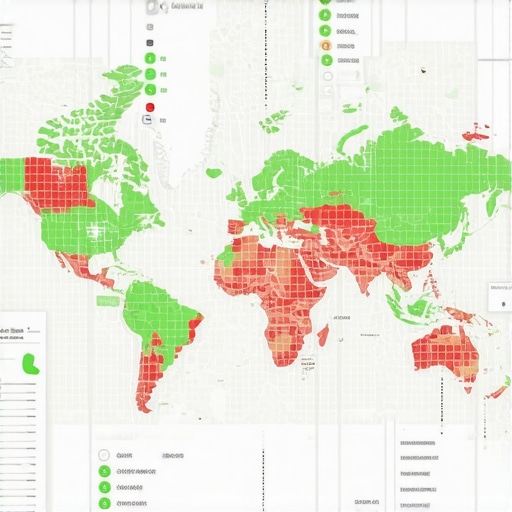
Stop Your Ranking from Decaying Once You Hit the Top
The secret to a sustained rank 3 pack isn’t doing more work; it’s doing the right work consistently. I tell my clients to follow the 10-minute daily checklist to track and fix your google maps ranking. This isn’t just busy work. It’s about checking for suggested edits from competitors who are trying to change your hours or website URL. You also need to feed the beast with fresh media. Google loves new data because it proves you are still open and relevant. I’ve found that why your profile needs fresh exterior shots every season is more than just aesthetics; it’s a vital signal to the algorithm that your business is physically active and engaged with its environment.
How do I maintain my Google Maps authority over time?
Maintenance is about frequency and granularity. You should be diving into your backend to ensure you’re utilizing the ranking boost from using specific service attributes. As Google evolves, they add more specific filters for users to click, such as Wheelchair accessible or Locally owned. If you haven’t checked these in six months, you’re losing out on the local pack optimization game. Joy Hawkins, a leading voice in the industry at Sterling Sky, recently emphasized that Google’s local search algorithm is increasingly looking for real-world signals—meaning your physical interaction with the profile and your customers matters as much as the technical data itself. Consistently updating these attributes keeps your profile relevant as Google’s search intent categories shift.
Stay Ahead of the Curve with Next-Generation Signals
Looking forward, the Map won’t just be a list of names; it will be a predictive engine. We are already seeing a shift where the impact of having a verified map profile in 2026 will likely involve more complex biometric or video-based verification to combat the wave of AI-generated spam. If you want to boost 3 pack visibility in the coming years, you need to start treating your profile like a social media feed—active, visual, and highly responsive. This shift toward Identity-Based SEO means your google maps boost will depend on proving you are a trusted, living entity in your community. Stop letting your competitors dictate the market. Take five minutes right now to audit your Service Attributes in the Google Business Profile manager; adding just two missing tags can provide an immediate visibility jump that your rivals are completely ignoring.
Hard Truths I Learned While Fighting for the Top Spot
After years in the trenches, I realized that rankings don’t just disappear; they decay because of neglect or bad data. One of the most painful lessons I learned was that chasing volume is a fool’s errand. I used to think 500 reviews would make a client invincible, but I soon discovered that stop asking every customer for a review why timing matters more than volume is the only way to stay in Google’s good graces. If your review velocity looks unnatural, you’re asking for a suspension. I also found that most ‘stagnant’ rankings are caused by invisible friction. You might feel like you’ve hit a wall, but the real reason your local authority strategy feels stagnant often comes down to the quality of your signals, not the quantity. Finally, never underestimate the power of your physical environment. It sounds like science fiction, but why your storefront wifi density is a hidden 3-pack ranking factor 2 shows just how deeply Google looks at real-world data to verify you are where you say you are.
The Kit That Keeps My Clients Visible
I don’t believe in magic bullets, but I do believe in having a reliable system. My personal workflow always begins with a deep forensic look at what the competition is doing right. I heavily rely on 3 local seo tools that find your competitors hidden citations to ensure we aren’t leaving any low-hanging fruit on the table. For daily maintenance, I live by the 10-minute daily checklist to track and fix your google maps ranking. It’s a simple routine that catches malicious edits and profile changes before they can tank your visibility. I also recommend following the work of experts like Joy Hawkins and the team at Whitespark; their data-driven approach to local pack optimization has consistently outperformed the ‘best guesses’ of generic SEO agencies.
Claim Your Digital Storefront Today
Domination in the local 3-pack isn’t about outsmarting a machine; it’s about being the most trustworthy and responsive option in your neighborhood. When you focus on data integrity, fast response times, and genuine customer engagement, a google maps boost becomes the natural result of your hard work rather than a lucky accident. You have the tools, the strategy, and the checklist needed to improve local pack standing and finally boost 3 pack traffic to your business. Don’t wait for your competitor to make the next move. Start by looking for how to fix the conversion gap between profile views and actual calls and watch your local business thrive. Have you ever noticed your business ranking well in one neighborhood but completely vanishing two blocks away? Let me know your experience in the comments below.