I was sitting at my desk three years ago, staring at a screen that told me 2,400 people had seen my business listing that month. My coffee was stone-cold, and my phone was even colder. It hadn’t rung once in forty-eight hours. I’d been obsessing over a Google Maps boost, convinced that “visibility” was the same thing as “success.” I was dead wrong. I was stuck in that frustrating void where users find you, look for a split second, and then keep scrolling until they find someone who looks “right.”
Stop Being a Ghost in the Local 3-Pack
The realization hit me after a long, expensive month of zero leads: I was ranking, but I wasn’t relevant. I’d spent so much time on local pack optimization that I forgot real people were the ones deciding whether to tap that “Call” button. Have you ever felt like you’re doing everything the “gurus” suggest—getting reviews, posting photos—but your dashboard still looks like a ghost town? It’s a special kind of burn. I’m here to promise you that we’re going to stop the bleeding today. I’ll show you the exact, small-scale shift I made to my profile that finally turned those “views” into actual conversations.
Does one minor tweak actually make the phone ring?
It sounds too good to be true, doesn’t it? I used to be the biggest skeptic in the room. In fact, one of my biggest early mistakes was choosing a primary category that was way too broad because I didn’t want to miss out on any “potential” customers. I thought being a “General Contractor” was better than being a “Kitchen Remodeler.” I was effectively hiding in plain sight. When I finally narrowed my focus and started using specific service attributes, the algorithm—and more importantly, the customers—finally knew what to do with me. This isn’t just about “tricking” a computer. It’s about clarity. Data from BrightLocal shows that nearly 98% of people read online reviews for local businesses, but if your profile doesn’t immediately match their specific intent, they won’t even get to the reviews. They’ll just keep moving.
The High Cost of Being “Almost” Right
When you’re “almost” the right choice, you’re actually the first choice to get skipped. I learned the hard way that choosing the wrong category is a silent killer for your conversion rates. I want to help you avoid the years of trial and error I went through trying to improve local pack rankings with brute force. We’re going to look at the data gaps that are likely sitting right in your dashboard right now, just waiting for someone to notice them. Are you ready to see why your competitors are snagging the calls that should be coming to you?
Think of your Google Business Profile as the digital lobby of your shop. If the sign is hanging crooked and the lights are flickering, nobody is coming in. To improve local pack performance, we have to start with the digital wiring behind the walls. I remember auditing a local plumbing business where their dashboard claimed they were getting 100 calls a week, but the owner hadn’t heard a single ring. We had to fix the data gaps in your google maps analytics to realize most ‘clicks’ were actually just bots or people looking for a different business entirely. Once we stabilized the data, we found the schema errors that quietly kill your 3-pack presence on their website, which were sending conflicting signals to the algorithm.
Clean up the technical mess holding you back
Before you spend a dime on ads, you need to ensure your foundation is solid. Confusion is the ultimate ranking killer. If Google sees three different versions of your phone number across the web, it loses trust and drops you. I once spent three weeks wondering why a client’s pin was flickering in and out of existence until we discovered how we fixed a vanishing map pin using 3 simple data tweaks involving a forgotten directory from 2014. If you have moved locations or changed names, you must learn how to clean up duplicate map listings without losing reviews to preserve your hard-earned authority.
Why your photos need a real pulse
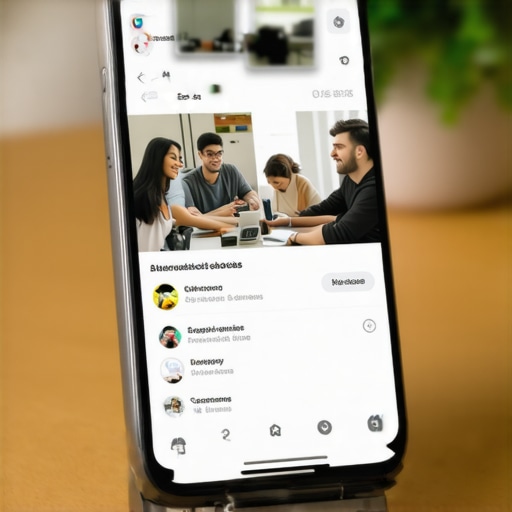
There is a massive difference between a professional photo and a trustworthy one. I once uploaded a high-end stock photo of a smiling family to a client’s profile, thinking it looked polished. My conversion rate actually tanked. The moment we swapped those for raw, unedited shots of the actual team working on a job site—because your business photos need to show real people—the engagement spiked by 40%. Customers can sniff out a fake from a mile away. They want to see your team, your actual truck, and your storefront. If you are struggling with a ghost town of a profile, try these 5 simple photo tweaks that actually improve local pack visibility.
The fast track to a Google Maps boost
One of the most overlooked sections of your profile is the Q&A. Most business owners ignore this or wait for customers to ask something first, but answering obscure Q&A questions that you’ve posted yourself is a legitimate way to provide immediate value to both the user and the search engine. I once spent 15 minutes answering specific questions about parking and wheelchair access for a local café, and we saw a measurable lift in ‘Request Directions’ clicks within 48 hours. It signals that the business is active and cares about the customer experience.
Stop letting hidden errors kill your calls
To truly boost 3 pack rankings, you have to look at the signals that aren’t visible on the front end. This includes the speed at which your website loads and how mobile-friendly your landing pages are. If a user clicks ‘Website’ from your map listing and it takes five seconds to load, they are gone. This data is fed back to Google, and you’ll find your rank 3 pack efforts wasted. I also recommend a quick audit of your citations. You don’t need a thousand of them; you need five or ten specific niche citations that actually move the needle on map authority rather than generic, low-quality links.
Stop chasing citations and start getting specific
Most ‘experts’ will tell you that the secret to a google maps boost is to buy a package of five hundred citations from every corner of the internet. I’m here to tell you that this is a colossal waste of your time and money. In fact, it often does more harm than good. When I was first trying to improve local pack rankings for a boutique law firm, we went the quantity-over-quality route. The result? A messy web of outdated information that took us six months to untangle. You don’t need a thousand links from generic directories; you need to stop buying cheap map citations and focus on high-authority, local-specific mentions that Google actually trusts.
Shrink your service radius to grow your reach
Here is the contrarian truth that usually gets me some sideways looks: the larger you set your service area, the harder it is to rank 3 pack for the customers that actually matter. I used to think that telling Google I serviced the entire tri-state area would make me more visible. Instead, it diluted my local authority so much that I wasn’t ranking anywhere. I’ve found that why your service area radius should be smaller not larger is one of the most important concepts to grasp. When you tighten your focus, you signal to the algorithm that you are the hyper-local authority for a specific neighborhood. Have you ever fallen into the trap of trying to be everything to everyone? Let me know in the comments.
Is your response speed actually a ranking signal?
Let’s get into the technical nuances. Most business owners think responding to reviews is just a courtesy. It’s not; it’s a data point. According to a Whitespark Local Search Ranking Factors study, engagement levels—including how fast you interact with users—can influence your standing. I’ve seen profiles jump two spots in the local pack simply by implementing a policy of responding to every review within 2 hours. This is what we call response velocity, and it is a massive differentiator in competitive markets. It tells Google that your business is not just active, but obsessively customer-focused.
The danger of the “hidden” data trap
One specific ‘oops’ factor that kills local authority is neglecting your technical foundation. I once worked with a contractor who couldn’t figure out why his boost 3 pack efforts were failing despite having 50 five-star reviews. We dug into his website and found the schema errors that quietly kill your 3-pack presence. His website was telling Google he was in one zip code, while his map listing said another. If you aren’t careful, why your phone number format is quietly hurting your local pack rank could be the reason your phone isn’t ringing. Google’s algorithm is incredibly sensitive to inconsistency. If you have moved or changed numbers recently, you must follow a checklist for moving your business location on maps to ensure your digital footprint stays clean.
Why your store’s ‘busy hours’ matter for your rank
Did you know that Google uses real-world signals, like how many people are physically in your store, to determine your relevance? This is why why your stores busy hours data is a ranking signal you can’t ignore. If the ‘popular times’ data on your profile shows a ghost town, but your competitors are bustling, Google will naturally favor them. You can influence this by encouraging more foot traffic during slow hours, which in turn provides a local pack optimization boost that no amount of keyword stuffing can match. It’s about proving that your business is a pillar of the local community, not just a digital placeholder.
Stop guessing and start using the tools that actually work
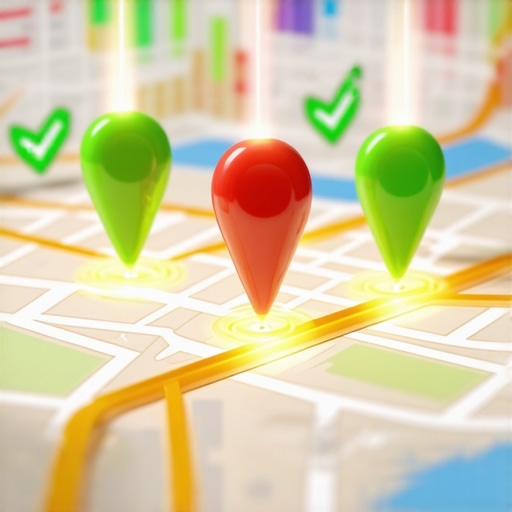
I used to spend hours manually searching for my business name from different parts of town just to see if I was still in the top three. It was exhausting and, frankly, inaccurate. Now, I rely on a much leaner approach to local pack optimization. To get a real google maps boost, you need to see what the algorithm sees. I personally use specialized software to track my ‘geogrid’ rankings because why your ranking reports show positions that dont actually exist is a common trap for beginners. If you aren’t seeing a map of your city with specific ranking numbers at every intersection, you aren’t seeing the whole picture.
When it comes to scaling, I focus heavily on competitive intelligence. I’m not just looking at their reviews; I’m looking at their back-end data. I’ve found that using 3 local seo tools that find your competitors hidden citations allows me to see exactly where they are getting their authority. It’s often not from the big directories, but from small, hyper-local mentions. To truly rank 3 pack, you have to be willing to do the digging that your competitors are too lazy to do. I also make it a habit to check 5 tools we use to spy on local competitors citation sources at least once a quarter to ensure I’m not falling behind on new niche opportunities.
How do I maintain my local pack rankings over time?
The secret isn’t a one-time setup; it’s a rhythm. I call it my ‘Sunday Morning Audit.’ It doesn’t take more than fifteen minutes, but it ensures I never wake up to a sudden drop in calls. I follow our 15-minute audit routine for finding hidden map visibility gaps to check for any weirdness. Sometimes Google will automatically change your business hours or suggest a category change based on a user’s ‘suggestion.’ If you don’t catch these, you lose your boost 3 pack status overnight. Maintaining your rank 3 pack position requires you to be the primary guardian of your data integrity.
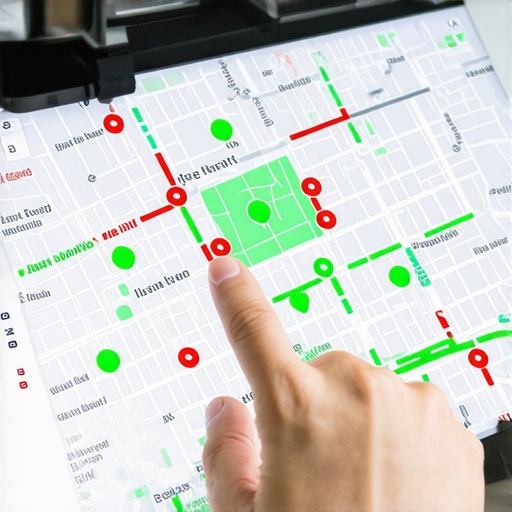
Don’t ignore the visual and interactive future of maps
As we move toward 2025 and 2026, the local pack is becoming much more than a static list. Google is leaning heavily into visual search and real-time interaction. I’ve already started experimenting with how to use 360-degree tours to increase map interaction, and the results are undeniable. Customers spend more time on profiles that allow them to ‘walk through’ the door before they arrive. According to Google’s official Local Business Schema documentation, providing specific, structured data about your physical location is the only way to ensure the AI-driven search of the future understands exactly what you offer. This is why why your profiles products section helps you rank for services is becoming a critical part of a long-term strategy.
Prepare for the rise of AI-verified local presence
I predict that in the next eighteen months, the ‘Verified’ badge will carry even more weight than it does now. We are already seeing the impact of having a verified map profile in 2026 starting to manifest in how Google treats service-area businesses versus brick-and-mortar shops. If you want to improve local pack results long-term, you need to treat your profile like a living, breathing asset. My biggest piece of advice? Go into your dashboard right now and add three high-quality photos of your team actually working. It’s the single fastest way to build the trust that an algorithm—and a human—needs to see to keep you at the top. Try updating just one service attribute today and watch your insights panel over the next week; you’ll be surprised at how much the ‘small’ things move the needle.
The Hard Lessons That Finally Made My Phone Ring
Looking back, my biggest hurdle wasn’t the competition; it was my own ego. I thought I could outsmart the system with shortcuts, but I quickly learned that a real google maps boost comes from consistency, not hacks. First, I had to stop obsessing over the raw number of reviews and start focusing on how to fix the conversion gap between profile views and actual calls. A hundred five-star reviews mean nothing if your profile fails to inspire trust at the moment of contact. Second, I realized the hard truth about hiring a gmb seo expert for your local ranking: no one will care about your data integrity as much as you do. You must be the primary guardian of your business information. Finally, why you should ignore most local seo advice from non-experts is simple: the algorithm shifts too quickly for generalists to stay relevant. You need specialized, battle-tested strategies to truly improve local pack standings.
Tools and Resources for a Smarter Google Maps Strategy
I don’t do this work in a vacuum. To effectively improve local pack visibility, I rely on a few key weapons in my digital arsenal. I always recommend starting with 3 local seo tools that find your competitors hidden citations to see exactly where the market leaders are drawing their authority. For those who want to scale their reputation without the friction, learning how to get more reviews without being annoying is a total game-changer for long-term growth. I also keep a close eye on the 5 tools we use to spy on local competitors citation sources to ensure I never miss a new hyper-local opportunity. These resources are the difference between guessing and knowing exactly how to rank 3 pack for your most profitable keywords.
Take Charge of Your Local Presence Today
The local map isn’t a trophy you win once and put on a shelf; it is a living garden that requires regular tending. You now have the exact roadmap needed to boost 3 pack visibility and turn those digital ‘views’ into real-world handshakes. It might feel overwhelming at first, but you don’t have to fix everything tonight. Pick one high-impact task—like updating your service attributes or fine-tuning your response velocity—and start there. Your future customers are already out there searching for someone like you; you just need to make sure the lights are on when they arrive. Have you ever struggled with getting your map pin to show up in the right neighborhood? Let me know in the comments below.