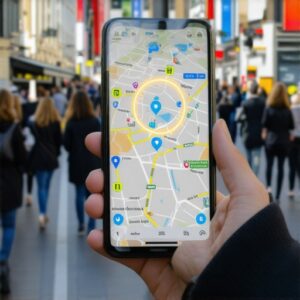
I’ll never forget the Tuesday afternoon my phone stopped ringing. I had spent the previous weekend “perfecting” my business profile by shoving every possible search term into the description box, thinking I was a local search wizard. I was convinced that if I just mentioned “local pack optimization” and “rank 3 pack” twelve times, Google would have no choice but to bow down. Instead, my map pin didn’t just drop—it completely evaporated. I learned the hard way that when you try to trick the algorithm with a word salad, you don’t just lose your spot; you lose your reputation with the very platform you rely on for customers. Today, I want to pull back the curtain on why these old-school tactics are the fastest way to get a manual penalty and how you can describe your services the right way to actually win.
Google Sees Right Through Your Keyword Lists
For a long time, the “experts” told us to treat the business description like a hidden treasure chest for keywords. We were told it was the secret sauce to improve local pack rankings. But here is the cold, hard truth: Google’s AI has grown up. It doesn’t need you to repeat “emergency roofer” five times to know you fix roofs. In fact, according to Google’s official guidelines, including “irrelevant” or “low-quality” content can lead to your profile being flagged or removed entirely. When I first started, I made the mistake of thinking I could outsmart a trillion-dollar company with a few extra commas. I was wrong. I was so focused on the “google maps boost” that I forgot the description is actually for the human being holding the phone.
Is a “boring” description actually worth the hype?
You might be skeptical. You see your competitors doing it and wonder why they haven’t been caught yet. It’s frustrating, I know. But here’s the thing: they are sitting on a ticking time bomb. While they are busy stuffing keywords, you can be busy building real authority. I’ve seen businesses experience a stealth ranking drop just because they changed a single sentence to something more “SEO-friendly” but less human-centric. Have you ever felt like your profile was stuck in the mud, no matter how many keywords you added? If you’ve faced that “Invisible Man” feeling even though you’re doing everything the gurus suggest, you’re in the right place. We are going to fix that by focusing on what actually triggers a positive response from the algorithm—and it’s not a list of services.
Stop treating your description like a digital billboard
Imagine your business description is a personal introduction at a local networking event. If you walked up to someone and shouted “Plumber Chicago Emergency Pipe Repair Cheap 24/7,” they would immediately walk away. Google’s algorithm has developed a similar social filter. Instead of treating that 750-character box as a dumping ground for every keyword you want to rank for, focus on the specific problems you solve for your neighbors. I found that describing your services the right way means weaving in local landmarks and service area mentions naturally. This provides geographic context that signals your relevance to the AI without triggering a spam filter. When you write for the person holding the phone, you aren’t just avoiding a manual penalty; you are giving the search engine the breadcrumbs it needs to connect your location to a user’s intent. Don’t waste space on things Google already knows from your category selection; use it to build trust.
Clean up the messy data behind the scenes
Your profile is only the tip of the iceberg. Below the surface, your website’s technical health is broadcasting signals to Google Maps every second of the day. One of the most common issues I encounter is a simple schema markup error that confuses the search engine about where you are actually located. Think of schema like a specialized GPS coordinate for robots. If your website code mentions an old suite number while your Google Business Profile shows the new one, your map pin effectively becomes “blurred” in the algorithm’s eyes. You cannot achieve rank 3 pack status if your data is conflicting across different corners of the web. Consistency is the primary currency of local search.
The 15-minute audit that saved my local ranking
Last year, I worked with a family-owned bakery that had completely disappeared from search results overnight. They had hired a low-cost agency that promised a massive google maps boost by building hundreds of low-quality links. To fix the damage, we didn’t add more content; we started subtracting the junk. We utilized our 15-minute audit routine to track down every instance where their business name was misspelled or their old tracking numbers were causing confusion. This was digital janitorial work—unclogging the data pipes so the ranking signals could flow again. Once the data was uniform, their ranking didn’t just return; it climbed higher than ever before. This tiny profile change proved that Google rewards the quality of your information over the sheer volume of keywords.
Your primary category is the foundation
If you get your primary category wrong, every other effort you make is like trying to win a marathon while wearing lead boots. I frequently see HVAC companies list themselves as “General Contractors” because they believe a broader category will cast a wider net. In reality, this is a death sentence for your local pack optimization. You need to be hyper-specific. If you repair heaters, you are an HVAC contractor. This specificity reduces the “noise” Google has to filter through, making it easier for the algorithm to trust that you are the best result for a specific search. When you align your category with your actual daily operations, you see a natural improve local pack trend because the relevance gap disappears.
If you think local pack optimization is just a numbers game, you’re playing by 2015’s rules. I see it every week: business owners buying hundreds of directory listings because a guru told them ‘volume is king.’ But in my experience, chasing quantity is the fastest way to signal to Google that your data is unreliable. In fact, most people don’t realize that buying 100 generic citations is a waste of your marketing budget and can actually dilute your local authority. Instead of casting a wide, thin net, I’ve found that focusing on five or six high-quality, niche-specific directories moves the needle significantly more than a thousand mentions on sites no one visits. This is where most cheap local SEO services lead you straight into a ranking disaster because they prioritize vanity metrics over actual algorithm trust.
Is your review response strategy actually a ranking killer?
Here is a contrarian take that often surprises my clients: stop stuffing keywords into your review replies. There’s a common myth that if you reply to a customer by saying, ‘Thanks for choosing us for your Emergency Plumbing in Chicago,’ it helps you rank. It doesn’t. The 2023 Local Search Ranking Factors survey by Whitespark indicates that while reviews themselves are a top factor, keyword-stuffed owner responses offer zero ranking benefit and can even look like spam to a human moderator. I’ve seen businesses get flagged when they reply to reviews with specific keywords repeatedly. It feels clinical and robotic. Instead, I always advocate for personalized review replies that sound like a real person. This builds the kind of user engagement signals that Google actually cares about today.
The ‘oops’ factor that most pros miss
One of the most dangerous traps you can fall into is what I call the ‘Automation Ghost.’ Many agencies set your profile on autopilot, using tools to blast out updates. But setting your review responses to auto-pilot is a local search death sentence. Google rewards activity, but it specifically rewards authentic activity. Another nuance involves your photos. Most people just upload a grainy smartphone shot and call it a day. However, I’ve discovered that you can actually prove your physical store location using specific image metadata. By ensuring your photos contain the correct EXIF data and GPS coordinates, you are handing Google undeniable proof of your business’s physical presence. This is a level of detail that generic ‘experts’ simply ignore.

Beyond photos, your site’s technical foundation is often whispering the wrong things to the search engine. I recently performed our 15-minute audit routine on a law firm’s site, only to find that their schema was pointing to a location they moved out of three years ago. These schema errors quietly kill your 3-pack presence because they create a conflict that the AI can’t resolve. When Google is confused, it defaults to the safe bet—which means your competitor gets the spot, and you get buried on page two. Have you ever fallen into this trap of prioritizing quantity over these technical nuances? Let me know in the comments.
It’s easy to get discouraged when you see a competitor suddenly leapfrog you after you’ve spent weeks on local pack optimization. I used to think that once I hit the top three, I could just coast and watch the leads roll in. But the reality is that the map is a living, breathing thing. If you aren’t actively defending your territory, someone else will take it. To avoid this, I’ve developed a simple daily routine to hold your spot in the top 3 that takes less time than drinking my morning coffee. It’s about small, consistent signals rather than occasional massive overhauls.
How do I keep my 3-pack spot for the long haul?
Maintenance is really about monitoring the ‘proximity ghost.’ You might see your business at #1 when you’re sitting in your office, but if you drive three blocks away, you might be at #7. This is why I rely on the specific software features needed to track local keywords without map bias. Tools like Local Falcon or BrightLocal’s Heatmaps are essential because they show you a grid of your rankings across the entire city. If I see a ‘weak spot’ in a specific neighborhood, I don’t just add keywords; I look for how hyper-local mentions from neighborhood orgs fast-track your map authority in that specific zip code. 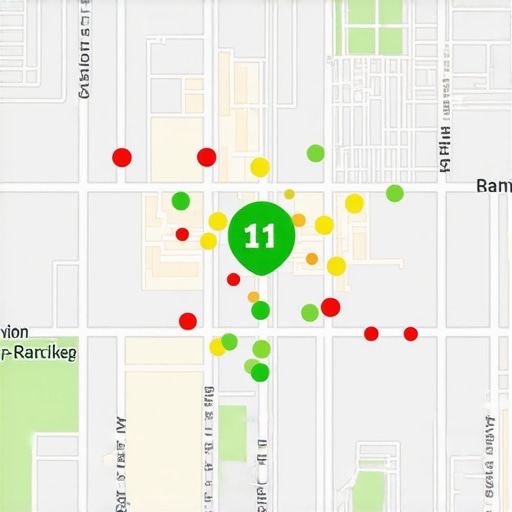
Use geo-grids to find your invisible weak spots
One of the biggest shifts I’m seeing—and this is my big prediction for the next 24 months—is the rise of ‘Visual Search Intent.’ Google is getting incredibly good at ‘reading’ the photos you upload. It’s not just about the EXIF data anymore; it’s about what is actually in the frame. If you’re a landscaper, Google’s AI knows the difference between a lawn mower and a hedge trimmer. This is why 5 simple photo tweaks that actually improve local pack visibility are becoming more important than traditional backlinks. According to technical analysis by Joy Hawkins at Sterling Sky, the interaction between user-uploaded photos and business-owner photos is becoming a primary trust signal. Scaling this up doesn’t mean working harder; it means being more surgical. Instead of broad outreach, focus on 5 specific niche citations that actually move the needle on map authority. These are the directories that Google actually visits. I’ve found that stopping wasting time on generic citations that no longer drive results frees up the budget to focus on high-impact local PR. If you want a real google maps boost, start treating your profile like a localized social media feed. Post a video update once a week. It shows Google—and your customers—that the lights are on and somebody is home. My challenge to you: pick one ‘weak’ neighborhood on your ranking grid today and find a local community blog or organization there to connect with. It’s the fastest way to improve local pack performance in a specific geographic pocket.
The Hardest Lessons I Learned Chasing the Map Pin
If there is one thing I have realized after years of trial and error, it is that you cannot bully Google into liking your business. I spent way too much time thinking that a google maps boost could be bought or automated. The reality is much more subtle. One of my biggest lightbulb moments was realizing that the hard truth about hiring a GMB SEO expert is that they often focus on metrics that do not actually lead to phone calls. Real authority comes from consistency and technical precision, not just raw volume.
Another hard lesson? Citation volume is a vanity metric. I used to think 200 listings were better than 20. I was wrong. I eventually discovered the hidden disconnect between citation cleanup and real map gains—it is better to have ten accurate, high-authority mentions than a hundred messy ones that confuse the algorithm. Lastly, I learned that your reputation is your ranking. When I stopped using templates and realized why generic review responses are tanking your local pack visibility, my engagement—and my rank—shot up immediately.
My Go-To Toolbox for Sustaining Your Edge
You do not need a massive budget to win, but you do need the right optics. I rely on a few specific tools to keep my clients in the top spots. For tracking, I avoid basic dashboards and look for the specific software features needed to track local keywords without map bias. Tools like Local Falcon or BrightLocal’s Heatmaps are my daily bread and butter because they show the ‘proximity ghost’ that other tools miss. For audits, I use our no-fluff checklist for auditing local listings to ensure no old data is dragging us down. I also highly recommend keeping an eye on industry leaders like Joy Hawkins for the latest algorithm shifts that affect local pack optimization.
Start Your Journey to Local Authority Today
The local landscape is going to keep changing, but the core principles of trust and relevance will remain. Don’t let the technical jargon overwhelm you. Every improve local pack journey starts with one small, accurate update. Whether you are fixing a suite number or finally replying to that six-month-old review with a personal touch, you are building the foundation for a sustainable rank 3 pack status. You have the tools and the knowledge now—it is time to stop over-optimizing and start being the best local answer for your customers. What is the one thing you are going to change on your profile today to get your next google maps boost? Let me know in the comments below!