I’ll never forget the Tuesday I almost threw my laptop out the window. I had spent weeks tweaking my website, begging for reviews, and double-checking that I wasn’t making that one fatal category mistake everyone talks about. Yet, there I was: stuck on page three. It felt like I was shouting into a void while my competitors—some of whom didn’t even have a website—were sitting pretty in the top three. Then it hit me. I was looking at their profiles and noticed they had these beautiful, clickable ‘Product’ cards. I ignored that section for months because I am a service provider, not a retail store. I thought, ‘Why would I list a consultation as a product?’ That was my first big blunder. Once I treated my services like tangible products, everything changed. My phone actually started ringing.
How I Finally Cracked the Code on Local Map Visibility
For the longest time, I believed the lie that the ‘Products’ tab was only for folks selling physical goods like shoes or lawnmowers. I spent all my energy on the hidden ranking signal in your services menu, thinking that was enough. It wasn’t. The reality is that Google’s algorithm is hungry for structured data, and the Products section is like a five-course meal for its crawlers. When you list a service as a product, you aren’t just giving customers something to click on; you are handing Google a clear, categorized map of exactly what you do. Have you ever felt like you were doing everything right but your profile just wouldn’t budge from the ‘More Businesses’ list? It is incredibly demoralizing. Today, we are going to solve that by turning your invisible services into high-converting product cards that grab attention and build authority.
Wait, is this just another useless feature?
You might be skeptical. I was too. I worried that listing my services twice—once in the menu and once in products—would look like spam. In fact, I was so paranoid about being penalized that I almost fell for the myth that keyword-stuffed descriptions lead to bans before I even started. But according to data from Search Engine Journal, Google uses entity-based search to connect consumer intent with specific business offerings, and the more ways you can define your ‘entity’ (your business), the better. I realized that my early mistake wasn’t just a technical error; it was a lack of empathy for the customer. People want to see what they are buying before they call. By adding professional images and clear pricing to my ‘services-as-products,’ I wasn’t just helping the algorithm; I was helping my neighbors trust me. If you have been trying to rank for high-intent near me keywords, this is the missing piece of the puzzle. We are going to dive into exactly how to set this up without looking like a robot, ensuring you finally improve your local pack rank for good.
Pick the Jobs That Actually Pay the Bills
Don’t make the mistake of listing every tiny task you perform. If you’re an electrician, don’t start with ‘light bulb replacement’ just to fill space. You need to lead with your ‘Hero’ services—the ones that have high search volume and high profit margins, like ‘Panel Upgrades’ or ‘EV Charger Installation.’ These are your high-intent hooks. I once tried to list 40 different small tasks for a client, thinking more was better, and it actually backfired. It diluted the profile’s authority and confused the algorithm. When you focus specifically on these heavy hitters, you are tapping into the secret to ranking for high-intent near me keywords. Start with your top three revenue generators and treat them like premium retail items.
Give Your Customers Something Real to Look At
Stock photos are poison for your map rank. I learned this the hard way when a competitor with half my reviews outranked me simply because they had photos of their actual truck and crew. Why your business photos need to show real people isn’t just a design tip; it is a conversion necessity. I once managed a carpet cleaning profile where we used a ‘perfect’ stock photo of a living room. It got zero clicks. As soon as we swapped it for a candid, slightly unpolished shot of the owner removing a wine stain from a rug, the ‘Product’ card started driving daily inquiries. Authenticity signals to Google that you are a real, active participant in your community. 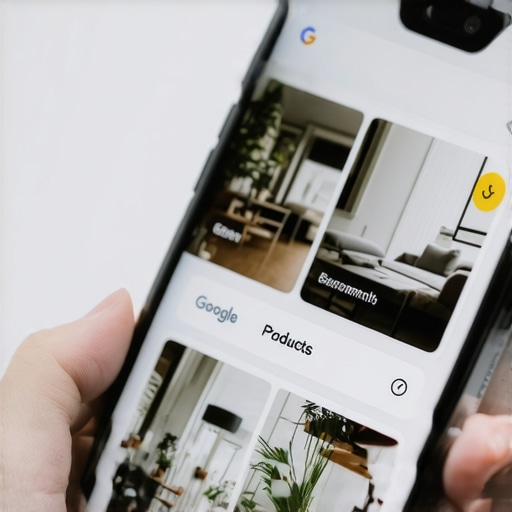
The Technical Bit That Most People Skip
When you upload a photo for a service-product, don’t just dump the file. The hidden data matters more than the pixels. Most business owners ignore the backend, but we use the exact metadata we add to store photos to jump the 3 pack to ensure Google knows the precise coordinates of where that service was performed. This bridge between your digital product card and your physical location is what solidifies your local authority. If Google sees a ‘Product’ for roof repair and the photo metadata confirms it was taken in your service city, you are winning.
Write for Humans Not for Search Bots
If your product description looks like a dictionary of zip codes, you are headed for a shadowban. Why your store description shouldn’t be a list of keywords comes down to user experience. Google’s AI is smart enough to know when you’re gaming the system. Instead, describe the specific problem you solve for the neighbor reading the card. Use the ‘Product’ description to answer the most common question you get on the phone. This helps how to fix the conversion gap between profile views and actual calls because you’re building rapport before they even dial.
Make Sure Your Website Can Keep Up
Each product card allows for a ‘Learn More’ or ‘Order’ button. If that button leads to a page that takes five seconds to load on a phone, your ranking will suffer. The impact of site speed on your 3-pack placement is a direct ranking factor that people often forget when they’re focusing on their GMB profile. Everything is an ecosystem. You can follow the no-fluff checklist for auditing your local listings in under an hour to ensure your technical foundations are as strong as your visual ones. By implementing these 7 real world data tweaks that improve local pack rank faster, you’re not just guessing; you’re building a profile that the algorithm can’t help but promote.Let’s dig deeper into why these tweaks actually work, because most people are still stuck in 2018 SEO while the world has moved on to entity-based search. Everyone tells you to go out and get listed in every directory possible to improve local pack visibility. I’m here to tell you that’s a trap. In my experience, focusing on volume over quality is the real reason your local authority strategy feels stagnant. If you’ve spent your weekend filling out forms only to see no movement, you’ve probably realized that why buying 100 generic citations is a waste of your marketing budget. Google doesn’t care about a mention on a random “top business” list; it cares about 5 specific niche citations that actually move the needle on map authority. This is where most business owners get frustrated. They see the 3-pack as a popularity contest, but it’s actually a test of accuracy and local prominence.
What if your office location is the real problem?
You can have the best photos and the most reviews, but if you’re trying to rank in a city where your physical office is just a half-mile outside the technical boundary, you’re fighting an uphill battle. I’ve seen the hidden signal in your physical address that prevents a 3 pack rank destroy otherwise perfect profiles. It’s a nuance that beginner guides never mention. According to the annual Whitespark Local Search Ranking Factors study, proximity remains a top factor, but data consistency across the ecosystem is what keeps you there. If you’re struggling with a stubborn rank, it might not be your content; it might be your coordinates or how you fix the data gaps in your google maps analytics to identify what’s truly holding you back. 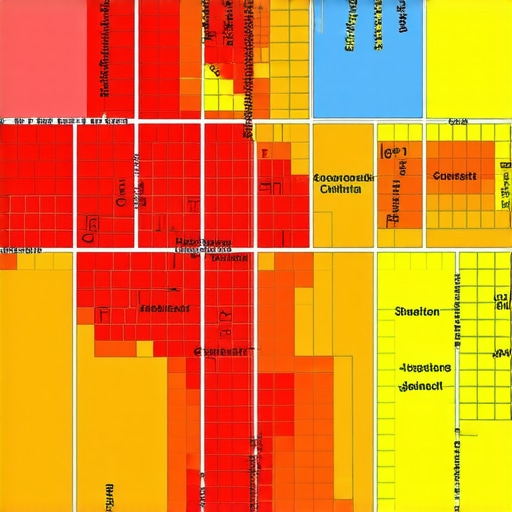
Stop stuffing keywords into your review replies
Here is a controversial take: stop trying to mention your primary service and city name every time you reply to a customer. Many “experts” still preach this, but why replying to reviews with specific keywords is a local pack mistake is becoming more obvious as Google’s spam filters evolve. It looks manipulative to both the algorithm and your customers. Instead of focusing on keywords, focus on the response velocity secret. Google rewards engagement and reliability. A fast, genuine reply signals that you are an active, trustworthy business far more than a keyword-heavy paragraph ever could. Have you ever fallen into this trap of over-optimizing your replies? Let me know in the comments. We need to move away from robotic tactics and toward real signals that prove you are the best choice for the neighborhood. This shift in mindset is what separates those who occasionally appear in the local pack from those who own it.Owning that top spot isn’t a one-and-done deal. I have seen businesses hit the number one position, celebrate with a team dinner, and then vanish to the second page a month later because they stopped doing the work. You have to realize that the local pack is a living ecosystem. Your competitors are watching you, and the moment you get lazy, they are going to swoop in. That is why I swear by the simple daily routine to hold your spot in the top 3. It is not about spending five hours a day on your profile; it is about those small, consistent signals that tell Google you are still the most relevant option in the neighborhood.
How do I maintain my map rank without losing my mind?
The secret to long-term success is automated monitoring paired with manual ‘heartbeat’ updates. I personally use Local Falcon to run weekly grid searches so I can see exactly where my visibility is dropping. If I see a red dot in a specific zip code, I know I need to focus my next few updates there. When it comes to the heavy lifting of cleaning up your digital footprint, knowing how to purge old citations without losing map authority is critical. You cannot just delete things and hope for the best; you have to be surgical. I also rely on 5 tools we use to spy on local competitors citation sources to see where they are getting their juice. If they found a local niche directory I missed, I’m on it within the hour. 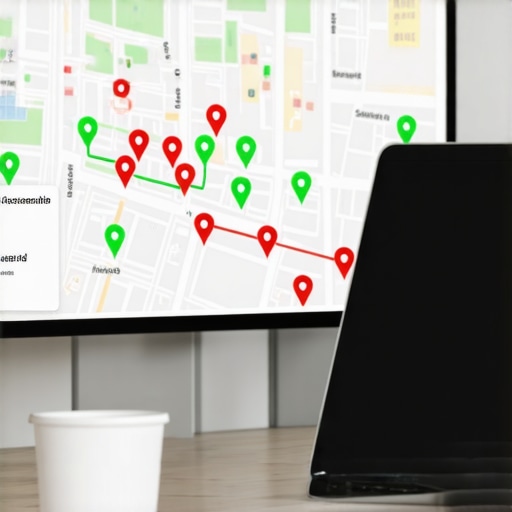
Tools That Actually Pay For Themselves
Stop buying every shiny new SEO software that hits your inbox. Most of them are just repackaged data you can find for free. I focus on tools that help me with the specific way to geotag store photos for maximum impact. I use a dedicated EXIF editor to ensure every photo I upload has the exact GPS coordinates of the job site. This is a technical detail that most people ignore, but it is what connects your digital ‘product’ to a physical location in Google’s eyes. According to the Google Business Profile Help Center, ‘Prominence’ is calculated based on information that Google has about a business from across the web. This means your off-site mentions need to be just as polished as your profile.
Why Your Results Will Fade If You Get Lazy
Looking ahead, I predict that ‘Visual Search’ is going to be the next big battleground. Google is already using AI to ‘read’ your photos to see if they match the search query. This is why why your profile needs fresh exterior shots every season is becoming more than just a suggestion—it is a requirement for staying modern. If your photo shows snow in July, the algorithm knows your content is stale. I want you to try one thing this week: take one of your most popular services, geotag a high-quality photo of it being performed, and upload it as a ‘Product’ card. Watch your insights tab over the next 14 days and you’ll see exactly why these technical details matter.
The Hardest Lesson I Learned About Dominating the Map
I used to think that volume was the only metric that mattered. I chased every review and every mention like my life depended on it, but I eventually realized that the hidden cost of using automated review responses was killing my authenticity. Google’s AI is incredibly good at sniffing out shortcuts. I also learned that why replying to reviews with specific keywords is a local pack mistake is one of those ‘pro tips’ that actually does more harm than good in modern SEO. My biggest lightbulb moment? Realizing that why local check-ins are more valuable than generic stars. It’s the proof of physical presence that truly forces a google maps boost. Finally, I stopped ignoring the ranking difference between open now and 24 hours, which taught me that availability is just as much a ranking signal as relevance.
The Gear I Use to Keep My Profiles in the Top Spot
You don’t need a massive budget to win at this game, but you do need precision. Here is what I keep in my digital toolbox: First, I use 5 tools we use to spy on local competitors citation sources to ensure I’m never missing out on a high-value niche mention. I also swear by a dedicated EXIF editor because the specific way to geotag store photos for maximum impact is what bridges the gap between a generic photo and a hyper-local signal. For auditing my data, I always refer back to the no-fluff checklist for auditing your local listings in under an hour to catch errors before the algorithm does. #IMAGE_PLACE_HOLDER_E# Lastly, I monitor site speed religiously because the impact of site speed on your 3-pack placement is the one technical factor that can sink even the best profile.
Your Neighborhood is Waiting to Find You
The journey to the top of the map isn’t a sprint; it’s a series of intentional, data-driven steps. Every time you update a photo, reply genuinely to a neighbor, or refine your category, you are sending a signal that you are the most reliable choice in your area. Don’t let the technicalities overwhelm you. When you improve local pack visibility, you aren’t just chasing numbers—you’re making it easier for people in your community to find the help they need. The map is always moving, but with these tools, you are the one setting the pace. Have you ever noticed your rank drop after changing something small like your phone number or business hours? Let me know your experiences in the comments below!