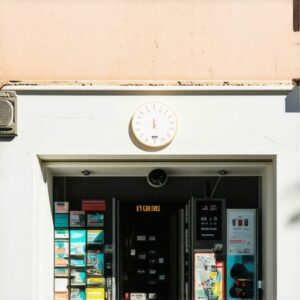
It was eighty-five degrees outside, the kind of heat that makes the asphalt shimmer, and there I was, staring at my phone in disbelief. My Google Maps listing featured a beautiful, crisp photo of my storefront—buried under three feet of snow. I looked like a business that had been abandoned since the previous January. It hit me right then: if I’m a customer looking for a quick repair or a cold drink, am I going to trust a place that looks like it’s currently in a deep freeze while I’m sweating through my shirt? Probably not. I realized that my “set it and forget it” attitude toward my profile was actually pushing potential customers straight into the arms of my competitors. I was trying to fix a map ranking that was stuck on page two, but I was ignoring the most obvious visual cue right in front of me.
Your Profile Should Look Like You Are Open Right Now
I spent months wondering why my local pack optimization efforts were stalling. I had the keywords, the reviews, and the citations, yet I was stuck. The problem wasn’t my SEO strategy in the traditional sense; it was my visual relevance. When you fail to update your exterior shots, you’re sending a subtle signal to both Google and your neighbors that you might not be paying attention. I made the mistake of thinking my professional headshot or a sleek logo was the heavy hitter, but your store entrance photo is actually more important than your logo when it comes to converting a searcher into a visitor. Today, I’m going to show you how a simple seasonal rotation of your exterior shots can keep your ranking from freezing over and ensure you hold your spot in the top 3.
Is a quick photo update actually worth the hassle?
You might think nobody notices, but the data says otherwise. According to a study by BrightLocal, businesses with more than 100 photos on their Google Business Profile get 520% more calls than those with fewer. It’s not just about quantity, though; it’s about accuracy and current context. When I finally swapped that snowy storefront for one with blooming spring flowers, my click-through rate jumped almost overnight. I’ve learned that specific photo tweaks, like capturing the current weather or seasonal decor, provide “visual proof of life.” It tells the algorithm—and the person holding the phone—that you are active, relevant, and ready for business.
Stop Letting Your Competitors Look More Relevant
Have you ever felt like you’re doing everything right, but that one shop down the street keeps hogging the top spot? Check their photos. They probably have shots of their pumpkin displays in October and their patio seating in June. I used to ignore this, thinking it was “fluff,” but showing real people and current conditions creates an immediate connection. I even started diving into adding specific metadata to my store photos to ensure Google knew exactly when and where they were taken. It’s a small move, but it’s the difference between being a ghost listing and a local landmark. Have you looked at your own profile lately—does it actually look like your business does today? If your exterior shots are from three years ago, you are quietly telling customers you might not be there anymore.
Look Through the Eyes of Your Searcher
To start your local pack optimization, you have to stop thinking like a business owner and start thinking like a hungry, frustrated person with five minutes to spare. When I audited a local bakery last year, their profile was technically perfect—NAP was consistent, reviews were high—but their main photo was a dimly lit shot of a closed security gate from three years ago. We immediately swapped it for a bright, high-resolution shot of their current seasonal window display. This simple change is why your map listing needs a physical storefront photo that matches what the customer sees on the sidewalk right now. If the user feels a disconnect between the digital pin and the physical building, they won’t click.
Give Google Proof of Life Every Seven Days
Freshness is a massive signal that most people ignore because they think google maps boost comes from a one-time setup. It doesn’t. You need a rhythm. I’ve found that why your profile needs to be updated every 7 days isn’t just a suggestion; it’s the threshold for staying relevant in competitive markets. During a particularly slow month for a client, we started posting ‘behind the scenes’ photos of their morning setup. Not only did this improve local pack visibility, but Google started displaying their ‘busy hours’ more accurately because of the increased engagement. It turns out why your stores busy hours data is a ranking signal that rewards active businesses with better placement during peak times.
Link Your Map Pin to Your Real Front Door
Precision is the enemy of the ‘page two’ slump. One of the most frustrating things I ever dealt with was a client whose pin was stuck in the middle of a parking lot behind their building. We used the small move that fixed our stuck map pin for good by manually adjusting the coordinates and then reinforcing that location with geotagged images. To boost 3 pack rankings, you must prove your physical store location using specific image metadata. When you upload a photo taken on-site, the EXIF data tells Google: ‘Yes, this business is exactly where the map says it is.’ This is especially critical if you are trying to master the secret to ranking for near me searches in suburbia, where distances are longer and location trust is harder to earn.
Use Landmarks to Win Over the Algorithm
Don’t just describe your services in your profile description; describe your location relative to the community. When I stopped using generic sales fluff and started writing about how our office was ‘three blocks north of the old town clock,’ our relevance scores spiked. This is exactly why your business description should focus on neighborhood landmarks. It anchors your business in the local geography in a way that keywords like ‘best plumber’ never will. We combined this with the map embed strategy that actually helps customers find your front door on our website to create a closed loop of location signals. Avoid the temptation to over-optimize; remember that why keyword stuffed descriptions lead to invisible profiles and bans is a real risk that can undo all your hard work in a single algorithm sweep.Most experts will tell you that the secret to a google maps boost is simply collecting as many 5-star reviews as possible. In my experience, that’s only half the story. You can have five hundred reviews and still get buried by a competitor with fifty if their engagement signals are more geographically relevant. This is why local check-ins are more valuable than generic stars. Google isn’t just looking for praise; it’s looking for proof that the customer was actually at your physical location when they engaged with your profile. In the 2023 Local Search Ranking Factors survey by Whitespark, experts noted that while on-page signals are massive, the quality of ‘local intent’ in reviews—meaning reviews that mention specific neighborhoods or services—often outweighs a generic ‘great job’ post. Let’s dig deeper into why your current strategy might be hitting a ceiling.
The Hidden Data Gaps Sabotaging Your Rank
One of the biggest mistakes I see established businesses make is ignoring their own dashboard. They see the green arrows going up and assume they are winning. But if you don’t know how to fix the data gaps in your google maps analytics, you are likely missing the fact that your traffic is coming from a tiny three-block radius while your competitors are pulling from the next town over. This often happens because your ‘services’ section is a mess. I found that the hidden ranking signal in your services menu is far more influential than the business description itself. If your services aren’t explicitly defined and mapped to local intent, Google won’t feel confident showing you for ‘near me’ queries outside your immediate parking lot. 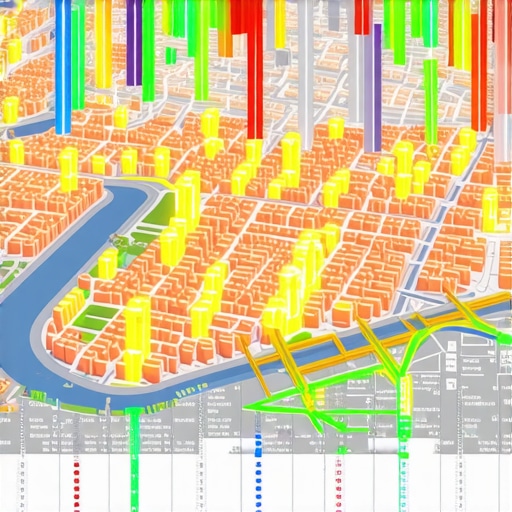
Can you actually rank without a physical street address?
It’s a common question, especially for those trying to improve local pack visibility while working from home. The ‘oops’ factor here is trying to cheat the system with a P.O. Box or a virtual office. This is a one-way ticket to a permanent ban. However, if you are a legitimate service-area business, you have to be careful about your reach. I’ve seen dozens of contractors fail because of the problem with having too many service area cities. When you tell Google you serve a 50-mile radius, you dilute your authority everywhere. It is much better to dominate three specific zip codes than to be invisible in thirty.
Why Your Category Choice Is a Silent Killer
Another nuance that beginners miss is the ‘Primary Category’ trap. You might think being a ‘Restaurant’ is enough, but if your main revenue comes from catering, why your primary business category is likely sabotaging your 3-pack rank becomes obvious once you see a specialist outrank you. Google prioritizes the primary category above all else. If yours is too broad, you’re competing with everyone; if it’s too narrow, you’re missing the volume. To boost 3 pack performance, you need to match your category to the specific keyword that has the highest local intent in your city. Also, never underestimate the response velocity secret. How fast you reply to messages and reviews tells Google you are an active, high-quality business, which directly impacts your local pack optimization. Finally, double-check your NAP. Even why a single suite number error kills your map visibility is a reality because it creates a ‘data conflict’ that makes Google trust your location less. Have you ever fallen into this trap or noticed a sudden dip after a minor edit? Let me know in the comments below.Once you stop the bleeding from those technical errors, the real game begins: staying there. I’ve seen businesses hit the top three and immediately stop doing the very things that got them there, only to vanish six weeks later. To maintain a real google maps boost, I’ve developed a strict morning workflow that I call my 600-second audit. I literally set a timer. This isn’t about deep-dive analytics; it’s about checking for ‘suggested edits’ from competitors and ensuring my local pack optimization isn’t being sabotaged by someone reporting my shop as closed. I follow the 10-minute daily checklist to track and fix your google maps ranking because it keeps me disciplined. If you aren’t looking at your profile every day, you are essentially leaving your front door unlocked in a bad neighborhood.
Link Your Website and Map Pin for a Shared Authority
One thing I’ve noticed is that Google treats your website and your map profile as a single entity, even if they live on different platforms. I personally use a strategy where I connect my local landing page directly to my map pin using specific URL parameters. This allows me to see exactly which website clicks are coming from the map versus organic search. To truly improve local pack visibility, your website needs to echo what your profile says. If your site mentions a service that your profile doesn’t, you’re creating a ‘trust gap.’ I always ensure the schema errors that quietly kill your 3-pack presence are addressed on the backend so the data matches perfectly.
How do I maintain this ranking over months and years?
The short answer is consistency over intensity. You don’t need to post fifty photos in one day; you need to post one photo every week. I rely on the simple daily routine to hold your spot in the top 3. This includes replying to every single review—yes, even the 1-star ones—within 24 hours. According to research by Joy Hawkins at Sterling Sky, the proximity of the searcher is the strongest ranking factor, but ‘activity’ is the strongest signal you can actually control. If Google sees a business that is constantly being updated, it feels safer recommending that business to a user. 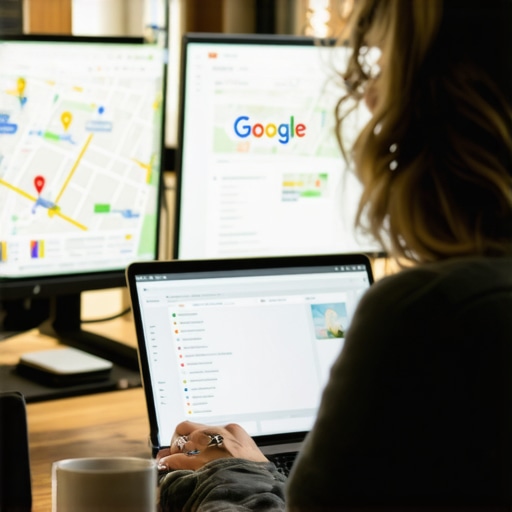
Prepare for the Future of Local Inventory
I’m predicting that the next two years will move away from ‘keywords’ and toward ‘live inventory.’ We are already seeing Google prioritize businesses that connect their physical inventory to local search results. If someone searches for a specific drill or a particular brand of coffee, and you’ve synced your Point of Sale (POS) system with your profile, you will leapfrog every competitor who is still just using generic keywords. This is the ultimate google maps boost because it satisfies the user’s intent instantly. I also recommend you use local map data to identify new competitors before they have a chance to take your spot. Don’t wait for your phone to stop ringing to realize someone has moved into your territory. My challenge to you today: go into your ‘Services’ menu right now and add a photo for every single service you offer. It’s a small move, but it’s the most effective way to boost 3 pack authority this week.
Realizations That Changed My Local Pack Optimization Game
Looking back at my journey with local search, I realized that my biggest mistake was treating my profile like a static billboard rather than a living storefront. I used to think bulk updates were the key to a quick win, but learning why most profile updates actually trigger a stealth ranking drop taught me that surgical, incremental changes are far more effective for a sustainable google maps boost.
- Precision beats volume: I found the hidden disconnect between citation cleanup and real map gains early on. It isn’t about having thousands of mentions; it’s about having five that Google actually trusts.
- Experts need to be local: There is a hard truth about hiring a GMB SEO expert—if they don’t understand the physical geography of your neighborhood, they can’t help you rank in the top spots.
- Small details matter: I spent months ignoring a suite number error, not realizing why a single suite number error kills your map visibility until my traffic completely flatlined.
Where I Turn for Reliable Local Data
I don’t guess when it comes to local data anymore; I rely on a specific set of habits and tools that provide clarity when the algorithm feels chaotic. The first thing I do when I feel stuck is run the no-fluff checklist for auditing your local listings to find simple human errors that might be blocking my progress. To keep an eye on the neighborhood, I use 5 tools we use to spy on local competitors, which helps me see where they are getting their best links. Finally, I make it a point to stop ignoring your Q&A section. It’s a free way to build trust and add relevant keywords without looking like a spammer.
It Is Time to Own Your Map Presence
Every day you wait to fix that map pin is a day a competitor is taking your potential phone calls. You don’t need a massive marketing budget to improve local pack visibility; you just need a commitment to accuracy and consistency. I want to see you bridge the conversion gap between profile views and actual calls so your digital effort turns into real-world revenue. Go take a fresh photo of your front door today and watch how it revitalizes your rank 3 pack efforts. What is the oldest photo currently sitting on your Google Business Profile? Let me know if you are planning to update it this week!