I remember sitting at my desk three years ago, staring at a local search grid that was a sea of red. My business was nowhere to be found in the 3-pack, even though I had more reviews and a prettier website than anyone else on the map. I was frustrated, bordering on angry. Then I saw it. A competitor with a half-baked profile was sitting at #1 simply because they called themselves a ‘Personal Injury Attorney’ while I had lazily selected ‘Law Firm.’ That one word was the difference between a ringing phone and total silence. It was a painful realization: I was literally telling Google to ignore me for the searches that actually mattered. I had fallen into the trap of being too broad, and it cost me thousands in lost leads before I finally woke up.
That One Tiny Drop-Down Choice That Keeps Your Phone From Ringing
Today, I want to show you how to stop that bleeding. Most of us treat that primary category field like a quick administrative task, but it is actually the most powerful lever you have for a google maps boost. If you get this wrong, all the high-quality photos and keyword-rich reviews in the world won’t save you. We are going to look at why your primary category selection is likely sabotaging your search rank and how to pick the specific niche that forces Google to take notice. I made the mistake of being a generalist early on, and I don’t want you to waste six months like I did.
Does a single word really carry that much weight?
You might be skeptical. After all, shouldn’t Google be ‘smart’ enough to know what you do based on your website? The hard truth is that the primary category is the ‘filter’ through which Google views your entire business. According to the annual Local Search Ranking Factors study by Whitespark, the primary GMB category remains the #1 foundational ranking factor for the local pack. If you are a plumber but you’ve listed yourself under ‘General Contractor,’ you are fighting an uphill battle you will never win. You need the exact way to describe your services so the algorithm stops guessing. Have you ever looked at your competitors and wondered how their messy, low-effort profiles are outranking your polished one? It’s almost certainly because they are aligned with the specific intent of the searcher. We often get distracted by the bells and whistles, but if your foundation is cracked, the house won’t stand. Before we dive into the data audits, we have to fix the identity crisis your profile is likely having right now. To do that, we need to look at how to fix the data gaps in your google maps analytics to see where you are actually losing people.
To move the needle, you have to stop thinking of your Google Business Profile as a static digital business card and start treating it like a high-precision lighthouse. If the light isn’t aimed exactly at the ships you want to attract, you’re just burning fuel in the dark. The first step in achieving a real google maps boost is a brutal audit of your current category alignment. You need to see exactly what the winners are doing, and for that, I rely on 3 local seo tools that find your competitors hidden citations to peek behind the curtain and see which specific sub-categories they are leveraging to dominate the rank 3 pack.
Stop Guessing and Start Looking at Your Competitors Playbook
I once worked with a boutique dental clinic that was desperate to improve local pack visibility but remained stuck on page two for months. They had great reviews, but their primary category was set to a generic ‘Dentist’ tag. The problem? Their highest-revenue patients were searching for ‘Cosmetic Dentist.’ We made that one-word switch on a Tuesday afternoon. By Thursday morning, they had jumped four spots into the 3-pack. It wasn’t a slow crawl; it was an overnight flood of new patient inquiries. This taught me that Google doesn’t reward effort; it rewards precision. To replicate this, you must look at your secondary categories. Think of these as supporting actors that give the lead role (your primary category) more depth. If you are a plumber, don’t just stop there; add ‘Drain Cleaning Service’ or ‘Water Heater Repair’ if those are your money-makers.
Clean Up the Digital Debris Holding You Back
Once your identity is sorted, you have to deal with the ‘digital debris’—those old, conflicting addresses and phone numbers floating around the web. I call this the anchor effect. Every time Google finds a version of your business with a different suite number or an old tracking phone number, it loses a little bit of trust in your location. You have to learn how to fix the messy data errors killing your 3 pack rank before you spend a dime on new ads. This cleanup isn’t glamorous, but it is the bedrock of boost 3 pack success. Beyond just the big directories, you should focus on 5 niche directory fixes that force your map pin upwards to ensure your industry-specific authority is unquestionable.
Bridge the Gap Between Your Website and the Map Pin
Google looks for ‘scent’—it wants to see that the information on your website perfectly mirrors what is on your profile. If your website mentions you offer emergency 24/7 service but your GMB profile says you close at 5 PM, the algorithm gets confused and demotes you. Many businesses suffer because of why missing on-site attributes are killing your 3-pack rank, such as not having your service area clearly defined in the footer. Furthermore, you must ensure your technical foundation is solid by addressing the schema markup error that keeps your profile out of local search. Finally, don’t underestimate the power of the human element. Instead of using robotic templates to reply to customers, learn how personalized review replies outperform keyword stuffed templates to build the kind of engagement signals that Google’s AI actually rewards.
It’s easy to get obsessed with the numbers, but I’ve seen businesses with 500 reviews get buried by a competitor with only 50. Most people think more reviews equals an automatic rank 3 pack win, but that is a dangerous oversimplification. According to research by Joy Hawkins at Sterling Sky, review quantity isn’t the silver bullet we once thought; Google is now prioritizing relevance and real-world behavior signals over sheer volume.
Why Shoving Keywords into Review Replies Backfires
A common trap I see is the ‘keyword stuffing’ obsession in responses. Everyone tells you to put your services in the review replies, but I’ve found that replying to reviews with specific keywords is a local pack mistake that many still make. It feels robotic to your customers and can actually flag your account for manipulation if you’re over-optimizing. Instead, focus on the response velocity secret to show Google you are active. Google rewards businesses that are responsive, not just those that are good at cramming ‘plumber near me’ into a thank-you note. Using personalized review replies builds genuine trust signals that the algorithm actually craves.
Can your physical store’s Wi-Fi actually help you rank?
It sounds like a tech-conspiracy, but we’re entering an era where Google looks at ‘environmental signals.’ I’m talking about things like guest Wi-Fi usage and real-time store foot traffic. For instance, in-store environmental sensors are the next big signal for a google maps boost that moves beyond the traditional digital footprint. If Google sees a cluster of mobile devices—actual humans—spending time at your location, it provides a massive google maps boost that no amount of fake citations can replicate. It’s about proving your business is a real hub of activity in your community. 
Avoid the stealth ranking drop when you update
Here is a mistake that almost cost me a major client: updating the profile during the busiest part of the day. You might think you’re being proactive by fixing a typo at noon, but most profile updates actually trigger a stealth ranking drop that can last for hours. When you change your hours or description during peak search hours, Google’s verification systems may temporarily ‘throttle’ your visibility. This is often the real reason your map pin disappears during peak business hours. Always make your big changes during off-peak hours.
The ‘Ghost’ Listings Killing Your Momentum
Beyond the profile itself, you have to look at the ‘ghosts’ in your building. I’ve seen many businesses lose their boost 3 pack because of ghost profiles in your building dragging down your 3 pack rank. If an old tenant never closed their listing, Google gets confused about who actually occupies that space. You also need to look beyond the big-name directories and focus on 5 specific niche citations that actually move the needle on map authority. These industry-specific boards carry more weight than generic listings. Have you ever noticed your ranking tank right after you tried to ‘improve’ something on your profile? Let me know in the comments if you’ve fallen into this trap.
Stop Flying Blind with Fake Data and Biased Reports
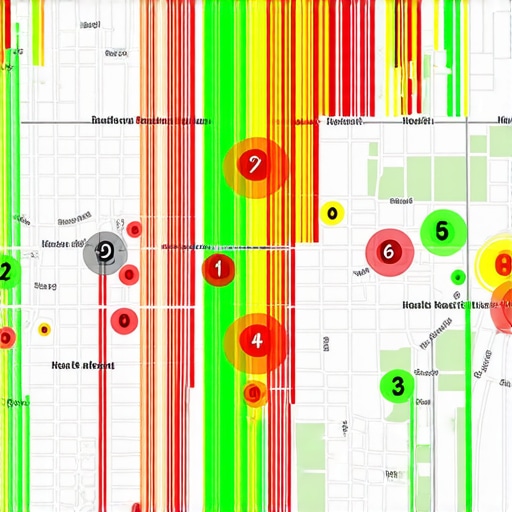
The biggest lie in local SEO is the static PDF ranking report. If your agency sends you a screenshot showing you’re #1, they are likely standing in your parking lot when they run it. To actually improve local pack standing, you need to see the grid—the literal map of where you win and where you lose. I personally rely on localized grid trackers because they reveal exactly where your ‘authority’ ends. When choosing a tool, you need to look for the specific software features needed to track local keywords without map bias. If you aren’t seeing your rank from three miles away, you aren’t seeing the truth. I’ve seen businesses fire their consultants after realizing their ‘top rankings’ were only visible within a two-block radius. If you’re hiring help, watch out for 4 red flags your local seo reseller is using outdated tools, such as relying on old-school browser-based searches that don’t account for mobile GPS coordinates.
How do I keep my map pin in the top three for the long haul?
Maintenance isn’t about massive overhauls; it’s about micro-actions. I’ve developed the 10 minute daily checklist to track and fix your google maps ranking that keeps the algorithm happy without eating up your entire morning. This includes checking for ‘suggested edits’ from competitors who might be trying to change your phone number or mark you as ‘permanently closed’ while you sleep. Beyond that, the secret to a sustained google maps boost is refreshing your visual data. Don’t just upload any photo; use 5 simple photo tweaks that actually improve local pack visibility to ensure your metadata is screaming ‘relevance’ to Google’s vision AI. According to the Google Business Profile API documentation, businesses that engage with user-generated content—like tagging photos or answering community questions—see a significant increase in ‘discovery’ impressions compared to static profiles.
Scaling your local presence without getting flagged as spam
Once you dominate one neighborhood, the urge is to copy-paste that success everywhere. Resist that urge. Google’s spam filters are more sensitive than ever to ‘templated’ local footprints. If you’re managing multiple spots, you need to know how to scale local content across 10 law firm locations without looking like spam. Each location needs its own heartbeat—its own local photos, its own unique reviews, and its own local community backlinks. I always tell my clients to focus on the backlink strategy that actually connects your profile to local search results rather than chasing high-DA guest posts that have nothing to do with your city. This hyper-local focus is the only way to boost 3 pack rankings across an entire region without triggering a suspension.
The AI-driven future of the 3-pack
Looking ahead, the ‘3-pack’ as we know it is evolving into a ‘Search Generative Experience.’ Google is beginning to pull data from your website’s hidden corners to answer specific user queries directly in the map interface. This makes essential google business profile tips for the 2026 local search cycle critical for anyone who wants to stay relevant. We are moving toward a world where your ‘entity’—the digital sum of your business—matters more than your keywords. If you want to stay ahead, my best advice is to try this one advanced tip: start uploading short, 30-second ‘behind the scenes’ videos directly to your profile updates. Google is heavily weighting video engagement right now as a way to verify that a business is real and active. Don’t wait for your competitors to do it first; start claiming that territory today.
What Three Years of Red Grids Taught Me About Google
Reflecting on my journey, the most painful lesson was realizing that local pack optimization isn’t about gaming the system; it’s about proving you exist in the physical world. I spent too much time chasing numbers and not enough time fixing the messy truth about why your service radius is shrinking your 3-pack presence. Here is what I know now: First, the primary category is your North Star—if that is wrong, nothing else works. Second, speed of engagement matters more than a thousand silent reviews. Third, your physical storefront’s ‘vibe’ (signals like guest Wi-Fi) is starting to leak into the digital world. Finally, I realized that why your primary category selection is likely sabotaging your search rank was the biggest hurdle I ever faced, and fixing it was like unlocking a floodgate.
#IMAGE_PLACE_HOLDER_E#
The Only Tools Worth Your Monthly Subscription
I’ve tested dozens of apps, but only a few stay on my taskbar. I live by localized grid trackers because they kill the ‘parking lot bias’ that makes you think you’re winning when you’re actually invisible three miles away. To stay ahead, I recommend adopting the 10 minute daily checklist to track and fix your google maps ranking which keeps me from obsessing over the wrong metrics. I also swear by specialized image metadata tools; making 5 simple photo tweaks that actually improve local pack visibility has done more for my map pin than any traditional backlink ever did. Lastly, don’t ignore niche directories—they are the quiet authority builders that the big players often overlook.
Claim Your Place on the Map
You have the data and the strategy, but the map is always moving. Don’t let the fear of a ‘stealth drop’ stop you from making progress. Every time you fix a citation or respond to a review with genuine care, you are building a wall around your business that competitors will struggle to climb. It is time to take control of your google maps boost and show your community that you’re the local authority they have been looking for. Have you ever noticed your ranking tank right after you tried to ‘improve’ something on your profile? Let me know in the comments below if you have fallen into this trap.