I remember the sinking feeling in my stomach when I first looked up my own workshop on Google Maps years ago. Instead of my freshly painted storefront, I saw a grainy image of a vacant lot from 2012. It looked like I was running a business out of a literal wasteland. I’ve seen this happen to hundreds of owners: you spend thousands on a beautiful sign, only for Google to show potential customers a picture of the alleyway behind your building or, worse, a competitor’s dumpster across the street. It’s a gut punch to your branding. You work so hard on local pack optimization, but the visual finish line is a disaster.
The Ghost of Your Building’s Past is Chasing Away Customers
It’s frustrating. You’ve done the heavy lifting to improve local pack visibility, but when someone actually clicks, they see a visual mess. This isn’t just an aesthetic annoyance; it’s a conversion killer. According to Google’s own data, businesses with high-quality photos are twice as likely to receive a request for directions. If people can’t recognize your shop from the street view, they won’t feel safe or confident enough to visit. Today, I’m going to show you exactly how to wrestle control back from the algorithms and ensure your digital curb appeal matches reality. We’ll look at why your store entrance photo is more important than your logo when it comes to winning over local searchers. Have you ever searched for your own business and felt that cringe because the photo was just plain wrong?
Does a Single Bad Photo Actually Kill Your Traffic?
You might think people are smarter than a computer glitch, but human psychology is a fickle thing. If your map pin is correct but the image shows a construction site, the user assumes you are closed or moved. I made a massive mistake early in my career of thinking Google’s Street View car was the final authority and that I just had to wait for it to drive by again. I waited two years. The truth is, you can’t just wait. You have to take proactive steps, like fixing a map pin that refuses to move to the right spot and uploading your own 360-degree imagery. It’s especially tricky for businesses in malls where visibility inside a complex is often misaligned with the street view exterior. We are going to fix that today by forcing Google to look at the right entrance and ensuring that your storefront sign is the star of the show.
Stop Letting Algorithms Define Your Storefront
Think of your Google Business Profile like a digital shop window. If you leave it to the Google Street View car, it’s like letting a random passerby take a blurry Polaroid of your shop and taping it to your front door. You wouldn’t do that in the real world, so don’t do it online. The first thing you need to do is flood your profile with your own high-quality imagery. This is the foundation of local pack optimization. When you provide the data, Google is less likely to rely on outdated third-party captures. I’ve found that why your map listing needs a physical storefront photo isn’t just about looks; it’s about verifying your physical existence to a skeptical algorithm.
Upload Your Own Evidence of Existence
Last summer, I worked with a local florist whose map pin was stuck in the middle of a busy intersection. No matter how many times we edited it, the pin stayed in traffic, frustrating customers and tanking their rank 3 pack efforts. We finally broke the loop by uploading a series of high-resolution shots showing the shop relative to the street corner. We even used how to use customer photos to prove your store exists by encouraging regulars to snap a shot of their bouquets right outside the door. Within 72 hours, the AI recognized the landmark, and the pin finally moved to the correct rooftop. This proves that user-generated content acts like a digital witness for your business location.
The Right Way to Geotag Your Images Manually
Google looks at the metadata of your photos to confirm you are where you say you are. If you take a photo with a professional DSLR that has GPS turned off, you’re missing a huge opportunity to improve local pack signals. You need to understand the specific way to geotag store photos for maximum impact. Use a tool to embed your exact latitude and longitude into the EXIF data of every image before you upload it. It’s like giving the Google bot a GPS-guided tour of your facility. This level of detail helps boost 3 pack visibility because it builds layers of trust that a simple text description can’t match.
Seasonal Updates Keep the Robots Happy
A photo of your shop covered in snow might look cozy in December, but it looks abandoned in July. Stale photos signal a stale business. You need to treat your profile like a living document. This is why I tell everyone why your profile needs fresh exterior shots every season. It’s a low-effort way to show Google you are active and operational. While you’re at it, double-check that your digital data matches your physical reality. Errors in your backend can be invisible but deadly; for instance, the impact of local schema on your 3-pack conversion rate is massive because it connects the dots between your website and your map pin. If your website says one thing and your map photo shows another, the conversion dies instantly.
Force a Refresh When the Pin Stays Put
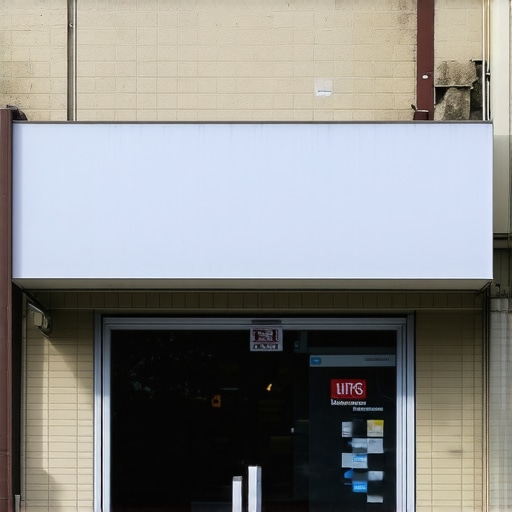
If you are struggling with a location that just won’t update, you have to get aggressive. Don’t just click ‘suggest an edit’ once and pray. You need to learn how to fix a map pin that refuses to move by leveraging multiple data points. This includes ensuring the ranking benefit of having a clear storefront sign is fully utilized. A clear, readable sign in your photos allows Google’s Optical Character Recognition (OCR) to read your business name directly from the image, which is one of the strongest verification signals available for google maps boost success.
Most local business owners assume that more is always better when it comes to local pack optimization. They buy hundreds of directory listings, thinking volume equals authority. I’ve found the opposite to be true. In my experience, a handful of hyper-local, high-quality mentions beats 500 low-tier directories every single time. It is better to stop buying cheap map citations and focus on quality. A recent study by Whitespark highlighted that while citations are a foundational element, their weight as a primary ranking factor has shifted toward behavioral signals and profile completeness. If you are just chasing numbers, you are missing the forest for the trees.
Stop Buying Cheap Citations and Expecting Magic
The biggest ‘oops’ factor I see with advanced clients is the hidden disconnect between citation cleanup and real map gains. You might spend weeks fixing a street suffix on an obscure website while your actual profile languishes because of poor engagement. Google is looking for signals of life, not just static data. This is how to improve local pack visibility: give the algorithm proof of activity. I often recommend focusing on local check-ins because why local check-ins are more valuable than generic stars comes down to physical verification of the customer’s journey.
Is your service radius actually sabotaging your 3-pack rank?
One of the biggest traps I see is what I call the ‘Greed Radius.’ Business owners think that by selecting every city within 50 miles in their dashboard, they will show up everywhere. Google’s algorithm is smarter than that; it looks for proximity and relevance. If you are a plumber in a downtown core but claim a 100-mile radius, your local relevance is diluted. This is why your service area radius should be smaller, not larger if you want to rank 3 pack for your most profitable neighborhoods. Tightening your focus often leads to an immediate jump in visibility for the areas that actually matter.
The Hidden Danger of Keyword-Stuffed Descriptions
I’ve seen businesses literally vanish overnight because they thought they could outsmart the AI with a list of cities in their bio. You must understand why keyword-stuffed descriptions lead to invisible profiles and bans. Google’s sentiment analysis is now sophisticated enough to recognize ‘unnatural’ language. Instead of a list of zip codes, your description should tell a story. Mentioning local landmarks or community involvement creates a stronger ‘local’ signal than a comma-separated list of services. Furthermore, check your physical surroundings; often why ghost profiles in your building are dragging down your 3-pack rank is the real culprit. If old, inactive businesses are still registered at your suite, Google may flag your location as high-risk for spam.
How do technical backend errors kill your conversion?
Even if you rank #1, a broken technical bridge will kill your ROI. I’ve analyzed hundreds of profiles where the ranking was perfect but the calls weren’t coming in. Often, the culprit is the schema errors that quietly kill your 3-pack presence. If your website’s structured data doesn’t perfectly mirror your map profile, the consumer loses trust, and the algorithm loses confidence. This is a critical part of a google maps boost strategy that most people overlook. Have you ever fallen into this trap of focusing on quantity over quality? Let me know in the comments below.
Winning a spot in the top three is an adrenaline rush, but holding it is where the real battle begins. I’ve watched dozens of businesses climb to the summit only to tumble back to page two because they treated their profile like a static billboard. Local SEO is a marathon, not a sprint, and the algorithm is constantly checking for ‘signals of life.’ This is why I tell my clients that knowing why your profile needs to be updated every 7 days is the difference between a permanent lead and a temporary fluke. You need a system that keeps the robots happy without eating up your entire work week.
Don’t Let Your Hard-Earned Rank Decay
The secret is consistency. I personally follow the simple daily routine to hold your spot in the top 3 which usually takes less than fifteen minutes. It starts with checking the Q&A. Most owners ignore this, but I’ve found the hidden power of responding to the questions section acts as a massive engagement signal. I even go as far as to plant my own questions using how to use customer QA to build trust on maps, ensuring that the most common hurdles for my customers are addressed before they even call me. If you respond quickly, you trigger the response velocity secret, which Google views as a hallmark of a high-quality, reliable business.
How can I keep my business in the 3-pack for the long haul?
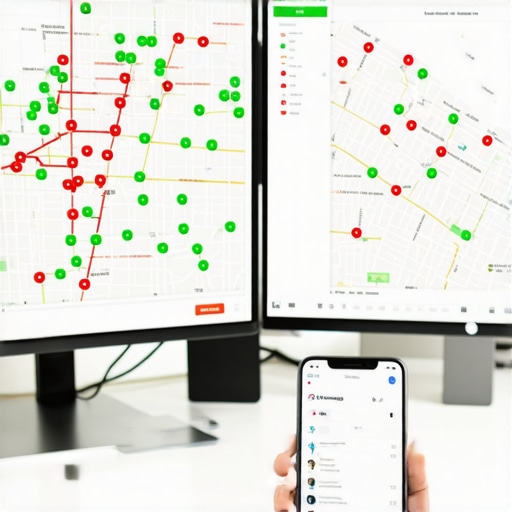
Maintenance is about monitoring the right data and ignoring the noise. I strictly use a grid-based rank tracker like BrightLocal or Whitespark because a single-point search doesn’t tell the whole story. You need to see how you perform three blocks away versus three miles away to truly understand the impact of driving distance on your local map rank. If I see my ‘green’ circles turning ‘red’ in a specific neighborhood, I don’t panic. I use how to use local map data to identify new competitors who might be aggressive with their local pack optimization. Once a month, I run through the no-fluff checklist for auditing your local listings in under an hour to ensure no one has ‘suggested an edit’ that changed my phone number or hours behind my back.
The Few Tools That Are Actually Worth the Subscription
I don’t believe in buying every shiny new tool, but a few are non-negotiable. Beyond a solid grid tracker, I use the Google Cloud Vision API to test my storefront photos. Before I upload a single shot, I run it through the ‘Safe Search’ and ‘Landmarks’ detection to see exactly what Google’s AI sees. If the AI doesn’t immediately recognize my shop as a ‘Retail Store’ or ‘Restaurant,’ the photo doesn’t go up. This level of technical precision is how you improve local pack performance by feeding the machine exactly what it wants. I also spend time looking for how to fix the data gaps in your Google Maps analytics because the ‘Insights’ tab in the dashboard is notorious for under-reporting actual customer actions.
The Shift Toward Real-Time Inventory and AI
Looking toward the future, I predict that static profiles will soon be obsolete. Google is moving toward a ‘Real-Time’ local search where your rank depends on what is happening inside your four walls right now. We are already seeing this with ‘In Stock’ labels on map pins. If you want to stay ahead of the curve, start looking into how to connect your physical inventory to your digital presence. The winners of 2025 won’t just be the ones with the most reviews, but the ones who provide the most live data. I strongly recommend you take one photo of your most popular product today and upload it with a geotag. It sounds small, but it’s these micro-actions that build the authority required to boost 3 pack rankings while your competitors are still trying to figure out why their 2012 photos aren’t working anymore. Give that Vision AI test a try on your current cover photo; you might be shocked by what Google actually sees.
The Harsh Truths I Learned Fighting for My Spot on the Map
Over the years of managing dozens of local profiles, I’ve realized that the algorithm doesn’t just reward the biggest budget; it rewards the most consistent presence. Here are the core realizations that changed everything for my clients:
- Proximity is a baseline, not a destiny: You can’t move your building, but you can broaden your influence by generating high-quality signals that resonate further out than your physical walls.
- The technical ‘boring’ stuff wins races: Most business owners chase reviews, but I’ve seen rankings soar just by fixing the schema errors that quietly kill your 3-pack presence. When Google’s robots can easily digest your data, they trust you more.
- Your Q&A is a secret weapon: I stopped viewing the questions section as a chore and started seeing it as a way to feed the AI context. Understanding the hidden power of responding to the questions section transformed my engagement rates almost overnight.
#IMAGE_PLACEHOLDER_E#
The Toolkit That Keeps Me Sane in Local SEO
I don’t believe in over-complicating things with dozens of subscriptions. If you want to actually improve local pack rankings without losing your mind, these are the few tools and strategies I swear by. First, always use a grid tracker to visualize the impact of driving distance on your local map rank; if you only check from your office, you’re flying blind. Second, use a quality citation auditor. It is much better to stop buying cheap map citations and focus on a few high-authority local mentions that actually carry weight. Finally, keep a simple spreadsheet to track your ‘freshness’ signals, ensuring you never go more than seven days without a profile update.
Take Your Business Back from the Algorithms
You’ve put in the hard work to build a physical business that serves your community. Don’t let a grainy street-view photo from a decade ago or a few technical glitches define your reputation. Local SEO is simply the digital version of sweeping your storefront and hanging a clean sign. By taking these proactive steps to boost 3 pack visibility, you aren’t just playing a game with Google; you are making it easier for your neighbors to find the help they need. Stay consistent, stay local, and keep your profile as active as your real-world shop. What’s the weirdest or most outdated thing Google Maps currently shows for your storefront? Let me know in the comments below.