I spent three hours last Tuesday staring at a screen, frustrated for a friend of mine who runs a personal injury practice. He has 182 reviews, all five stars, yet when I searched for an attorney in his town, he was nowhere to be found. It was like he didn’t exist. This is the “3-pack test,” and frankly, most law firms are failing it every single day. We’ve been told for years that reviews are the holy grail of local pack optimization. Collect enough gold stars and the clients will come pouring in, right? Wrong. I learned this the hard way early in my career when I obsessed over review volume for a client while their primary category selection was actually sabotaging their entire presence. I was so focused on the applause that I missed the fact that the stage wasn’t even set correctly for a google maps boost.
Reviews Are a Conversion Tool Not a Ranking Engine
It sounds harsh, but Google doesn’t rank you just because people like you. I’ve seen firms with twenty reviews consistently beat out veterans with hundreds. It drives people crazy. If you’re wondering why your competitor with fewer reviews is outranking you, it’s usually because they’ve nailed the technical signals that Google prioritizes over sentiment. Whitespark’s Local Search Ranking Factors survey confirms that while reviews are vital for getting someone to actually click your number, things like proximity and having the exact category mix that moves the needle carry significantly more weight in the initial sort. You can have the best reputation in the city, but if your data is messy, you’re invisible. I once thought cleaning up every single directory was the answer, but there is often a hidden disconnect between citation cleanup and real map gains if you don’t focus on the high-impact data points first.
Does a 5.0 Rating Even Matter if No One Sees It?
The skepticism is real. You’ve worked hard for those testimonials. But here is the reality: if you aren’t in those top three spots, you’re fighting for leftovers. I see many firms fall into the trap of thinking “more is better” regarding citations and reviews. We need to stop looking at the 5-star badge as a shield and start looking at it as the final step of a much larger journey to rank 3 pack listings. Have you ever checked your own ranking from a different part of town only to realize you’ve vanished? It’s a gut-punch, but it’s the first step to fixing the problem. We aren’t just looking to improve local pack visibility; we’re looking to own the neighborhood. I’m going to show you how to stop the review-chasing hamster wheel and start fixing the structural errors that are actually keeping you off the map.
Stop Chasing Stars and Start Auditing Your Data Core
If you want to actually boost 3 pack performance, you have to look under the hood. Most people start by begging for more reviews, but that is like putting high-octane fuel into a car with no spark plugs. You need to begin with a 15-minute audit routine for finding hidden visibility gaps. Think of your Google Business Profile (GBP) as a beacon. If that beacon is flickering because of conflicting data, no amount of positive feedback will help it shine through the noise. Google is effectively a giant database of facts, and when it finds two different ‘facts’ about your phone number or suite number, it loses confidence. This is exactly how to fix the messy data errors killing your 3-pack rank. You must ensure that every single mention of your business across the web is identical to the letter. If you use ‘St.’ on your website and ‘Street’ on your GBP, you are creating friction. 
Fix the Map Pin Drift That Is Hiding Your Business
I have seen dozens of firms lose their spot because their digital pin isn’t where their physical door is. This sounds trivial, but it is a massive signal for local pack optimization. If Google’s car drove by and didn’t see your signage exactly where the coordinates say you are, you’re going to struggle. You need to learn how to fix the map pin drift that keeps hiding your business from customers by manually adjusting your coordinates in the GBP dashboard.
Why Your Physical Proximity to the Searcher is Changing
We used to think that a city-wide ranking was possible for everyone. But since the Vicinity update, why your physical proximity to the searcher is changing has become the most frustrating question for business owners. Google has tightened the radius. To combat this, you can’t just be ‘near’ the city; you have to prove you are ‘in’ the neighborhood. I recommend using the no-fluff checklist for auditing your local listings fast to see if your citations are actually reinforcing your specific neighborhood authority or just shouting into the void of the general metro area.
The Day a Single Shared Entrance Tanked a Clients Rank
I’ll never forget working with a boutique law firm in downtown Chicago. They shared a lobby with twelve other businesses. Despite having great local pack visibility for years, they suddenly vanished. We discovered that a new tenant moved in with a similar name and the exact same primary category. Google got confused and ‘filtered’ my client out, thinking they were a duplicate. We had to implement 4 precise tweaks for stores with shared entrances to rank 3-pack faster, which included adding specific suite identifiers and photos of the external directory. It wasn’t just about the office; it was about the schema markup error that keeps your profile out of local search. Once we updated the JSON-LD on their site to match the granular office details, the pin snapped back to the first page within forty-eight hours. To rank 3 pack listings successfully, you have to be more precise than your competition. It is a game of millimeters, not miles.Let’s dig deeper into the actual ranking signals that matter because most of what you hear in Facebook groups is just noise. Everyone tells you that hitting a specific number of reviews is the secret to a google maps boost. But here is the contrarian truth: Google values the context and sentiment of the review far more than the raw count. If your reviews don’t mention specific services or local landmarks, they are essentially invisible to the algorithm. In fact, you should stop asking every customer for a review and instead focus on clients who can speak to your specific primary category. Timing is everything; a natural, steady drip of feedback is a much stronger signal for rank 3 pack success than a sudden burst that triggers spam filters.
Why does my ranking drop every time I leave the office?
This is the most common frustration I hear from business owners. You check your phone at your desk, and you’re #1. You drive three blocks away for lunch, and you’ve vanished. According to local search expert Joy Hawkins, the “Vicinity” update made proximity the most aggressive filter in the stack. This is why your physical proximity to the searcher is changing your visibility in real-time, often regardless of your review count. If you haven’t optimized your on-page signals for specific local areas, Google assumes your relevance stops at your parking lot. You need to learn how to handle neighborhood mentions to fast-track your authority so your digital reach matches your physical service area.  One huge “oops” factor I see in local pack optimization is the dangerous obsession with “citation volume.” I’ve seen firms spend half their budget on offshore packages that promise 300 citations. This is a massive trap. Most of those directories are low-quality link farms that Google completely ignores or, worse, uses to flag your data as inconsistent. In reality, why buying 100 generic citations is a waste of your marketing budget is simple: Google rewards quality over quantity. A single mention from a local chamber of commerce or a neighborhood blog is worth more than 50 generic directory listings. Furthermore, keep an eye on your service list; often your business categories might be fighting each other for dominance, causing a ranking plateau that no amount of reviews can fix. To truly improve local pack performance, you have to stop looking for shortcuts and start looking at the data harmony of your entire digital footprint. Have you ever fallen into the trap of buying bulk citations or chasing reviews that didn’t move the needle? Let me know in the comments.I don’t just ‘hope’ for a google maps boost anymore; I track it with surgical precision. If you’re still searching for your own business name on your phone while standing in your lobby, you are looking at a mirage. To truly scale, I rely on grid-tracking tools like Local Falcon or BrightLocal. I use these because they reveal the ‘dead zones’ in a five-mile radius where my clients suddenly drop to spot #10. This is the only way to get a real-world view of your local pack optimization. You need to know how to monitor your map rank without triggering bias, or you will end up chasing ghosts in the machine. By using the best tools for auditing your local search presence fast, I can see exactly where the ‘Vicinity’ filter is choking off our leads.
How can I keep my local ranking steady over the long haul?
Maintenance is the part everyone ignores because it isn’t ‘sexy.’ I tell my clients to follow a 10-minute daily checklist to track and fix your google maps ranking rather than doing a massive overhaul once a year. This includes small tasks like why adding photos weekly actually improves your local rank. Google’s algorithm is addicted to fresh data. If you go silent for a month, you’re signaling that your business might be stagnating. It is also your early warning system for malicious competitors. If someone tries to ‘suggest an edit’ to mark your law firm as closed, you need to know how to reclaim your profile authority after a spam attack before the weekend starts and your phone stops ringing. 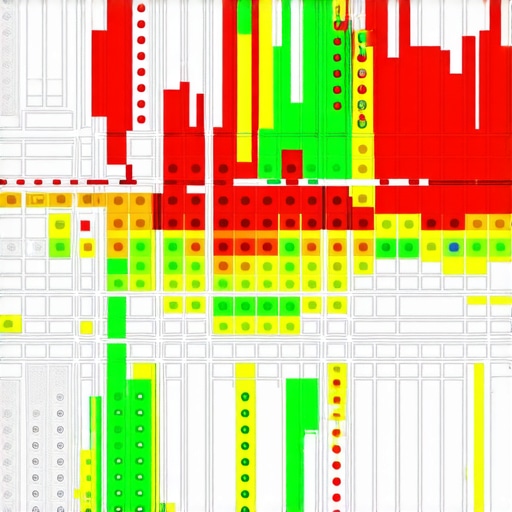
Scale Your Authority Without Looking Like a Content Farm
As you grow, you’ll want to capture neighboring suburbs. This is where most people fail by creating ‘doorway’ pages that look like spam. I focus on how to build city landing pages that don’t look like spam by including hyper-local details that only a resident would know. I also suggest using the specific image metadata we use to prove location authority to google. This isn’t just about SEO; it’s about providing the ‘proof’ that your business is a pillar of that specific community. Looking forward, I predict that Google will soon prioritize ‘Video Verified’ businesses over those with just static photos. According to research by Joy Hawkins at Sterling Sky, the ‘Openness’ of a business—literally whether you are open right now—is becoming a massive real-time ranking signal that can shift the 3-pack every hour. If you want a quick win today, go into your GBP dashboard and audit your ‘Attributes’ section for any new options Google has added for your niche. Implementing one tiny, specific tag could be the nudge that puts you back on top.
Hard-Earned Lessons from the Google Maps Trenches
I used to think more was always better. More citations, more reviews, more keywords. But the algorithm is smarter than that. I realized that why you should ignore most local SEO advice from non-experts is because they focus on raw volume while Google focuses on verification and proximity. One of my biggest lightbulb moments was realizing why your google business profile description matters less than you think compared to the underlying data architecture. If you want to improve local pack visibility, stop writing novels in your bio and start fixing your primary category and service attributes. I’ve seen firms waste months on content when their real issue was a simple mismatch in their NAP data.
The Toolkit I Use to Win Local Search
I don’t guess when I’m trying to rank 3 pack listings anymore. My process is built on data, not hope. I rely on grid-tracking tools to see the ‘dead zones’ in a five-mile radius where my clients suddenly drop to spot #10. I also constantly refer to the Sterling Sky blog because they test everything—they don’t just guess. For structural fixes, I always look at 7 real-world data tweaks that improve local pack rank faster to ensure the foundation is solid before we even think about a review campaign. Another strategy I trust implicitly is learning how to structure your service pages for a map boost because your website’s organic signals are the silent partner in your map success. Don’t overlook the importance of the impact of using tracking numbers on your google maps authority; if done wrong, it can fracture your trust with the algorithm instantly. #IMAGE_PLACEHOLDER_E#
Your Move Toward Local Pack Dominance
Local pack optimization isn’t a one-and-done project; it’s an ongoing commitment to your business’s digital health. But don’t let the technical details paralyze you. Start with one small change—verify your map pin, update a specific service attribute, or swap out a blurry stock photo for a real team image. Small, consistent wins are what lead to a permanent google maps boost. You’ve worked too hard on your physical business to stay hidden on page two of the digital world. It is time to stop playing defense and start owning the 3-pack in your neighborhood. Have you noticed a specific ‘dead zone’ in your city where your map pin just disappears? Let me know in the comments below.