I remember sitting at my kitchen table, coffee cold and shoulders tense, staring at a rank tracker that refused to budge. I had a client—a local HVAC pro—who was a wizard with a wrench but invisible in the wealthy zip code just six miles north. I’d done what every guru suggested: I built a dozen city landing pages, peppered them with the right keywords, and waited for the phone to ring. It didn’t. Instead, we were buried on page four, suffocating under a mountain of competitors who seemed to have a magic touch I lacked. My big mistake was thinking that more pages equaled more authority, but I was just spreading myself thin with low-quality fluff.
Google Knows When You Are Just Faking It
It took me six months of trial and error to realize that Google’s algorithm has a BS detector specifically tuned for service area businesses. I was treating these pages like a digital paper trail rather than a real local resource. I thought if I just mentioned the city name enough times, the algorithm would get the hint. Spoiler alert: it doesn’t work that way anymore. If you want to force service area pages to rank in cities 20 miles away, you have to stop acting like a guest and start acting like a local fixture. The secret isn’t just about keywords; it’s about proving you actually set foot in those neighborhoods.
Are these pages just a giant waste of time?
I hear this from business owners every single week. They’ve spent thousands on SEO agencies that churn out thin, repetitive content, and they’ve seen zero ROI. It’s a valid fear. If you build city landing pages that look like robotic spam, you aren’t just wasting time—you might be actively hurting your brand’s reputation. But when you get the proximity signals right, the results are transformative. According to research by Search Engine Land, proximity remains a dominant ranking factor, meaning you have to work twice as hard to prove relevance when you don’t have a physical office in that high-competition zip code. I’ve learned that the service area page blunder keeping you invisible is usually a lack of hyper-local data points. Have you ever felt like you’re shouting into a void when trying to rank in a neighboring town? I’ve been there, and I promise there is a way out. You need to stop hiding and start showing up where your customers are actually searching by utilizing specific localized signals that the algorithms crave.To bridge the gap between where you are and where you want to be, you must treat your landing page like a digital storefront for that specific town. If your page is so generic it could apply to any suburb in the country, the algorithm will treat it like white noise. You need to stop treating Google like a search engine and start treating it like a local investigator. This means you must focus on neighborhood landmarks within your copy to ground your business in the local geography. It is about mentioning the specific intersection near the park or the high school where your trucks are frequently seen. When we started to fix the data gaps in your Google Maps analytics for a struggling plumber, we found he was getting impressions from a town ten miles away but zero clicks because his page lacked any local context. 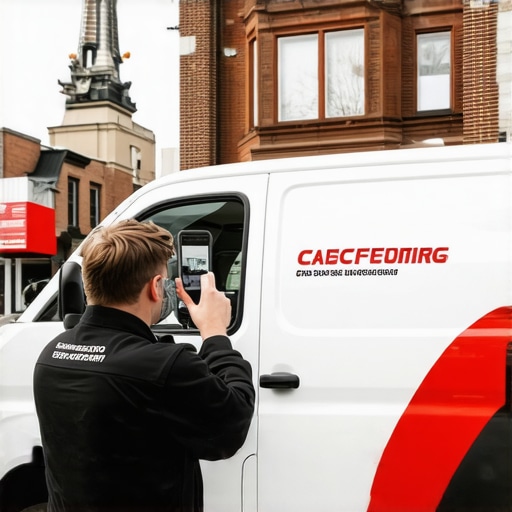
Anchor Your Brand to the Neighborhood Map
I remember a specific project where a client in the pest control niche could not break the top 10 for a neighboring wealthy suburb. We spent a day gathering photos of their service vehicles parked near that town’s historic clocktower and the main library. By doing this, we were able to prove your physical store location using specific image metadata, even if the store was just a service van. We geotagged those images to the exact coordinates of the town square and embedded them on the city-specific landing page. Within weeks, the algorithm stopped seeing him as an outsider and started treating him as a local provider.
Use Physical Proof Instead of Generic Content
Stop using stock photos of smiling workers who clearly do not live in your state. Authenticity is the only currency that matters in a post-AI search world. Use real photos of your team at work in the specific neighborhood you are targeting. This visual evidence acts as a proximity multiplier that your competitors are likely ignoring.
Build the Technical Bridge Between Page and Pin
A great page is useless if Google cannot tie it back to your Map Pin. You must connect your local landing page directly to your map pin through a combination of schema markup and optimized map embeds. This creates a closed-loop signal that tells the bot this content is the authoritative source for this location. To really solidify this, implement the backlink strategy that actually connects your profile to local search results by reaching out to local blogs or neighborhood associations for mentions.
Keep the Signals Fresh to Maintain the Rank
Local SEO is never a set it and forget it task. You need to understand why your profile needs to be updated every 7 days. Constant updates, whether it is a new job site photo or a quick post about a local event, tell Google that your business is active and relevant in that area right now. When visibility drops, it is usually because the signals have gone cold, allowing a more active competitor to slide into that coveted 3-pack spot.
I see businesses throwing money at the wrong problems every single day. The most common advice you’ll hear in the SEO world is to buy a massive “citation package” of 200 random directories to build authority. In my experience, this is the quickest way to stay stuck on page two. While the gurus scream about volume, the reality is that citation quantity has hit a point of diminishing returns. You are better off with five high-quality, niche-specific mentions than 500 links from directories that haven’t been updated since 2012. This is why buying 100 generic citations is a waste of your marketing budget and usually leads to messy data that confuses the algorithm rather than clarifying it.
The Category Trap That Silently Kills Rankings
One of the most dangerous “oops” moments I’ve witnessed happens during the initial setup or a frantic re-optimization. Business owners think that by selecting every possible category, they are casting a wider net. In reality, they are diluting their primary signal. If your primary category is too broad, you’re competing against everyone; if it’s wrong, you’re invisible. I’ve seen cases where your primary business category is likely sabotaging your 3-pack rank because it doesn’t align with the specific intent of your local customers. Making a sudden change here can often trigger a manual review or a stealth ranking drop that takes months to recover from. Instead of guessing, you should focus on specific niche citations that actually move the needle and reinforce that core category signal.
Can you really outrank a physical office from 15 miles away?
This is the question that keeps service-based business owners up at night. Conventional wisdom says proximity is king, but the Whitespark Local Search Ranking Factors study often highlights that while proximity is a major factor, it is not the only one. You can beat a closer competitor if your behavioral signals are stronger. This means things like response velocity—how fast you reply to messages and reviews—actually matter more than most people think. We’ve seen that fast replies actually improve local pack visibility because Google wants to recommend businesses that are responsive to their users. If you have a physical office, don’t just rely on the address; your map listing needs a physical storefront photo to verify that you aren’t just another “ghost profile” in a shared building. Have you ever fallen into the trap of focusing on link volume instead of these real-world signals? Let me know in the comments, because I’ve seen both sides of that coin. To truly improve local pack rank faster, you have to stop chasing ghosts and start optimizing for the actual humans using the map.
I used to think that once I hit the top three, I could just sit back and watch the leads roll in forever. I was wrong. The local pack is more like a treadmill than a trophy shelf; if you stop moving, you start sliding backward. To stay at the top, I had to stop guessing and start using a very specific set of tools that don’t lie. Most people use generic rank trackers that give a single average position for a city, but that is useless for maps. I realized I needed the specific software features needed to track local keywords without map bias, specifically geo-grid tracking. This allows me to see exactly where my visibility drops off, block by block, rather than getting a false sense of security from a ‘city-wide’ average.
The tools I actually use to keep my clients at the top
I don’t believe in over-complicating things with twenty different apps. Instead, I rely on a tight stack that focuses on real-time data. For example, I use a dedicated tool to monitor the ‘suggest an edit’ spam that competitors love to use. If someone tries to change your phone number or mark you as ‘permanently closed’ on a Sunday morning, you need to know immediately. This is part of the 10-minute daily checklist to track and fix your Google Maps ranking that I developed to prevent small errors from turning into ranking disasters. I also keep a close eye on what the pros at Sterling Sky are reporting regarding algorithm shifts; their research into ‘proximity vs. relevance’ has saved me hundreds of hours of wasted effort. 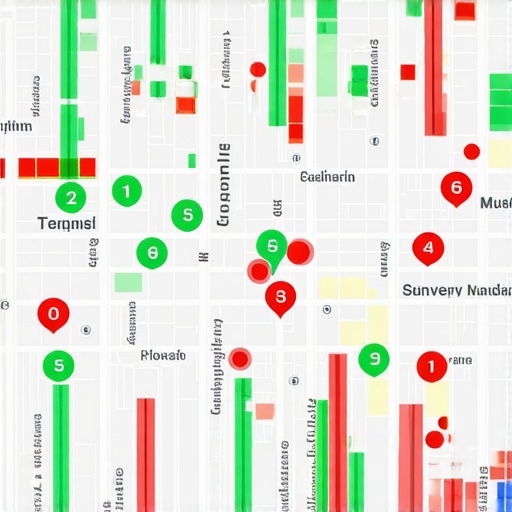
How do I maintain my 3-pack rank over time?
Consistency is the only way to survive. You have to realize why your profile needs to be updated every 7 days. It doesn’t have to be a monumental task—just a fresh photo of a completed project or a quick answer to a customer question. I’ve found that a simple daily routine to hold your spot in the top 3 is more effective than a massive monthly overhaul. If you let the profile go stale, the algorithm assumes you’re less active than the hungry competitor down the street who is posting updates every Tuesday.
What local search looks like in the 2026 cycle
Looking ahead, I’m seeing a massive shift toward AI-driven intent. Google isn’t just looking for keywords anymore; it’s looking for ‘evidence of service.’ This means your reviews, your photos, and your service descriptions need to be more detailed than ever. I’m already preparing my clients by following essential Google Business Profile tips for the 2026 local search cycle, which prioritizes video content and direct-to-map inventory feeds. The ‘ghost profiles’ are going to be wiped out, leaving room only for the businesses that prove they are physically present and highly responsive. If you want to stay ahead of the curve right now, I strongly suggest you implement 7 real-world data tweaks that improve local pack rank faster today. Pick just one—like geotagging your latest project photo—and see how the map reacts. You’ll be surprised at how much the small things matter when the competition is asleep at the wheel.
What the Algorithm Taught Me After 500 Failed Local Listings
The biggest lie in SEO is that you can optimize once and walk away. I learned the hard way that momentum is your only real protection against a competitor with a bigger budget. One of my most painful lessons was realizing that most profile updates actually trigger a stealth ranking drop if you aren’t careful with the timing and frequency. I also spent years obsessing over directory cleanup until I noticed the hidden disconnect between citation cleanup and real map gains—fixing a typo on an obscure site rarely moves the needle as much as a fresh, geotagged photo does. Another hard-earned truth? Don’t trust every ‘expert’ who promises a quick fix; I’ve documented the hard truth about hiring a GMB SEO expert so you don’t repeat my expensive mistakes.
The Stack I Use When a Client is Stuck on Page Two
I don’t gamble with my clients’ visibility. To keep a boost 3 pack strategy consistent, I rely on a few specific resources. First, I always keep the no-fluff checklist for auditing your local listings handy to ensure I haven’t missed a simple technical error. For tracking, I prioritize software features needed to track local keywords without map bias to get the ground-level truth of where we rank. I also religiously follow the updates from Sterling Sky, as their data-driven research into the local pack has debunked more SEO myths than I can count. These tools aren’t just for show; they are the difference between guessing and growing.
Your Blueprint for Map Dominance Starts Today
It is easy to feel overwhelmed by the sheer number of signals Google tracks, but remember that the algorithm is fundamentally trying to serve the best local option to a human user. When you focus on being that best option—responsive, transparent, and physically present—the rankings eventually follow. If you are feeling stuck, don’t try to overhaul everything at once. Start by implementing 7 real-world data tweaks that improve local pack rank faster and watch how the map responds over the next few days. You have the knowledge; now you just need the consistency to outlast the competition. Your journey toward local pack optimization is a marathon, but the view from the top is worth every step. #IMAGE_PLACEHOLDER_E# Have you ever found yourself stuck on page two despite following all the standard SEO rules? Let me know your biggest hurdle in the comments below!