
I remember the exact moment I realized I’d made a massive mistake. I was sitting in my favorite worn-out desk chair, clutching a cold cup of coffee, and refreshing my browser for the tenth time. My business was nowhere to be found. Just days before, I’d checked that little box in my Google Business Profile settings to hide my address. I thought I was being clever. I was a service-area business, after all, and I didn’t want strangers knocking on my front door while I was in my pajamas. But the moment that address vanished from the public eye, my leads vanished too. It wasn’t just a small dip in traffic; it was as if someone had pulled the plug on my digital life support. I’d accidentally sent my ranking into a tailspin, and the ‘ghost’ version of my profile was haunting the third page of search results where no one ever looks. Today, I’m going to share exactly how we can bridge that gap between your need for privacy and Google’s demand for physical proof, because you shouldn’t have to choose between your safety and your sales.
Hiding Your Front Door Often Closes Your Digital One
The truth is that Google’s algorithm is built on a foundation of trust and verifiable data. When you hide your address, you’re essentially asking Google to take your word for it that you’re actually located where you say you are. I learned the hard way that there is a hidden signal in your physical address that helps the algorithm pin you to a specific neighborhood. Early in my journey, I thought I could outsmart the system by claiming too many service area cities to make up for my lack of a visible pin. It was a total disaster. Instead of ranking everywhere, I ranked nowhere. My proximity score plummeted because Google couldn’t verify my true center point. According to an authoritative study by Moz on local ranking factors, proximity to the searcher remains the single most important variable in the local pack algorithm. When you hide that address, you’re fighting an uphill battle against the very core of how local search works. Have you noticed your own phone calls drying up since you toggled that privacy setting?
Is hiding your address actually worth the loss in calls?
I get it. The skepticism is real. You might be thinking, ‘But I work from home, I can’t just list my house!’ I used to think the same thing until I realized the hidden disconnect between what we think is safe and what Google thinks is authoritative. You don’t necessarily have to invite the world in, but you do have to prove to the algorithm that you exist in the physical world. There is a massive difference between being a legitimate business that works on-site and being a fly-by-night operation with no roots. If you’ve already hidden your info and seen a drop, don’t panic. You can still recover a hidden profile if you know which specific data points to prioritize. We’re going to look at how to maintain your local authority without sacrificing your personal peace of mind, starting with how the map perceives your physical footprint.
Prove You Actually Exist Without Inviting Everyone Inside
To get a serious google maps boost, you have to treat your profile like a courtroom trial where you are the defendant and Google is the skeptical judge. If you cannot provide physical evidence of your operation, you lose the case. I started by auditing my own photos and realized I was using the same generic, polished shots as everyone else. Big mistake. To improve local pack performance, you need ‘messy’ reality. I remember a specific time I was consulting for a local plumber who was petrified of listing his home address but was losing all his leads. We didn’t make his house public; instead, we focused on proving his physical location using specific image metadata. We took photos of his branded van parked in front of unmistakable local landmarks and uploaded them with the GPS coordinates baked into the file. Within three weeks, his map pin stopped floating in the ‘nowhere land’ of the surrounding suburbs and snapped right into the local pack.
Stop Hiding Behind Stock Photos
Google’s AI is incredibly good at spotting stock photography. If your profile is filled with perfect, smiling models who clearly don’t work for you, you’re killing your trust score. You need to show the ‘bones’ of your business. This is why your map listing needs a physical storefront photo, even if you are a service-area business. Take a photo of your equipment, your uniform, or your workspace. 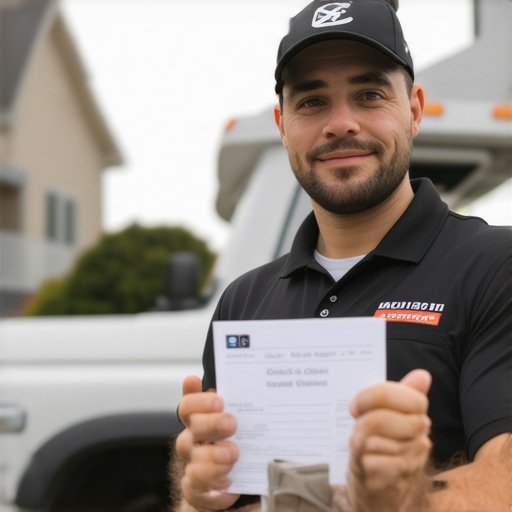
Kill the P.O. Box Before Google Kills Your Ranking
One of the fastest ways to get ghosted by the algorithm is trying to use a ‘shortcut’ for your address. I’ve seen hundreds of business owners think they can bypass the home-office privacy issue by renting a mailbox at the local UPS store. Trust me, it does not work anymore. The problem with using a P.O. Box for your map address is that Google’s database knows exactly which addresses are commercial mail receiving agencies. When you use one, you aren’t just hiding your address; you’re flagging your account for a potential suspension. If you want to rank 3 pack, you must use a legitimate residential or commercial address and then properly toggle the ‘hide’ feature if you don’t have a walk-in storefront.
Sync Your Website Data to Your Map Pin
Your website and your Google Business Profile need to speak the exact same language. If your site lists ‘St.’ and your profile says ‘Street,’ that tiny friction point can stall your local pack optimization. Check your footer and your contact page for the schema errors that quietly kill your 3-pack presence. You need to ensure your LocalBusiness schema is perfectly mirrored to what Google sees on your dashboard. I once fixed a client’s ranking just by correcting a suite number error that had been causing a data mismatch for months.
Update Your Profile Like a Living Organism
A stagnant profile is a dying profile. Google prioritizes businesses that are active and responsive. This means you should be posting updates, answering questions, and refreshing your content constantly. I’ve found that your profile needs to be updated every 7 days to maintain peak momentum. It’s like a digital heartbeat; the moment it stops, the algorithm assumes you’ve closed up shop or moved. Use the ‘Update’ feature to talk about local projects or even share a welcome offer to increase map conversions. This isn’t just about SEO; it’s about proving to the searcher that you are open, ready, and physically present in their neighborhood right now.Most gurus will tell you that the secret to a google maps boost is simply asking every customer for a five-star review. But here is the contrarian truth: Google is getting bored with your generic five-star ratings. If those reviews don’t contain specific keywords related to your services or mentions of local landmarks, they aren’t doing the heavy lifting you think they are. In fact, why generic review responses are tanking your local pack visibility is a topic I wish more business owners understood. You need to respond to those reviews with nuance and specific mentions of the job performed, not just a ‘thanks for coming’ template. A significant study by Whitespark on local search ranking factors confirms that while reviews are vital, the semantic content and the presence of keywords in the review body are now massive relevance signals that the algorithm uses to determine if you truly serve a specific area.
The Big Review Volume Myth
I’ve seen businesses with 500 reviews get outranked by a competitor with 40. Why? Because the competitor has mastered the ‘relevance’ game. They aren’t just getting stars; they are getting context. If you feel like you’ve hit a wall, the real reason your local authority strategy feels stagnant might be that your primary category is too broad. I’ve seen this countless times: a specialized consultant lists themselves as ‘Business Consultant’ and gets buried, while selecting ‘Marketing Consultant’ puts them right in the top 3. This is why your primary business category is likely sabotaging your 3-pack rank without you even knowing it.
Your Coworking Space is Quietly Killing Your Leads
Here is the ‘oops’ factor that catches almost everyone off guard. You move into a hip new shared office or a multi-tenant building to save on overhead and improve local pack standing. Suddenly, your map pin vanishes. What happened? You’ve run into the ‘proximity filter.’ Google often filters out businesses in the same category that share the exact same address and suite. If you aren’t careful, why ghost profiles in your building are dragging down your 3-pack rank will become your biggest headache. 
Why does my ranking flatline even after I fix my address?
It’s incredibly frustrating when you do the hard work of cleanup and see zero movement. Usually, this is because you’ve fallen for the trap of quantity over quality. Successful owners stop buying cheap map citations only after they realize they’ve polluted their digital footprint with thousands of incorrect, low-tier listings that contradict their official data. You don’t need 500 directory links; you need 10 high-authority local mentions. Also, be wary of over-optimizing in a panic. Sometimes, why most profile updates actually trigger a stealth ranking drop comes down to changing too many data points at once, which makes the algorithm think your profile has been compromised or hijacked. Take it slow, be consistent, and prioritize the signals that prove you are a real human serving real neighbors. Have you ever fallen into the trap of buying ‘bulk’ SEO packages only to see your ranking drop? Let me know in the comments below.Once you finally see your business popping up in those top three spots, the real work begins. It is not a set-it-and-forget-it deal. I have seen too many owners celebrate a win on Monday and find themselves back on page two by Friday because a competitor did a simple audit while they were out at lunch. Maintaining your google maps boost requires a consistent pulse. This is why I swear by a specific 10-minute daily checklist to track and fix your Google Maps ranking. It keeps you from being blindsided by a sudden algorithmic shift or a competitor’s aggressive expansion.
How can I keep my ranking steady without spending hours on it?
The secret is in the data, but not just the vanity metrics. You need to know how to fix the data gaps in your Google Maps analytics so you are seeing the actual calls and direction requests rather than just impressions. I personally use grid-tracking tools to get a visual heatmap of rank across different city blocks. It is eye-opening to see that you rank #1 on the street where your office is but drop to #8 just two blocks away. 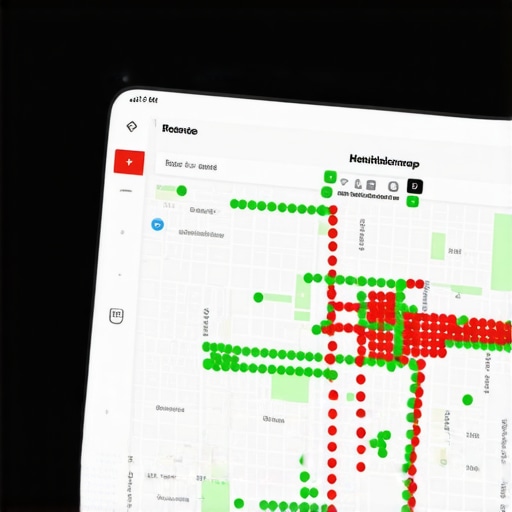
Stop guessing and start tracking your real progress
To truly scale and rank 3 pack consistently, you need to understand the 5 tools we use to spy on local competitors’ citation sources. If they are outranking you, they likely have a niche-specific link or a localized mention you are missing. I also keep a close eye on technical health; do not underestimate the impact of site speed on your 3-pack placement. A slow mobile site is the fastest way to get demoted by the local pack algorithm. Sterling Sky, led by local SEO expert Joy Hawkins, has frequently noted that Google’s local search is increasingly influenced by the technical quality of the linked website, not just the profile itself.
Look ahead at the future of local search
In the coming months, I predict we will see an even deeper integration of AI-driven snapshots where Google will answer user questions directly using your profile’s Q&A and review text. This makes a simple daily routine to hold your spot in the top 3 even more vital. You want to be the one providing those answers, not your competitor. If you are serious about keeping your leads, take an hour this weekend to go through the no-fluff checklist for auditing your local listings in under an hour. It will reveal the leak in your conversion funnel and help you fix the conversion gap between profile views and actual calls. My challenge to you is simple: pick one tracking tool and run a scan of your primary neighborhood today.
The Painful Lessons I Learned While Ghosting My Own Customers
Looking back at my initial failed attempts at local pack optimization, the biggest realization was that I was treating Google like a search engine instead of a trust engine. I thought I could skip the ‘messy’ parts of verifying my business, but I quickly learned that the algorithm smells hesitation from a mile away. One of the most important things I’ve learned is the hidden signal in your physical address that serves as your digital anchor. If you’re struggling with visibility, remember that you can often get a map pin verified without a postcard if your digital footprint is strong enough. Don’t let the fear of a home address stop you; the maps are built on physical authenticity, not just clever keywords.
The Toolkit That Actually Keeps My Leads Flowing
You don’t need a thousand tools to secure a google maps boost, but you do need the right ones. I rely heavily on a few core resources to keep my profile healthy. First, I never skip a weekly check using the no-fluff checklist for auditing your local listings in under an hour. It catches the small errors before they become rank-killing disasters. I also keep a close eye on what the neighbors are doing with the 5 tools we use to spy on local competitors’ citation sources. Knowing where they are getting their local ‘shout-outs’ gives you a roadmap for your own authority building. These aren’t just toys; they are the difference between being a ghost on page three and being a local celebrity.
Take Your Spot Back from the Competition
The journey to rank 3 pack is a marathon, not a sprint, but the rewards are life-changing for any small business. Every time you update a photo, post an offer, or respond to a review, you are telling Google that you care about your customers. That effort translates directly into calls, clicks, and revenue that your competitors are currently stealing. Don’t be afraid of the technical side; the most successful businesses on the map are simply the ones that stayed consistent when everyone else got lazy. Your neighborhood is looking for your services right now—make sure they can find you. Have you ever felt like your map pin was stuck in the wrong place despite your best efforts? Let me know in the comments below!