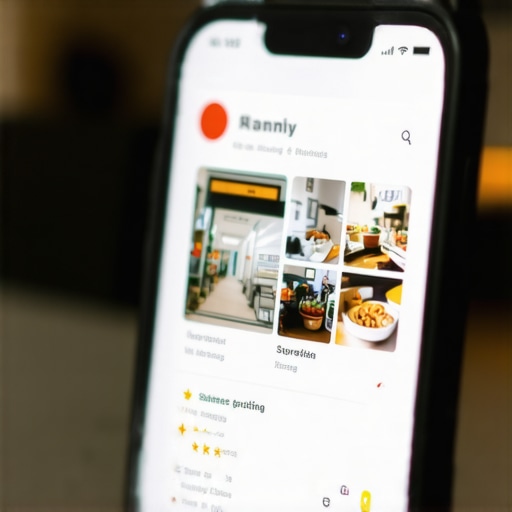
I remember sitting in my home office at 2 AM, nursing a lukewarm coffee and obsessively rewriting my business description for the fourteenth time. I was convinced that if I could just weave ‘best plumber in town’ into the text three more times, I’d finally see that elusive google maps boost. I treated that 750-character box like it was the Declaration of Independence. But after weeks of checking my dashboard, the results were soul-crushing: zero new calls and my pin was still buried on page four. It was a classic rookie mistake. I was polishing the hubcaps on a car that didn’t even have an engine. If you’ve been sweating over your ‘About’ section, I have some news that might hurt a little, but it’s going to save you a lot of time. The truth is, your business description doesn’t actually impact your rank. Google’s algorithms are looking for hard data, not your creative writing skills. Today, we’re going to stop wasting time on the fluff and start focusing on the local pack optimization tactics that actually bring customers through your door. [image1]
The Day I Realized My Creative Writing Degree Was Useless for SEO
My lightbulb moment didn’t come from a textbook; it came from a competitor. There was this local shop—their description was literally just a single, poorly formatted sentence—yet they were sitting pretty at the top of the 3-pack. Meanwhile, I had a Shakespearean epic in my profile and was nowhere to be found. It turns out, I was ignoring the hidden visibility gaps that actually matter to Google. I realized that while I was perfecting my pitch, they were busy ensuring their service area wasn’t shrinking their visibility. It was embarrassing, honestly. I thought I knew the game, but I was playing checkers while the algorithm was playing chess. To really boost 3 pack performance, you have to look past what feels important and look at what the machine actually consumes.
Is the description section actually worth the hype?
In a word: No. While it’s great for converting a customer who has already found you, it does almost nothing to help them find you in the first place. According to the Whitespark Local Search Ranking Factors survey, business descriptions have zero correlated impact on local pack rankings. This was a hard pill for me to swallow. I had spent hours on mine while neglecting the fact that my primary business category was likely sabotaging my rank.
Stop Polishing the Wrong Parts of Your Profile
We’ve all been there—tinkering with the easy stuff because the technical stuff feels intimidating. But the ‘Helpful Neighbor’ advice I give everyone now is simple: stop overthinking the prose. If you want to improve local pack visibility, you need to look at data points that Google trusts more than your own self-praise. For instance, did you know that using stock photos can actually hold you back? I learned that the hard way too. Have you ever spent a whole weekend tweaking your profile only to see your rankings stay exactly the same? It’s a frustrating cycle, but one we can break by shifting our focus to real-world data tweaks that move the needle faster. We need to stop chasing the ‘ghost signals’ and start feeding the machine what it actually wants to see to get that rank 3 pack status you deserve.
Clean Up Your Digital Mess Before You Do Anything Else
Think of your Google Business Profile like a physical storefront; if the sign says ‘Open’ but the door is locked, people leave. Google works the same way with your digital data. I spent years thinking my business was ‘special’ enough for Google to ignore a few mismatched phone numbers across the web. I was wrong. You need to learn how to fix the messy data errors killing your 3 pack rank 2 before the algorithm even considers moving you up. I once worked with a local locksmith who had three different phone numbers listed across Yelp, Facebook, and his own site. He was pulling his hair out because a guy down the street with half his reviews was outranking him. We didn’t add more reviews; we just standardized his contact info. Within ten days, his pin jumped from the bottom of page two to the middle of the 3-pack. It wasn’t magic; it was just removing the digital noise that made Google distrust his actual location. 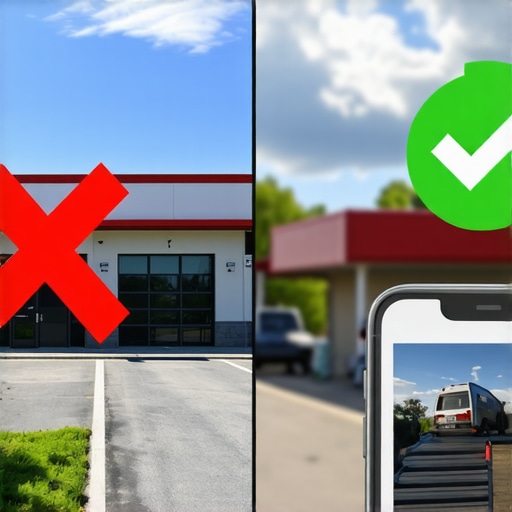
Stop Letting Your Categories Fight for Dominance
One of the biggest mistakes is picking too many categories in hopes of ‘casting a wider net.’ If you’re a plumber, don’t list yourself as a general contractor, a handyman, and an HVAC tech all at once unless those are separate, fully staffed divisions. Why your business categories might be fighting each other is a real phenomenon where Google gets confused about your core intent. When the algorithm is confused, it plays it safe and ranks someone else who is clearly defined. You should check why your primary business category is likely sabotaging your search rank if you haven’t seen movement in months. I found that by narrowing our focus to one specific primary service, we actually saw a boost 3 pack performance for all our secondary services too, simply because Google finally understood what we actually did.
Ditch the Stock Photos and Show Some Real Proof
Forget the professional headshots and the glossy office shots that look like they were taken for a magazine. Google’s AI is incredibly good at identifying stock imagery, and it usually hates it. If you want a google maps boost, grab your smartphone and take a raw photo of your actual truck or your actual front door. I learned that the hard way when I spent five hundred dollars on a pro photographer only to see our rank 3 pack status dip. Why? Because those high-res images lacked the organic GPS data and ‘realness’ Google looks for. You need to stop using stock photos if you want a top 3 ranking and instead learn how to use local image metadata to prove your store location. Real photos act as a ‘proof of life’ for your business, telling the algorithm that you aren’t just a virtual mailbox hiding in a basement. This is a core part of the 15-minute audit routine for finding hidden visibility gaps that most business owners completely ignore because it feels too simple to work.It’s easy to get caught up in the ‘more is better’ mentality, especially when it comes to reviews. I used to think that hitting the 100-review milestone was the golden ticket to a permanent rank 3 pack position. But here is the contrarian truth: a competitor with 40 reviews and a high engagement rate will often crush a business with 200 stagnant ones. Google prioritizes ‘freshness’ and interaction. If you are getting reviews but never responding, or worse, using robotic templates, you are leaving money on the table. In fact, why replying to reviews with keywords is a mistake is one of the first things I teach my clients. Google’s NLP is smart enough to see through the ‘Best Plumber New York’ spam. Instead, focus on the response velocity secret for better local visibility. Speed matters. A reply within an hour signals a live, breathing business that cares about its customers. Have you ever fallen into this trap of ignoring your reviews until the weekend? Let me know in the comments.
Does your store’s Wi-Fi actually whisper to the Google algorithm?
This sounds like tinfoil-hat territory, but it’s a sophisticated nuance of local pack optimization. Google uses ‘location signals’ far beyond just your GPS coordinates. They look at the BSSID of nearby Wi-Fi networks to triangulate where users are. There’s a fascinating correlation where why your guest guest-wi-fi-name is actually a hidden ranking signal because it confirms your physical presence to every person who walks through your door with a smartphone. 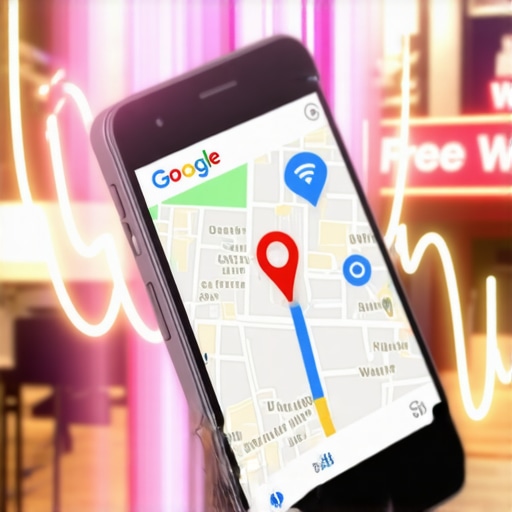
The trap of buying a thousand citations for fifty dollars
I see business owners making this ‘oops’ mistake constantly. They go to a freelance site and buy a package of 100 citations, thinking it’s a shortcut to a google maps boost. The reality? Most of those sites are ‘ghost’ directories that no human ever visits. Google knows this. According to Joy Hawkins at Sterling Sky, user engagement—like clicking the ‘Call’ button or ‘Directions’—is a massive driver for boost 3 pack success, often outweighing simple citation volume. What actually works is cleaning up the mess you already have. You’ll see the hidden disconnect between citation cleanup and real map gains if you focus on accuracy over quantity. Stop asking for more and start making sure what’s already out there isn’t lying about your phone number. If you’ve been tempted by those cheap packages, realize that why buying 100 generic citations is a waste of your marketing budget and focus on 7 real-world data tweaks that improve local pack rank faster 3. To truly improve local pack standing, you need to prove you are the most relevant, reliable answer to a local query.I used to log out of my Google account and search for my own business from a different coffee shop every Tuesday just to see if my rank was real. It was exhausting and, frankly, scientifically useless because Google knows exactly where you are based on your IP address. If you want a real google maps boost, you have to stop searching like a customer and start analyzing like a data scientist. I eventually discovered grid tracking tools that show exactly where your visibility drops off street-by-street. This is how you should monitor your map rank without triggering bias. I don’t move a muscle on a profile now until I see the data. Using these tools allowed me to realize that while I was ranking #1 at my front door, I was invisible three blocks away. That realization changed everything about how I approach local pack optimization.
Stop Guessing and Start Measuring with Grid Tracking
The only tool I actually pay for every month is a high-quality local rank tracker. Why? Because it’s the only way to see the ‘proximity effect’ in real-time. If you don’t see your ranking on a map grid, you’re flying blind. You might think your boost 3 pack efforts are failing, but the grid might show you’re actually expanding your reach into a new neighborhood. I also spend a lot of time in my dashboard looking at data most people ignore. You need to learn how to use google maps insights to predict customer calls rather than just looking at raw views. Views are a vanity metric; direction requests and phone calls are what pay the bills. I’ve seen businesses with 10,000 views get fewer calls than those with 500 views, simply because they didn’t know how to optimize business hours for peak local search times.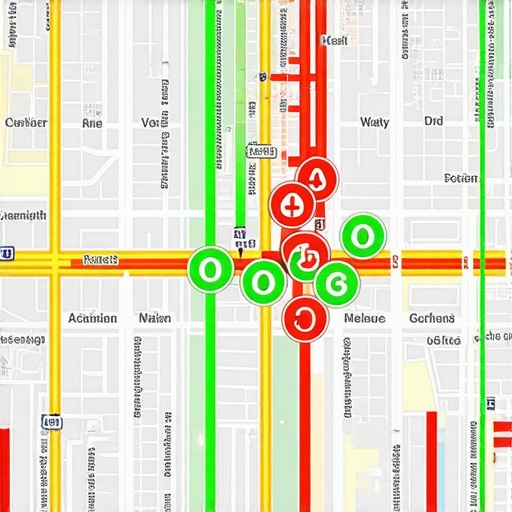
How do I maintain my 3-pack position over the long haul?
Maintenance isn’t about massive overhauls; it’s about the ‘boring’ consistency. I follow a strict 10-minute daily checklist to track and fix your google maps ranking. This includes checking for suggested edits from competitors (yes, they can change your phone number!) and ensuring no one has messed with my categories. If you aren’t careful, you might find why your primary category selection is likely sabotaging your search rank after a recent update you didn’t notice. I also keep a sharp eye on the technical health of my website. Most people forget that Google connects your site to your map pin. One simple schema error that quietly kills your 3 pack presence can undo months of hard work. As local search expert Mike Blumenthal often notes, Google’s ‘Local Search’ is increasingly becoming ‘Local Visual Search,’ where the AI interprets the content of your site and photos to determine relevance.
Future-Proof Your Profile Against the Next Algorithm Shift
Looking ahead, the rank 3 pack battle is going to move toward ‘Proof of Entity.’ Google wants to know you are a real human with a real shop. In the next 18 months, I predict that video will become the dominant ranking factor for local. Start recording 10-second clips of your team at work. While everyone else is still trying to figure out how to build city landing pages that dont look like spam, you’ll be winning because you’re providing the raw, authentic data Google craves. Improve local pack standing by being the business that Google can’t afford to ignore because your data is the most complete and verified in the neighborhood. My advanced tip for you today: go into your Google Business Profile right now and check your ‘Insights’ for the specific queries that triggered your profile. If you see a keyword you aren’t optimized for, don’t put it in your description—go take a photo of that specific service and upload it instead.
The Hard Truth About Why Being Busy Isn’t the Same as Ranking
Looking back at my 2 AM coffee-fueled rewriting sessions, I realize I was chasing ghosts. The biggest ‘aha’ moment for me wasn’t finding a new keyword; it was realizing that Google treats my business as a data entity, not a creative writing project. First, I learned that engagement signals are the king of the hill. If people are clicking your ‘Request a Quote’ button, Google sees that as a vote of confidence that outweighs a thousand keywords in a description. I also discovered that why your maps engagement rate matters more than raw traffic is the difference between a busy dashboard and a busy phone line. Finally, I stopped trying to ‘trick’ the algorithm and started providing the proof it wanted. I shifted from being a writer to being a data curator, and that is when the rank 3 pack status actually stuck.
My Daily Toolkit for Dominating Local Search
I don’t make a single move on a profile without consulting a few specific resources that I’ve come to trust over years of trial and error. To keep things moving, I use a no-fluff checklist for auditing your local listings fast which helps me spot errors before they become ranking disasters. For tracking, I rely on grid-style visibility tools rather than standard search results to avoid location bias. I also keep a close eye on industry-standard surveys like Whitespark’s Ranking Factors to see where the wind is blowing. If you want to see a real-world example of how these tools work together, look at the tiny profile change that swapped scrolling for real customer phone calls to see how small data tweaks outperform major overhauls.
The Future of Your Local Business Starts with One Data Point
You don’t need to fix everything tonight. In fact, trying to change twenty things at once is the fastest way to get your profile flagged. Start with the ‘proof of life’—the real photos, the consistent NAP data, and the rapid review replies. The path to a permanent google maps boost is paved with small, consistent actions rather than one-off miracles. When you focus on local pack optimization through the lens of accuracy and user trust, you stop fighting the algorithm and start working with it. It’s time to improve local pack standing by showing Google exactly who you are, where you are, and why you are the best choice for the person searching right now. Boost 3 pack performance isn’t just a goal; it’s the inevitable result of a clean, honest, and active digital presence.
Have you ever noticed your ranking drop after making what seemed like a ‘good’ change to your profile? Let me know in the comments below.