I remember standing on the sidewalk outside my first office on a rainy Tuesday, clutching my phone and feeling like a total failure. I had done everything the ‘experts’ told me to do. I had the citations, I had the keyword-stuffed descriptions, and I even had a handful of five-star reviews from my cousins. But on Google Maps? I was a ghost. My business pin was buried so deep on page four that even I couldn’t find it without a direct search. I was losing real, local clients to a competitor down the street who didn’t even have a proper website. Then I realized my fatal error: I was hiding. I had uploaded a sleek, expensive stock photo of a generic skyscraper because I was embarrassed that my office was just a small suite in a renovated brick building. The moment I swallowed my pride, walked outside, and snapped a raw, honest photo of my actual front door, the game changed. Within weeks, my phone started ringing. It turns out, Google doesn’t want perfection; it wants proof. Today, I am going to show you exactly how to stop being a digital ghost and use your physical storefront to dominate the local pack.
Give Google a Visual Receipt of Your Business
I used to think my Google Business Profile was just a digital business card. I was wrong. It is actually a transparency test. When you upload a photo of your entrance, you aren’t just showing customers where to park; you are giving Google a visual receipt that proves you exist in the real world. I made the mistake of thinking that ‘professional’ meant using polished graphics, but in the world of local search, professional means being verifiable. If you are still hiding behind a logo, you need to understand why your store entrance photo is more important than your logo for building immediate trust with the algorithm. Google’s AI is incredibly sophisticated. According to Google’s Cloud Vision documentation, their systems can identify objects, landmarks, and even text within your images. When you provide a clear shot of your building, you are helping that AI connect your digital profile to a physical coordinate. This is exactly how you prove your physical store location and leapfrog over competitors who are still using generic stock imagery. Trust is hard to earn but easy to show. Have you ever felt like your business is invisible on the map even though you are physically standing right there in your shop?
Does a boring photo of a brick building really move the needle?
I get the skepticism. You want your brand to look premium and high-end. You worry that a photo of a plain door or a sidewalk might look ‘unprofessional’ or cheap. I felt the exact same way. But here is the reality: your customers are looking for a place they can actually visit, not a curated art gallery. When you show the world your actual signage, you are leveraging a massive ranking benefit that most of your competitors are too proud to use. I wasted months trying to look bigger than I was, and it nearly cost me my business. Once I embraced these simple photo tweaks, my visibility skyrocketed. It is not about being pretty; it is about being present. By showing your storefront, you eliminate the ‘scam’ factor that plagues local search results. You aren’t just another name on a list; you are a real destination. Now that we understand the ‘why’ behind this visual proof, let’s look at the specific way you need to capture these images to ensure Google gives you the credit you deserve.
Stop Taking Selfies and Start Mapping Your Signage
Your first mission is simple: get a shot that includes your neighbors. I used to think a tight crop of my logo was the way to go. Wrong. Google needs to see your ‘street context.’ When I helped a local bakery that was stuck on page two, I noticed their only photo was a close-up of a single cupcake. We went outside, stood across the street, and took a wide-angle shot that showed their sign, the bakery next door, and the street sign on the corner. This ‘neighborhood grounding’ is one of the most underrated ways to boost 3 pack visibility because it validates your Name, Address, and Phone data against public street view records. It is like giving Google a GPS-guided tour of your front porch and proving that you are a legitimate part of the local ecosystem. 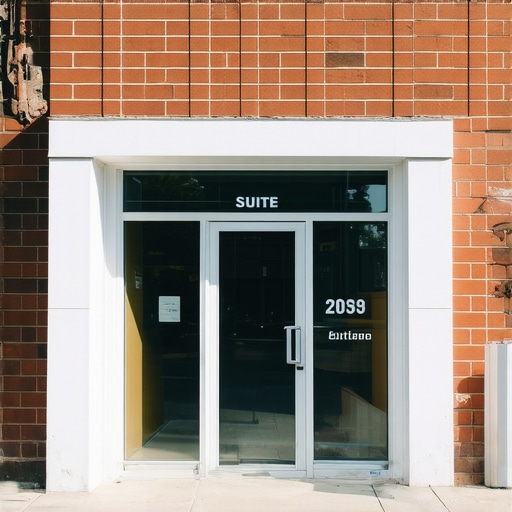
Embed the Geographic Proof Directly into the File
Once you have the shot, you need to ensure the invisible data is working for you. Most people do not realize that every photo taken on a smartphone contains a hidden trail of breadcrumbs called EXIF data. If you are struggling with how to prove your physical store location using specific image metadata, you need to verify that your latitude and longitude are baked into the file before you hit upload. I once spent three days wondering why a new office pin would not stick, only to realize the photos I uploaded were ‘scrubbed’ of their location data by a social media app first. When I used raw files and applied the exact metadata we add to store photos to jump the 3 pack, the pin locked into place almost instantly. It is the digital equivalent of a notarized document for your location.
Show Google What is Behind the Glass
Do not stop at the front door. Google’s algorithms are looking for a complete loop of evidence. This is where you can truly improve local pack standings by showing the transition from the sidewalk to the desk. Knowing why your floor plan photos help local search results is often overlooked, but it tells the AI that this is not just a shell of a building; it is an active place of commerce. I like to take a ‘continuous’ series: the door, the lobby, and the service area. This creates a virtual walkthrough that signals high quality to Google’s Vision AI. If you are in a shared building, remember that why a single suite number error kills your map visibility is usually due to conflicting data; your photos must clearly show your specific suite number to break that tie.
Keep the Digital Dust Off Your Profile
The most common mistake I see is the ‘one and done’ approach. You take one great photo in 2022 and wonder why your rank 3 pack efforts are stalling years later. Your physical space changes—seasons change, posters in the window change. If you are not refreshing your visual proof, Google starts to wonder if you have gone out of business. This is exactly why your profile needs to be updated every 7 days. It shows the algorithm that the ‘lights are on’ and someone is home. I have seen businesses jump five spots just by adding one fresh, timestamped photo of their entrance every Monday morning. It is a low-effort, high-reward habit that keeps you relevant for google maps boost while your competitors’ profiles grow stale.Everyone tells you to jam as many keywords as possible into your business description, but in my experience, that is the fastest way to get ghosted by the algorithm. The common wisdom says you need to blanket the internet with hundreds of directory listings to build authority. I used to buy those ‘citation packages’ by the dozen, thinking I was building a moat around my business. I was wrong. In today’s environment, buying 100 generic citations is a waste of your marketing budget because Google has moved past simple pattern matching. They are looking for ‘entity’ proof, not just text strings on a dusty web directory. If you are still chasing NAP consistency on sites that have not been updated since 2012, you are missing the hidden disconnect between citation cleanup and real map gains. High-level pros know that one mention from a local neighborhood association is worth more than fifty ‘Yellow Page’ clones. It is about geographic relevance, not just quantity. Most ‘experts’ will tell you to obsess over your business description, but Google barely uses the description for ranking anymore. If you want to rank 3 pack, your focus should be on the hidden ranking signal in your services menu. This is where you can be granular. Instead of ‘General Dentistry,’ you list ‘Emergency Tooth Extraction’ and ‘Invisalign for Teens.’ This structured data is what the AI actually processes to determine your relevance. I have seen businesses improve local pack positioning by 40% just by deleting a keyword-stuffed bio and properly categorizing their actual services. Don’t let someone charge you for a bio that does nothing; understand the hard truth about hiring a GMB SEO expert and check your own menu first.
What happens when your service radius overlaps with a competitor’s home turf?
This is the advanced ‘trap’ that kills growing businesses. You want to capture the next town over, so you expand your service area in the dashboard. Suddenly, your rankings in your own neighborhood start to dip. I call this the ‘dilution effect.’ According to a study by Whitespark on Local Search Ranking Factors, proximity remains the strongest signal, but ‘centroid’ bias can be triggered if your service area is too broad. You end up looking like a ‘jack of all trades, master of nowhere.’ Instead of stretching your radius, you should be focused on why your service area pages do not rank in neighboring towns and fixing the on-site content first.  Another nuance people miss is the danger of the ‘virtual’ footprint. I have seen dozens of entrepreneurs try to google maps boost presence by renting a mailbox at a UPS store or a coworking space. It is a ticking time bomb. Google’s Street View cars and AI are literally cataloging the lobbies of every shared space on the planet. If you do not have a dedicated entrance or permanent signage, you are courting a permanent ban. You need to understand the map ranking danger of using a virtual office before you sign that lease. The algorithm is now cross-referencing your ‘office’ against known coworking databases. If you share a lobby, you must ensure your profile does not conflict with others, otherwise ghost profiles in your building will drag you down. Have you ever fallen into this trap? Let me know in the comments.Once you’ve cleared out the ghost profiles and fixed your suite numbers, the real work begins. I’ve seen countless businesses fight tooth and nail to hit that top three spot, only to disappear six months later because they treated local SEO like a project rather than a pulse. The local algorithm isn’t a statue; it’s a living thing that reacts to every new review, every updated photo, and every competitor’s move. If you want to stay on top, you need to stop guessing and start measuring the right data. I personally moved away from ‘static’ rank trackers years ago. If your software only tells you that you are #1 in your zip code, it’s lying to you. You might be #1 at your front door and #15 two blocks away. This is why I look for the specific software features needed to track local keywords without map bias, specifically geo-grid tools that show me a heat map of my actual reach. Seeing a sea of green dots turn red as you move toward a competitor’s territory tells you exactly where you need more local reinforcement.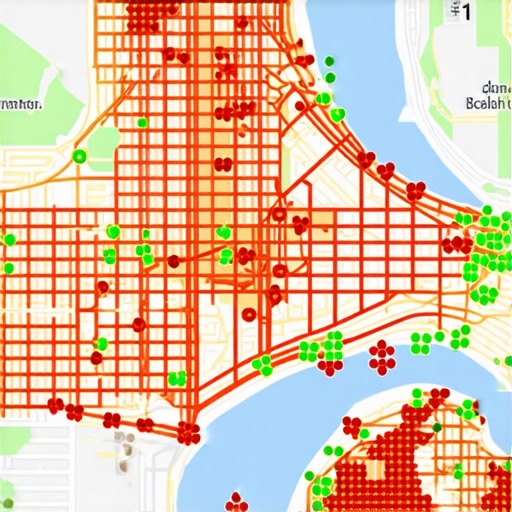
Keep the Momentum Without Burning Out
You don’t need to spend four hours a day on your dashboard. In fact, that usually leads to over-optimization and ‘spam’ triggers. I developed a simple daily routine to hold your spot in the top 3 that focuses on ‘micro-signals’—the tiny interactions Google loves. This involves replying to one new review with natural language and uploading one fresh ‘behind the scenes’ photo. Google’s own documentation on How to improve your local ranking on Google explicitly states that ‘Prominence’ is a key factor, which is determined by the information Google has about a business from across the web. This means your work outside the dashboard is just as important as the work inside it. If you are feeling stuck, you need the 10-minute daily checklist to track and fix your Google Maps ranking to ensure you aren’t missing silent errors like ‘suggested edits’ from competitors that can change your phone number or hours overnight.
How do I keep my map pin from sinking next month?
The secret is identifying ‘data gaps.’ I once helped a plumber who was dominating his town but couldn’t understand why his traffic was dropping. We realized his mobile site had slowed down significantly after a plugin update. Remember, how to fix the data gaps in your Google Maps analytics often starts with looking at the user experience. If your site is slow, Google will eventually stop showing your pin because it provides a poor experience for the user. Looking ahead, I see the local pack becoming even more visual and inventory-driven. By the time we hit the essential Google Business Profile tips for the 2026 local search cycle, the AI will likely be ranking you based on the real-time availability shown in your photos and ‘Live View’ AR data. If you haven’t done an audit recently, I strongly suggest using the no-fluff checklist for auditing your local listings in under an hour right now. One small error in your map embed can negate all the hard work you’ve put into your photos. Don’t wait for your phone to stop ringing to check your stats—run an audit today and lock in your position.
The Hard Truths I Learned While Fighting for the Top 3 Spot
Looking back at my journey, the biggest ‘aha’ moment wasn’t about a secret hack; it was realizing that Google is actually quite literal. I spent years thinking I could outsmart the system with thousands of links, but the real reason your local authority strategy feels stagnant is usually a lack of physical proof. If you aren’t showing the AI that you are a real, breathing entity in your neighborhood, no amount of technical wizardry will save you.
Another lesson? Stop obsessing over your business bio. I’ve seen more results from optimizing the hidden ranking signal in your services menu than from any flowery description. Be specific, be granular, and let the data do the heavy lifting. Finally, I learned that distance is a merciless filter. You can’t force a pin to rank 50 miles away if you have no local presence there. It is better to dominate your own block than to be invisible in ten different towns.
A Few Reliable Shortcuts for Your Local Strategy
If you are tired of generic advice, here is the short list of what I actually trust to improve local pack standings. First, you need a high-quality geo-grid tool. I look for the specific software features needed to track local keywords without map bias because standard trackers just do not give you the street-level truth. Second, I recommend keeping a physical folder of your business licenses and utility bills; you will thank me when you need to navigate the hard truth about hiring a GMB SEO expert or dealing with a sudden suspension. Lastly, never underestimate the power of a 15-minute sweep. I always keep the no-fluff checklist for auditing your local listings on my desktop to catch errors before they turn into ranking drops.
Claim Your Spot in the Neighborhood Today
Your business deserves to be seen by the people standing right outside your door. It is easy to get overwhelmed by the technical jargon of local pack optimization, but at its core, this is about being helpful to your neighbors. Take that photo of your front door, update your services, and reply to that review you have been ignoring. These small, consistent moves are exactly how you rank 3 pack and stay there for the long haul. Google maps boost does not happen overnight, but the results are permanent when built on a foundation of real-world proof. What is the single biggest hurdle you have faced trying to get your pin into the top 3? Let me know in the comments below!