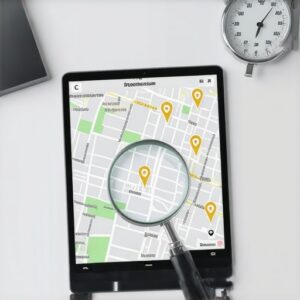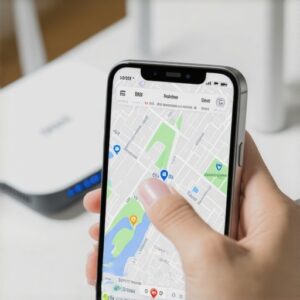
I remember the morning I checked my phone over coffee, expecting to see my business sitting pretty at the top. Instead? Crickets. We’d dropped to spot number five. That ‘Top 3’ badge I’d spent months fighting for had vanished overnight. I felt like I’d been kicked out of my own neighborhood. It’s a gut-punch that every small business owner knows too well—that sinking feeling that the algorithm just decided it didn’t like you today. But here’s the thing I learned the hard way: getting to the top of the local pack isn’t a trophy you keep; it’s a piece of real estate you have to defend every single morning. If you aren’t active, you’re essentially handing your customers over to the guy down the street.
Why the Local Pack Feels Like Moving Sand
For a long time, I fell for the ‘set it and forget it’ myth. I thought if I just fixed my citations and uploaded a few nice photos, I could focus on my actual work. I was wrong. Google loves fresh data more than a kid loves candy. If you aren’t showing signs of life, your competitors—who are likely using sneaky moves to push you out—will gladly take your spot. I realized that my ranking didn’t drop because of a penalty; it dropped because I stopped caring. That’s why I developed a routine that takes less time than brewing a second pot of coffee. It’s about building a simple daily routine that signals to Google that you are the most relevant, active, and trustworthy option in town. According to a study by BrightLocal, 98% of consumers used the internet to find information about local businesses in 2022, and most of that action happens right in the 3-pack. You can’t afford to be invisible even for a day. [image]
Is Spending Ten Minutes a Day Really Worth the Effort?
You might be thinking, ‘I have a business to run, I can’t spend hours on my phone.’ I get it. I used to think this was all just fluff. Early on, I made the massive mistake of buying generic citations and hoping they’d do the heavy lifting for me. It was a total waste of money. What actually works is small, consistent actions that prove your local authority. Whether it’s a quick photo or a fast response to a customer, these tiny signals prevent that stealth ranking drop that happens when a profile goes stale. Have you ever noticed your phone stops ringing the moment you stop posting updates? That’s not a coincidence. Have you ever felt like you’re playing a game of Whac-A-Mole with your Google Maps ranking? I want to show you how to stop reacting and start holding your ground. Using my 10-minute daily checklist, we can turn that volatility into a steady stream of calls. It isn’t about working harder; it’s about being the most consistent neighbor on the block. Let’s dive into what that actually looks like on a Tuesday morning.The first thing I had to tackle was the foundation. You can’t build a skyscraper on quicksand, and for most small businesses, that quicksand is messy, inconsistent data. I once spent three weeks wondering why a local plumber wasn’t budging from the second page of search results. It turned out he had ‘Suite B’ listed on his website but just the street address on his Yelp and Bing listings. It seems like a tiny detail, but why a single suite number error kills your map visibility is a lesson I learned through pure frustration. Google’s algorithm thrives on certainty; when it sees conflicting information, it plays it safe by hiding your profile. You have to scrub away the messy citation errors that keep your business from ranking before any advanced local pack optimization will actually stick. Think of it like clearing out the weeds before you even think about planting a prize-winning garden.
Answer the Questions Your Customers Are Actually Asking
Moving past the basics, we have to look at how people interact with your brand before they even call you. Most owners wait for a review to drop before they even think about touching their Google Business Profile. That is reactive, and in the world of a google maps boost, being reactive means you’re already losing. I want you to be proactive. Have you looked at your Q&A section lately? It is often a ghost town or, worse, filled with weird, unanswered questions from years ago. I started a habit of ‘planting’ my own questions—the exact things customers ask me in the shop—and then answering them immediately. You should stop ignoring your QA section because it acts as a massive signal of activity and relevance to Google. It’s like being the shopkeeper who stands at the front door to greet people instead of hiding in the back office hoping the phone rings.
Why Your Photos Need a Digital Fingerprint
Then there is the visual evidence that proves you are where you say you are. I used to just snap a blurry photo of a finished job and hit upload, thinking that was enough to improve local pack presence. It wasn’t. Google’s AI is incredibly smart, but it still benefits from help connecting your images to a specific physical coordinate. I began focusing on how to prove your physical store location using specific image metadata. By ensuring that the ‘where’ and ‘when’ are baked into your image files, you are providing Google with an undeniable receipt of your daily business activity.
Spot the Visibility Gaps Before Your Competitors Do
Finally, you need a way to find the leaks in your strategy. I rely on a specific 15-minute audit routine for finding hidden map visibility gaps. I remember running this for a small neighborhood cafe and realizing their ‘Primary Category’ was set to a generic ‘Restaurant’ tag instead of ‘Coffee Shop.’ That one change—a five-second click—helped them rank 3 pack for their most profitable keywords by the next morning. You have to look for where the signals are crossing or where you’re simply invisible because of a technicality. This isn’t about gaming a system; it’s about becoming the most helpful and present option for the person searching on their phone right now. You have to understand why your primary business category is likely sabotaging your 3-pack rank if you aren’t seeing the calls you expect.So, it’s Tuesday morning. You’re sitting there replying to reviews, thinking you’re checking off a major box. Most people tell you to shove every keyword imaginable into your response—’Thanks for visiting our city plumbing business!’ Stop right there. It’s one of the biggest myths in the game. In fact, research by local SEO leaders like Sterling Sky has shown that keyword-rich owner responses have zero direct impact on your actual ranking. It feels productive, but you’re actually risking a spam flag or, even worse, a stealth ranking drop because you’re trying to outsmart the bot. Instead of a keyword-stuffed mess, you should realize why replying to reviews with specific keywords is a local pack mistake. It’s about human engagement, not a secret code. Have you ever fallen into this trap? Let me know in the comments.
Don’t Waste Your Breath on Keyword-Stuffed Review Replies
The problem is that the algorithm has evolved past simple text matching. If you’re hyper-focused on the text of your replies, you’re missing the signal of ‘Response Velocity’ and genuine interaction. I’ve seen businesses get hit with a stealth ranking drop because they automated their responses with a bot that kept repeating the same phrases. Google’s AI is smart enough to see the pattern. Real local pack optimization requires you to act like a real person, not a SEO robot.
Why does my business suddenly vanish during rush hour?
This is what I call the ‘ghost’ phenomenon. You check your rank at 10 PM and you’re #1. You check at 2 PM and you’re gone. This happens because of ‘proximity bias’ and real-time competition density. You need to understand the real reason your map pin disappears during peak business hours. It’s often because your competitors are physically closer to the searcher at that specific moment, or their ‘open’ status is being prioritized by the algorithm to provide the best user experience. If you aren’t tracking your rank at different times of day, you aren’t seeing the full picture. Speaking of pictures, the technical side of your gallery is where most people fail. I don’t just mean high resolution; I mean the exact metadata we add to store photos to jump the 3 pack. Google looks for those geotags to confirm you aren’t a lead-gen ghost office. 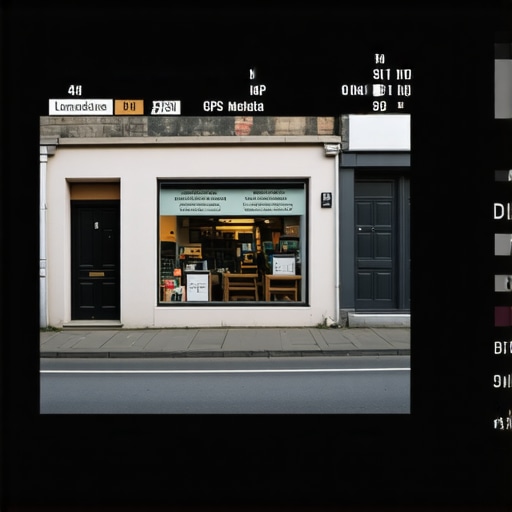 The biggest ‘oops’ I see advanced owners make is trusting their reporting software blindly. I once worked with a law firm that thought they were dominating, but their tool was using a static IP from a data center miles away. In reality, they were invisible to the actual neighborhood nearby. You have to be aware of why most ranking tools report fake map positions. If your software isn’t accounting for local bias or mobile-first indexing, it’s just a vanity metric. You need to verify your rank 3 pack status with boots-on-the-ground checks or tools that simulate hyper-local GPS coordinates. Don’t let a green dashboard fool you while your phone stays silent. Focus on the data that reflects the actual human experience on the street.It drives me crazy when I see a business owner celebrate a ‘ranking report’ that shows them at #1, only to find out the tool was checking from a desktop in a different state. To actually boost 3 pack performance, you need to see what the customer sees on their iPhone while standing three blocks away. This is why I am obsessed with the specific software features needed to track local keywords without map bias. I personally use grid-based tracking tools like Local Falcon or BrightLocal’s Local Search Grid because they show the ‘drop-off’ point—the exact street where you stop being #1 and start being invisible. If you do not know where that line is, you cannot push it back. You are essentially flying a plane with a broken altimeter, and that is exactly why your ranking reports show positions that dont actually exist most of the time.
Stop guessing with broken tracking tools
Tracking is only half the battle; the other half is knowing how to fix the holes the tracking reveals. When I see a ‘dead zone’ in my ranking grid, I immediately look for 7 hidden signal errors that keep you out of the local pack. Usually, it is a lack of local relevance in that specific neighborhood’s digital mentions. According to the 2023 Local Search Ranking Factors report by Whitespark, ‘proximity’ remains the top factor, but ‘on-page signals’ are the lever you can actually pull to fight back. I have found that how to fix the data gaps in your google maps analytics often starts with looking at your landing page performance for those specific outskirts. 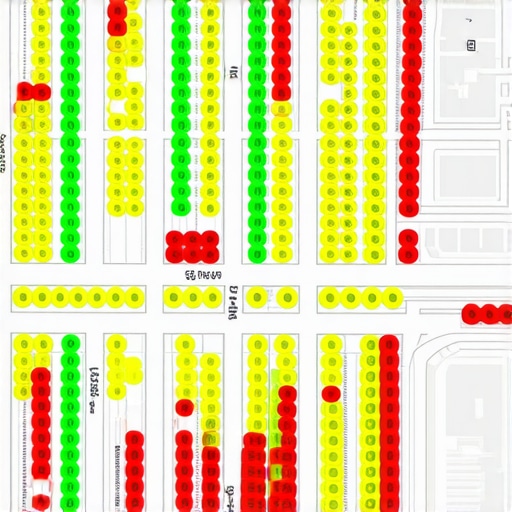
How do I maintain my 3-pack rank over the long haul?
Maintenance is not about doing a huge overhaul every six months; it is about micro-adjustments. I treat my Google Business Profile like a garden. If I see the ‘calls’ metric dipping, I do not panic and change my business name. Instead, I run our 15-minute audit routine for finding hidden map visibility gaps. I check for new competitors who might be edge-ranking or see if my primary category needs a seasonal tweak. Looking toward the future, I expect the algorithm to get even more aggressive about verifying real-world presence through AI-analyzed video and user-generated content. You should prepare now by reading these essential google business profile tips for the 2026 local search cycle. The ‘set it and forget it’ era is officially dead. My challenge to you today: open your profile, look at your ‘Insights’ from the last 90 days, and find one neighborhood where your views are high but your calls are low. That is where your growth is hiding.
The Day My Local Rankings Taught Me Humility
If I could go back to my first year in business, I would tell myself to stop obsessing over quantity and start valuing signal quality. I wasted months on low-grade directory blasts before I realized that why cheap local seo services usually end in a ranking disaster is usually due to a total lack of genuine local relevance. One major lightbulb moment was discovering the response velocity secret; it is not just about replying to customers, it is about how fast you prove you are active and open for business. I also learned the hard way that why generic review responses are tanking your local pack visibility comes down to Google’s ability to detect patterns—if you sound like a robot, the algorithm eventually treats you like one. Focus on being the most helpful human in your zip code, and the map position will follow.
Tools I Actually Use When the Phone Stops Ringing
When visibility drops, I do not guess. I go straight to our 15-minute audit routine for finding hidden map visibility gaps to see exactly where the connection is breaking. For checking out the competition, these 5 tools we use to spy on local competitors are essential for identifying which niche directories are actually moving the needle in your specific town. I also recommend keeping the latest industry ranking factor reports bookmarked as they are the closest thing we have to a local SEO bible. Finally, always verify your progress by learning how to fix the data gaps in your google maps analytics so you are not chasing vanity metrics that do not lead to sales.
Take Back Your Neighborhood One Map Pin at a Time
The journey to a consistent rank 3 pack position is not a sprint; it is a series of small, intentional steps that build your digital authority. Do not let the technical side of local pack optimization intimidate you. Every photo you upload with the exact metadata we add to store photos and every thoughtful, unique response you give is a vote of confidence in your brand. You have the tools now to achieve a significant google maps boost and sustain it against even the most aggressive competitors. Start with one small change from your checklist today, and watch how it transforms your ability to improve local pack visibility and boost 3 pack calls for the long haul.
Have you ever noticed your ranking drop unexpectedly after making a simple update to your profile? Let me know your experience in the comments below.