I’ll never forget the Tuesday morning I opened my laptop, expecting the usual trickle of lead notifications, only to see my local 3-pack ranking had completely cratered. I’d gone from the top spot to somewhere on page four, buried under a landslide of obvious bot reviews. It felt like someone had spray-painted lies all over my digital storefront while I was sleeping. If you’re seeing your hard-earned reputation get dragged through the mud by a competitor’s negative SEO campaign, I know exactly how that knot in your stomach feels. I spent weeks trying to fix it the wrong way before I finally found the blueprint to reclaim your profile authority and get back on top.
The Morning My Local Rank Fell Off a Cliff
Early on, I made the huge mistake of thinking I could just ignore it or that generic review responses would somehow signal to Google that I was the victim. I was wrong. In fact, my frantic, unorganized profile updates actually triggered a stealth ranking drop because I was acting out of pure panic instead of strategy. I started changing my business hours and description every five minutes, which just made the algorithm trust me even less. Realizing that I was sabotaging my own recovery was a bitter pill to swallow, but it was the lightbulb moment I needed to stop the bleeding and start the real repair work. Have you ever looked at your dashboard and seen a sudden spike of 1-star ratings from accounts that don’t even live in your country? If so, you’re not alone, and you’re not helpless.
Does Google even care if these reviews are fake?
The skepticism is real. We often feel like we’re shouting into a void when reporting these attacks. However, the data shows that authenticity is a massive battle for the search giants. According to a study by BrightLocal, 46% of consumers feel they have seen at least one fake review on a business profile in the last year. This means the algorithm is under immense pressure to filter out the noise. The secret isn’t just complaining to support; it’s about drowning out the fake signals with undeniable, high-authority proof of your business’s legitimacy.
Why You Can’t Afford to Wait for the Bots to Disappear
Waiting for the algorithm to “catch up” is a recipe for a permanent map visibility gap. When those fake reviews hit, they don’t just lower your star rating; they dilute your relevance. I found that while I was waiting for Google to act, my competitors were using sneaky competitor moves to fill the void I left behind. You have to be proactive. If you don’t take control of the narrative immediately, you aren’t just losing a few stars—you’re losing your seat at the table in the local pack. I’m going to show you exactly how I stopped the damage and forced my map pin back to the top by focusing on the signals that actually move the needle.The first thing I did when the 1-star reviews started pouring in was hit the “flag” button like a maniac. That was my second big mistake. Flagging is just a signal; it’s not a solution. You have to treat a spam attack like a crime scene. I remember a specific client—a local HVAC contractor—who got hit with 40 fake reviews in two hours. We flagged every single one and Google denied every single request. Why? Because we didn’t provide context. Once we started gathering IP patterns and cross-referencing the “reviewers” with our actual customer database, the tone of our appeals changed. You need to show Google the gap between reality and the bot-generated fiction.
Proof is Your Only Lever in a Dispute
If you find yourself in a situation where your profile is actually taken down, don’t just beg. You need to provide the 3 specific documents you must upload to overturn a profile suspension. Think of it like a digital passport. Without the right “stamps”—utility bills, business licenses, and photos of your signage—you’re just another suspicious entity in their eyes. I’ve seen businesses wait months for a response simply because they didn’t lead with hard evidence.
Overwrite the Spam with a Flood of High-Value Interactions
You can’t just wait for the bad stuff to go away; you have to push it down. Think of your profile as a bucket of water. If someone dumps ink into it, the only way to get it clear again is to keep pouring fresh, clean water in until the ink is diluted to nothing. This is where how fast replies actually improve local pack visibility comes into play. I started responding to every single legitimate review within minutes. This signals to the algorithm that the business is hyper-active and the spam was an anomaly. I also doubled down on my profile’s conversion features. I realized that the tiny profile change that swapped scrolling for real customer phone calls was worth ten 5-star reviews. By adding a direct booking link and updating my “products” section, I forced the algorithm to see real user engagement again. When real humans start clicking “call” or “get directions” more frequently than bots are leaving reviews, the math starts to tip back in your favor.
Use Your Q&A Section to Re-Verify Your Relevance
Don’t ignore the questions people ask on your profile. In fact, you should be seeding them yourself. I’ve found that answering obscure Q&A questions is the fastest google maps boost when your ranking is stuck. It adds semantic depth to your profile that spam reviews lack, providing the algorithm with the keyword-rich context it needs to trust your niche authority again.
Fix the Back-End Data Errors Google is Using to Penalize You
Spam attacks often expose underlying weaknesses in your digital foundation. While I was fighting the reviews, I noticed my NAP (Name, Address, Phone) data was a mess across the web. I had old office addresses from three years ago still floating around on forgotten directories. These are the messy citation errors that keep your business from ranking because they provide Google with a reason to doubt your legitimacy. I stopped chasing quantity and focused on 5 specific niche citations that actually move the needle on map authority. For my HVAC client, this meant getting listed on local trade associations and verified contractor boards rather than 100 random yellow-page clones.
Use Visual Evidence to Kill the Bot Narrative
Finally, start uploading fresh, geo-tagged photos. I learned the hard way that knowing how to prove your physical store location using specific image metadata is a superpower. When you upload a photo taken at your office with the GPS coordinates baked into the file, you’re providing a trust signal that a bot in another country can’t replicate. It’s like a digital fingerprint for your business location.
While metadata is a great start, the most common trap I see business owners fall into is the ‘more is better’ fallacy when it comes to mentions of their business online. Most people assume that if five citations are good, five hundred must be better. In reality, this is where the wheels usually fall off. I’ve seen businesses spend thousands on bulk listing packages only to realize there is a hidden disconnect between citation cleanup and real map gains. Google isn’t counting entries anymore; it’s measuring consistency and relevance.
Why Your Description is a Secret Ranking Trap
You’ll often hear ‘experts’ tell you to stuff every service you offer into your business description. This is probably the fastest way to get your account flagged. I used to think adding a list of twenty suburbs would help me rank in those areas, but the opposite happened. I learned that why keyword stuffed descriptions lead to invisible profiles and bans is rooted in Google’s desire for a natural user experience. If your description looks like a list of tags from 2005, the algorithm will treat you like a relic from 2005. Stick to your brand story and let your service menu do the heavy lifting for keywords.
The real ‘oops’ factor comes from the ‘citation explosion’ strategy. When you buy 100 generic listings, you often create a mess of slightly different phone number formats or address abbreviations that confuse the map pin. I’ve found that why buying 100 generic citations is a waste of your marketing budget boils down to the fact that Google prioritizes ‘trusted’ sources over sheer volume. One mention on a local neighborhood blog is worth fifty mentions on a random directory from across the globe.
Should You Really Ask Every Customer for a Review?
This is where I get a bit contrarian. Most SEOs tell you to automate your review requests so every single customer gets an email. I think that’s a mistake. If you get a sudden surge of ten reviews in one day and then nothing for three weeks, it looks like a manipulation attempt to the algorithm. According to the Whitespark Local Search Ranking Factors study, review ‘velocity’ and ‘steadiness’ are far more important than raw numbers. This is why you should stop asking every customer for a review and instead focus on a steady, natural drip of feedback. A business that gets two reviews a week, every week, will almost always outrank a business that gets fifty in a month and then goes silent.
The Data Signal Most Experts Ignore
If you’re still relying on basic tools to see where you rank, you’re likely flying blind. I discovered early on that why most ranking tools report fake map positions is because they don’t account for the user’s precise physical location. You might look like you’re in the #1 spot when you check from your office, but move three blocks away and you’re #8. To fix this, you need the specific software features needed to track local keywords without map bias. Once you see the real grid of your visibility, you can stop guessing and start targeting the specific neighborhoods where your map pin is weakest. Have you ever fallen into this trap of trusting a single ‘green’ ranking report only to realize your phone isn’t ringing? Let me know in the comments. I’ve found that implementing a 10-minute daily checklist to track and fix your google maps ranking is the only way to stay ahead of the competitors who are constantly trying to nudge you out of that 3-pack.
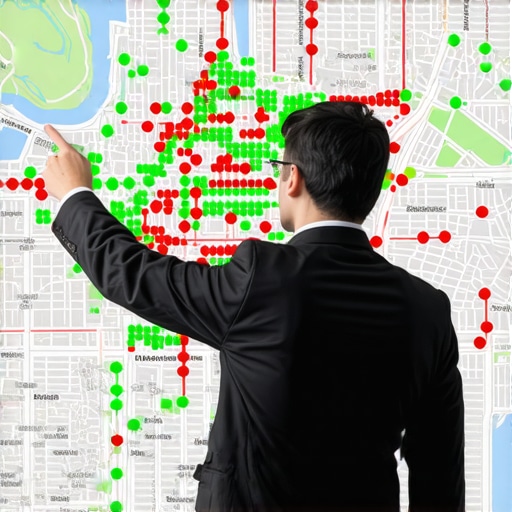
I’ve spent thousands on software that promised the world, only to realize that most of it was just regurgitating the same useless data. If you’re still looking at a single number for your keyword ranking, you’re missing the forest for the trees. I only use tools that provide a geo-grid view because they reveal the truth about your visibility. If your consultant is still sending you PDF reports with a single ‘average’ position, they are likely using 4-red-flags-your-local-seo-reseller-is-using-outdated-tools. To truly win, you need the specific software features needed to track local keywords without map bias. I personally use these grids to see exactly where my map pin starts to fade, which allows me to target my local link-building efforts to the precise streets where I’m losing ground.
Stop trusting static ranking reports
Maintaining that top spot isn’t a one-and-done job; it’s about defending your territory. I’ve found that the most successful businesses don’t just set their profile and walk away. They follow a simple daily routine to hold your spot in the top 3. This doesn’t take hours—it’s about high-impact micro-tasks like checking for ‘suggested edits’ from competitors or verifying that your business hours haven’t been tampered with by a ‘helpful’ user. I also make it a point to regularly audit my image gallery. I’ve found that the exact metadata we add to store photos to jump the 3-pack creates a trust signal that the algorithm simply cannot ignore. It’s the difference between being a ‘verified’ local presence and just another pin on the map.
How do I maintain my map position as the neighborhood gets more crowded?
The key to longevity is consistency and localized depth. As Joy Hawkins from Sterling Sky has often noted, the algorithm is increasingly sensitive to ‘openness’ and real-world proximity signals. This means you can’t just spam your way into the 3-pack from three towns over. Instead, you have to build genuine local authority. If you have multiple branches, you need to learn how to scale local content across 10 law firm locations without looking like spam. This involves creating unique, neighborhood-specific landing pages that answer the specific needs of those residents rather than just copying and pasting the same ‘about us’ section ten times.
Expect Google to get even pickier about your photos
Looking toward the future, I predict that AI-driven visual recognition will become the primary way Google verifies your business category. We are already seeing the algorithm identify specific tools and storefront features within uploaded images to confirm a business is who they say they are. This is why I tell my clients to stop using stock photos immediately. For the 2026 search cycle, you’ll need to double down on essential google business profile tips for the 2026 local search cycle, which will focus heavily on video updates and real-time interaction signals. If you want to stay ahead of the curve, try this one advanced tip: take a 30-second video of your office and upload it as a ‘post’ update once a week. It’s a massive trust signal that most of your competitors are too lazy to do. If you’re feeling overwhelmed, just start with our 15-minute audit routine for finding hidden map visibility gaps to see where you stand today.
The Expensive Realizations That Finally Fixed My Google Maps Boost
Reflecting on my journey through the local search maze, the biggest ‘lightbulb moment’ was realizing that Google rewards behavior, not just keywords. I spent months trying to game the system before I realized that a google maps boost comes naturally when you treat your profile like a living breathing entity rather than a static billboard. One of the hardest truths I had to swallow was that most profile updates actually trigger a stealth ranking drop if you do them in a state of panic. Consistency is a signal in itself. I also learned that the algorithm is much smarter at detecting real-world engagement than we give it credit for. If you aren’t seeing the results you want, it’s rarely because you haven’t bought enough links; it’s usually because you’ve missed the fine details of the exact way to describe your services for better map results.
- Stop chasing the aggregate score: A perfect 5.0 rating is often less trustworthy than a 4.8 with high engagement and detailed, localized replies.
- Video is the future: I found that learning how to use video updates to stand out in the local pack result provided a faster trust signal than 50 static photos ever could.
- Documentation is your insurance: Keep your business licenses and utility bills handy. If you ever face a suspension, having the exact documents that got our suspended profile back in 48 hours ready to go is the difference between a minor hiccup and a business catastrophe.
My Tested Arsenal for Dominating Local Search
I don’t believe in using a hundred different tools; I believe in using three or four that actually provide actionable data. I personally rely on Whitespark for deep-dive citation research because it cuts through the fluff of generic directories. For tracking, I avoid any tool that doesn’t offer a geo-grid view—you need to see your rank 3 pack status neighborhood by neighborhood. If you’re just starting your cleanup, I highly recommend following our 15-minute audit routine for finding hidden map visibility gaps. It’s the same framework I use to identify why a profile is ‘stuck’ despite having great reviews. For daily maintenance, nothing beats the 10-minute daily checklist to track and fix your google maps ranking to ensure no competitor has suggested a malicious edit to your hours or address.
Your Path to Local Pack Superiority Starts with One Step
Reclaiming your spot in the local pack isn’t about a single magic trick; it’s about a series of intentional, high-authority actions that prove you are the most relevant answer to a user’s query. It can feel overwhelming when you’re staring at a drop in rankings, but remember that every spam attack or algorithm shift is just an opportunity to tighten your local pack optimization and come back stronger. You have the tools, the strategy, and the proof that it can be done. I’ve seen businesses go from total invisibility to being the most called provider in their city by simply focusing on the trust signals that matter. It’s time to stop letting the bots win and start showing Google why you’re the best in the business. Have you noticed any suspicious ‘suggested edits’ or weird review patterns on your profile lately? Let me know in the comments below so we can troubleshoot it together.