I still remember the late-night panic back in 2019 when my local business started slipping. Our competitor down the street, who didn’t even have a website, somehow locked down the top spot. Desperate to improve local pack positioning for my business, I fell for the oldest trick in the SEO playbook. I spent $150 on a package promising “300 premium local citations guaranteed to boost 3 pack visibility.” I waited. I watched my dashboard. What actually happened? Absolutely nothing. If anything, my local pack placement got worse because those automated directory submissions flooded the internet with conflicting information. I learned the hard way that when it comes to the real cost of cheap citation building, you pay with your rank. Today, I want to show you why chasing massive numbers of directories is a dead-end street and what actually moves the pin on Google Maps.
The Database Trap That Swallows Your Hard-Earned Cash
Most business owners believe the myth that more directories equals more trust. But Google’s algorithms have evolved far past the raw quantity of links. In fact, a study by Moz on search engine ranking factors shows that behavioral signals and physical proximity carry vastly more weight than low-quality directories. When you buy cheap citation packages, you are usually paying a bot to fill out profile forms on dead, unindexed websites that search engines completely ignore. To make matters worse, these automated tools often mismatch your business data, creating a nightmare of messy NAP discrepancies that actively confuse search engines. Instead of a google maps boost, you get a digital mess that takes months to clean up. Let me ask you: Have you already spent money on these massive directory packages only to watch your map pin stay completely frozen?
Is buying citations actually worth the hype anymore?
The short answer is no, not the way most people do it. The game has changed from bulk quantity to hyper-local relevance. Instead of buying hundreds of useless listings on spammy websites, you should focus on building authority through high-quality, local connections. In our upcoming sections, we will dive into the exact steps you can take to bypass these useless databases and build real local authority. Let’s look at how to stop wasting cash and start focusing on what truly matters to the search algorithm.
Stop Counting Listings and Start Targeting Local Context
We have been conditioned to think about search algorithms like old-school phone books. We assume that if our name is printed in more places, we win. In reality, modern local search operates like a small-town chamber of commerce meeting. If a trusted local community organizer vouches for you, it carries ten times more weight than a random list of business names printed on a flyer in another state. I discovered this truth the hard way during a freezing winter in Chicago, when I spent weeks manually cleaning up mismatched records for a family-owned plumbing shop. The owner had purchased three different citation packages, creating a digital trail so fragmented that search engines could not verify the shop’s physical location. When we finally ignored the database directories and focused on a few hyper-local community relationships, our phone began ringing again. Forcing your business into the top rankings requires clean data and localized authority, not massive lists.
The High-Impact Blueprint for Direct Profile Synchronization
To build a bulletproof local presence, your first step is to synchronize the raw data on your own website before you ask Google to trust your business location. If you want a real google maps boost, you must eliminate inconsistencies at the source. This starts with audit work. You can quickly scan for issues yourself by learning how to audit your local citations in 15 minutes without paying for tools. Make sure that your business name, address, phone number, and suite formatting are identical on your footer, your contact page, and your map profile. A minor difference in formatting can quietly keep you out of the local pack. For example, if your office is in an shared building, read up on the tiny error in your suite number that blocks your local pack entry to ensure search engines do not filter you out as a duplicate listing.
Connecting Your Website Content to Your Maps Profile
Your website and your Google Business Profile are not two separate islands; they are directly connected. When search engine crawlers scan your website, they look for geographic anchors that match your physical location.  If your site content fails to mention specific regional details, your proximity signal weakens. To fix this, optimize your service pages using localized language and target neighborhoods instead of just the broad city name.
How We Used Specific Neighborhood Mentions to Boost Relevance
In my own agency, I tried a simple test with a local dentist whose ranking was stuck on the second page for his primary city. Instead of targeting the generic metro area, we integrated specific neighborhood indicators. You can learn how we did this by reading about how to use specific neighborhood mentions to bypass bigger competitors. By referencing known local landmarks, major cross streets, and nearby community parks within the service page copy, we gave the search algorithm concrete, contextual evidence that the business was truly integrated into that specific neighborhood. This simple content tweak helped us improve local pack positioning within weeks. Additionally, make sure your website’s back-end code supports your physical location by ensuring you do not run into the schema error that keeps your profile out of local search. Proper local schema markup acts as a direct translator for search engine bots, ensuring they read your geographic coordinates exactly as they appear on Google Maps.
The Great Proximity Lie in Modern Map Tracking
Most local business owners are obsessed with checking their rankings from their own office desks. They open up a browser, type in their primary service, see themselves at the top, and celebrate. In my experience, this is the single biggest trap in local search. You are looking at a hyper-local bubble that does not exist for a customer standing just three blocks away. This false sense of security prevents you from doing the actual work needed to improve local pack positioning where it actually matters. When you rely on static, single-point searches, you are completely blind to how your visibility degrades as searchers move across town. To truly understand this dynamic, you must realize why most proximity-based ranking reports are giving you false hope. If you are not tracking your visibility using a multi-point grid, you are optimizing for a ghost.
Why does your competitor with fewer reviews outrank you?
This is the question that keeps business owners up at night. You have 150 pristine five-star reviews, yet a competitor with mediocre ratings and half the review count is consistently sitting in the coveted top spot. The common industry myth is that review volume is the ultimate kingmaker for a google maps boost. However, search engines prioritize contextual relevance and real-world behavioral signals over raw review counts. In fact, according to Whitespark’s annual Local Search Ranking Factors survey, physical proximity and proper primary category selection vastly outweigh review volume. If your competitor has aligned their primary category perfectly with search intent while you are suffering from internal category conflicts, they will win every time. You can read more about this structural issue in our analysis on why your business categories might be fighting each other. It is not about who has the loudest cheerleading squad; it is about who has the cleanest, most authoritative digital foundation.
The Review Velocity Trap That Can Get You Banned
When business owners realize they need to improve their local ranking, their immediate instinct is to launch an aggressive campaign to acquire as many reviews as possible in a short window. This sudden spike in activity triggers spam filters faster than almost anything else. Google’s algorithm monitors the velocity of your reviews. If a business that typically receives two reviews a month suddenly gets twenty in a single weekend, those reviews will likely be filtered out, or worse, your entire profile could face suspension. 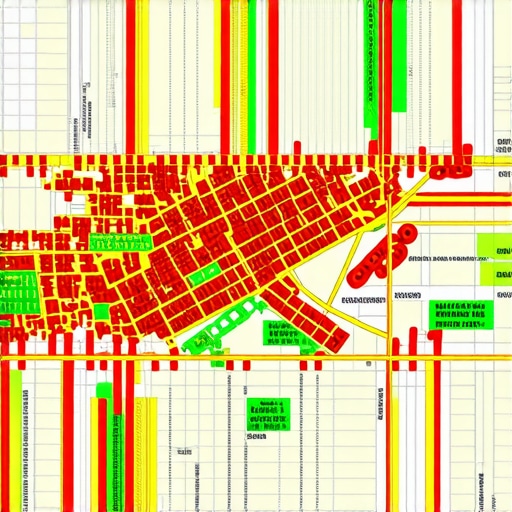 Instead of artificial spikes, you need a steady, natural acquisition rate. Furthermore, you must avoid automated short-cuts. Using pre-packaged review acquisition services is a dangerous shortcut that will backfire, which is why why buying review packages is the fastest way to get banned. Instead, focus on building organic, steady feedback loops with your genuine customers. Have you ever fallen into this trap of chasing quick fixes only to watch your reviews disappear? Let me know in the comments below. Let’s start building real, unshakeable map authority together.
Maintain Your Local Dominance with Smarter Systems
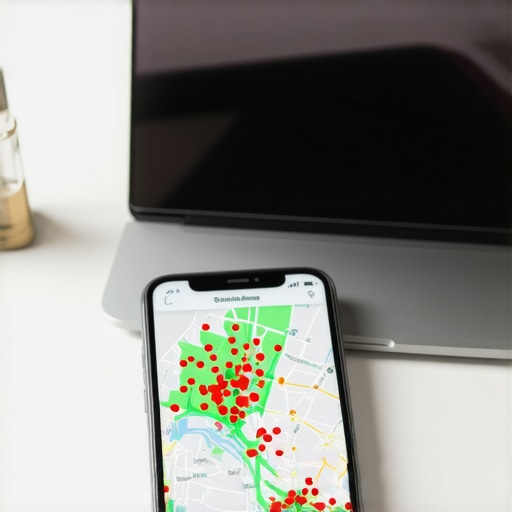
Once you clean up your citations and align your categories, you cannot just sit back and hope your rankings stay locked in. Google Maps is a dynamic marketplace where competitor actions, algorithm core updates, and user behavior continually shift the ground beneath your feet. I personally spent months building a top ranking for a local contractor, only to watch it slip away because we stopped monitoring the profile for just a few weeks. The key to keeping your position is regular, systematic maintenance. Rather than guessing where your visibility is slipping, you should learn how to use heat maps to track your true local visibility. Using grid-based geogrid tools is the only way I monitor my projects now, as they show exactly which streets are losing traction so we can deploy targeted local content before a competitor takes over.
How do I maintain my maps rankings over time?
Consistent, daily habits outperform occasional massive overhaul projects. If you want your map pin glued to the top of search results, you must implement a structured routine. I recommend establishing the one daily task to keep your map pin glued to the top spot, which ensures your profile remains active and highly favored by Google’s freshness algorithm. In my experience, the absolute best tool for auditing your digital footprint quickly and discovering hidden issues is discussed in my guide on the best tools for auditing your local search presence fast. When you use dedicated tools instead of manual searches, you catch issues like duplicate profiles or sudden address changes before they impact your lead flow.
The Future of Maps Optimization and Machine Learning
Looking ahead, local search is moving rapidly toward real-world behavioral validation and away from simple on-page signals. According to the Google AI Search documentation and recent patent filings, search engines are increasingly utilizing real-time mobile location history to confirm whether searchers actually visit the physical storefronts they click on. In the future, virtual offices and fake locations will be completely weeded out by machine learning models that analyze continuous foot traffic patterns. To prepare for this shift, you should focus on driving real-world engagement and optimizing your digital profile to convert views into actual physical visits. I highly recommend trying one advanced tip today: audit your technical markup to make sure you do not suffer from the schema error that keeps your profile out of local search. This small technical adjustment ensures Google’s crawlers can seamlessly read and verify your physical coordinate data, setting a bulletproof foundation for your local search future.
We have all spent hours chasing vanity metrics that do not actually translate into real customer calls. But once you look past the standard advice, you realize that real local search authority is built on small, deliberate actions rather than bulk automated packages.
The Hardest Lessons I Learned While Trying to Improve Local Pack Positioning
When I first started trying to improve local pack positioning for my partners, I made the classic mistake of thinking Google was easily fooled by volume. It took several painful ranking drops to realize three fundamental truths about how the modern local algorithm actually operates:
- Proximity is dynamic, not static: You cannot expect a single optimization tweak to cover an entire metropolitan area. Understanding why your physical proximity to the searcher is changing based on real-time mobile data will save you from targeting impossible zip codes.
- Categories dictate your ceiling: If you get greedy and select too many overlapping services, you trigger internal filters. Selecting the exact category mix that moves the needle in local search is infinitely more powerful than trying to rank for everything at once.
- Real engagement beats automated signals: Bots can fill out forms, but they cannot simulate a real human clicking on your directions link or calling your store. Google’s machine learning models are incredibly smart at detecting these behavioral differences.
The Map Tools I Actually Rely On Daily
I do not believe in buying expensive software suites that promise to do your work for you. Instead, I focus on a very lean, highly focused toolkit that provides immediate clarity on my digital footprint:
- Geogrid Visualizers: These are the only way to see past the local search bubble. I use them to track search visibility across a precise 13×13 grid so I know exactly where my rankings drop off.
- Schema Validation Tools: To ensure search engines read my physical location data flawlessly, I run regular structural checks to avoid the schema error that keeps your profile out of local search.
- True Citations Audit Sheets: I keep a manual spreadsheet of our top 15 high-authority local listings, rather than paying for automated sync tools that create duplicate entries. If you want to clean up your own footprint fast, refer to the no-fluff checklist for auditing your local listings fast.
Your Blueprint to Claim the Top Spot
The digital landscape is shifting away from simple keyword matches and moving toward real-world verification. This is actually incredible news for real, local business owners. It means you no longer have to get outspent by massive national brands with huge backlink budgets. By ensuring your website has clean data, focusing on hyper-local community relevance, and maintaining a steady stream of genuine customer interactions, you can easily secure a sustainable, long-term google maps boost.
Have you ever spent money on a citation builder only to watch your rankings stay completely frozen? Let me know your experience in the comments below!