I remember the pit in my stomach three years ago. I had just finished a job for a client who was absolutely glowing with satisfaction. As they walked out the door, I froze. I wanted that review. I desperately needed it to boost my 3-pack rank. But I didn’t want to be that guy who begs for a digital gold star while the handshake is still warm. So, I stayed silent. Two weeks later, my competitor—who honestly does half as good a job but asks everyone—jumped ahead of me on the map. I realized then that my misplaced politeness was actually a business-killing silence. That realization changed everything about how I approach my local pack optimization strategy. Today, I am going to show you how to build a review flywheel that feels like a natural extension of your service, not a desperate plea for attention. We are going to fix your reputation strategy and improve your local pack presence simultaneously.
Why Begging for Stars Usually Backfires
I made a massive mistake early on by thinking more was always better. I signed up for a service that bombarded my customers with three emails and two texts within 48 hours of a purchase. It was a disaster. I learned the hard way about the hidden cost of using automated review responses and aggressive outreach. I didn’t just annoy people; I actually drove away repeat business. The reality is that modern customers can smell a ‘review trap’ from a mile away. If your approach feels like a chore for them, they will ignore it. Or worse, they will leave a disgruntled comment about your persistence. We need to focus on the ‘ask’ when the dopamine of a solved problem is at its peak. This is the secret to how to fix the conversion gap between profile views and actual calls. When you align your request with their success, it doesn’t feel like an intrusion; it feels like a shared celebration of a job well done. According to a study by BrightLocal, 87% of consumers used Google to evaluate local businesses in 2022, but they are increasingly sensitive to ‘review solicitation’ that feels impersonal or forced.
Is it really possible to get reviews without pestering people?
I hear this skepticism all the time from local business owners who are tired of the grind. You might think that if you don’t nudge them five times, they’ll simply forget. But the trick isn’t more nudges; it’s better timing. By creating a ‘moment of peak satisfaction,’ the review becomes the natural conclusion to the service. I also learned that you have to be careful with what you do once those reviews start rolling in. For instance, I used to think I was being clever by stuffing my replies with city names, but I found out that why replying to reviews with specific keywords is a local pack mistake that can actually look spammy to the algorithm. Instead, focusing on the response velocity secret is a much more effective way to show Google you are active without annoying your customer base. Have you ever felt like you were bothering a customer by asking for a review? It’s a common hurdle, but once you shift your mindset from ‘taking’ to ‘confirming their satisfaction,’ the entire dynamic changes. Now, let’s look at the specific, non-annoying ways we can integrate this into your daily workflow.
Catch Them While the Problem is Still Solved
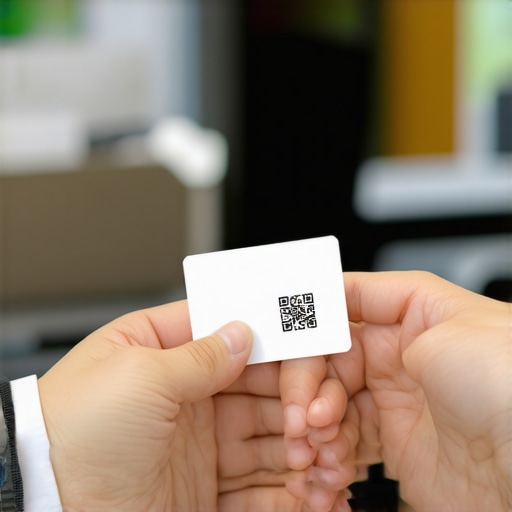
The biggest mistake I see local owners make is treating a review request like a follow-up invoice. If you wait 24 hours, the dopamine hit of having a fixed leaky pipe or a fresh haircut has already faded. You need to ask when the relief is highest. I once advised a local locksmith who was struggling to boost 3 pack visibility despite having great service. He was texting clients the next day. We changed one thing: he started handing over a small, high-quality business card with a direct QR code the second the customer stepped back into their house. His review rate tripled in three weeks because he captured the ‘moment of gratitude.’ This is how you improve local pack standing without being a pest; you make the review the final ‘click’ of a successful transaction.
Turn Your Customers into Your Best Photographers
Google trusts what your customers see more than what you say. Most people think a five-star rating is the end goal, but a review with a photo is worth ten times more for your local pack optimization. When a customer uploads a photo of your storefront or the work you did, they are providing geographic and visual proof that you are a real, active business. This creates a massive google maps boost because it validates your physical location through the impact of user-generated content on your map visibility. I remember a small cafe that was stuck on page two. We started a simple ‘Photo of the Month’ contest where customers who posted a photo to their review were entered to win a gift card. Within 60 days, their profile was a vibrant gallery of real human interaction, and they jumped straight into the top spot.
The Seven Day Maintenance Rule
Local SEO isn’t a slow-cooker; you can’t just ‘set it and forget it.’ Think of your profile like a physical garden. If you don’t pull the weeds or water the plants, the curb appeal vanishes. This is why your profile needs to be updated every 7 days to signal to the algorithm that you are still the most relevant choice for searchers. This doesn’t mean you need a PR firm. It means posting a single photo of a new project, answering a customer question, or sharing a quick update about your hours. Incorporating the simple daily routine to hold your spot in the top 3 ensures that your competitors don’t out-hustle you while you’re busy running the shop. I’ve seen profiles with 500 reviews get overtaken by profiles with 50 reviews simply because the latter was posting fresh content twice a week.
Use Metadata to Prove You Are Local
If you are uploading your own photos—which you should be doing constantly—you need to stop treating them like static images. Google reads the data behind the pixels. When I work on a rank 3 pack project, I focus heavily on the exact metadata we add to store photos to jump the 3 pack. This includes ensuring the GPS coordinates are embedded in the file and the filenames aren’t just ‘IMG_1234.jpg’. Instead, use descriptive names that link your service to your neighborhood. I once helped a roofer who was invisible in his own town. We started geotagging his job site photos before uploading them, and suddenly, Google realized he wasn’t just ‘a roofer,’ but ‘the roofer’ for that specific zip code. It’s a technical edge that most of your competitors are too lazy to implement.
Most business owners assume that to boost 3 pack visibility, they need to cast the widest net possible. They set their service area to cover three counties and fifty cities, thinking more territory automatically equals more leads. In my experience, this is the fastest way to become invisible everywhere. Google prioritizes proximity and local relevance above almost everything else. When you tell the algorithm you’re ‘everywhere,’ it often decides you’re ‘nowhere’ specific enough to outrank a local competitor who focuses on a three-mile radius. This is exactly why your service area radius should be smaller not larger. I’ve seen businesses slash their service radius by 50% and see their local pack optimization scores double because their authority became concentrated rather than diluted. By avoiding the problem with having too many service area cities, you allow Google to trust your business as a neighborhood authority.

The Costly Mistake of Faking Your Physical Location
Then there’s the ‘Virtual Office’ trap. It’s incredibly tempting to rent a cheap mailbox in the city center to get a ‘prime’ location for your google maps boost. Don’t do it. Google’s AI and manual review teams are incredibly good at spotting the map ranking danger of using a virtual office. If you get caught, your profile doesn’t just drop—it gets suspended. I’ve seen years of hard-earned reviews vanish overnight because a business owner tried to cheat the physical address requirement. The same logic applies to citation building. Many agencies still push the idea that more is better, but why buying 100 generic citations is a waste of your marketing budget becomes clear when you realize that Google values consistency and niche relevance over raw numbers. According to the 2023 Local Search Ranking Factors study by Whitespark, high-quality, industry-specific citations carry far more weight than hundreds of directory entries from sites nobody visits.
Why Doesn’t My Keyword-Rich Description Help Me Rank?
I often get asked if stuffing the business description with keywords actually helps to improve local pack standings. The short answer is no. While it’s helpful for the human reader to understand what you do, Google has explicitly stated that the business description field isn’t a direct ranking factor for the 3-pack. You are much better off focusing on the ranking signal in your about section keywords that relate to your brand identity and neighborhood history rather than a laundry list of services. Using this space to connect with your local community builds trust with customers, even if it doesn’t move the needle on the algorithm directly. Have you ever fallen into the ‘wider is better’ trap with your service area? Let me know in the comments, and let’s discuss how to fix it.
I used to think that hitting the top spot was the hard part. It’s not. Staying there is the real battle. Once you’ve achieved a google maps boost, you basically have a target on your back. Competitors will see you, they will copy your categories, and some might even try to report your listing for ‘policy violations.’ That’s why maintenance isn’t just about adding photos; it’s about defensive SEO. I spend exactly 15 minutes every Monday morning going through the no-fluff checklist for auditing your local listings in under an hour. This routine prevents the ‘slow slide’ into obscurity and helps me catch issues before they impact my rank 3 pack status. I also keep a close eye on how to handle a sudden drop in map visibility just in case a core update rattles the cage. If you aren’t looking at your profile at least once a week, you’re essentially leaving your storefront’s keys in the lock.
How do I keep my map rank when competitors start fighting back?
Consistency is the only real shield. I’ve found that the ranking impact of having a consistent business name across the web is often underestimated until it breaks. When a competitor tries to improve local pack standing by spamming keywords, your best defense is a rock-solid, verified history. I use tools like GeoSetter or specialized mobile apps to handle the specific way to geotag store photos for maximum impact. This isn’t just about ‘doing SEO’; it’s about providing undeniable proof of your presence. Darren Shaw’s Local Search Ranking Factors survey often highlights that while Google Business Profile signals are paramount, ‘On-page’ signals on your website are the fastest-growing factor. This is why I also obsess over the impact of site speed on your 3-pack placement. If your site is slow, your map pin will eventually suffer.
Stop treating your profile like a static business card
Your profile needs to breathe. I personally use the simple daily routine to hold your spot in the top 3 to ensure I’m always signaling ‘relevance’ to the AI. This includes checking your QA section to answer questions before they turn into missed leads. Most owners ignore this, which is a massive opening for you to boost 3 pack visibility by simply being more helpful than the guy down the street. 
The exact toolkit I use to stay ahead
When it comes to local pack optimization, I don’t trust my gut; I trust data. I use 5 tools we use to spy on local competitors’ citation sources to see exactly where they are getting their ‘local juice’ from. If they have a link from a neighborhood association or a local news site, I want it too. I also focus heavily on how to prove your physical store location using specific image metadata. This is the technical ‘secret sauce’ that separates the pros from the amateurs. Looking forward, I predict Google will move toward ‘Visual Inventory’ and real-time proof. We’re already seeing it with how to connect your physical inventory to local search results. Soon, the algorithm won’t just see your store; it will identify the specific products on your shelves via customer photos. My advanced tip for you today: stop what you’re doing and upload three photos of your actual team working today—don’t use stock photos. Real faces build real rankings.
The Truth About Why Some Profiles Simply Won’t Move
After years of tweaking pins and optimizing descriptions, I’ve realized that the algorithm isn’t nearly as mysterious as we pretend. It’s actually quite logical—it wants to see proof of life. Many owners fail because they treat their profile as a digital tombstone rather than a living storefront. If you feel like your progress has stalled, it might be the real reason your local authority strategy feels stagnant: a lack of fresh, human-generated signals. I’ve seen businesses with perfect SEO on paper get crushed by a competitor who simply posts a photo of their lunch special every Tuesday.
- Proximity is a baseline, not a ceiling. You can’t change where your building is, but you can change how much Google trusts you are actually inside it.
- Consistency is a shield. One mismatched phone number on an old directory can act like an anchor on your rank 3 pack efforts.
- Speed is a ranking factor. If your mobile site takes forever to load, Google won’t risk sending a searcher to you, even if you’re right next door.
Tools That Keep My Map Pins Stuck to the Top
I don’t believe in doing this manually when data can do the heavy lifting. To boost 3 pack visibility, you need to see what the bots see. I personally rely on BrightLocal for tracking my grid rankings—it’s the only way to know if you’re winning in the next zip code over. For technical hygiene, I use Whitespark because they understand the nuance of citation cleanup better than anyone. If you’re feeling overwhelmed and considering help, make sure you know these 3 red flags to spot before hiring a google business profile expert so you don’t waste your hard-earned marketing budget.
#IMAGE_PLACEHOLDER_E#
Your Local Dominance Starts with One Small Tweak
The biggest hurdle isn’t the competition; it’s the hesitation. You don’t need a massive budget to improve local pack standing; you just need to be 1% more active than the guy down the street. Start tonight by implementing these 7 real-world data tweaks that improve local pack rank faster. Even if you’ve been hit by bad luck or negative actors, you can always recover. I’ve helped people learn how to reclaim your profile authority after a review spam attack and come out stronger on the other side. This is your business, your neighborhood, and your google maps boost waiting to happen. Go take it.
Have you ever seen a competitor jump ahead of you in the 3-pack for no obvious reason? Let’s talk about it in the comments below.