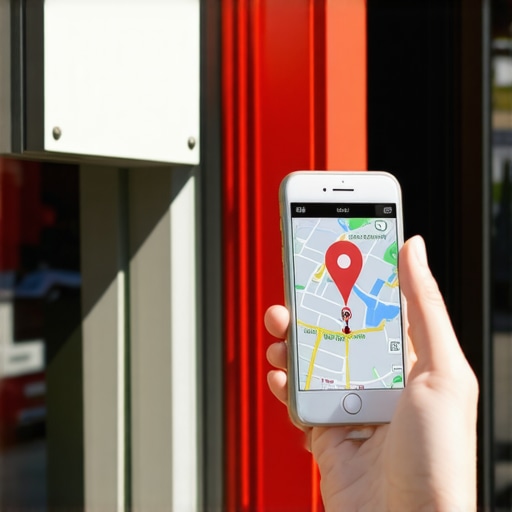
I will never forget the rainy Tuesday I spent pacing outside my first small office, frantically waving my phone at a brick wall. I had done everything right for my local pack optimization—or so I thought. My website was fast, my citations were clean, and yet, when I stood ten feet from my own front door and searched for my services, my business was a ghost. I was not in the top three; I was not even on the first page. It felt like a punch in the gut. The realization hit me only after a frustrating video verification call where the Google representative kept asking me to show the permanent signage. I did not have any. I had a printed piece of paper taped to the glass. That one amateur move kept me invisible for months, and today, I am going to show you exactly how to bridge that gap between your physical storefront and a massive google maps boost.
Stop hiding your front door from the algorithm
When I first started out, I was obsessed with the digital side of things. I thought if I just tweaked my metadata enough, I would magically appear in the local results. I was wrong. Google is increasingly using its eyes—both human reviewers and AI—to verify that you actually exist where you say you do. If your business looks like a shell, the algorithm treats it like spam. I eventually learned that why your storefront photo is more important than your logo is because it provides the real-world proof Google craves. Without a permanent sign, your efforts to improve local pack rankings are built on sand. You are not just buying a piece of plastic or metal; you are buying a trust signal that tells the map bot you are not a lead-gen scammer operating out of a basement.
Do I really need to spend a fortune on a permanent sign?
I get the skepticism. When money is tight, a professional sign feels like a luxury you can postpone. I certainly did. But here is the cold, hard truth: temporary banners and magnetic signs are often flagged as non-permanent, which can lead to the dreaded verification loop. In fact, research from the International Sign Association suggests that on-premise signage is one of the most cost-effective forms of marketing, often more impactful than digital ads for local discovery. If you have already hit a wall, you might need the 3 specific documents you must upload to overturn a profile suspension to prove your legitimacy. Have you ever had your profile rejected because your office did not look like a business to a reviewer? It is a common, soul-crushing hurdle that we are going to clear today by focusing on the physical signals that lead to a massive boost 3 pack. We will also look at how to fix the data gaps in your google maps analytics once that signage finally puts you on the map.
Turn your storefront into a digital trust magnet
The shift from being invisible to dominating the local results starts with what I call the ‘Bouncer Protocol.’ Imagine Google is a picky bouncer at an exclusive club. If your ID looks like it was printed at home—meaning no permanent sign, no clear address, and messy data—you are not getting past the velvet rope. I learned this the hard way with a locksmith client in Philly. He was operating out of a tiny office in a shared building but had no signage on the door. He was stuck on page four. We spent $150 on a brushed aluminum sign, took a high-resolution photo showing the street number and the door, and within a week, he saw a massive google maps boost. To replicate this, you must treat your physical office like a crime scene where you want Google to find every piece of evidence. Start by taking photos from across the street. Capture the flow of traffic, the neighboring buildings, and the permanent signage. These are not just pictures; they are data points. If you are struggling with how to present these visual cues, look into 5 simple photo tweaks that actually improve local pack visibility to ensure your uploads are working for you, not against you. 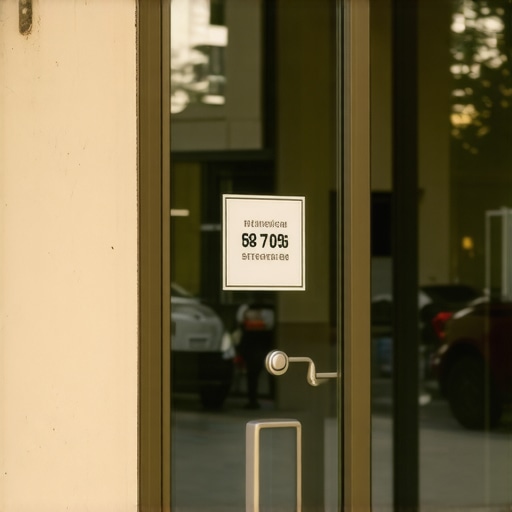
Stop the category guessing game that stalls your growth
Most business owners pick a category that describes what they *do* generally, rather than what people *search for* specifically. This is a fatal mistake in local pack optimization. If you are a ‘Personal Injury Lawyer’ but you set your primary category as ‘Law Firm,’ you are competing with every divorce and estate attorney in the city. You are diluting your relevance. I have seen rankings jump overnight just by switching the primary category to a more specific niche. It is a common trap because why your primary business category is likely sabotaging your 3 pack rank is often due to the algorithm prioritizing the most direct match for the user’s intent. Do not try to be everything to everyone; be the exact solution for the specific search.
Use 360-degree views to prove you exist
If a photo is a trust signal, a 360-degree tour is a trust explosion. It tells Google that there is a physical space where customers can walk in and spend money. This is especially vital for businesses in competitive ‘rank 3 pack’ markets where spam listings are rampant. When you show the interior, the desks, and the waiting area, you are essentially telling the map bot, ‘A lead-gen scammer couldn’t fake this.’ I always recommend clients how to use 360-degree tours to increase map interaction because it keeps users on your profile longer. Dwell time on your listing is a silent but powerful way to improve local pack standing.
Prove your residency with the right paperwork
When the algorithm gets suspicious, it will ask for a video or a document. Do not panic. This is your chance to solidify your authority. If you have been flagged, you need to know how to prove a physical location with utility bill uploads correctly. A blurry cell phone pic of a water bill won’t cut it. It needs to be a clear PDF or a high-quality scan that matches your profile’s name and address exactly. Even small details, like your digital footprint, can cause friction. I’ve found that why your storefront wifi density is a hidden 3-pack ranking factor is becoming more relevant as Google uses signals from mobile devices to confirm business legitimacy in high-density areas. Every little bit of ‘real world’ data helps boost 3 pack rankings.Everyone tells you to hunt for reviews like a hungry wolf, but there is a nuance here that most self-proclaimed gurus completely miss. In my experience, high volume isn’t always the flex you think it is. I have seen businesses with 500 reviews get buried by competitors with 50 because the smaller business had better review velocity and topical relevance. When you aggressively push for feedback all at once, you might actually be hurting your local pack optimization. You should stop asking every customer for a review why timing matters more than volume because a sudden spike can trigger Google’s spam filters, causing your best testimonials to be hidden. A 2023 study by Whitespark on local ranking factors confirms that while review volume is a key signal, the presence of keywords in reviews and the consistency of new entries are what truly drive a google maps boost. If you are wondering why your competitor ranks higher with fewer reviews, it is often because their customers are naturally mentioning the services they provide, which creates a stronger relevance signal than a thousand ‘great job!’ five-star ratings.
Stop wasting money on the citation volume myth
Another massive trap I see business owners fall into is the ‘more is better’ citation trap. They spend hundreds of dollars on generic directories that nobody visits, thinking it will improve local pack standing. I used to do the same until I realized that why buying 100 generic citations is a waste of your marketing budget is due to the fact that Google prioritizes the quality and consistency of your data over the raw number of mentions. If your phone number is formatted inconsistently across these sites, you are creating friction for the algorithm. In fact, why your phone number format is quietly hurting your local pack rank 3 is a common technical oversight that dilutes your authority. #IMAGE_PLACE_HOLDER_C#
Why does your map pin vanish when you are actually open?
Have you ever checked your phone during a busy shift only to find your business is nowhere to be found? This is the ‘Oops’ factor that drives people crazy. It is often tied to how your business hours interact with search intent and proximity. I have discovered that the real reason your map pin disappears during peak business hours 3 often stems from Google’s attempt to provide the most ‘available’ results, and if your data signals are messy, you get filtered out. To boost 3 pack visibility during these critical windows, you must ensure your on-site data matches your profile perfectly. Don’t waste time on fluff; remember that why your business description doesn’t actually impact your rank is because Google uses it for conversion, not for the actual ranking algorithm. Focus your energy on the signals that actually move the needle, like primary category selection and high-quality imagery. Have you ever fallen into this trap? Let me know in the comments.Winning the top spot is one thing, but staying there is a completely different animal. I’ve seen businesses hit the number one spot on a Tuesday and vanish by Friday because they treated local pack optimization like a one-time chore rather than a living, breathing system. If you want a permanent google maps boost, you have to stop thinking about SEO as a ‘launch’ and start thinking about it as a ‘maintenance schedule.’ I personally rely on our 15-minute audit routine for finding hidden map visibility gaps every single Monday morning. It is the only way to catch the subtle shifts in competitor behavior before they eat your lunch. I don’t use fancy, automated dashboards that spit out generic PDF reports; I get into the trenches and how to monitor your map rank without triggering bias is the secret to seeing what your customers actually see.
Stop the data drift before it kills your momentum
The biggest threat to your boost 3 pack success isn’t your competitors—it is ‘data drift.’ Over time, third-party sites, old social media accounts, and even your own website can start to show conflicting information. I recently helped a dental clinic that fell from rank 1 to rank 8 because an old employee had updated a Yelp profile with a slightly different suite number. Google saw the conflict and pulled the plug on their trust score. To prevent this, you must learn how to fix the messy data errors killing your 3 pack rank 2 before they snowball into a total ranking collapse. If you are planning a change, follow the checklist for moving your business location on maps to ensure the algorithm doesn’t get confused during the transition. 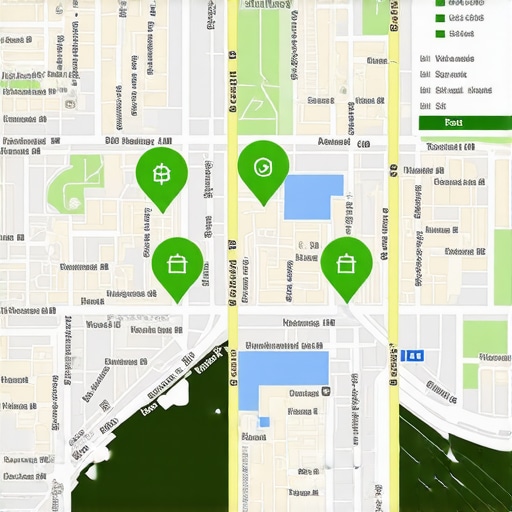
How can I keep my business in the 3-pack for the long haul?
Maintenance comes down to three things: response velocity, visual freshness, and data integrity. According to the 2024 Local Search Ranking Factors study by Whitespark, ‘on-page signals’ and ‘behavioral signals’ like click-through rates are now more influential than ever. This means you need to care about the response velocity secret how fast replies actually improve local pack visibility 3. If a customer asks a question or leaves a review, and you wait three days to reply, you are telling Google your business is semi-dormant. I suggest setting a 2-hour window for all replies to prove you are active. Looking ahead, the impact of having a verified map profile in 2026 will likely involve even more real-time video verification and AI-driven image analysis. The trend is moving toward ‘Live Proof’—meaning businesses that post weekly updates and fresh photos will outrank those that haven’t touched their profile since 2019. To stay ahead, try this advanced tip today: Go into your profile and add one ‘Update’ post with a real-time photo of your team working; this small nudge in activity can often trigger an immediate local pack optimization refresh. Are you ready to stop being a ghost and start being the local authority?
What I learned when my best client vanished overnight
The most expensive lesson I ever learned in local pack optimization was that momentum is a fragile gift. I once had a client who reached the top spot and immediately told me to stop our monthly maintenance because ‘we won.’ Six weeks later, a new competitor moved in with better photos and a faster response time, and my client’s phone stopped ringing. I realized then that a google maps boost isn’t a trophy you keep on a shelf; it’s a garden you water. You should why you should ignore most local seo advice from non-experts because they often focus on ‘hacks’ instead of the relentless consistency that Google actually rewards. If you aren’t checking your data at least once a month, you are leaving the door wide open for someone else to take your spot.
The gear I use to maintain a permanent edge
I don’t believe in overcomplicating things with expensive software that does half the job. My personal toolkit is lean and focused on maintaining a permanent edge in any competitive rank 3 pack landscape. First, I use 3 local seo tools that find your competitors hidden citations to see where the local authority is actually coming from. Then, I stick to our 15-minute audit routine for finding hidden map visibility gaps to ensure no old data is creeping back into the ecosystem. These aren’t just ‘SEO tasks’—they are the digital equivalent of sweeping your storefront every morning. #IMAGE_PLACEHOLDER_E#
Your neighborhood is waiting to find you
At the end of the day, all the technical tweaks to improve local pack standings serve one purpose: helping a real person solve a real problem. Whether you are a plumber fixing a leak or a lawyer helping a family, your presence on that map is the bridge between their crisis and your solution. Don’t be afraid of the technical side; start with the tiny profile change that swapped scrolling for real customer phone calls and build your authority one trust signal at a time. You have worked too hard on your business to remain a ghost in your own city. Now is the time to boost 3 pack rankings and claim the visibility you deserve. If you find yourself stuck, remember that how to fix the conversion gap between profile views and actual calls is often just a matter of showing more proof of your excellent work.
Which of these physical trust signals—the sign, the photos, or the data—do you think is currently holding you back the most? Let me know in the comments below!