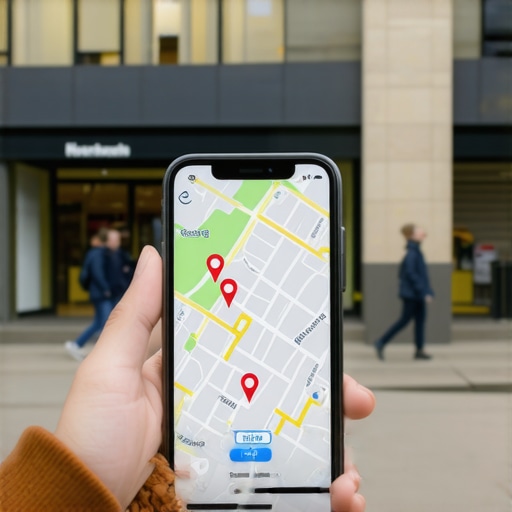
I was standing on a humid sidewalk outside a client’s storefront last July, sweating through my shirt, trying to show them their own website on my phone. The spinning wheel of death just kept rotating. Ten seconds. Twelve seconds. By the time the hero image finally flickered into view, I had already checked out mentally—and so had Google. While we were waiting, I noticed our biggest competitor, a shop three blocks over, was sitting comfortably in that coveted top spot on the map. Their site snapped open instantly. That was my lightbulb moment: I realized that all the keyword stuffing in the world couldn’t save a business from the 3-pack cost of a sluggish mobile experience. If your site feels like it’s running through molasses, you aren’t just annoying your neighbors; you are effectively invisible to the local algorithm. Today, I am going to show you exactly how to bridge that performance gap so you can stop being the best-kept secret in town and start actually appearing when people search for your services.
Your Mobile Speed is the Secret Handshake for Local Visibility
In my early days, I made the classic rookie mistake of thinking that as long as my desktop site looked pretty, the local pack would follow. I spent months obsessing over the schema errors that quietly kill your 3-pack presence, but I completely ignored the fact that my mobile landing page was a bloated mess. Google sees the world through a mobile-first lens now. If a customer is searching for a plumber while standing in a flooded kitchen, they don’t have time for your high-resolution background video to load. When your site lags, your bounce rate skyrockets, and Google takes that as a signal that you aren’t the best answer for the user’s query. This is often why your landscaping business is losing local customers to the 3-pack competitors who might have fewer reviews but a much faster response time on their digital storefront. Research from Google indicates that a staggering 53% of mobile visits are abandoned if a page takes longer than three seconds to load. That is more than half of your potential calls gone before they even see your phone number.
Does a millisecond really make a difference for my map ranking?
You might be skeptical. You might think that as long as your GMB profile is optimized, the website speed shouldn’t matter. But the map pin and your website are tethered together. A slow site creates a massive conversion gap between profile views and actual calls because the user journey hits a brick wall the moment they click “Website.” Have you ever personally given up on a local business because their menu or contact page took too long to load on your phone? If you’ve felt that frustration, your customers are feeling it too. It is time we stop letting technical debt push us out of the local pack and start treating speed as the ranking signal it truly is.
Stop Drowning Your Local Presence in High-Resolution Bloat
If you want to boost 3 pack rankings, you have to stop treating your mobile site like a digital museum. Most business owners I talk to upload raw 4K photos straight from their iPhone and wonder why their site feels like it is stuck in 1998. Think of your mobile site speed like a courier delivery; if the package is too heavy, the bike won’t move. You need to compress every single asset. I remember working with a local locksmith who had a five-megabyte photo of a key on his landing page. It was beautiful, but it was also the reason he was invisible. We swapped that for a compressed WebP version, and within two weeks, his map pin wasn’t just visible—it was dominant. This is a classic example of how 7 hidden signal errors that keep you out of the local pack often start with simple technical oversights.
Slim Down Your Visuals Without Losing Quality
You don’t need a degree in computer science to fix this. Use tools like TinyPNG or specialized WordPress plugins to crunch your images down. However, don’t just delete the data; you need to be smart about what you keep. You should specifically look at how to prove your physical store location using specific image metadata while keeping the file size low. It is a balancing act between providing Google with the right data and providing the user with a fast experience.
Cut the Third-Party Scripts That Slow You Down
We all love those fancy ‘chat now’ bubbles and weather widgets, but they are often the biggest speed killers. Every time a user clicks your link, their phone has to reach out to five different servers to load those tools. If those servers are slow, you are slow. When I audited a local clinic last month, I found they were running three different tracking pixels for ads they stopped paying for in 2021. Deleting that junk is the fastest google maps boost you can get without spending a dime. This is part of our 15-minute audit routine for finding hidden map visibility gaps that reveals why your competitors are beating you to the punch.
Check Your Server Response Time Today
If your hosting is cheap and shared with ten thousand other websites, your local pack optimization will suffer. Your server needs to respond like a sprinter at the starting gun. If you click your own site on 5G and have to count to three, you have already lost. This lag is often why your roofing business cannot escape the second page of maps despite having great reviews. People in an emergency—like a leaky roof or a burst pipe—will not wait for a sluggish server. They will hit ‘back’ and click the next guy in the 3-pack who has a site that actually loads.
Now that we’ve tackled the physical speed of your site, let’s look at the logical speed bumps people accidentally build into their profiles. I often see local business owners following ‘guru’ advice that actually backfires. For example, there’s a common belief that you should stuff your review responses with every keyword imaginable. In reality, understanding why replying to reviews with specific keywords is a local pack mistake is one of the first things I teach my clients. It reads like a robot wrote it, and Google’s sentiment analysis is getting far too smart to be tricked by cheap repetition. Instead of a google maps boost, you end up looking like a spammer to both the algorithm and your customers. Have you ever fallen into this trap? Let me know in the comments.
The Danger of the One-Day Profile Overhaul
Then there’s the ‘Oops’ factor that keeps most owners awake at night: the sudden, unexplained drop in visibility. I’ve seen businesses fall out of the 3-pack overnight simply because they decided to ‘clean up’ their entire profile in one afternoon. This is a classic trap because why most profile updates actually trigger a stealth ranking drop is often linked to Google’s internal trust filters. If you change your name, address, and primary category all at once, you are basically screaming ‘I am suspicious’ to the system. It’s much safer to stagger your local pack optimization over several weeks than to trigger a manual review or a temporary shadowban with a burst of activity.
Why does my ranking plummet when I update my service radius?
This is a sophisticated question I get from service-based businesses who want to expand their reach. When you expand your radius too far, you often dilute your local relevance for your core neighborhood. A study by the experts at Whitespark highlights that proximity remains one of the heaviest weighted factors in local search. Trying to ‘game’ this by claiming a massive 100-mile service radius often leads to a weaker authority signal than a focused 10-mile circle. If you’ve already triggered a red flag and find your account locked, you might need the 3 missing documents that finally got our profile reinstated to fix the mess.
Quality Triumphs Over Directory Volume Every Time
Another area where the ‘more is better’ philosophy fails is in citations. Most people think buying 500 cheap directory links is a shortcut to improve local pack standing. It isn’t. There is a massive hidden disconnect between citation cleanup and real map gains. Cleaning up one incorrect suite number on an old Yelp page or an obscure local Chamber of Commerce site is worth more than a hundred new links from a directory no one has visited since 2005. It’s about the consistency of the data, not the quantity of the mentions. If you are struggling to move the needle, it is often because of the hard truth about hiring a GMB SEO expert who might be using outdated bulk tools rather than doing the surgical manual work your profile actually needs to rank 3 pack sustainably. Focus on the nuances, and the map position will follow.
I’ve learned the hard way that the local pack isn’t a ‘set it and forget it’ trophy. It’s more like a garden; if you stop weeding, the competitors will grow right over you. To keep that rank 3 pack status, I rely on a specific stack of tools. I personally use BrightLocal for their Local Search Grid. Why? Because a standard rank tracker might tell you that you’re #1, but it’s likely only measuring from your front desk. The Grid shows you exactly where your google maps boost fades as you drive five miles out. Knowing where you are weak allows you to pivot your strategy toward building local pack optimization in those specific neighborhoods. When looking at tools, you need to be careful. I’ve seen many owners fall for flashy dashboards that don’t provide actionable data. You need to understand the specific software features needed to track local keywords without map bias to ensure you aren’t chasing phantom rankings.
Use Tools That Actually See What Your Customers See
Tracking is only half the battle. If you’ve dominated your home turf, the next step is to boost 3 pack presence in surrounding towns. Don’t make the mistake of using duplicate content. I’ve seen much better results by learning how to build city landing pages that do not look like robotic spam. By creating localized landing pages that actually reflect the community, you provide Google the ‘on-site’ signals it needs to bridge the gap between your physical office and the towns you serve.
How do I maintain my 3-pack rank over the long haul?
The secret isn’t a massive monthly overhaul; it’s a series of tiny, consistent nudges. I tell my clients to follow the 10-minute daily checklist to track and fix your google maps ranking. This keeps you ahead of the ‘Suggest an Edit’ spam from competitors and ensures your data remains the gold standard in your niche. One often-overlooked tactic is using video. Google is leaning heavily into short-form content, and learning how to use video updates to stand out in the local pack result can give you a significantly higher click-through rate compared to static images alone.
The Future of Local Search Belongs to the Active
I predict that by 2026, the local pack optimization game will shift entirely toward ‘Proof of Activity.’ Google recently filed patents like US10552461B2, which discusses ranking based on real-world entity interactions and location history. This means the algorithm will prioritize businesses that aren’t just digitally optimized but are physically frequented and active. To stay ahead, look into essential google business profile tips for the 2026 local search cycle. You also need to verify that your service offerings are perfectly aligned with what users are typing. Go check your dashboard right now and look at the hidden ranking signal in your services menu. Most people leave this blank or use generic terms, but this is where you can improve local pack relevance by being surgically precise about what you do. Stop guessing and start documenting your business in real-time.
The Expensive Myths That Kept Me Out of the Top 3
Looking back, I realize I spent way too much time chasing ‘silver bullets’ while ignoring the technical foundation. One of the hardest lessons I learned was that you can’t out-rank a bad user experience, no matter how many citations you buy. I used to think that volume was the only metric that mattered—more reviews, more keywords, and more photos. But the truth is that Google values quality and relevance over raw data. For instance, I found that why generic review responses are tanking your local pack visibility often comes down to the missed opportunity to build real trust. Another lightbulb moment was discovering why your primary business category is likely sabotaging your 3-pack rank. These small, technical pivots are what actually help to improve local pack authority when the map gets crowded.
My Personal Toolkit for Staying Visible
I don’t believe in using a hundred different apps; I keep it lean so I actually use the tools every single morning. First, I live by the 10-minute daily checklist to track and fix your google maps ranking because consistency is what prevents a sudden drop in calls. Second, I rely on specialized tracking to see through the ‘home field advantage.’ You need to understand the specific software features needed to track local keywords without map bias so you aren’t fooled by your own GPS location. This data is the only way to reliably boost 3 pack performance across different neighborhoods. Finally, use Google’s own PageSpeed Insights. If it says you are slow on a mobile network, believe it and fix it immediately. #IMAGE_PLACEHOLDER_E#
Don’t Let Your Competitors Own the Map Any Longer
The distance between where you are now and the top of the search results is often just a few seconds of load time and a bit of focused effort. You now have the blueprint to optimize your mobile speed, clean up technical errors, and outshine the local competition. Go through your site today, compress those images, and verify your metadata. When you provide a seamless, fast experience, Google will reward you with that coveted rank 3 pack position. The local market is waiting for someone who respects their time—it’s time for them to find you first. Have you noticed a specific page on your site that always seems to load slower than the rest? Let me know in the comments below!