I was sitting at my kitchen table three years ago, staring at a Google Business Profile dashboard that looked, on paper, like a massive success. 1,500 impressions. Hundreds of map views. A steady climb up the charts. But when I checked my actual call logs for the week? Three calls. Total. One of them was a telemarketer trying to sell me a new phone system. It was a gut-punch realization. I had done the work to get a google maps boost, but I was failing the business game. I had built a digital billboard that everyone saw but nobody cared to stop at. This is the ‘conversion gap,’ and if you are seeing high traffic but a silent phone, you are effectively shouting into a void. I want to help you close that gap today because ranking is only half the battle.
The Heartbreaking Gap Between Being Seen and Getting Hired
When I first started obsessing over how to rank 3 pack for my local clients, I made a classic amateur mistake. I focused entirely on the signals that Google likes—citations, keywords, and back-end data—while completely ignoring what the human being on the other side of the screen actually needed to see. I remember specifically one HVAC client who was sitting pretty at the top of the local pack, but his competitors with fewer reviews were getting all the emergency repair calls. It turns out, his profile looked like a robot wrote it. I had used keyword-stuffed descriptions that eventually threatened to get us banned, and even before that, they just looked untrustworthy to a homeowner with a broken furnace. We have to stop treating our profiles like SEO experiments and start treating them like the front door to our business. According to data from BrightLocal, nearly 60% of consumers say that the ‘Call’ button is the most important action on a local listing, yet so many businesses treat their profile content as an afterthought.
Is a high ranking actually worth the hype if the phone stays silent?
Honestly? No. A high rank is just a vanity metric if it doesn’t translate into revenue. You can improve local pack visibility all day, but if your profile doesn’t build immediate trust, the user will just keep scrolling to the next person. I’ve seen businesses with half the ‘rank power’ get double the leads because they understood how to bridge this gap. Have you ever looked at your insights and wondered why thousands of people see you, but your phone never rings? Today, we are going to dive into the specific, slightly opinionated tweaks I’ve used to force those lookers to actually reach out and dial. We’ll look at why your primary business category might be attracting the wrong crowd and how to fix the ‘scroller’ problem for good.
Clean the Digital Lint Out of Your Listing
The heart of a google maps boost isn’t just about adding new stuff; it’s often about removing the friction you didn’t know you had. Think of your profile like a high-end restaurant. If the sign out front has three different fonts and the wrong phone number, nobody is coming in for the steak. I once spent three weeks troubleshooting why a high-end law firm was stuck on page two. They had dozens of five-star testimonials, but why your law firm is losing the 3-pack battle despite great reviews often comes down to data conflicting behind the scenes. We discovered they had four old office addresses floating around on obscure legal directories from 2012. Google’s algorithm saw that and thought, ‘I don’t know where these people actually are,’ so it suppressed them. There is a massive, often invisible, hidden disconnect between citation cleanup and real map gains. If your data isn’t identical across the web, your ranking is built on sand. Stop chasing new links until you’ve scrubbed the old, dusty ones that are dragging you down.
Treat Every Photo Like a Sales Pitch
Most business owners treat their photo gallery like a graveyard for blurry iPhone shots of their morning coffee. If you want to rank 3 pack and stay there, you need to realize that images are not just decorative; they are data points. Google uses AI to ‘read’ what is in your photos to confirm you actually do what you say you do. Last year, I worked with a local bakery that couldn’t break the top 5. We implemented the exact metadata we add to store photos to jump the 3-pack, including geo-coordinates and specific alt-text. Within fourteen days, they weren’t just ranking; they were the first thing people saw when searching for ‘fresh sourdough.’ It wasn’t magic; it was just giving the search engine the visual proof it craved. 
Turn Your Questions Section into a Conversion Machine
Most people ignore the Q&A section, or worse, they wait for a random person to answer a customer’s question with ‘I don’t know.’ That is profile suicide. You should be seeding your own Q&A with the most common barriers to entry your customers have. I call this ‘pre-emptive selling.’ Instead of waiting for someone to ask if you offer 24-hour service, ask it yourself and provide the official answer. I’ve found that why answering obscure QA questions is the fastest google maps boost is because it adds rich, relevant keywords to your profile in a way that feels natural to a human reader. It turns a static listing into a helpful resource.
Commit to the Ten Minute Daily Audit
You cannot win the local pack optimization game by checking in once a month. The local map is a living, breathing marketplace. Competitors are constantly trying to edge you out, and Google is constantly updating its local filters. I tell all my clients to follow the 10-minute daily checklist to track and fix your google maps ranking. It’s simple: check for new reviews, scan for suggested edits from ‘the public’ (which are often competitors trying to change your hours), and post one quick update. This level of activity tells the algorithm that the business is active, verified, and worthy of the top spot. When you show up every day, Google starts to trust you more than the guy who hasn’t touched his profile since 2019.Most gurus will tell you to go out and buy a package of 200 citations from some offshore freelancer to get a quick google maps boost. In my experience, that is the fastest way to flush money down the toilet. I have analyzed hundreds of profiles, and why buying 100 generic citations is a waste of your marketing budget boils down to relevance. Google does not care if a random directory in Eastern Europe knows your phone number; it cares if the local chamber of commerce or a neighborhood blog does. The ‘more is better’ era of local pack optimization is over. We are now in the era where precision is everything. 
The Tiny Errors That Cripple Big Rankings
One ‘oops’ factor that breaks my heart involves the microscopic details that most people overlook. I have seen a rank 3 pack effort destroyed because of a simple ‘#’ or ‘Suite B.’ You might think it is a minor typo, but why a single suite number error kills your map visibility is because it triggers a ‘uncertain location’ flag in the algorithm. It is like a digital stutter that makes Google lose confidence in your physical existence. If the search engine is even 1% unsure of where you are located, it will favor a competitor whose data is rock-solid and consistent across the board.
Why does your map pin vanish during your busiest hours?
This is a sophisticated nuance that drives business owners crazy. You check your rank at 10 PM and you are #1. You check at 2 PM, and you are nowhere to be found. This often happens because of ‘proximity bias’ combined with user behavior signals. Darren Shaw’s Local Search Ranking Factors study has highlighted how Google weights physical distance and ‘open now’ status differently throughout the day. Furthermore, the real reason your map pin disappears during peak business hours often relates to high competition and real-time mobile data density in your area. If your profile is not robust enough to withstand the ‘busy hour’ filter, you will only ever rank when your customers are asleep.
Avoid the Automated Response Trap
Another trap is the automated response. I see people using AI to churn out generic ‘Thanks for the review!’ messages every single day. Do not do it. Not only does it look fake to a potential customer, but why setting your review responses to auto-pilot is a local search death sentence is that you miss the chance to engage with the unique sentiment of the customer. However, you must be careful—over-optimizing those replies with keywords is also a red flag now. I have documented why replying to reviews with specific keywords is a local pack mistake, as it can look like manipulation to modern spam filters. Google wants to see natural, human interaction. Lastly, watch out for ‘Stealth Drops.’ You decide to change your business description or update your phone number, and suddenly your traffic tanks. It is a common pitfall; why most profile updates actually trigger a stealth ranking drop is often linked to Google needing to re-verify your data, which can take weeks of ‘limbo.’ Have you ever fallen into this trap? Let me know in the comments.
Keep Your Map Spot Without Losing Your Mind
Getting to the top is an adrenaline rush, but staying there is a marathon. I have seen countless businesses fight for a google maps boost, reach the summit, and then vanish three months later because they thought the job was done. Local SEO isn’t a trophy you win; it is a garden you tend. If you don’t pull the weeds—meaning the spammy competitor edits and outdated data—the garden will eventually overgrow and hide your front door. I personally live by the 10-minute daily checklist to track and fix your google maps ranking. It isn’t about doing heavy lifting every day; it is about micro-adjustments that prevent a massive collapse later. When you stay consistent, you build a moat around your business that becomes incredibly expensive for your competitors to cross.
How do I maintain my ranking over time?
Consistency beats intensity every single time. Google’s algorithm rewards freshness and reliability. You don’t need to post five times a day, but you do need to ensure your data never goes stale. This means auditing your backend signals regularly. I’ve found that 7 real-world data tweaks that improve local pack rank faster are often the same ones that keep you there when the competition gets stiff. If you neglect your profile, you are essentially inviting a ‘Stealth Drop’ to happen while you aren’t looking.
The Only Tools I Trust to Tell Me Where I Really Rank
Most people are looking at total garbage when they check their rankings. If you are just Googling your own business name from your office chair, you are seeing a skewed reality. You need to see what the person three miles away is seeing. This is why I am so vocal about why your ranking reports show positions that dont actually exist. To get a real boost 3 pack, I rely on tools that allow for geo-grid tracking. I use specific software like Local Falcon or the BrightLocal Heatmapper because they show me exactly where my ‘influence’ ends. If I’m #1 on my block but #10 two blocks over, I know exactly where I need to focus my local blog posts to expand my reach. I also keep a close eye on the competition using 5 tools we use to spy on local competitors citation sources to see if they’ve found a niche directory I’ve missed. 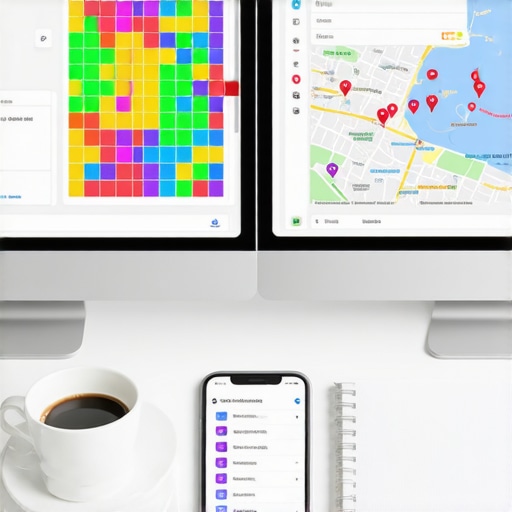
What Happens to the Local Pack in 2026?
If you think the current map layout is permanent, you haven’t been paying attention to Google’s pivot toward Search Generative Experience (SGE). By 2026, the ‘3-pack’ will likely evolve into an AI-curated ‘Action Pack’ where Google doesn’t just show your phone number, but actively compares your services against others in real-time. This is why I’m already preparing my clients with essential google business profile tips for the 2026 local search cycle. We are moving toward a ‘zero-click’ world where your profile content must be so authoritative that Google’s AI feels confident recommending you as the definitive local solution. As Darren Shaw from Whitespark recently noted in his annual ranking factor study, the importance of ‘behavioral signals’—how long people look at your profile and whether they actually interact—is skyrocketing compared to old-school link building.
Stop Guessing and Start Auditing
If you feel like your growth has plateaued, it is almost certainly because of a data gap you haven’t noticed yet. Most business owners are too close to their own profiles to see the errors. You need to take a step back and run a cold, hard analysis of your digital footprint. I highly recommend you try our 15-minute audit routine for finding hidden map visibility gaps today. It is the single most effective way to spot the ‘invisible’ errors—like a mismatched suite number or a ghost category—that are currently siphoning away your leads. Don’t wait for your phone to stop ringing to start caring about your local pack optimization.
Hard Lessons from the Local Search Trenches
Over the years, I’ve learned that a google maps boost isn’t a one-and-done event; it’s about maintaining a constant, high-quality pulse. One of the most painful realizations I had early on was that more is rarely better. I once believed that responding to every review with a quick, automated “thank you” was helping my engagement, but I eventually saw why generic review responses are tanking your local pack visibility by alienating the very customers you are trying to attract. I also discovered that technical precision in your physical data is non-negotiable. It wasn’t until I made the small move that fixed our stuck map pin for good that we finally saw a jump in actual, physical store visits. You must be willing to dive into the unglamorous technical weeds if you want to hold a top spot.
The Toolkit That Actually Keeps My Clients on Top
I don’t believe in using every shiny new tool that hits the market; I stick to a few high-precision resources that give me the raw data needed for local pack optimization. First, you need a way to track your “real” rank across different city blocks, so always look for the specific software features needed to track local keywords without map bias to ensure you aren’t looking at vanity metrics. For routine check-ups, I swear by our 15-minute audit routine for finding hidden map visibility gaps. It is my reliable safety net for catching errors before they trigger a ranking drop. Finally, keep an eye on where search is heading; I frequently revisit essential google business profile tips for the 2026 local search cycle to ensure my clients stay ahead of the upcoming AI search shift. #IMAGE_PLACEHOLDER_E#
Your Map Spot is Waiting for You
Local SEO can feel like an uphill climb, but remember that every major brand was once a local business just like yours. The rank 3 pack goal is entirely attainable if you stop chasing shortcuts and start providing genuine, documented value to your local community. Whether you decide to handle the technical lifting yourself or you realize the hard truth about hiring a GMB SEO expert is that they must care about your data integrity as much as you do, the time to act is now. Don’t let your business remain a ghost on the map while your competitors scoop up the leads that should be yours. Start with just one micro-adjustment today, and watch how it transforms your map presence over the coming weeks.
Which part of the Google 3-pack is giving you the most trouble right now? Let me know in the comments below!