I’ll never forget the Tuesday morning my phone stopped ringing. For three years, my shop sat comfortably in the top spot of the Google Maps 3-pack. Then, in less than forty-eight hours, I was on page two. I felt invisible. I checked my profile, and everything looked fine, or so I thought. But when I dug deeper into what the ‘new guys’ were doing, I realized they weren’t just better—they were using tactics that felt like a punch to the gut. If you’ve ever felt like you’re playing a fair game while your rivals are using a loaded deck, this is for you. Today, we’re going to pull back the curtain on the subtle, often sneaky moves that tank your local pack optimization and exactly how to fight back.
Is local pack optimization actually worth the hype?
Some folks think the map is just a ‘nice to have.’ I made that mistake early on. I focused so much on my main website that I let my Google Business Profile collect dust. Big error. According to a BrightLocal consumer study, nearly 90% of people look at local reviews and map data before even considering a visit. If you aren’t in those top three spots, you’re essentially handing your customers to the guy down the street. It’s not just about visibility; it’s about survival in a market where everyone has a smartphone in their hand. Have you noticed a sudden drop in your calls lately?
How Your Competitors Play the Suggest an Edit Game
One of the first things I learned the hard way was how easily a competitor can mess with your data. They don’t need a login; they just need a ‘suggest an edit’ button and a bit of patience. I once had a rival change my business hours to ‘closed’ during my peak Friday rush. It took me a week to notice why the shop was so quiet! This is why your profile needs to be updated every 7 days just to keep Google’s eyes on your real data. This isn’t just a minor glitch; it is a calculated move. You need to know how to fix the suggest an edit spam from competitors before it drains your local authority. When you handle a sudden drop in map visibility, checking your core business info for rogue edits is step number one. Often, these rivals use tools to spy on your citation sources and then report yours as ‘duplicate’ or ‘incorrect’ to trigger a manual review. It’s frustrating. It’s personal. But it is also fixable.To stop the bleeding, you have to build a profile that is so bulletproof Google’s AI would feel stupid for questioning it. This starts with how you present your physical existence.
Stop Hiding Behind Virtual Desks and Post Office Boxes
If you want to improve local pack rankings, you have to realize that Google is increasingly obsessed with physical reality. Using a virtual office might seem like a clever way to get a prestigious address, but it’s actually a one-way ticket to suspension. In my second year of consulting, I worked with a local locksmith who couldn’t figure out why his map pin was hovering over a park two blocks away while his competitors dominated the 3-pack. It turned out he was using a shared space that had twelve other ‘locksmiths’ registered to the same suite number.
The Real Storefront Advantage
You need to show Google that you aren’t a ghost. This is why your map listing needs a physical storefront photo that clearly shows your permanent signage and street number. A polished logo is nice, but a photo of your front door is a trust signal that moves the needle. If you are struggling with a location that isn’t easily visible, remember that the map ranking danger of using a virtual office is real; Google’s algorithms can now cross-reference lease records and street view data to see if you actually exist. If you’re a service-based business, don’t fall for the problem with using a P.O. Box for your map address. Google wants a hub, not a mail drop. If you are stuck in the verification loop, there are ways how to get a map pin verified without a postcard, often by using live video or showing how to prove a physical location with utility bill uploads to verify your legitimacy. 
Scrub Your Digital Footprint Before It Trips You Up
Think of your business citations like a credit score for your location. When every directory on the internet says something different about your phone number or address, your ‘trust’ drops.
Hunt Down Every Duplicate Mention
I remember a plumber who had moved his shop three times in five years. His old addresses were like digital landmines scattered across Yelp, Yellow Pages, and old blog directories. Every time a bot crawled one of those old listings, it weakened his current local pack optimization. You must learn how to purge old citations without losing map authority. It’s a tedious process of manually claiming and updating, but it’s the only way to ensure your ‘NAP’ (Name, Address, Phone) consistency is 100%. If you find your pin is acting erratic, it’s often because of these conflicting signals. Knowing how to fix a map pin that refuses to move often involves first cleaning up these external mentions so Google doesn’t have a reason to pull your data back to an old location.
Turn Your Customers into Your Most Powerful Ranking Signal
You can optimize your technical data all day, but Google trusts what users say more than what you say.
Photos That Prove You Are Real
High-quality images are great, but why your business photos need to show real people is about humanizing the brand and proving activity. I started telling my clients to take ‘in-action’ shots—a team member fixing a pipe or a customer smiling at the counter. When you combine this with 5 simple photo tweaks that actually improve local pack visibility, like optimizing file names and metadata, you create a trail of ‘freshness’ that Google loves. Finally, don’t just wait for reviews to happen. You have to be proactive. Learning how to get more reviews without being annoying is an art. It’s about timing and making it easy for the customer to help you rank 3 pack.Most ‘experts’ will tell you to cast the widest net possible. They will say, ‘Set your service area to a 50-mile radius so you show up in every neighboring town.’ In my experience, that is the quickest way to stay stuck on page two. Google’s proximity filter is incredibly sensitive. I have found that why your service area radius should be smaller, not larger is actually the secret to local dominance. When you shrink your radius, you concentrate your ‘relevance signals.’ You stop being a ‘maybe’ for twenty zip codes and become the undisputed authority in your immediate five-mile block.
Can Google actually detect if your office is a ghost?
There is a common myth that as long as you have a suite number, you are safe. That is a dangerous trap. Modern algorithms cross-reference data from dozens of sources, including local tax records and even Wi-Fi signals. In fact, some research suggest why your storefront wifi density is a hidden 3-pack ranking factor, meaning Google knows if people are actually spending time at your location. If you are trying to fake a physical presence, you are playing with fire. This is why why your map listing needs a physical storefront photo that shows the world you aren’t just another digital ghost.  One of the biggest ‘oops’ moments I see happens during the category selection. Most business owners pick the first thing that looks ‘close enough.’ But why your primary business category is likely sabotaging your 3-pack rank comes down to specificity. If you are a personal injury lawyer but select ‘Law Firm,’ you are competing against every divorce and real estate attorney in town. You are drowning in a sea of irrelevant competition. A study by the experts at Sterling Sky highlighted that changing a primary category can have a more immediate impact on rankings than almost any other single factor. If you get this wrong, why your category choice is scaring away local leads becomes a very expensive lesson.
Watch out for the automation trap
Another mistake that feels like a shortcut but ends in a disaster is using AI to talk to your customers. I know, it is tempting to let a bot handle the grunt work, but the hidden cost of using automated review responses is a loss of trust—both from customers and from Google. Google rewards authentic interaction. When you use generic templates, you miss the chance to naturally include local landmarks or specific service keywords that help you rank 3 pack. Have you ever fallen into this trap of prioritizing speed over substance? Let me know in the comments. If you are feeling overwhelmed by all these moving parts, be careful who you trust. The hard truth about hiring a GMB SEO expert for your local ranking is that many will just automate these errors on your behalf. Look for someone who understands the nuances of why your profile needs to be updated every 7 days rather than someone promising instant results.
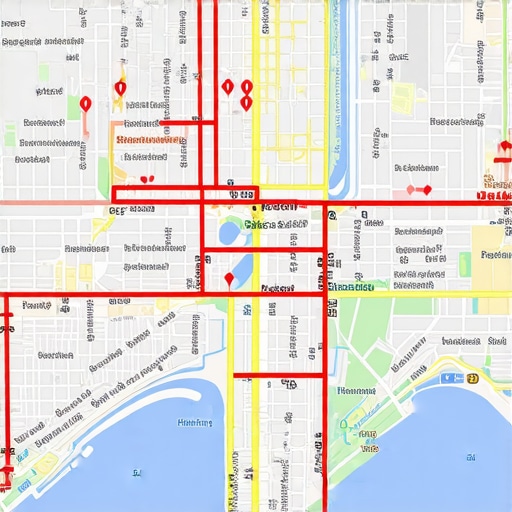
Staying in the top 3 isn’t a one-and-done trophy; it’s a moving target that requires constant calibration. I personally use grid-tracking tools like Local Falcon or BrightLocal because they show me exactly where my rank 3 pack authority drops off block-by-block. If I see a cluster of red dots three miles north of my shop, I know I need to mention that specific neighborhood in my next business post. You can’t fix what you can’t see, and relying on your own phone while standing in your shop lobby is the fastest way to get complacent about your actual reach.
I also obsess over the technical metadata that most people ignore. When I upload new photos, I’m not just hitting ‘post’ and hoping for the best. I follow the specific way to geotag store photos for maximum impact because it tells Google’s AI exactly where the service happened. It’s about building a ‘relevance map’ that covers your whole service area, not just your front door. This is how you consistently boost 3 pack visibility without burning through a massive ad budget.
How do I keep my map ranking high over the long haul?
Maintenance is about rhythm rather than intensity. Every Monday morning, I spend exactly twenty minutes doing what I call a ‘sanity check.’ I look for new aggressive competitors using 5 tools we use to spy on local competitors citation sources and I check for any rogue ‘suggested edits’ that might have changed my phone number or hours. If you’re planning on scaling or relocating, you absolutely must follow the checklist for moving your business location on maps to avoid a total visibility blackout that can take months to recover from.
Darren Shaw, a leading authority in the Whitespark Local Search Ranking Factors study, emphasizes that ‘signals of steady activity’ are often more powerful than a one-time optimization blitz. This means the impact of user-generated content on your map visibility is massive. Instead of just asking for a star rating, encourage customers to post their own photos of the finished job; those are the ultimate trust signals that Google’s algorithm can’t ignore.
What does the future hold for your local presence? By 2026, I predict that AI-driven ‘Search Generative Experience’ will rely almost entirely on these authenticated real-world signals. The impact of having a verified map profile in 2026 will be even more critical as Google starts ‘browsing’ on behalf of users. If your profile doesn’t have a high density of recent, local data, you simply won’t be an option for the AI to recommend. Try this advanced tip today: find one photo on your profile from three years ago and replace it with a fresh shot of your team in action. You’ll be surprised how much google maps boost you get just from showing the system you’re still active.
Hard Truths I Wish I Had Known Sooner
If I could go back to that Tuesday morning when my ranking vanished, I’d tell myself that local pack optimization isn’t a trophy you win once; it is a garden you tend daily. One of the biggest ‘lightbulb moments’ for me was realizing that Google actually treats your business like a living entity. For instance, did you know that why your stores busy hours data is a ranking signal is because Google wants to send people to active, thriving locations? If your shop looks like a ghost town in the data, the algorithm treats you like one.
Another lesson that hit home was the danger of outsourcing your brand’s soul. Before you sign a contract, make sure you know the 3 red flags to spot before hiring a google business profile expert because a bad hire can do more damage to your map pin in a week than a competitor can in a year. I also learned that small, hyper-local details matter more than broad keywords. I stopped trying to rank for the whole state and started focusing on why your business description should focus on neighborhood landmarks. That shift alone brought in more qualified leads than any ‘near me’ keyword ever did.
The Toolset That Keeps Me on the Map
I don’t fly blind anymore. My ‘daily drivers’ include tools that provide a clear view of the battlefield. I trust Whitespark for their deep-dive research into ranking factors and Local Falcon for those eye-opening grid maps that show exactly where my visibility drops off. I also keep a close eye on community signals; learning how to use local events to push your profile into the top 3 has been a game-changer for building relevance that software alone can’t replicate. Finally, I always prioritize visual proof over graphic design. I’ve found that why your store entrance photo is more important than your logo is simply because it helps a real human find your door, and Google’s AI tracks that successful navigation as a massive win for your profile.
Your Journey to the Top Starts Now
The map is waiting for you. It might feel like a mountain of technical tasks right now, but every small update—a fresh photo, a replied review, or a corrected address—is a step toward total local dominance. Don’t wait for the perfect moment to start; the best time to boost 3 pack visibility was yesterday, but the second best time is right now. You have the tools, the strategy, and the insider knowledge to move that pin. Go claim your spot at the top.
Have you ever noticed your map ranking change after you updated your business photos? Let me know your experience in the comments below!