
I remember the exact moment I realized I was fighting a losing battle. It was a cold Tuesday night, my third cup of lukewarm coffee sat on the desk, and I was staring at a Google Maps result that just didn’t make sense. I had more reviews, a faster website, and better prices than the guy in the top spot. Yet, there was this massive corporate franchise—headquartered three states away—sitting comfortably in the pole position for my own zip code. I felt like a ghost in my own town. I’d spent months trying to rank for the ‘big city’ keywords, only to realize I was trying to shout in a crowded stadium when I should have been having a conversation on a neighbor’s front porch. I made the classic mistake of thinking ‘bigger is better’ in SEO, but the truth is, Google wants to see that you actually belong to the community you claim to serve. Today, I’m going to show you how to stop being an outsider and start using hyper-local signals to reclaim your territory.
Stop Fighting for the Whole City and Start Winning Your Block
One of the biggest blunders I made early on was trying to rank for the entire metropolitan area. I thought if I could just get a piece of that massive search volume, I’d be set. Instead, I got buried. It turns out that when you try to speak to everyone, Google thinks you’re relevant to no one. To really boost your 3-pack rank, you have to lean into the specific micro-locations that your competitors are too lazy to mention. When I started integrating specific neighborhood mentions into my content, the needle finally moved. Bigger competitors usually rely on generic, city-wide templates that feel robotic. You have the advantage of being able to talk about the local park, the specific intersection everyone hates, or the community center down the road. This is precisely why your competitor with fewer reviews is outranking you; they might just be doing a better job of proving their local ‘proximity’ through their digital footprint. By focusing on these tiny pockets of your city, you create a dense web of local relevance that a corporate office in another time zone simply cannot replicate.
Does focusing on tiny neighborhoods really move the needle?
You might be skeptical. I certainly was. I worried that if I mentioned ‘Old Town’ or ‘The Waterfront’ too much, I’d miss out on the rest of the city. But the data tells a different story. According to research from BrightLocal, proximity and local relevance are among the top three most important factors for appearing in the local pack. When you secure local backlinks from neighborhood blogs or community associations, you aren’t just getting a link; you are getting a vote of confidence from a ‘neighbor’ in Google’s eyes. This creates a surge in local pack optimization that city-wide keywords alone can’t touch. I’ve seen businesses drive map trust simply by sponsoring a little league team and talking about it on their site. It’s about building a narrative of presence. Have you ever felt like a ghost in your own town while some massive franchise steals your leads? Let’s fix that by getting specific.I always start with a data audit because you can’t build a house on a swamp. I once worked with a family-run bakery that was baffled why they weren’t showing up for ‘croissants near me’ despite being the only bakery for three miles. It turned out their phone number was listed differently on three major directories. Google saw this and, instead of picking one, it just stopped trusting the profile entirely. This is one of the messy citation errors most local businesses overlook that quietly erodes your authority. To fix the messy data errors killing your 3-pack rank, you need to ensure your Name, Address, and Phone number are identical across the board. Think of your digital footprint like a paper trail; if the trail splits in three directions, Google simply stops following.
Wipe Out the Data Errors That Confuse Google
The most direct way to improve local pack visibility is to verify your foundational data. I’ve seen businesses lose 20% of their call volume just because they neglected to update their holiday hours or left an old suite number on an obscure directory. If Google senses a conflict between your website and your Google Business Profile, it will hedge its bets by showing a competitor with more consistent data. This is why your digital footprint data is messing up your placement without you even realizing it. Start by doing a manual search for your business name and address. If you find old listings from a previous office location, kill them immediately. Consistency isn’t just about accuracy; it’s about signaling to the algorithm that you are a stable, reliable entity in the physical world.
Put Away the Stock Photos and Show Your Real Face
If your profile is filled with generic images of handshakes and clean offices that look like they were taken in a studio in California, you are hurting your rank 3 pack chances. Google’s Vision AI is incredibly good at identifying stock photography, and it knows when you are using a ‘placeholder’ for a real location. I remember a lawyer who couldn’t break the top 10 until we swapped his polished stock headshots for a grainy, honest photo of his actual lobby and the sign on his door. You must stop using stock photos if you want a top 3 ranking because authenticity is a primary trust signal.  Beyond just the quality, adding photos weekly actually improves your local rank because it shows Google your business is active and currently serving customers. It acts like a digital ‘proof of life’ that encourages the algorithm to push you higher.
Write Review Replies for Humans Instead of Algorithms
We’ve all seen those businesses that reply to every 5-star review with a robotic ‘Thanks for the review, we are the best plumber in Chicago!’ This is a massive missed opportunity for local pack optimization. I’ve found that personalized review replies outperform keyword templates every single time because they drive engagement and dwell time on your profile. When you mention specific details—like a customer’s dog or the specific street where you performed the service—you are providing hyper-local context that Google loves. On the flip side, replying to reviews with keywords is a mistake that can make your profile look like spam to both the algorithm and the actual humans trying to hire you. Treat your reviews like a neighborhood conversation, not a SEO playground.
Keep Your Map Pin from Wandering Into the Wrong Zip Code
Sometimes the reason you aren’t ranking has nothing to do with your content and everything to do with a technical glitch. I’ve seen businesses whose map pins ‘drifted’ a block away from their actual entrance due to a coordinates error. If your pin is in the wrong spot, Google thinks you’re located somewhere you aren’t, which can totally disqualify you for ‘near me’ searches. You need to fix the map pin drift that keeps hiding your business to ensure you are accurately represented in the 3-pack. Additionally, you can google maps boost your relevance by leveraging local events and checking your service area radius to make sure you aren’t accidentally telling Google you don’t serve the very neighbors you are trying to reach.While getting your pin in the right spot is a great start, there’s a much deeper layer to rank 3 pack success that most gurus gloss over. Everyone tells you that the person with the most citations wins. I’m here to tell you that’s a dangerous half-truth that might be draining your budget. In my experience, why buying 100 generic citations is a waste of budget is the hardest lesson for business owners to learn. You don’t need volume; you need relevance. If you’re a local plumber, a link from a national directory of ‘general businesses’ carries almost zero weight compared to a link from a local plumbing parts wholesaler or a neighborhood community board. This is where local pack optimization gets technical. You have to stop thinking like a machine and start thinking like a local entity.
Quantity is the Death of Quality in Local Citations
The ‘Oops’ factor I see most often is businesses accidentally creating a conflict between their primary and secondary categories. I once audited a law firm that was invisible for ‘personal injury’ because they had listed ‘legal services’ as their primary category. This is why your primary category selection is likely sabotaging your search rank and giving your best leads to the guy across the street. When your categories are too broad, you’re trying to be everything to everyone again, and Google’s algorithm penalizes that lack of specificity. Research from BrightLocal consistently highlights that category relevance is the single most impactful on-page factor for the local pack. 
Why does that one competitor with zero reviews still dominate the map?
It’s frustrating to see a profile with no photos and zero social proof sitting at the top while you’re grinding for every 5-star rating. This usually happens because they’ve mastered the hidden technical signals. It could be that they’ve performed a 15-minute audit routine for finding hidden visibility gaps that you’ve missed, or perhaps their physical proximity to the searcher is so tight that Google prioritizes ‘closeness’ over ‘quality.’ However, more often than not, it’s because your business categories might be fighting each other behind the scenes, creating a ‘dilution’ effect that weakens your authority for your main service. If Google is confused about what you do best, it will default to the most geographically close option, even if that business is inferior.
The High Stakes of Profile Mismanagement
One major trap is the fear of suspension. I’ve seen owners get so scared of ‘triggering’ the algorithm that they stop updating their profile entirely. This is a mistake. If you do get flagged, you need to have the 3 specific documents for overturning a profile suspension ready to go. Silence is not a strategy; activity is. Have you ever fallen into this trap of over-optimizing or, conversely, staying too quiet out of fear? Let me know in the comments. We need to stop chasing ‘more’ and start chasing ‘better’ to truly google maps boost our presence. It’s about showing Google that you are the most logical, stable, and relevant answer to a neighbor’s problem.I’ve learned the hard way that a top ranking isn’t a trophy you keep forever; it’s a rental you have to pay for with consistent activity. To improve local pack status and keep it there, I rely on a specific 10-minute daily checklist to track and fix your Google Maps ranking. Every morning, before I even check my email, I look for ‘rank decay.’ This isn’t just about ego; it’s about noticing when a competitor tries a new tactic. You can’t just search for yourself on your phone, though. Google knows it’s you, and it will lie to you by showing your own business higher than it really is. You have to learn how to monitor your map rank without triggering bias by using incognito windows or specialized grid-tracking tools like BrightLocal or Local Falcon.
The Only Software I Trust to Spy on Competitors
When I’m serious about a google maps boost, I don’t guess. I use the best tools for auditing your local search presence fast. My go-to is usually a combination of Whitespark for citations and a browser extension called GMB Everywhere. Why? Because it reveals the secondary categories your competitors are hiding. If I see a guy with half my reviews outranking me, I use these tools to perform a 15-minute audit routine for finding hidden visibility gaps. Usually, I find they’ve found a niche category I’m completely ignoring. 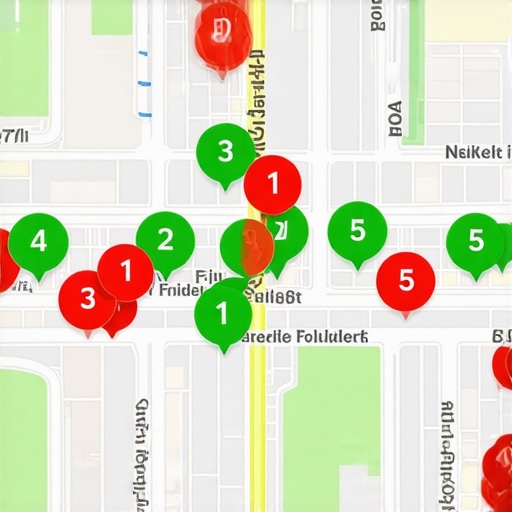 This level of data is what separates the hobbyists from the professionals. I also recommend checking your own profile for ‘ghost’ edits—automated changes Google makes to your hours or services based on third-party data. If you don’t catch these, why your closed status is costing you permanent customer trust becomes a painful lesson in lost revenue.
How do I keep my map rank steady as the algorithm changes?
Maintenance is about freshness, not just accuracy. I’ve noticed that why adding photos weekly actually improves your local rank isn’t just a myth; it’s a signal to Google’s Vision AI that your business is a living, breathing entity. I also make sure to how to optimize your business hours for peak local search times, especially during holidays or local events. If Google sees people clicking ‘Directions’ when your profile says you’re closed, it hurts your engagement score. In the near future, I predict we will see an even heavier shift toward video and real-time verification. According to Google’s own Business Profile verification guidelines, they are leaning into video as the ultimate proof of a ‘real’ business. This is why the impact of user-uploaded videos on your local ranking authority is going to be the next big battlefield for local pack optimization. If you aren’t encouraging customers to post 10-second clips of your storefront or your work, you’re leaving money on the table. Stop waiting for the algorithm to ‘discover’ you. Go run that 15-minute audit routine right now and see which of your categories are fighting each other. It’s the single fastest way to reclaim a spot you’ve lost.
The Hardest Lesson I Learned While Chasing the Top Spot
After years of tweaking profiles, the biggest realization I had was that rank 3 pack status isn’t about outsmarting Google—it is about out-servicing the algorithm’s doubt. I spent way too much time thinking about keyword density when I should have been looking at why my business categories were fighting each other. The moment I streamlined my primary and secondary categories, the ‘clutter’ vanished and my visibility spiked. I also learned that primary category selection often sabotages local search rank because we try to be too broad. If you are a specialist, tell Google exactly that. Finally, remember that your 3-pack presence is an ecosystem; if your website is slow or your citations are messy, your map pin will feel the weight of that distrust.
My Personal Arsenal for Beating the Local Giants
To keep my local pack optimization sharp, I don’t rely on intuition. I use tools for auditing local search presence that give me the ‘unfiltered’ truth. #IMAGE_PLACEHOLDER_E# I personally trust Whitespark for deep-cleaning citations because buying 100 generic citations is a total waste of your budget compared to a few high-quality, niche-specific links. For daily monitoring, I stick to my 10-minute daily checklist to catch any ‘rank decay’ before it becomes a permanent drop. These resources transformed my approach from guessing to knowing exactly where my next lead is coming from.
Own Your Streets Again
You don’t have to be a multi-national franchise to win the google maps boost you deserve. In fact, your local roots are your greatest weapon. By being authentic, keeping your data pristine, and engaging with your neighbors through reviews, you create a digital footprint that no corporate budget can replicate. It’s time to stop being a ghost and start being the local authority everyone sees first when they need help. It’s your territory—go out there and reclaim it. Have you noticed your 3-pack rank slipping after you updated your categories? Let me know your experience in the comments below!