I still remember the late-night panic when my biggest client’s Google profile simply blinked out of existence. I had spent months trying to boost our 3-pack rank, but the competition was brutal. In a moment of weakness, I added three descriptive keywords to their official business name. For 48 hours, we were kings of the mountain. Then, the “Account Suspended” email arrived. It was a visceral lesson in why the shortcuts we think are clever are actually just landmines waiting to go off. Today, I’m going to show you why that temporary dopamine hit of a higher rank isn’t worth the structural damage to your brand’s reputation and how you can achieve a Google Maps boost without the constant fear of a manual review.
I Chased the Quick Win and Lost My Map Pin
The temptation is real. You see your competitor ranking for “Emergency Roofer” because they literally named their business “Emergency Roofer [City Name],” even though their legal name is just “Smith Roofing.” I fell for it. I thought I could outsmart the algorithm by padding our title. While we did see a map ranking surge almost immediately, it was built on sand. Google’s AI is incredibly good at cross-referencing your name with your verified physical signage and official documents. When those don’t match, you don’t just drop a few spots; you disappear. I ended up spending way too much time learning how we recovered a suspended profile in under a week, a stress I wouldn’t wish on any business owner.
Is keyword stuffing really worth the risk?
You might be thinking, “But Joe down the street has been doing it for years!” It’s true that some people get away with it for a while. However, data compiled by Search Engine Journal highlights that while the business name remains a heavy-hitter for rankings, it is also the primary trigger for manual suspensions. If you’re serious about improving your local pack presence, you have to play the long game. Have you ever felt that urge to “just add one more word” to your profile name because you were tired of being on the second page? I’ve been there, and I can tell you, the view from the top isn’t great when you’re constantly looking over your shoulder. Instead of tricks, we should focus on fixing your primary category selection, which carries immense weight without the risk of a permanent ban.
To fix this, we need to stop looking for hacks and start building a fortress of data that Google can’t ignore. Think of your business data like a GPS coordinate for a rescue mission. If the longitude is off by even a fraction, the helicopter lands in the ocean instead of on the roof. Your first priority is to fix the messy data errors killing your 3-pack rank before you even think about aggressive optimization.
Clean Up Your Messy Digital Footprint
The biggest obstacle to a Google Maps boost is often the ghosts of your business’s past. I remember working with a local locksmith who had his business listed at three different addresses across four years of moving. Every time he relocated, he just opened a new profile and left the old one to rot. We spent three weeks hunting down those ghosts. Once the digital clutter was gone, his profile didn’t just rank; it stayed there. You have to hunt down the messy citation errors most local businesses overlook, such as old phone numbers on forgotten directories or slightly different spellings of your street name.
Why your storefront photo beats your logo every time
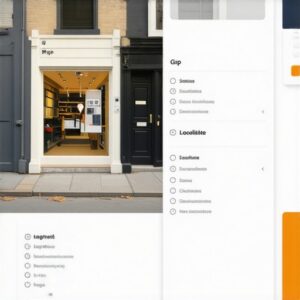
Google’s AI is now sophisticated enough to read the signage in your photos to verify you actually exist where you say you do. This is why why your storefront photo is more important than your logo. If you are using a generic graphic or a stock image of a smiling person in a headset, you are signaling to Google that you might be a lead-gen ghost. You must stop using stock photos if you want a top 3 ranking. Real, raw photos of your office, your branded truck, or your team in front of your signage act as a physical anchor for your digital pin.

Turn your shop’s Wi-Fi into a ranking beacon
Proximity is the strongest ranking factor, but it isn’t just about where you are—it’s about how Google perceives you are filling that space. There is a hidden relationship between store wi-fi and map proximity signals that most people ignore. When customers connect to your guest network, it sends a massive signal of real-world engagement. Furthermore, why missing on-site attributes are killing your 3-pack rank 3 often comes down to the fact that Google uses these small details to match you with hyper-specific user queries.
Speed Wins the Proximity Game
If you want to improve your local pack presence, you need to look at how fast you interact with the world. The response velocity secret for better local visibility is simple: Google rewards businesses that are active and helpful. This includes how quickly you reply to reviews. Instead of using a bot, remember that how personalized review replies outperform keyword templates is not just about customer service; it’s about proving to the algorithm that there is a real human managing the business daily. When you combine this speed with an 15-minute audit routine for finding hidden visibility gaps, you create a profile that is too robust for the algorithm to ignore.
We often hear that the path to a google maps boost is paved with keywords and endless citations, but that advice is dangerously incomplete. Many business owners spend hours crafting the perfect ‘About’ section, only to find that why your business description doesn’t actually impact your rank is a hard reality of the current algorithm. Google prioritizes structural data and real-world signals over the prose you write about yourself. If you are pouring your heart into a 750-word description thinking it will help you rank 3 pack, you are effectively shouting into a vacuum.
Stop Wasting Resources on Citation Volume
The most common advice in local SEO is to ‘get more citations.’ However, there is a hidden disconnect between citation cleanup and real map gains that most beginners ignore. The industry has shifted; it is no longer about the quantity of listings on obscure directories that no one visits. In fact, why buying 100 generic citations is a waste of budget becomes clear when you realize that Google now values relevance over raw numbers. Five mentions on local neighborhood blogs or niche-specific trade associations will do more to improve local pack visibility than five hundred low-quality links from a generic database. Have you ever fallen into this trap of chasing quantity over quality? Let me know in the comments.
Why does your competitor with fewer reviews still hold the top spot?
It’s the question that keeps business owners up at night. You have 150 five-star reviews, and your competitor has 20, yet they are sitting at the top of the 3-pack. This happens because why your competitor with fewer reviews is outranking you often comes down to the specificity of their categories and the strength of their local entity. If you’ve selected too many broad categories, you might be experiencing a dilution of authority. Understanding why your secondary categories might be diluting your primary rank is an advanced tactic that separates the experts from the amateurs. Google’s algorithm struggles when a business tries to be everything to everyone; if your categories fight each other for dominance, you end up ranking for nothing. According to Whitespark’s Local Search Ranking Factors study, the ‘Primary Category’ remains one of the top three most influential factors, and adding irrelevant secondary ones can actually confuse the local search bot.
Another nuance often overlooked is the technical side of your website. You can have a perfect profile, but the schema error that keeps your profile out of local search could be acting as a silent barrier. If your website’s structured data doesn’t perfectly match your Google Business Profile, the algorithm loses trust in your location. This is especially true for businesses trying to rank in multiple areas; you must how to prove your office isn’t just a virtual mailbox to Google by providing consistent, verifiable data across all touchpoints. Chasing a local pack optimization strategy without a solid data foundation is like building a house on a swamp. You might look good for a week, but the moment the algorithm updates, your ranking will sink.
Once you have cleared the data hurdles, the real work begins—and it is not about doing more, it is about doing the right things consistently. I see so many business owners hit the top spot and then stop everything. That is exactly when the ‘drift’ starts. To stop the bleed, you need the right arsenal. I personally rely on grid-based tracking rather than standard keyword tools because searching from your office desk gives you a biased view. You need to know how to monitor your map rank without triggering bias to see the real picture. If I had to pick just one toolset, I would look at the best tools for auditing your local search presence fast to identify if a competitor is suddenly encroaching on your territory.
Stop guessing where your map pin actually lands
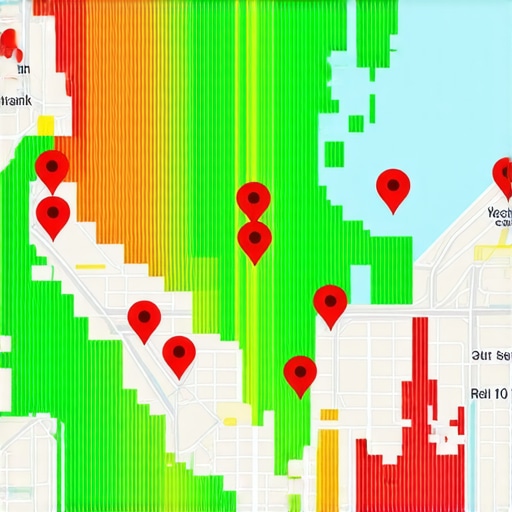
Looking at a single ranking number is a rookie mistake. In my experience, a business might rank #1 at its front door but drop to #10 just three blocks away. This is why I use heat maps to visualize the ‘search perimeter.’ If you find your reach is shrinking, it is often a sign that Google is tightening your service radius. You can fight this by learning how to get more calls from maps without increasing ad budget through better engagement rather than just more citations.
How do I maintain my 3-pack rank over time?
It is not about a monthly ‘set it and forget it’ check. I use a 10-minute daily checklist to track and fix your google maps ranking. This includes checking for suggested edits from ‘helpful’ competitors who might try to change your hours to ‘closed’ during peak times. Yes, it happens. If you aren’t watching, why your closed status is costing you permanent customer trust becomes a painful reality that kills your ranking momentum. I also recommend a very specific technical habit: using your smartphone’s native camera for team photos and uploading them directly. This preserves the ‘Exif’ data. Learning how to use local image metadata to prove your store location is a powerful way to feed the algorithm’s hunger for authenticity. You aren’t just adding content; you are providing a GPS-stamped verification of your activity. This is why adding photos weekly actually improves your local rank—it creates a timeline of verified existence. 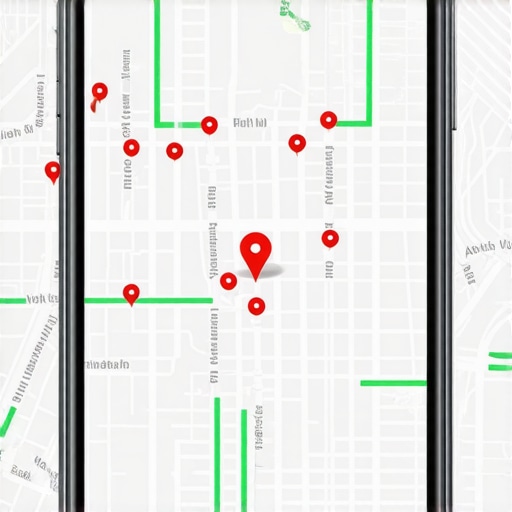
Real-world actions will beat keywords soon
I suspect the algorithm is moving toward ‘Engagement Velocity.’ According to Joy Hawkins at Sterling Sky, the ‘Vicinity Update’ proved that Google is prioritizing proximity and real-world signals over traditional SEO metrics more than ever. It is no longer just about citations; it is about how many people click ‘Directions’ or ‘Call’ relative to your competitors. This is why your maps engagement rate matters more than raw traffic. In the near future, Google will likely weigh these real-world actions even heavier than site backlinks. My advice? Stop searching for your own business name on your phone and start using a grid tracker to see where your visibility actually drops off. Your next move is to run a full check on your metadata to ensure every photo you upload is acting as a signal, not just a decoration.
The Hard Truths My First Big Suspension Taught Me
Looking back, that “Account Suspended” email was the best thing that happened to my strategy. It forced me to stop looking for hacks and start understanding entity authority. When we finally submitted the missing documents that finally got our profile reinstated, I realized that Google doesn’t want the “best SEO”—it wants the most reliable business. You’ll learn quickly why you should ignore most local SEO advice from non-experts because most of them are still teaching tactics from 2018. True authority comes from consistency, not cleverness. I’ve found that the tiny profile change that swapped scrolling for real customer phone calls was usually just a matter of honesty, like updating hours or adding a high-res photo of the front door.
The Tools I Use to Stay Ahead of the Algorithm
You don’t need a thousand-dollar software suite to rank 3 pack effectively, but you do need precision. I always start with the no-fluff checklist for auditing your local listings fast to ensure my foundation isn’t crumbling. For daily monitoring, I rely on grid trackers to see how my pin moves across town. If the numbers look off, I immediately check for the schema markup error that keeps your profile out of local search. Finally, to keep the engagement high, I focus on why answering obscure QA questions is a fast map boost, as it signals to Google that you are an active participant in your local community.
#IMAGE_PLACE_HOLDER_E#
Your Journey to the Top Starts with One Real Photo
Local search is getting more “real” every day. The algorithm is leaning into physical evidence and user behavior over backlink counts. By committing to a consistent local pack optimization plan, you aren’t just chasing a temporary lead; you’re building a digital asset that will feed your business for years. Don’t let the technical jargon intimidate you. Start with the basics, fix your data, and be the most responsive business in your zip code. Your future customers are already searching for you—you just need to make it easy for Google to show them the way.
Have you ever seen a sudden drop in your traffic and realized a simple data error was the culprit? Let me know in the comments below!