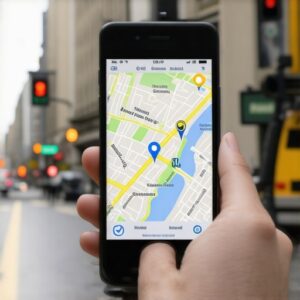
I remember the exact moment my heart dropped into my stomach. It was a Tuesday morning, coffee in hand, when I realized my business had literally disappeared from Google Maps. One day I was riding high, enjoying a massive google maps boost, and the next, I was invisible. I did what most people do: I panicked. I submitted a messy appeal with a grainy photo of my business card and a prayer. It didn’t work. In fact, sending in incomplete info just made things worse. I learned the hard way that Google doesn’t want your excuses; they want a very specific paper trail. Today, I’m going to pull back the curtain on the exact paperwork that finally broke the stalemate for me. We aren’t just talking about generic proof of business. We are talking about the holy trinity of verification that forces a human reviewer to actually take your case seriously. If you’ve been struggling to improve local pack visibility because of a sudden blackout, these documents are your golden ticket.
Stop Sending Junk to the Google Review Team
When I first started out, I thought a lease agreement was enough. I was wrong. My biggest mistake was assuming the reviewer would just get it. They won’t. These reviewers spend seconds on each case. If the address on your paperwork is even slightly different from your profile—say, Suite 100 versus #100—you’re toast. This lack of precision is the real reason most appeals fail before they even start. You need to prove that your business is a physical reality, not just a digital ghost. This is especially true if you’ve been tripped up by the problem with using a P.O. Box or a virtual office. Google’s algorithms are more suspicious than ever. According to data from Near Media, nearly half of all local business owners find the verification and reinstatement process to be the single most frustrating part of managing their online presence. It doesn’t have to be a mystery. I’m going to show you how utility bill uploads can be the hammer that breaks the lock on your suspension.
Is a formal appeal really worth the headache?
I get it. You’re busy running a business, not playing detective for a tech giant. But look at it this way: every day your profile is down, your competitors are eating your lunch in the rank 3 pack. Have you ever felt like you’re yelling into a void while your competitors stay safely tucked in the top results? The frustration is real, but the solution is surprisingly boring and bureaucratic. If you can gather these three items, you stop being a victim of the algorithm and start being an authority that Google can’t ignore.
The Utility Bill is Your Only Real Shield
Think of a Google reviewer like a tired clerk at the DMV. They aren’t looking for a reason to help you; they are looking for a single discrepancy to justify clicking ‘Reject.’ To get a real google maps boost after a suspension, your utility bill is your strongest weapon. I once worked with a boutique gym owner who couldn’t improve local pack standings because their electricity bill was in the landlord’s name rather than the business name. It didn’t matter that they had five-star reviews or a decade of history. Google saw a mismatch and hit the kill switch. We had to produce a formal sub-lease and a notarized letter just to prove the ‘physicality’ of the space. When you submit these, ensure the name and address match your profile character-for-character. If your profile says ‘Avenue’ but the bill says ‘Ave,’ change the profile first. This precision is vital for local pack optimization because it eliminates the doubt that triggers the algorithm’s red flags. Knowing how to prove a physical location with utility bill uploads correctly can save you weeks of back-and-forth emails.
Your Storefront Photo is More Than Just a Picture
Most business owners upload a logo and think they are done. That is a massive mistake. To truly boost 3 pack visibility, you need to show the world—and the reviewer—that you have a permanent, physical presence. This is why your store entrance photo is more important than your logo. I remember a specific case with a locksmith who was stuck on page five. We took a high-resolution photo of his permanent signage, including the street number on the door, and uploaded it. Within three days, his visibility spiked. You want a wide shot that shows your business name alongside neighboring buildings. This context proves you aren’t running a ‘ghost’ business from a basement. If you are struggling with a hidden location, why your map listing needs a physical storefront photo becomes very clear once you see how quickly Google trusts a well-documented entrance. 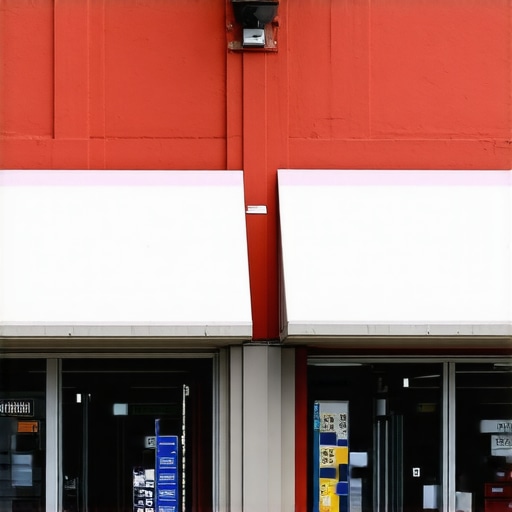
Small Address Gaps That Kill Your Authority
Precision is the difference between being a local leader and being a digital outcast. If your business license, tax documents, and Google Profile don’t align perfectly, you are basically asking for a ranking drop. This is especially true regarding your contact info; for example, why your phone number format is quietly hurting your local pack rank is a nuance most people ignore until their rank 3 pack status disappears. I once spent four hours helping a client scrub old citations because their suite number was listed inconsistently across the web. It felt like tedious busywork until we saw the improve local pack results a week later—the map pin finally stayed put. You must also be careful with your branding; learning how to get your business name right without spamming keywords ensures you stay on the right side of the terms of service while still maintaining authority. If you’ve seen a rank 3 pack decline, it’s often these tiny data gaps. You might need to learn how to handle a sudden drop in map visibility by auditing your legal documents first, ensuring every comma and hyphen is in its rightful place.Most people assume that to get a massive google maps boost, they need to cast the widest net possible. They set their service area to cover three counties and list every possible service they’ve ever thought of. In my experience, this is the fastest way to dilute your authority. Google’s algorithm values relevance and proximity above all else. This is why why your service area radius should be smaller, not larger. If you try to claim an entire metro area from a suburban office, the algorithm gets confused and ranks no one. It’s better to be the king of a 5-mile radius than a ghost in a 50-mile one. Then there’s the ‘hidden’ trap I see at least once a week: the virtual office. It’s tempting to rent a fancy downtown address to try and improve local pack standing in a high-value area. Don’t do it. I’ve seen countless businesses get flagged because why shared office spaces are a nightmare for 3-pack rankings. Google knows these addresses. They know when twenty different law firms are ‘located’ in the same suite. Unless you have a dedicated entrance and permanent signage that you can photograph, you’re building your house on sand. #IMAGE_PLACE_HOLDER_C#
Does your website speed really affect a local map rank?
You might think your website and your map pin are separate entities, but they are deeply intertwined. A study by Moz highlighted that behavioral signals—like how fast a page loads after someone clicks ‘Website’ from the Map—are becoming heavyweight ranking factors. If your mobile site is sluggish, it creates a poor user experience that Google tracks. This is why the impact of site speed on your 3-pack placement is often the missing piece of the puzzle. Beyond speed, the impact of local schema on your 3-pack conversion rate cannot be overstated; it tells Google exactly what you do in a language the bots understand perfectly. I once worked with a plumber who was obsessed with keywords but ignored his ‘Open Now’ status. He didn’t realize the ranking difference between open now and 24 hours could literally double his leads on weekends. Or even worse, he had chosen the wrong niche category. If you aren’t careful, why your primary business category is likely sabotaging your 3-pack rank will become a painful reality. Have you ever fallen into this trap of ‘more is better’ only to see your rank 3 pack status disappear? Let me know in the comments.Winning the rank 3 pack is just the first half of the battle. The real work is staying there while your neighbors try to knock you off. I’ve seen businesses climb to the top only to vanish because they stopped feeding the beast. If you think a one-time optimization is enough, you’re in for a rude awakening. You need a routine. First, let’s talk about the 7-day rule. If you aren’t posting an update or a photo once a week, Google starts to wonder if you’re still in business. That’s why why your profile needs to be updated every 7 days to signal activity. I personally use a tool like Local Falcon because it gives me a geographic heatmap. Seeing exactly where your map pin is showing up—and where it isn’t—is the only way to know if your local pack optimization is working across the whole city. It’s not just about a single point; it’s about your reach.
The Tools That Actually Save My Sanity
I’m not a fan of bloated ‘all-in-one’ SEO suites that cost a fortune and do nothing well. I prefer a surgical approach. I use grid-tracking software to see my rank 3 pack status in every neighborhood, not just at my front door. If I see a dip three miles North, I know I need to adjust my neighborhood-specific content. I also keep a close eye on my competitors using 5 tools we use to spy on local competitors citation sources. If they start getting mentioned on local news or niche blogs, I need to match that energy. 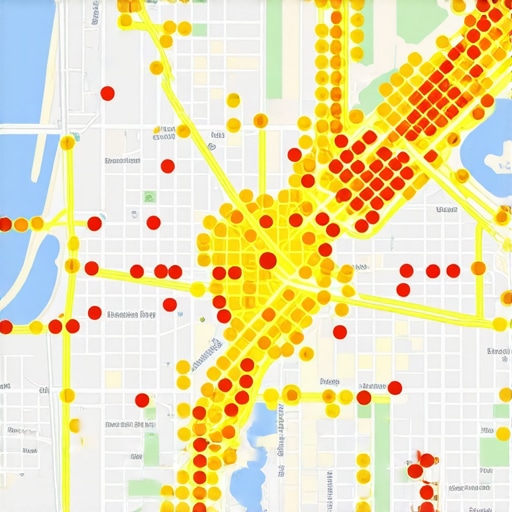
How do I keep this momentum going for years?
Consistency is the secret sauce. Beyond the weekly posts, you need to look at your physical signals. For example, why your profile needs fresh exterior shots every season isn’t just about aesthetics; it’s about proving to the AI that your shop is still there and active in the community. If the Street View shows a snowstorm and it’s July, you’re creating cognitive dissonance for the user. As Joy Hawkins from Sterling Sky often points out, Google’s algorithms are increasingly favoring businesses that demonstrate real-world engagement over those that just have ‘clean’ data. This is why 6-check-in frequency signals that improve local pack visibility are becoming so crucial. When people are physically visiting your store and their phones are pinging those towers, it tells Google you are the real deal. Looking ahead, the landscape is shifting from text-based search to more interactive, real-time data. I predict that the impact of having a verified map profile in 2026 will be the absolute baseline for survival, not a competitive advantage. We’re moving toward a world where how to optimize your profile for voice search directions will matter as much as the keywords you chose five years ago. To improve local pack standing today, you must keep an eye on the horizon. Before you close this tab, go grab a photo of your front door right now—make sure the address is visible—and upload it to your profile. It sounds too simple to work, but in the world of Google, simple, consistent evidence is the king of google maps boost strategy.
The Most Expensive Mistakes I Made Before Fixing My Rank
I used to think that simply having more reviews than the guy across the street was enough to stay on top. I was wrong. What I eventually realized is that Google values engagement speed over sheer volume. I found that the benefit of responding to every review within 2 hours wasn’t just about good manners—it was a direct signal to the algorithm that I was open, active, and attentive to customers. Another hard pill to swallow was my ego regarding categories. I wanted to be seen for everything, but why your category choice is scaring away local leads becomes painfully clear when you realize that being a ‘jack of all trades’ dilutes your local authority. Finally, I stopped using professional stock photography. My rankings saw a noticeable lift when I switched to raw, authentic images of my crew. This is exactly why your business photos need to show real people; it creates a layer of human verification that bots and reviewers alike find much more trustworthy than a polished logo.
The Only Software Worth Your Hard-Earned Cash
I don’t believe in buying every shiny new SEO tool that hits the market. I keep my toolkit lean and focused on data I can actually use. To stay competitive, I regularly use 3 local SEO tools that find your competitors hidden citations. This allows me to see exactly where the ‘big players’ are getting their local mentions so I can go out and earn them too. I also highly recommend looking into rich media options. Learning how to use 360-degree tours to increase map interaction has been a game-changer for my clients in the hospitality and retail sectors. It increases the time a user spends engaging with your profile, which is a powerful, often overlooked ranking signal that a standard photo just can’t match.
Stop Waiting for Google to Find You
Successful local pack optimization is a marathon, and the terrain is constantly shifting. You can’t just set it and forget it. As we look toward the future, the impact of having a verified map profile in 2026 will only increase as AI and voice search become the primary ways customers navigate their neighborhoods. If you start building that foundation of trust and physical proof today, your rank 3 pack status will be much harder for a competitor to shake. Don’t wait for a google maps boost to happen by accident; go out there and force the algorithm to recognize you as the local authority you are. Have you ever seen a sudden drop in your map visibility after making a simple update to your profile? Let me know your experience in the comments below!