I spent three months staring at my business stuck at position #7. I’d done everything right—the keywords were there, the hours were set, and I’d even bugged my cousin for a review. But nothing moved. Then, the local high school had a massive fundraiser. I set up a small booth, took some photos, and mentioned it on my profile. Within ten days, I was sitting pretty in the top 3. It was a wake-up call. I realized that Google isn’t just looking at your data; it’s looking for your pulse in the community. If you’ve been grinding away at your settings and still feel invisible, you’re likely missing the human side of the algorithm. I remember one specific Tuesday, sitting in my office and watching my competitor—who doesn’t even have a better service than mine—stay glued to that #1 spot. I was furious. I realized they weren’t better at SEO; they were just better at being the local guy. They were at every ribbon cutting and every farmers market. That’s when the lightbulb went off. Your profile needs to breathe.
Stop Thinking Like a Coder and Start Thinking Like a Mayor
I’ve been there—obsessing over every little character in my dashboard. Early on, I even made the rookie mistake of thinking that if I just keyword-stuffed enough, I’d magically rank. Spoiler: it didn’t work. In fact, it’s one of those neighborhood-focused details I ignored that ended up costing me visibility. Google wants to see that you are a local authority, not just a digital ghost. Today, we are going to bridge that gap by showing you how to turn a simple local event into a high-octane engine for local pack optimization. We aren’t just talking about a post here and there; we are talking about creating a localized gravity that Google cannot ignore.
Will a few local sponsorships really beat my competitors?
I get the skepticism. You’re busy running a business, and the last thing you want is to spend a Saturday at a park for SEO reasons. But here is the reality: generic citations no longer drive results the way they used to. When you engage with your town, you create a trail of local proof. Whether it’s through local news mentions that verify your location or geo-tagged photos from a charity run, you’re feeding Google the exact trust signals it craves. According to data from Whitespark’s Local Search Ranking Factors survey, community-based signals are becoming more critical as the algorithm moves away from easily manipulated text fields. I once tried to shortcut this with a backlink strategy that was way too broad, and my ranking stayed flat. It wasn’t until I started showing up—literally—that my google maps boost finally kicked in. Have you ever felt like you’re doing everything right but your map pin is still stuck in the mud?Moving from a ‘digital ghost’ to a local authority requires a shift in how you feed the algorithm. Think of Google as a high school principal; they don’t just want to see your name on the roster, they want to see you participating in the pep rally. I remember early in my career, I tried to rank a small plumbing client by just hammering away at his description. I thought if I used the phrase ‘best plumber’ ten times, we’d win. Instead, we vanished. It wasn’t until I had him take his service van to the local high school football game and post a photo that we saw a shift. This wasn’t magic; it was about proximity and proof.
Win the Neighborhood Vote with Real Interactions
To start, you have to understand that how to use local sponsorships to gain map authority is about more than just a tax write-off. When you sponsor a local 5k or a Little League team, you create a digital trail that links your business name to a specific geographic coordinate in a way a keyword never can. This creates a localized gravity for your profile. I once spent weeks trying to outrank a massive franchise in a tiny suburb. They had more reviews and a bigger budget, but we started sponsoring the monthly ‘coffee with a cop’ events at a local diner. By tagging the location and mentioning the neighborhood, our local pack optimization actually beat the national brand because Google saw us as the relevant neighbor, not the faceless corporation.
Stop Hiding Behind a Generic Logo
Your profile needs to show the physical world. I see so many businesses using a sleek, graphic-designed logo as their main image, but why your store entrance photo is more important than your logo comes down to trust. Google wants to see a front door. They want to see the ranking benefit of having a clear storefront sign that matches the name on your profile. If you are a service-area business, don’t just use a stock photo of a wrench. Show your truck in front of a recognizable local landmark. Use how to prove your physical store location using specific image metadata-2 to embed the exact coordinates into your uploads. This tells the algorithm, ‘Yes, I am actually here on 5th Street.’ 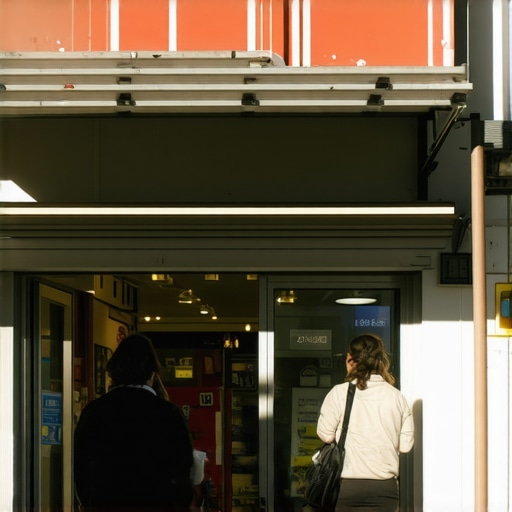
Clean Up the Data Mess on Your Profile
You might be accidentally sabotaging yourself before you even start. One of the biggest silent killers I see is category confusion. If you’ve ever wondered why your primary business category is likely sabotaging your 3-pack rank-2, it’s often because you’ve picked something too broad or too niche. You need to align your category with the actual search intent of your neighbors. Furthermore, don’t ignore the granular details like the hidden ranking signal in your services menu. Every service you list is a potential hook for a ‘near me’ search. I once helped a dental practice that was stuck at #9. We simply updated their menu to include specific procedures they actually performed, rather than just ‘General Dentistry,’ and they jumped to the top 3 within a week. Finally, ensure the ranking impact of having a consistent business name is respected across all platforms. If your sign says ‘Main Street Cafe’ but your profile says ‘Main St. Cafe & Bakery,’ you’re creating friction that makes Google hesitant to trust your location data.
Let’s dig deeper into why your current strategy might be spinning its wheels while your competitors seem to glide toward the top. Most ‘experts’ will tell you to go out and buy a massive package of directory listings to flood the internet with your name. I’m here to tell you that why buying 100 generic citations is a waste of your marketing budget-2. In my experience, five high-quality, neighborhood-specific mentions do more for a google maps boost than a thousand directory listings from sites nobody has visited since 2005. If you’re still chasing quantity over relevance, you’re stuck in an outdated SEO era that Google has long since moved past.
Forget the Keyword Stuffing Trap
Here is the ‘oops’ factor I see constantly: business owners replying to every single review by stuffing it with keywords like ‘best plumber in Chicago’ or ‘affordable lawyer near me.’ This is a massive mistake. In fact, why replying to reviews with specific keywords is a local pack mistake-2 is one of the quickest ways to trigger Google’s spam filters. It feels productive to you, but to the algorithm, it’s a red flag that you’re trying to game the system rather than engage with your neighbors. Real people don’t talk in keywords, and Google’s AI is getting incredibly good at spotting the difference.
Can responding faster actually push my pin higher?
This is where the ‘hidden’ nuance comes in. Research by Joy Hawkins at Sterling Sky, a leading authority on local search, has shown that Google is increasingly prioritizing real-world engagement over static data fields. This is why the response velocity secret how fast replies actually improve local pack visibility-2 is the next frontier for local pack optimization. It’s not just about what you say in your profile; it’s about how quickly you interact with it. Google tracks the time between a customer message or a new review and your response. If you’re taking three days to acknowledge a customer, you’re essentially telling the algorithm that you aren’t an active or reliable resource for the community.
Have you ever fallen into this trap of focusing on the wrong numbers? Maybe you spent a month fixing every tiny citation error only to find the hidden disconnect between citation cleanup and real map gains-2 left your ranking exactly where it started. It’s frustrating, I know. Let me know in the comments if you’ve seen a sudden drop in visibility even after doing ‘everything right.’ Often, the solution isn’t adding more data, but fixing the rank 3 pack signals that actually matter to your local leads.
Finally, we need to address the ‘Conversion Gap.’ You can improve local pack rankings all day, but if those views don’t turn into phone calls or directions, Google will eventually demote you in favor of a business that converts better. Learning how to fix the conversion gap between profile views and actual calls-2 is the final piece of the puzzle. It’s about more than just appearing at the top; it’s about proving to Google that you are the most helpful and responsive option in the neighborhood.
Closing that conversion gap isn’t a one-time project; it’s a lifestyle for your business. I learned the hard way that a google maps boost is like a gym membership—you can’t just go once and expect to stay fit forever. Once you hit that top spot, every other business in your zip code is suddenly looking at your profile as the target. To stay there, I’ve had to develop a system that moves beyond just ‘fixing things’ and into the realm of aggressive maintenance. I don’t just guess where I’m ranking anymore. I use tools like Local Falcon to run geo-grid reports that show me exactly where my visibility drops off. If I’m #1 at my shop but #8 two miles south, I know I need to focus on local backlinks from neighborhood blogs in that specific area to reclaim my rank 3 pack status.
The Pro Toolset for Keeping Your Pin at the Top
I get asked constantly what I actually use to manage multiple locations without losing my mind. Beyond the standard dashboard, I rely heavily on tools we use to spy on local competitors to see where they are getting their mentions. But the real secret weapon? It’s a simple browser extension called GMB Everywhere. It lets me see the exact categories my competitors are using in real-time. I also set a weekly calendar alert for the 10-minute daily checklist that ensures I’m checking for ‘suggested edits’ from competitors. I’ve seen rivals try to change my phone number or mark my business as ‘permanently closed’ on a Friday night, hoping I won’t notice until Monday. Vigilance is the only real local pack optimization that lasts.
How do I maintain my local pack rank over the long haul?
Maintenance is about momentum, not just data entry. As Mike Blumenthal, a leading expert at Near Media, often points out, Google’s algorithm is increasingly prioritizing ‘real-world signals’ over static citations. This means you need the simple daily routine to hold your spot, which includes things like uploading one fresh photo a week and answering at least one new Q&A. I also keep a close eye on my operating hours. I’ve found that the ranking difference between open now and 24 hours can be the deciding factor for a customer searching at 5:01 PM. If you aren’t updating your holiday hours or special events, you’re practically handing your 3-pack spot to the guy down the street who did.
Looking ahead, I predict the next big shift in local pack optimization will be the integration of ‘live inventory’ directly into the map results. We’re already seeing this with ‘See What’s In Store’ features. If you can connect your physical inventory to local search results now, you are going to be miles ahead of the competition when AI-driven search starts prioritizing businesses that can prove they have a specific item in stock right this second. It’s about being more than a map pin; it’s about being a real-time solution for your neighbors. If you want to see an immediate lift, I challenge you to try using the welcome offer to increase map conversions today. It’s a small technical step that provides a huge boost in user engagement signals that Google loves.
The Hard Truths About What Actually Moves the Map Pin
After years of obsessing over rank 3 pack positions, I’ve realized that the biggest gains often come from the most overlooked details. For a long time, I thought cleaning up every single directory listing was the holy grail, but I eventually saw the hidden disconnect between citation cleanup and real map gains. It turns out that Google values your physical presence and neighborhood relevance more than a typo on a directory site no one visits. One of my biggest lightbulb moments was discovering why your floor plan photos help local search results; it provides a level of transparency and authenticity that a generic stock photo never could. Also, I’ve seen countless businesses fail because of the map ranking danger of using a virtual office. If you aren’t physically there, the algorithm will eventually sniff you out and drop your visibility.
The Toolkit That Keeps Me in the Top 3
Maintaining a consistent google maps boost requires the right gear and a proactive mindset. I don’t rely on luck; I rely on consistent data monitoring. First, I always run the no-fluff checklist for auditing local listings once a month to catch any competitor ‘edits’ or data drift. I also highly recommend using specific industry insights, like content tweaks for real estate or other niches, because a blanket strategy rarely wins in competitive markets. For tracking, I trust Local Falcon for geo-grid reports and GMB Everywhere for category spying. If I ever see a dip in my stats, I immediately look for ways to handle a sudden drop in map visibility before it becomes a permanent slide down the rankings.
#IMAGE_PLACE_HOLDER_E#
Stop Being Invisible and Claim Your Neighborhood
The journey to improve local pack rankings is rarely a straight line. There will be weeks where you feel like you’ve hit a wall, but the businesses that win are the ones that treat their profile like a living, breathing extension of their storefront. It’s about more than just technical local pack optimization; it’s about showing your community—and Google—that you are the most relevant, active, and trustworthy choice in town. Go out there, take that fresh storefront photo, sponsor that local team, and watch your pin climb. What’s the one neighborhood-specific detail you’ve been ignoring in your profile? Let’s talk about it in the comments below.