I remember sitting in my home office last October, nursing a lukewarm coffee and staring at my Google Business Profile dashboard with a growing sense of dread. I had done everything the experts told me to do. I optimized my descriptions, uploaded clear photos, and even managed to fix a few data tweaks to improve my local pack rank. Yet, there I was—stuck on page two while a competitor who hadn’t updated their profile since 2018 sat comfortably in the top three. It felt personal. I was convinced the algorithm had a vendetta against me until a small local journalist mentioned my shop in a ‘Top Hidden Gems’ roundup. Within days, my map pin wasn’t just a dot on a screen; it became a verified landmark in Google’s eyes. Today, I’m going to show you how to stop shouting into the void and start using local news mentions to prove to Google exactly where you are and why you belong at the top.
I Was Doing Everything Right and Still Losing
I made the classic mistake of wasting money on low-quality directory listings that promised the world but delivered nothing. I thought if I just had enough mentions on random websites, Google would eventually believe I existed. I was wrong. The algorithm is smarter than that now. It doesn’t just want data; it wants confirmation from trusted, local sources. When I finally shifted my focus from generic directories to actual local press, the results were almost instant. Have you ever felt like your business is a ghost in your own town, despite all your hard work?
Is Getting on the Local News Actually Worth the Hassle?
I used to think that unless I was on the front page of the city paper, it didn’t count. That skepticism cost me months of progress. The truth is, even a small mention in a neighborhood blog or a local community update acts as a powerful digital signal. According to a study by the Pew Research Center, local news remains a primary trust factor for communities, and search engines use that same logic to verify your physical presence. I learned the hard way that neighborhood blog links carry significantly more weight for your 3-pack rank than a dozen high-authority national PR mentions.
Google Just Wants to Know You Are Real
The real reason your map pin might be struggling isn’t always about keywords; it’s about trust. Google is terrified of displaying ‘ghost’ businesses that don’t actually exist at the address provided. This is why maintaining NAP consistency is just the bare minimum. When a local news outlet mentions your business name alongside your city or neighborhood, it creates a geographical anchor. It tells the algorithm, ‘Yes, this person is actually here, participating in the community.’ This realization changed my entire approach to SEO, moving me away from robotic spreadsheets and toward actual community engagement. It’s not about gaming the system anymore; it’s about becoming a recognized part of the local landscape.
Turn Neighborhood Chatter into Search Engine Gold
Think of a local news mention as a digital affidavit. When a local journalist or community blogger writes about your business, they aren’t just giving you a ‘shoutout’; they are providing Google with a verified witness account of your existence. I remember working with a small bakery that was completely invisible online. We tried the usual tricks, but nothing worked until they sponsored a neighborhood ‘cleanup day.’ The local community blog wrote a three-paragraph post about it. That single, hyper-local link did more to fix a map ranking that is stuck on page two than months of generic SEO work. It worked because it proved the business was a physical pillar of that specific zip code.
Focus on the Micro-Outlets Instead of the Giants
The biggest mistake I see is business owners chasing a feature in a national magazine. Google’s local algorithm actually places a higher premium on relevance than on raw authority when it comes to the map pack. You should be looking for the neighborhood newsletters, the high school sports boosters, and the ‘best of’ lists curated by people who actually live in your city. I’ve found that learning how to use local sponsorships to gain map authority is the fastest way to get these mentions without needing a full-time PR team. These small sites are starving for content and are usually happy to mention a local business that is actually doing something for the community.
The Simple Move That Validates Your Address
Once you get that mention, you can’t just let it sit there. You have to bridge the gap between the news story and your Google Business Profile. Think of your website as a translator. If the news outlet links to your homepage, that’s good. But if you can get them to link to a dedicated page that features a map of your location, you’re creating a direct signal path. Many people fail here because they use the simple map embed trick most web designers get completely wrong, which confuses the algorithm instead of guiding it. 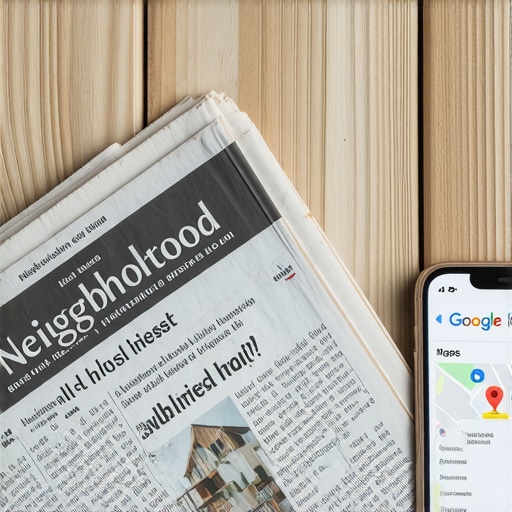
Connect Your Press Mentions to Your Physical Map Pin
To maximize the ‘boost’ from a news mention, you need to ensure your digital ducks are in a row. When I was struggling to move a client’s pin last year, we realized that while they had great press, their website didn’t have a clear connection to the map. We implemented a backlink strategy that actually connects your profile to local search results by updating their local landing page. By highlighting the news feature on a page that was already optimized for their neighborhood landmarks, we created a localized ‘authority loop.’ You should also make sure you know how to connect your local landing page directly to your map pin so that when Google crawls the news site and follows the link, it immediately hits a wall of geographic proof. This isn’t about tricking the system; it’s about making the evidence of your local presence so overwhelming that the algorithm has no choice but to rank you higher.Let’s dig deeper into the mechanics of why neighborhood mentions work when generic SEO fails. Most ‘experts’ will tell you that local SEO is a numbers game—that you need to blast your business name across every directory in existence. I’m here to tell you that’s a one-way ticket to the second page. In my experience, buying 100 generic citations is a waste of your marketing budget because Google simply ignores the ‘noise’ from low-authority aggregators that have no geographic relevance to your specific city. The algorithm has evolved past simple tallying; it now looks for topical and local clusters that prove you are an authority in your specific niche and area.
Stop Chasing Every Junk Directory Under the Sun
Everyone says you need more citations, but I’ve found that less is often more if the quality is high. I once worked with a plumber who had 300+ citations but couldn’t crack the top 10. We purged the junk and focused on just five hyper-local links from the city’s chamber of commerce and a local charity. The result? His rank jumped to the top three in three weeks. You have to stop wasting time on generic citations that no longer drive results and start looking for sources that Google actually trusts to verify your physical location.
Does your response speed matter more than your physical location?
It’s a controversial take, but data suggests that proximity—the literal distance from the searcher—is no longer the absolute king. According to the BrightLocal Local Search Ranking Factors survey, behavioral signals are becoming increasingly critical. This means that if your business has higher engagement, Google might rank you above a closer competitor. I’ve seen this play out where the impact of driving distance on your local map rank was mitigated simply because the further business had a 100% response rate to customer questions.
Avoid the Stealth Trap of Constant Profile Tweaking
Here is a specific warning: many business owners fall into the ‘update trap.’ They think that changing their business description or services menu every three days shows Google they are active. In reality, most profile updates actually trigger a stealth ranking drop because the algorithm views frequent major changes as a sign of instability or even potential fraud. If you want to show activity, use the Q&A section or post photos instead of touching your core business data. 
Look for the Hidden Ranking Signals
Another nuance that gets overlooked is what I call ‘Menu Authority.’ If you are a service-based business, the hidden ranking signal in your services menu is often the deciding factor when two businesses have similar review scores. Google parses the text in your service list to match specific, long-tail queries. If you haven’t detailed exactly what you do, you’re leaving money on the table. Have you ever fallen into the trap of over-optimizing your profile only to see your rankings vanish overnight? Let me know in the comments.
It’s easy to get obsessed with the initial climb, but the real work starts once you’ve actually arrived. I’ve seen businesses claw their way to number one, only to vanish within a month because they thought the job was done. Maintenance isn’t about massive overhauls; it’s about micro-actions. I follow a strict 10-minute daily checklist to track and fix your Google Maps ranking because the algorithm never sleeps and neither does your competition. If a competitor suddenly changes their primary category or if ‘suggest an edit’ spam starts hitting your profile, you need to know before the weekend starts.
The Boring Routine That Actually Keeps You at the Top
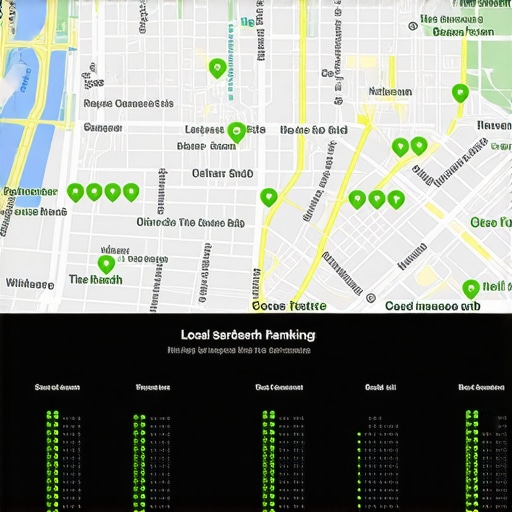
One of the biggest lessons I learned is that Google values fresh, consistent signals over one-time bursts of activity. This is why I tell everyone that your profile needs to be updated every 7-days. I’m not talking about changing your core business name or address—we already know that leads to a stealth drop—but rather uploading a fresh photo of your storefront or responding to a new review. I personally use specialized software to monitor my ‘ranking grid.’ While many people just check their rank from their own office chair, I use geo-grid trackers to see how I’m performing three miles away in a different neighborhood. It’s one of the 5-tools we use to spy on local competitors and identify where their authority is actually coming from.
How can I maintain my 3-pack rank for the long haul?
The secret is what I call defensive SEO. You have to realize that as you climb, you become a larger target for competitors and ‘map editors.’ You have to be proactive. I’ve had to learn how to fix the suggest an edit spam from competitors before it has the chance to tank my visibility. Joy Hawkins, the founder of Sterling Sky and a renowned local search expert, has frequently pointed out that Google’s reliance on user-generated content means that if you aren’t monitoring your profile, someone else is essentially managing it for you. This is why a simple daily routine to hold your spot in the top 3 is more valuable than any expensive monthly retainer with a generic agency.
What the Next Two Years of Local Search Look Like
Looking ahead, I predict that AI-driven search results will make your ‘Services Menu’ and Q&A section the new battleground. Google won’t just show a list of names; it will answer specific user questions using the raw text inside your profile. That tiny profile change that swapped scrolling for real customer phone calls usually happens when you stop treating your profile like a static yellow pages ad and start treating it like a live conversation. As Google moves toward ‘Search Generative Experience,’ the depth of your local data will outweigh the length of your backlink profile. If you take away one thing from my experience, let it be this: go into your dashboard right now, find one unanswered question in your Q&A, and give it a detailed, helpful response. It takes two minutes and signals to the algorithm that you are the most relevant answer in your zip code.
The Hard Truths I Discovered About Map Ranking
When I first started obsessing over my local visibility, I thought it was a pure numbers game. I quickly learned that the algorithm is far more discerning than I gave it credit for. One of the most painful lessons was realizing that most profile updates actually trigger a stealth ranking drop if they are made too frequently or without clear intent. I also had to accept that the ranking impact of having a consistent business name across the web is not just a ‘best practice’—it is the bedrock of your digital identity. If Google sees even slight variations, it loses confidence in your location. Finally, I discovered that there are often 7-hidden-signal-errors that keep you out of the local pack, ranging from hidden duplicate listings to conflicting metadata on your own website. Once I addressed these fundamental cracks, the external press mentions actually started to stick.
My Personal Shortlist of Local Growth Tools
You don’t need a massive budget to win at local pack optimization, but you do need the right data. I rely heavily on a few specific resources to keep my edges sharp. For competitive intelligence, I always turn to the 5-tools we use to spy on local competitors to see where their backlinks are coming from. This allows me to find those hyper-local neighborhood blogs that the big agencies miss. To keep myself from getting overwhelmed, I follow the no-fluff checklist for auditing your local listings in under an hour. This routine ensures I catch citation drift before it hurts my rank. I also suggest checking out industry leaders like Whitespark or BrightLocal for their annual ranking factor surveys; they provide the macro-trends that help you understand why certain micro-tweaks are working.
#IMAGE_PLACEHOLDER_E#
Your Map Pin Deserves a Top Spot
Ranking in the top three isn’t just about technical SEO; it’s about proving your business is a living, breathing part of your town. Every time you get a mention in the local news or a neighborhood newsletter, you are adding another layer of geographic proof that Google craves. This journey toward a sustained google maps boost takes patience and a willingness to step away from the keyboard and into your community. Don’t let the technical jargon intimidate you. Start with one local mention, verify your core data, and watch how the algorithm rewards your authenticity. Have you ever felt like your map pin is stuck in quicksand despite your best efforts? Drop a comment below and let’s troubleshoot your local rank together.