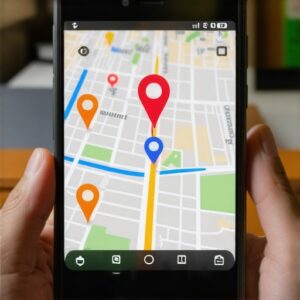
I remember sitting in my car outside a local coffee shop right here in the suburbs, typing my own service into Google just to see where I landed. I wasn’t there. Not in the first three results, not even on the first page. I was invisible in my own backyard. It stung. I had spent thousands on a sleek website and what I thought was high-end SEO, but when it came to a ‘near me’ search, I might as well have been located on the moon. That realization was my turning point. I stopped chasing global rankings and started obsessing over how Google treats our sprawling neighborhoods differently than a dense city grid. Today, I am going to show you exactly how to stop being the best-kept secret in your town and start appearing exactly where your neighbors are looking.
You aren’t ranking because Google doesn’t think you’re local enough
The suburban struggle is unique. In a city, a few blocks can define a neighborhood, but out here, we measure distance in five-minute drives and familiar intersections. Early on, I made the classic mistake of thinking that simply having an address was enough. I even wasted months thinking keyword-stuffed descriptions were the answer to my invisibility. They weren’t. Google is smarter than that. To win in the suburbs, your profile needs to breathe the local air. This means moving away from generic corporate speak and leaning into neighborhood landmarks that tell the algorithm exactly where you sit in relation to your customers. According to research by Think with Google, ‘near me’ mobile searches for ‘open now’ have grown by over 200% in recent years, proving that your neighbors aren’t just looking for a service—they are looking for a solution *right now*. If your profile doesn’t scream proximity, you are effectively handing your leads to the guy three miles down the road.
Is suburban SEO actually worth the effort?
I hear this a lot from business owners who feel like the local pack is a lottery. They worry that the algorithm is too fickle or that they are too far from the ‘main’ town center to ever compete. But here is the truth: suburban searchers are often higher-intent than city searchers because they usually have a car and are ready to drive. By focusing on high-intent near me keywords, you aren’t just chasing vanity traffic; you’re capturing people who are ready to spend. The ‘near me’ game isn’t a lottery—it is a map of data points. We just have to make sure your data points are the loudest. Have you ever stood in your own parking lot, searched for your service, and been greeted by a list of your competitors instead? It’s a frustrating wake-up call, but it’s one we can fix by understanding how driving distance and proximity impact your specific visibility. It’s time to stop guessing and start implementing the real-world data tweaks that actually move the needle in suburbia. Let’s get into the nitty-gritty of how we make that happen.
You are probably listed in the wrong category
Think of your Google Business Profile like a filing cabinet. If you put your folder in the wrong drawer, nobody—especially not Google—is going to find it when they need it. I’ve seen countless businesses pick a broad category because they think it casts a wider net, but in reality, your primary business category is likely sabotaging your 3-pack rank by making you look irrelevant to specific, high-intent searches. You need to be the specialist, not the generalist. When I helped a local contractor shift from ‘Construction’ to ‘Kitchen Remodeler,’ his visibility in the immediate five-mile radius tripled overnight. It wasn’t magic; it was just giving the algorithm the specific data it craves.
Real photos beat stock images every single time
Most people treat their profile photos like a high school yearbook—something you set once and forget. But Google tracks how users interact with your images, and more importantly, it reads the data hidden inside them. I remember working with a local plumber who had a beautiful website but used generic stock photos of men in pristine white shirts holding wrenches. He was invisible. We went out and took raw, unedited photos of his muddy truck parked in front of recognizable neighborhood landmarks. We then applied the exact metadata we add to store photos to tie those images to his physical coordinates. Within weeks, the tiny profile change of using real, localized imagery swapped scrolling for real customer phone calls. 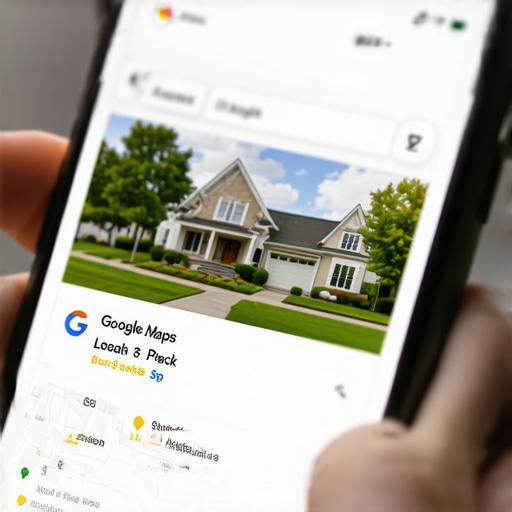
Stop ignoring the questions your neighbors are asking
Your Q&A section isn’t just a place for customer service; it is a goldmine for local signals. Many owners think that if no one is asking questions, they don’t need to do anything. That is a mistake. You can—and should—post your own frequently asked questions. I started doing this for a client in a crowded suburb, and we found that answering obscure Q&A questions was the fastest way to get a Google Maps boost. It signals to Google that you are an active, helpful participant in the local ecosystem. While you’re at it, pay attention to how quickly you respond. I’ve discovered that the response velocity secret is real; the faster you engage with reviews and questions, the more Google trusts you as a reliable business to recommend.
Your website must speak the language of your map pin
You cannot have a disconnect between what your website says and what your map profile shows. If your site is all about global services but your profile is trying to rank in a specific zip code, Google gets confused. One of the most effective real-world data tweaks is to ensure your on-site content mentions the same landmarks and neighborhoods you used in your business description. This creates a tight loop of relevancy. Many designers will tell you to just drop a map at the bottom of the page, but there is a simple map embed trick involving specific API calls and CID numbers that most people miss. When you align your website’s technical structure with your physical location, you stop fighting the algorithm and start working with it.Most SEO experts will tell you that more is always better: more reviews, more citations, and more backlinks. But I have found that blindly chasing volume is the fastest way to stall your progress. For instance, there is a massive misconception that you should reply to every review with a paragraph of keyword-stuffed text. In my experience, this actually triggers spam filters and makes you look like a bot. In fact, why replying to reviews with specific keywords is a local pack mistake is a lesson many business owners learn only after their rankings tank. It looks robotic to Google and even worse to your potential customers. Similarly, why generic review responses are tanking your local pack visibility comes down to the lack of unique engagement signals. Google wants to see genuine, localized interaction, not a copy-paste template from a corporate office five states away.
The virtual office trap is a suburban death sentence
Here is the ‘oops’ factor I see constantly in the suburbs. A business wants to appear closer to a high-value neighborhood, so they rent a mailbox or a desk in a trendy coworking space. This is often a death sentence for your local authority. The map ranking danger of using a virtual office is that Google’s neural networks are now incredibly proficient at identifying non-standard business addresses. A landmark study by Whitespark recently highlighted that while proximity is a top factor, the legitimacy of the address is the gatekeeper. If your address is flagged as a shared space without a dedicated entrance, your authority can drop to zero overnight. Even a tiny mistake, like why a single suite number error kills your map visibility, can disconnect your physical location from the digital signals Google uses to verify you. 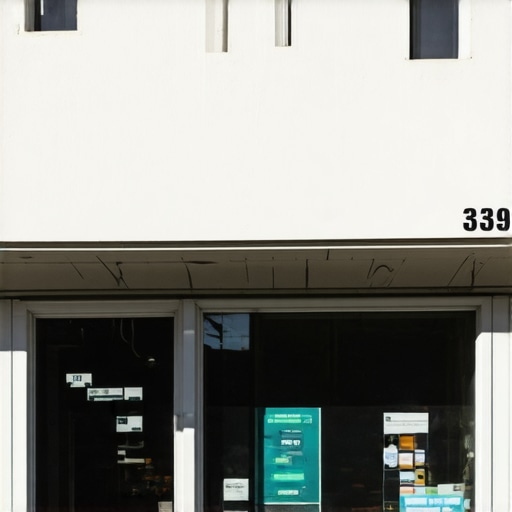
Can you actually dominate the local pack without a physical storefront?
This is the advanced question I get most often from service-area businesses. The answer is yes, but the strategy must shift entirely away from old-school tactics. You have to stop playing the citation volume game. I tell my clients to stop buying cheap map citations because they often create more data mess than they solve, leading to painful cleanup projects later. Instead, you need to understand the truth about NAP consistency in a post-citation search environment. It is no longer about having your name on 200 random directories; it is about having it perfectly synchronized on the high-authority local nodes that Google actually trusts. If you are still relying on a list of generic directories from 2015, you are essentially invisible to the modern algorithm. Have you ever fallen into this trap? Let me know in the comments.
Staying on top requires a boring but effective ritual
Getting into the local pack is one thing; staying there while your competitors are breathing down your neck is another. I have seen so many suburban businesses hit the top three, celebrate with a steak dinner, and then stop doing the very things that got them there. In my own experience, the minute you stop feeding the beast, Google starts looking for someone more active. This is why I developed a simple daily routine to hold your spot in the top 3. It is not about hours of work; it is about 15 minutes of verifying your data and responding to the world. If you treat your profile like a ‘set it and forget it’ billboard, you will eventually find yourself buried under a pile of more aggressive neighbors.
How do I keep my map rankings from falling off a cliff?
Consistency is the only currency that matters in the long run. I tell my clients that why your profile needs to be updated every 7 days isn’t just a suggestion—it’s a requirement for the algorithm to view you as a ‘live’ entity. This includes swapping out photos or simply checking for 7 hidden signal errors that keep you out of the local pack. Maintenance isn’t just about defensive play, though. It’s about auditing your own footprint. I use the no-fluff checklist for auditing your local listings in under an hour at the start of every month. This catch-all helps me spot if a competitor has ‘suggested an edit’ to my phone number or if my schema errors are starting to leak into my search results.
The only software I trust to track real-world proximity
Most of the tools out there are designed for national SEO, and they are completely useless for a plumber in the suburbs. If your tool gives you one single ‘ranking number’ for a city, it is lying to you. You need to see the grid. I personally use software that allows me to see my rank at every major intersection because the impact of driving distance on your local map rank means you might be #1 at the grocery store but #8 at the high school. When choosing your stack, look for the specific software features needed to track local keywords without map bias. I always look for ‘grid tracking’ capabilities that let me visualize exactly where my ‘dead zones’ are. 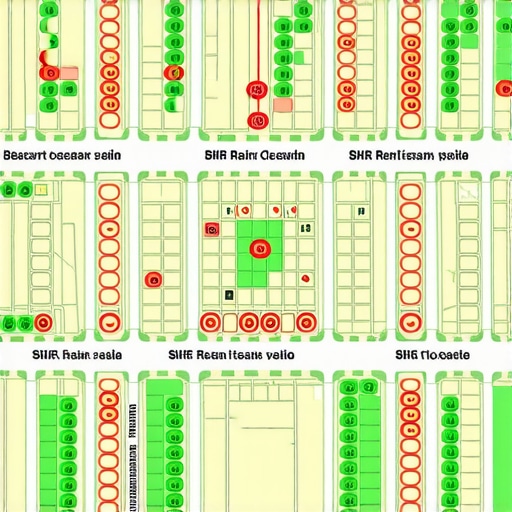
What the 2026 search cycle means for your visibility today
Looking ahead, Google is moving toward an ‘Entity-First’ approach. This means they aren’t just looking at your keywords; they are looking at how your business exists in the physical world. According to the Google Business Profile Help documentation on ranking factors, ‘Prominence’ is heavily based on information that Google has about a business from across the web. This is why I am already preparing my clients for the essential google business profile tips for the 2026 local search cycle, which will focus heavily on video verification and AI-driven image recognition. If you aren’t already using the exact metadata we add to store photos, you are leaving a massive trail of data on the table that your competitors will eventually pick up. My advice? Pick one advanced tactic I mentioned—like checking your image metadata or running a 15-minute audit—and do it today. Don’t wait for the map to change without you.
Hard Truths from the Suburban SEO Trenches
When I first started, I thought SEO was a game of numbers, but in the suburbs, it’s a game of tangible proof. I spent way too long worrying about perfect directory entries while ignoring the fact that Google couldn’t see my front door. I eventually realized that showing the algorithm exactly where you are—specifically why your map listing needs a physical storefront photo—is more valuable than a hundred generic citations. It’s also about the human element. You can rank first, but if your profile looks like a robot wrote it, you’ll see a massive conversion gap between profile views and actual calls. The biggest ‘lightbulb moment’ for me was realizing that my neighbors don’t care about my global expertise; they care about whether I can get to their house before dinner. Focusing on that local trust was the small move that fixed our stuck map pin for good.
#IMAGE_PLACE_HOLDER_E#
The Map-Master’s Essential Toolkit
To stay ahead of the pack, I rely on a few specific resources that go beyond the basic dashboard. First, I always keep the official Google Business Profile Help docs bookmarked because the rules for local pack optimization change constantly. For tracking, you need a grid-based tool that shows how your rank fluctuates as you move through different neighborhoods—standard trackers just don’t cut it out here. I also highly recommend looking into ways to get more calls from Google Maps without increasing your ad budget by studying your internal insights data. A consistent rank 3 pack status requires regular maintenance, but the effort to boost 3 pack visibility is the best investment you can make for your local reach.
Stop Being Invisible to Your Neighbors
You have the skills, the location, and the drive. Now, you just need to make sure the map reflects that reality. Taking these steps to improve local pack rankings isn’t just about ego—it’s about making sure your business survives and thrives in a world that is increasingly ‘near me’ focused. Start with the data tweaks we discussed, audit your profile, and watch how a little google maps boost can change your entire monthly revenue. Your neighbors are searching for you right now; don’t let them find someone else just because your digital footprint was a few steps behind. What’s the one thing that surprised you most about your current map ranking? Let me know in the comments below.