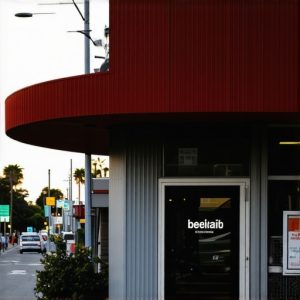
I’ll never forget the day I sat in my office, staring at a gorgeous, high-resolution file of my new business logo. It was expensive. It was “on brand.” It was also doing absolutely nothing to help me rank. I’d spent weeks obsessing over the exact shade of teal while my actual Google Business Profile was showing a grainy, depressing image of a side street that made my shop look like a ghost town. I was invisible where it mattered most—the local 3-pack. It was a classic case of focusing on the wrapper instead of the store itself.
Your Logo Doesn’t Help Customers Find Your Door
I spent a fortune on branding because I thought that’s what “serious” businesses did. I ignored the basics of local pack optimization because I was too busy being a “creative.” But here is the cold, hard truth: Google doesn’t care about your vector files. They care about providing a seamless experience for the person behind the screen. If a customer can’t recognize your building from the street, they won’t click. That realization was my turning point. Today, we are going to fix the disconnect between your digital identity and your physical presence so you can finally boost 3 pack performance.
Is a professional logo actually worth the hype?
You might be skeptical. After all, your logo is your identity, right? But in the eyes of a search algorithm, it’s just another graphic. I made the mistake of thinking my branding would carry me, only to find that I was suffering from a massive conversion gap between profile views and actual calls because people didn’t trust the location. According to research by BrightLocal, 60% of consumers say local search results with good images capture their attention, and those images need to be of the actual business, not just a symbol.
Why your front door is a ranking signal
When you provide a clear shot of your entrance, you aren’t just being helpful; you’re handing Google a verification tool. It’s one of those simple photo tweaks that actually improve local pack visibility because it anchors your business to a specific coordinate. There is a massive ranking benefit of having a clear storefront sign that most “experts” forget to mention. Have you ever struggled to find a business because their online photo looked nothing like the street view? It’s a trust-killer, and it’s likely killing your rank, too.
How to Prove to Google That You Actually Exist
I remember helping a local bakery that was stuck on page three for months. We realized their primary photo was a beautiful, high-res close-up of a croissant. Delicious, sure, but Google’s AI had no clue where the shop was located in the physical world. We took one wide-angle shot from the sidewalk showing the bakery right next to a very recognizable blue mailbox on the corner. Within nine days, they were in the top 3. It wasn’t magic; it was data validation. To improve local pack visibility, you need to stop thinking like a photographer and start thinking like a surveyor.
The Validation Shot: Why Your Phone is Your Best SEO Tool
The first thing you need to do is step outside. You need a photo that captures three things in one frame: your business signage, your street number, and a bit of the neighboring environment. This is how you prove your physical store location using specific image metadata. When you upload this, Google’s computer vision cross-references the photo with Street View data. If they match, your trust score spikes. I also recommend checking the exact metadata we add to store photos to jump the 3 pack to ensure your coordinates are hard-coded into the file itself. 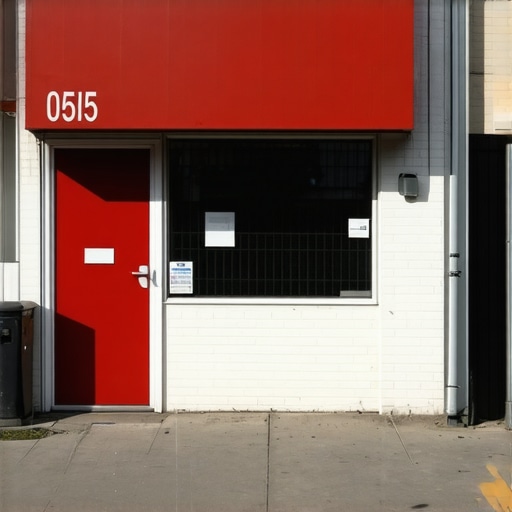
Stop the Suite Number Sabotage
I see this mistake constantly with office buildings and strip malls. If your official address includes ‘Suite 201’ but your Google Business Profile just says ‘Suite B’ or leaves it out entirely, you are creating a logic gap. This is why a single suite number error kills your map visibility instantly. Google sees two different locations and decides to trust neither. Go to your profile right now and ensure your unit number matches your utility bills and your lease exactly. This is a local pack optimization fundamental that most people overlook because it feels too small to matter. It isn’t. Even the hidden signal in your physical address that prevents a 3 pack rank often comes down to these tiny formatting discrepancies.
Embed the Map the Right Way
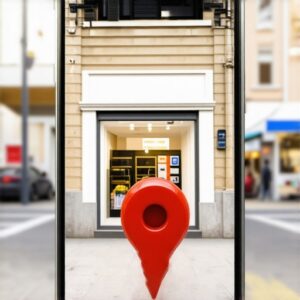
Once your physical data is clean, you have to bridge the gap on your own website. Most people just grab a random iframe code and slap it on their footer. That’s a missed opportunity for a google maps boost. You need to link your specific CID (Customer Identification) to the embed. There is a specific simple map embed trick most web designers get completely wrong that involves using the unique machine-readable ID of your business. When you learn how to use local map embeds on your contact page correctly, you are essentially telling Google, ‘Yes, this website and that map pin are the exact same entity.’ This creates a closed-loop of authority that makes it much harder for competitors to nudge you out of your spot. To rank 3 pack consistently, your website must act as the digital anchor for your physical location.
Stop Chasing Citation Volume Like It’s 2012
Most agencies will try to sell you a package of 200 citations as the “secret sauce” to improve local pack results. They are wrong. In reality, you should stop buying cheap map citations because they often do more harm than good. Google’s algorithm has evolved past simple name-matching. Today, it’s about hyper-local relevance. According to Darren Shaw’s Local Search Ranking Factors study, citation volume is actually declining in importance compared to proximity and local authority signals. When you flood the web with low-quality listings, you create the hidden disconnect between citation cleanup and real map gains that keeps you stuck on page two. I’ve seen businesses realize that buying 100 generic citations is a waste of your marketing budget when they could have spent that time getting one mention from a local neighborhood blog.
The Review Response Trap That Actually Hurts Your Visibility
Here is a contrarian take: stop stuffing keywords into your review replies. Everyone says it helps with a google maps boost, but it’s becoming a “tell” for low-quality spam. I’ve found that why replying to reviews with specific keywords is a local pack mistake is because it degrades the user experience and triggers spam filters. Google rewards natural, helpful interactions, not robotic repetition. To truly boost 3 pack performance, your replies should be personalized and fast, rather than keyword-dense.
Beware the Stealth Ranking Drop
Another common “oops” factor is the urge to fix everything at once. You find five things wrong and you change them all in ten minutes. This is why most profile updates actually trigger a stealth ranking drop. Sudden, bulk changes to your core data look suspicious to Google’s automated verification systems. It’s better to make incremental, verified tweaks as part of a long-term local pack optimization strategy. This prevents your profile from being flagged for suspicious activity while you attempt to rank 3 pack for your most competitive terms.
Could your floor plan be the missing ranking signal?
Most people think photos are just for show, but Google’s AI is actually scanning the interior of your space to categorize your business accurately. This is an advanced nuance: why your floor plan photos help local search results. By showing the layout, you provide further physical evidence of your business’s legitimacy and operational capacity. It’s about building a multi-dimensional proof of existence that simple text descriptions cannot match. Have you ever fallen into the trap of obsessing over citation counts while ignoring your actual shop photos? Let me know in the comments.I’ve seen so many business owners reach the top 3 and then immediately take their foot off the gas. That is the moment your competitors have been waiting for. Maintaining that spot isn’t about big monthly projects; it’s about micro-habits. For me, that means following the 10-minute daily checklist to track and fix your google maps ranking. If you aren’t looking at your profile every day, you’re missing the tiny ‘suggested edits’ from competitors that can slowly erode your authority. To improve local pack standing, you have to be more persistent than the guy down the street.
Stop trusting those PDF reports that say you’re #1
One of the biggest lies in this industry is the static ranking report. I absolutely hate those PDFs that show you are at the top for a keyword without specifying where the searcher was standing. This is why your ranking reports show positions that dont actually exist in the real world. To get the truth, you need to look for the specific software features needed to track local keywords without map bias, like geo-grid visualization. If your current agency can’t show you a map with green and red dots representing different street corners, they are likely one of those 4 red flags your local seo reseller is using outdated tools. You need to see how you rank 3 pack from the coffee shop three blocks away, not just from your own office chair.
How do I keep my business in the top 3 month after month?
The secret is ‘Check-in’ data. Google knows when people are actually visiting your store based on their phone’s GPS history. Encouraging your customers to open their maps app or leave a photo while they are physically at your location is a massive signal. I’ve found that why local check-ins are more valuable than generic stars is because they prove physical traffic, which is much harder to fake than a five-star review. This kind of ‘real-world validation’ is what separates the winners from the spammers in local pack optimization. According to Sterling Sky’s recent case studies on proximity, Google has tightened the ‘relevancy leash,’ meaning your profile must prove it is the most active and visited option in the immediate area to maintain a google maps boost.
The future of local search belongs to the active
Looking ahead, I see the local pack becoming even more visual and conversational. By the time we hit the essential google business profile tips for the 2026 local search cycle, AI will be summarizing your reviews to answer hyper-specific questions before a user even clicks. If you aren’t documenting your daily operations through the profile’s ‘Update’ feature, you’re going to be left behind. To boost 3 pack visibility for the long haul, you must treat your profile like a social media feed that happens to live on a map. Go ahead and try this today: open your Google Business Profile on your phone and post one ‘Update’ photo of a job you finished this morning. Don’t overthink the caption; just show the world you are active.
Why I Stopped Chasing Hacks and Started Building Real Trust
After years of testing, I’ve realized that improve local pack success isn’t about outsmarting Google—it’s about out-proving everyone else. One of the hardest lessons I learned was that the ranking impact of having a consistent business name is far more powerful than any backlink. I also learned that you can’t just set it and forget it; you have to actively protect your territory. Knowing how to fix the suggest an edit spam from competitors saved my business from a major ranking drop when a local rival tried to change my phone number to theirs. It’s a battlefield out there, but transparency and local pack optimization are your best armor.
The Gear and Guides That Keep My Clients on Top
You don’t need a massive budget to boost 3 pack visibility, but you do need the right tools. I always recommend using a geo-grid tracker to see your rank from different street corners. To keep things clean, I rely on the no-fluff checklist for auditing your local listings in under an hour at least once a quarter. Instead of generic directories, I focus on 5 specific niche citations that actually move the needle on map authority. These are the small, industry-specific sites that Google actually trusts because they have specialized relevance to your category.
#IMAGE_PLACEHOLDER_E#
Your Path to Becoming the Local Authority
The journey to rank 3 pack isn’t a sprint; it’s a series of small, intentional steps that prove you are exactly who you say you are. Don’t let the technical jargon intimidate you. Start with a single photo of your front door or a quick reply to a review. These micro-wins build the momentum that eventually leads to a permanent google maps boost. You have the shop, the talent, and the location—now it’s time to make sure Google knows it too. Have you checked your storefront photo lately to see if it actually matches your current signage? Let me know in the comments!