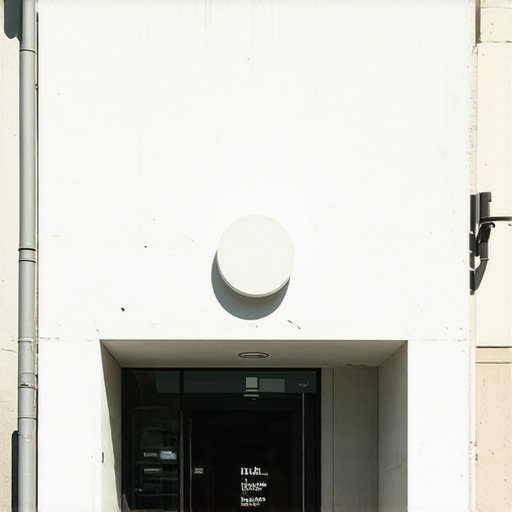
I spent six months obsessing over my backlink profile and tweaking every single word on my website, yet my shop remained buried on page two of Google Maps. I was doing everything the ‘gurus’ told me to do. Then, one Tuesday afternoon, I watched a potential customer drive slowly past my door, look at their phone, look at my plain brick wall, and keep driving. It hit me like a ton of bricks. If a human can’t tell what my business is from the sidewalk, why should Google’s AI be any different?
Your Signage Is the Handshake Google Needs to See
We often focus so much on the digital side that we forget Google is trying to mirror the real world. My early mistake was treating my Google Business Profile like a separate entity from my physical shop. I thought a sharp logo on the screen mattered more than the faded vinyl on my window. I was wrong. When I finally installed a high-contrast, clear sign and updated my photos, the local pack optimization didn’t just feel like a chore; it felt like common sense. Google uses ‘Computer Vision’ to read your storefront from Street View and user-uploaded photos. If your sign is clear, Google has higher confidence that you are exactly who you say you are. Today, we are going to solve the mystery of why your physical presence is the missing link in your google maps boost strategy.
Is a fancy sign really worth the investment for SEO?
You might be thinking that spending money on physical hardware to help a digital ranking is overkill. I get it. But consider this: a study by the University of Cincinnati’s Economic Center revealed that 76% of consumers enter a store they have never visited before based purely on its signs. For Google, that ‘curb appeal’ translates into user engagement signals. When we started proving our physical store location using specific image metadata, our visibility soared because we were giving the algorithm the visual proof it craved. It’s not just about aesthetics; it’s about establishing trust with the bots. Have you ever stood across the street and realized your own business is basically invisible to anyone not using a GPS? If so, you’re likely losing out on the exact metadata benefits we add to store photos to bridge the gap between the sidewalk and the search result. We need to make sure the map embed strategy that actually helps customers find your front door matches the reality of what they see when they arrive.
Capture Your Business Through the Eyes of a Bot
To win the rank 3 pack game, you need to think like a digital scanner. Imagine Google’s AI is a tourist who is slightly lost; it’s looking for landmarks that match the data on your profile. When you upload photos, don’t just show a pretty product. Show the street sign, the neighboring building, and your entrance in one frame. This creates a ‘visual anchor.’ We found that 5 simple photo tweaks that actually improve local pack visibility often involve simply stepping back ten feet to include more context. It’s like giving the algorithm a 3D map of your reality.
Stop Letting Your Suite Number Hide Your Business
I once worked with a chiropractor who was literally invisible in search because his suite ‘B’ was listed as ‘#2’ on his website but ‘Ste B’ on his Google profile. That tiny discrepancy is a massive red flag for bots. You have to realize that why a single suite number error kills your map visibility isn’t just about pedantry; it’s about trust. If the bot sees a conflict, it defaults to the safe choice—ranking your competitor who has their data in a row. Check your mailbox, your lease, and your footer. They must be identical twins. 
The Day I Realized My Logo Was My Enemy
Early in my career, I uploaded a high-res, designer-made logo as my primary photo and expected the phone to ring. I thought it looked professional. But my local pack optimization stalled completely. Why? Because nobody sees a floating white-background logo when they drive down Main Street. I swapped it for a slightly grainy, sun-drenched photo of my actual storefront with my car parked in front. Within two weeks, my google maps boost wasn’t just a graph going up; it was real customers walking in. Google wants the ‘lived-in’ look. We now use the exact metadata we add to store photos to jump the 3-pack to ensure that even the file names tell a story of a real, physical location.
Embed Your Map Like a Human Not a Bot
Most web designers just grab the default iframe and dump it in the footer. That’s a missed opportunity to improve local pack signals. You should be using the simple map embed trick most web designers get completely wrong which involves centering the pin on your specific entrance, not just the general zip code. This precision feeds into your boost 3 pack efforts by reducing ‘user friction’—that annoying moment when someone arrives at your building but can’t find the door. To keep these signals consistent, I follow the 10-minute daily checklist to track and fix your google maps ranking because local SEO is more like a garden that needs daily weeding than a one-time project.Let’s dig deeper into the mechanics of the 3-pack because most advice out there is dangerously outdated. You’ve probably been told that the more citations you have, the better. That’s a myth that needs to die. In reality, why buying 100 generic citations is a waste of your marketing budget often comes down to the ‘dilution effect.’ When you spray your data across low-quality, bot-filled directories, you’re not building authority; you’re creating noise that Google’s algorithm has to filter out. I’ve seen businesses with only 15 high-quality, niche-specific mentions outrank competitors with 200 junk links. It’s about 5 specific niche citations that actually move the needle on map authority, not a massive spreadsheet of dead-end links. Then there’s the ‘category trap.’ Most owners pick the broadest category possible, thinking it casts a wider net. But why your primary business category is likely sabotaging your 3-pack rank is usually because you’re competing with titans for a broad term when you could be dominating a specific one. If you’re a boutique law firm, don’t just list yourself as ‘Lawyer.’ This creates a relevance conflict that confuses the bot. 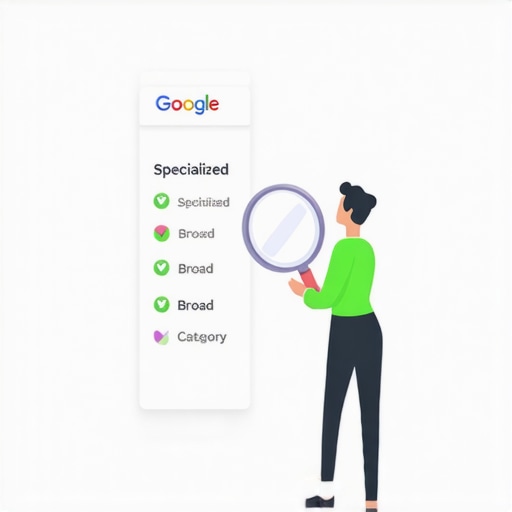
Is your service radius actually pushing you off the map?
One of the most sophisticated mistakes I see involves the ‘radius’ setting. Many service-based businesses try to cover a 50-mile radius from their home office. Whitespark’s Local Search Ranking Factors study consistently shows that proximity is a massive weighted factor for the local pack. When you set an unrealistic radius, you’re essentially telling Google you’re a ‘jack of all trades, master of nowhere.’ We found that the messy truth about why your service radius is shrinking your 3-pack presence is that Google would rather show a closer, more ‘relevant’ competitor even if their reviews are slightly worse. Another nuance people miss is the reporting bias. You might look at your dashboard and see yourself at #1, but why your ranking reports show positions that dont actually exist often boils down to the ‘searcher’s location.’ If you’re checking your rank while sitting in your office, of course you’re #1. This is why we use the specific software features needed to track local keywords without map bias to get the cold, hard truth. One massive ‘oops’ I see is the ‘keyword-stuffed response’ trend. People think that by jamming ‘Best Plumber’ into every review reply, they are helping their rank. They aren’t. In fact, why replying to reviews with specific keywords is a local pack mistake is that it looks like spam to both the AI and the customer. Google rewards genuine interaction and the response velocity secret of replying quickly, not keyword density. Finally, stop ignoring the silent killers like why your phone number format is quietly hurting your local pack rank. Have you ever fallen into this trap of chasing quantity over quality? Let me know in the comments.
Stop Guessing and Start Seeing Your Actual Ranking Grid
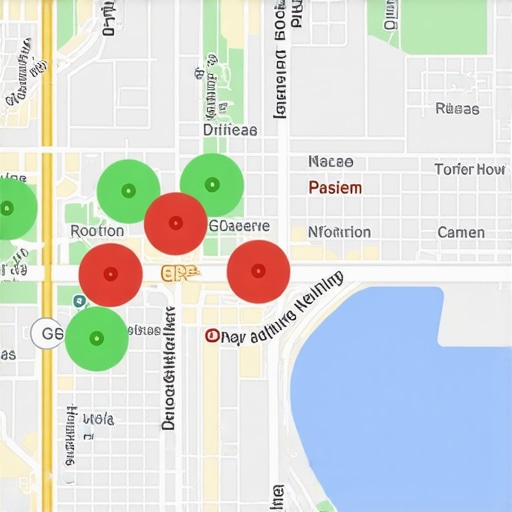
I learned the hard way that a single ranking report from your office desk is a lie. If you want a real rank 3 pack advantage, you need to see what the customer sees from the coffee shop three miles away or the park across town. Proximity is the most weighted factor in the local algorithm, and it is ruthless. I personally use the specific software features needed to track local keywords without map bias because it provides a granular heat map of your performance. If I see a cluster of red dots just two blocks away from my store, I know my local pack optimization is failing in that specific neighborhood, likely due to a lack of local citations from that area. It is about surgical precision, not broad strokes. I also keep a close eye on what the competitors are doing by using 5 tools we use to spy on local competitors citation sources. If they find a new local directory or a neighborhood blog, I am on it within forty-eight hours to ensure they do not gain a foothold.
How do I keep my spot in the top 3 without spending all day on it?
Consistency is the only thing that beats the algorithm in the long run. Most owners treat local SEO like a sprint, but it is a slow-motion marathon. I follow a simple daily routine to hold your spot in the top 3 that takes less time than drinking my morning coffee. A huge part of this is to improve local pack signals through active engagement. You cannot just ignore reviews or leave them sitting for weeks. I live by the response velocity secret because Google tracks how fast you engage with your community. According to Mike Blumenthal, a leading authority in local search, Google’s ability to cross-reference physical location data with digital signals is only becoming more sophisticated. If your profile is static while your competitor is posting updates and replying to Q&As, you are basically telling the AI that you are closed for business. Engagement is the pulse of your profile.
Connect Your Website Directly to Your Map Pin
Most people treat their website and their map profile like distant cousins who barely speak. In reality, they should be married. I have spent countless hours fixing the schema errors that quietly kill your 3-pack presence because that hidden code is the literal bridge between your URL and your physical front door. You must learn how to connect your local landing page directly to your map pin to ensure a seamless google maps boost. Looking ahead to 2026, I predict that Search Generative Experience (SGE) and Augmented Reality will favor businesses that have the most structured, verified data. It will not just be about who has the most reviews, but who has the most scannable reality for AI agents to digest. To stay ahead of these shifts, use the no-fluff checklist for auditing your local listings in under an hour right now. Your future boost 3 pack success depends on the clean, structured data you provide today. Take one look at your landing page schema before the next update rolls out—it is the fastest way to spot a ranking leak.
The Hardest Truths I Learned While Fighting for the Top Spot
I used to think that more was always better, spending thousands on links that didn’t actually move the needle. Now I know that relevance and physical proof are the only currencies Google really accepts. One major realization for me was why buying 100 generic citations is a waste of your marketing budget—it actually creates a digital footprint of low-quality noise that can scare the algorithm away. Another “aha” moment came when I realized why replying to reviews with specific keywords is a local pack mistake; the AI is now sophisticated enough to see through the spam, and it values natural, human conversation over robotic keyword stuffing. Lastly, never let a bad day ruin your momentum. Learning how to handle a negative review without tanking your current ranking is vital because Google tracks your resilience and professionalism, not just a perfect five-star score. These shifts in perspective transformed my approach to local pack optimization from a chore into a strategy.
The Tools I Keep in My Local SEO War Chest
If you want to stop guessing and start seeing real growth, you need a reliable tech stack. I rely heavily on the specific software features needed to track local keywords without map bias because if you don’t have accurate, location-specific data, you are essentially flying blind. I also recommend checking out these 5 tools we use to spy on local competitors citation sources to see exactly where your rivals are getting their authority. For a quick health check of your digital presence, I suggest running through the no-fluff checklist for auditing your local listings in under an hour at least once a month. These resources ensure that your boost 3 pack efforts are backed by data rather than hope.
Take the First Step Toward Your Map Dominance
The journey to a permanent google maps boost isn’t about one giant leap; it is about these small, intentional steps that prove your business’s legitimacy to the world. You now have the blueprint to bridge the gap between your physical storefront and your digital profile. Go out there, update your photos, fix your hidden missing on-site attributes, and start showing Google that you are the most trusted option in your neighborhood. You have the tools and the knowledge—now it is time to execute. Have you noticed a difference in your traffic after updating your storefront photos or responding more humanly to reviews? Let me know in the comments below!