Why Your Landscaping Business is Losing Local Customers to the 3-Pack
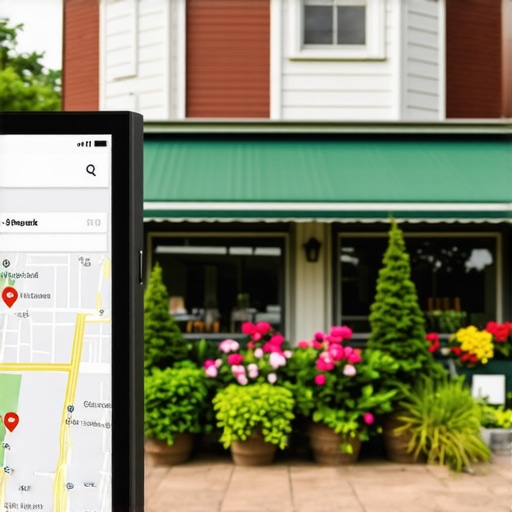
Imagine a homeowner in your service area. It’s Saturday morning, the sun is out, and they’ve finally decided that their overgrown backyard needs a professional touch. They pull out their smartphone and type “landscaping companies near me” or “best lawn care service” into the search bar. In less than a second, Google presents them with a map and three prominent business listings.
This is the Google 3-Pack. And if your business isn’t one of those three, you are effectively invisible.
I’m Roni Sarker, Founder & CEO of The RN Agency. Over the last 7 years, I’ve watched the landscape of local search shift from a “nice-to-have” to the absolute lifeblood of small businesses. I’ve seen talented landscapers with decades of experience lose massive contracts to newcomers simply because the newcomer understood google business profile seo better. The reality is brutal: 80% of local searches convert (Source: Cube Creative research). If you aren’t in that top 3, you aren’t just losing “clicks” – you are handing your revenue directly to your competitors on a silver platter.
The “Invisible” Landscaper: What is the Google 3-Pack?
The Google 3-Pack is the curated list of the top three local business results that appear at the top of Google Search and Maps. For a landscaping business, this is the most valuable real estate on the internet. Why? Because on mobile devices – where the majority of local searches happen – the 3-Pack takes up the entire screen. A user has to scroll past the ads, past the map, and past the 3-Pack just to find the “traditional” organic results.
Most business owners think that “ranking on page 1” is the goal. I’m here to tell you that for a local service provider, page 1 organic results are a consolation prize. If you want to rank higher on google maps, you have to understand the three pillars Google uses to determine who gets those top spots: Proximity, Relevance, and Prominence.
- Proximity: How close is your business to the person searching?
- Relevance: Does your business actually provide what the user is looking for?
- Prominence: How well-known and authoritative is your business in the digital space?
One of the most common ways landscapers fail the “Relevance” test is through poor categorization. If you haven’t looked at your primary and secondary categories lately, you are likely hurting your own visibility. I’ve written extensively on Why Your Primary Category Selection Is Likely Sabotaging Your Search Rank, and it remains one of the fastest fixes for a stagnant profile.
The Brutal Math of Being #4 in Local Search
In the world of google business profile seo, being #4 is almost as bad as being #40. There is a massive “click gap” between the third result in the map pack and the “View All” button. Most users will never click “View All.” They will call one of the top three, look at their photos, read three reviews, and make a decision.
Consider this: over 50% of “near me” searches result in a physical store visit or a direct service call within 24 hours. If you are sitting at spot #4, you are fighting for the scraps – the 20% of “scrollers” who are either extremely picky or looking for the cheapest possible price. The high-intent, high-value customers? They’ve already called the guy at #1.
From a financial perspective, the ROI of being in the 3-Pack is staggering. In various case studies, we’ve seen that landscaping leads can be generated for as low as £17 when a profile is fully optimized and visible in the top 3. Contrast that with the hundreds of dollars you might spend on generic Google Ads or lead-buying platforms like Angi or HomeAdvisor. To see where you truly stand across your entire city, I recommend using a google business profile audit tool from SEO Viper Tools. It provides a grid view of your rankings that shows you exactly where your “dead zones” are.
5 Reasons Your Landscaping Competitors Are Outranking You
If you’ve been stuck outside the 3-Pack, it’s not bad luck. It’s a lack of google business profile optimization. Here are the five most common reasons my agency sees landscapers failing to dominate their local market.
1. Category Confusion
Google offers several categories for the green industry: “Landscaper,” “Lawn Care Service,” “Landscape Designer,” and “Landscape Architect.” If you choose “Landscaper” but your primary revenue comes from weekly mowing, you may be missing out on “lawn care” searches. You must align your primary category with the highest-volume search term that matches your core business, then use secondary categories to fill the gaps.
2. The “Service Area” Trap
Many landscapers try to “game” the system by setting a massive service area – sometimes covering three entire counties. This actually dilutes your ranking power. Google wants to show the most local, relevant result. By trying to be everywhere, you end up being nowhere. This is a classic mistake I call The Service Area Page Blunder Keeping You Invisible in Nearby Towns. You need to be strategic about how you define your boundaries.
3. Review Velocity vs. Review Rating
Having a 5.0 rating is great, but if your last review was from six months ago, Google views your business as stagnant. Review velocity – the frequency at which you receive new reviews – is a major ranking signal. A competitor with a 4.7 rating and 10 new reviews this month will often outrank a 5.0 business with no recent activity.
4. NAP Inconsistency and “Dirty” Data
NAP stands for Name, Address, and Phone number. If your business is listed as “Green Turf Landscaping” on Google but “Green Turf LLC” on Yelp, and your old phone number is still on a random local directory, Google loses trust in your data. However, don’t fall for the trap of buying massive, cheap citation packages. I’ve explained before Why Buying 100 Generic Citations is a Waste of Your Marketing Budget; you need high-quality, niche-relevant signals, not spam.
5. Lack of Hyper-Local Content
Google’s algorithm is smarter than ever. It looks for “local signals” beyond just your address. Are you posting updates to your Google Business Profile? Are you writing blog posts about local soil conditions, native plants in your specific city, or local landscaping ordinances? If not, you’re missing out. Check out these 6 Local Blog Topics That Actually Get Landscapers More Google Maps Traffic to start building that local authority.
Advanced Signals: Preparing for 2026 Local SEO
As we move toward 2026, the technical side of local seo for landscapers is becoming more complex. We are seeing the emergence of “6G signals” and “device handshakes” as localized ranking factors. This means Google isn’t just looking at your profile; it’s looking at the physical movement of devices around your business or service areas to verify your legitimacy.
One of the most frustrating technical issues we see is “pin drifting,” where your map marker isn’t precisely where it should be, or your service area center is misaligned with your actual operations. This can be a silent killer for your rank. If you’re seeing weird fluctuations in your position, read my guide on Stop Pin Drifting: 4 Fixes for a Google Maps Boost [2026].
To stay ahead of these technical shifts, manual tracking isn’t enough. You need professional local seo software like SEO Viper Tools. These local seo ranking tools allow you to monitor how your business appears to users in different neighborhoods in real-time, allowing you to adjust your strategy before your competitors even realize what happened.
The Roni Sarker Audit: How to Reclaim Your Map Position
If you are tired of being the best-kept secret in your city, it’s time to take action. Here is a simplified version of the audit process I use for my high-ticket clients at The RN Agency.
Step 1: Audit Your “Real” Position
Don’t just search from your office chair. Your results are biased because of your physical proximity. You need to see a “bird’s eye view” of your rankings across the city. You can use our The 10-Minute Daily Checklist to Track and Fix Your Google Maps Ranking to establish a baseline. If you see a lot of red (meaning you are ranked #4 or lower), you have work to do.
Step 2: High-Resolution “Work in Progress” Photos
Landscaping is a visual business. Google’s AI can now “see” what is in your photos. If you upload high-resolution photos of a retaining wall, Google associates your profile with the keyword “retaining wall installation.” Don’t just post the finished product; post the “work in progress” to show authenticity and location data.
Step 3: Localized Backlink Strategy
Standard SEO focuses on “high authority” links from big websites. Local SEO focuses on “locally relevant” links. A link from a local hardware store, a neighborhood association blog, or a local chamber of commerce is worth ten links from a generic national blog. These links act as “votes of confidence” for your local presence.
For those who find the technical side overwhelming, I often recommend a professional google maps ranking service. Whether you work with an agency or use professional google maps seo tools, the goal is the same: consistency and authority.
Conclusion: Stop Donating Leads to Your Competitors
Every day that your landscaping business sits at #4 or lower in the map pack, you are effectively donating money to your competitors. You are paying for the equipment, the insurance, and the crew, but they are getting the phone calls.
Google business profile seo is no longer an optional part of a marketing budget; it is the foundation. In an era where homeowners make split-second decisions based on what their phone tells them, your digital visibility is just as important as the quality of your lawn mowers.
You have the skills to transform a backyard into an oasis. I have the skills to make sure people actually see that work. Don’t let another season go by as an “invisible” landscaper. Use the tools available to you, audit your profile, and reclaim your spot in the top 3. Your bottom line will thank you.
Are you ready to dominate? Start by using SEO Viper Tools to see exactly where you stand, or reach out for a professional audit today. The 3-Pack is waiting.