
Our 15-Minute Audit Routine for Finding Hidden Map Visibility Gaps
If you are a business owner or an agency partner, you already know the frustration of the “Visibility Gap.” You’ve claimed the listing, you’ve uploaded a few photos, and you’ve even managed to snag a handful of five-star reviews. Yet, when you search for your core services, your business is nowhere to be found in the coveted Local 3-Pack. This is where google business profile seo becomes the difference between a thriving digital storefront and a ghost town. Most “SEO experts” will try to sell you on a 40-page PDF filled with technical jargon and vanity metrics that don’t move the needle. In reality, Google acts as an “Emir of Auditors,” constantly scanning your profile for data inconsistencies, lack of activity, and compliance failures.
The hard truth is that the Map Pack is the only place that matters for local conversion. If you aren’t in those top three spots, you are essentially invisible to the 80% of local searchers who never click “More Businesses.” To bridge this gap, you don’t need a month-long overhaul; you need a high-impact, 15-minute routine that exposes the hidden friction points sabotaging your rank. By treating your Google Business Profile (GBP) as a high-performance engine rather than a “set-and-forget” directory listing, you can outpace competitors who are still operating on 2018 tactics. This guide breaks down our proprietary 15-minute audit routine designed to rank google business profile assets in even the most competitive niches.
Minutes 1-3: The Category & Compliance Core for Google Business Profile SEO
The first three minutes of your audit are the most critical because they deal with the foundation of your visibility: compliance and categorization. If your foundation is cracked, no amount of reviews or posts will help you rank higher on google maps. We start with the “Category Trap.” Many businesses choose a primary category that is too broad or, conversely, too niche, missing out on the massive search volume associated with related terms. You must verify that your primary category aligns perfectly with your most profitable service. If you are a “Plumber” but 70% of your revenue comes from “Emergency Drain Cleaning,” you need to evaluate if your secondary categories are supporting that goal effectively.
During this phase, we also perform what we call the “Zero-Tolerance Name Review.” Based on recent research into Google’s spam algorithms, the search giant has moved into a “permanent mode” of searching for violators. If your legal business name is “Smith & Sons,” but your GBP name is “Smith & Sons Best Plumbers in Chicago,” you are begging for a soft suspension. Google’s AI is now sophisticated enough to cross-reference your profile name against state registries and your own website footer. Any discrepancy creates a “trust gap” that suppresses your rankings. To ensure your categories are optimized without overstuffing, you can use google business profile seo tools to see exactly which categories your top-ranking competitors are utilizing.
For a deeper dive into how these choices impact your bottom line, check out our guide on Why Your Primary Business Category Is Likely Sabotaging Your 3-Pack Rank. Remember, Google’s goal is to provide the most relevant answer to a user’s query. If your categories are messy, you aren’t the answer – you’re a risk.
Minutes 4-7: The Conversion & Visual Layer to Rank Google Business Profile Assets
Once the technical foundation is set, we move to the visual layer. This is where most businesses commit the “Stock Photo Sin.” If your profile is filled with generic images of handshakes or pristine offices that aren’t yours, Google’s Cloud Vision AI knows it. Stock photos are a trust killer for both the algorithm and the customer. In these four minutes, you must audit your visual content. Are there photos of your actual team? Your branded trucks? Your physical location? High-quality, authentic visual content serves as a powerful trust signal that can significantly improve google maps ranking.
Activity equals visibility in the eyes of Google. We recommend a “Visual Refresh” where you look for outdated imagery or low-resolution uploads that might be creating a conversion gap. When a user finds you on Maps, they are looking for proof of life. If your last photo was uploaded in 2022, the user (and the algorithm) assumes you might be out of business. Simple tweaks, like adding captions to your photos or ensuring your logo is high-resolution, can improve local pack visibility almost instantly. We often see a direct correlation between the frequency of photo uploads and the “heat” of a business’s ranking map. This is a key component of any comprehensive The No-Fluff Checklist for Auditing Your Local Listings in Under an Hour.
To scale this process, many agencies rely on a local seo audit tool to identify which images are performing best and which ones are being ignored by users. Don’t underestimate the power of the “eyes.” If your profile looks like a generic template, your click-through rate (CTR) will suffer, and CTR is a massive secondary ranking factor for the 3-pack.
Minutes 8-10: The Trust & Engagement Engine and Google Maps Ranking Service
Minutes eight through ten are dedicated to your “Response Velocity.” It is no longer enough to simply “get reviews.” In 2024 and beyond, Google tracks how quickly you respond to those reviews and whether your responses are unique or canned. A google maps ranking service that doesn’t emphasize engagement is doing you a disservice. During this part of the audit, look for unanswered reviews from the last 30 days. If you find them, respond immediately – but avoid the temptation to keyword-stuff your replies. Google’s NLP (Natural Language Processing) can spot “Review Optimization” from a mile away, and it often looks like spam to the end-user.
You also need to audit your Q&A section. This is frequently a “hidden” gap where competitors or disgruntled customers can post questions that go unanswered, or worse, are answered by random local guides with incorrect information. You should treat the Q&A section as a mini-FAQ. If there are no questions, post your own! Ask the questions your customers frequently ask on the phone and provide the authoritative answer. This adds keyword-rich, relevant content to your profile that Google can index. Utilizing google maps rank tracker technology can help you see if these engagement spikes correlate with ranking jumps in specific neighborhoods.
Engagement isn’t just about reviews; it’s about the “Conversion Gap.” If you have thousands of views but zero calls, your profile is a leaky bucket. To fix this, you need to analyze the “Call to Action” buttons and ensure your “Message” feature is turned on and monitored. For more on this, read our strategy on How to Fix the Conversion Gap Between Profile Views and Actual Calls. If you aren’t engaging, you aren’t winning.
Minutes 11-13: The 2026 Hyperlocal Signals and Google Business Profile Optimization
As we look toward the future of google business profile optimization, we have to account for the shift toward “Environmental Verification.” By 2026, standard SEO signals like citations and backlinks will be secondary to real-time data. Google is already experimenting with “Hidden 6G Signal Fixes” and “Smart-Glass Display Pings” to verify that a business is actually where it says it is. This is the differentiator for our audit routine. We look at how your business interacts with the local ecosystem. Are you mentioned on local news sites? Are your “device-handshake” data points (the number of smartphones that dwell at your location) consistent with your claimed hours?
In the near future, LEO (Low Earth Orbit) satellite fixes and edge-computing nodes will allow Google to verify physical presence with centimeter-level accuracy. This means that “virtual offices” and “PO Boxes” will be wiped off the map entirely. During these three minutes, you should audit your “Local Signal Strength.” Ensure your NAP (Name, Address, Phone) data is consistent across high-authority local directories, but more importantly, ensure your business is generating real-world signals. This might include checking your “Check-ins” or encouraging customers to take photos while at your location.
This futuristic approach is detailed in our latest research: 5 Hidden 6G Signal Fixes to Rank 3-Pack Fast [2026]. If you aren’t preparing for these “Mixed Reality Signal Tweaks,” you will be left behind when the next major algorithm update hits. The goal is to make your business a “Physical Certainty” in Google’s database.
Minutes 14-15: The Activity Audit & Competitive Spying with Local SEO Tools
The final two minutes of the routine are about momentum and the competition. First, check your “Posts Ghost Town.” Google Business Profile Posts are not social media; they are micro-blogs that tell Google what you are doing *right now*. If you haven’t posted an update, offer, or event in the last seven days, your profile is losing its “freshness” score. A quick post about a recent project or a seasonal discount keeps the “Activity Signal” high. This is one of the easiest ways to rank higher on google maps without spending a dime on ads.
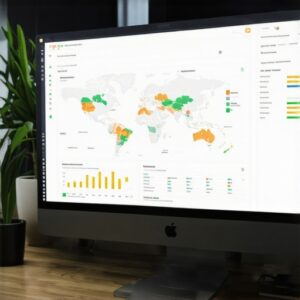
Finally, we look at the competition. Using SEO Viper Tools, we quickly scan the top three competitors in your primary service area. What are they doing that you aren’t? Are they getting more reviews? Are they using a specific secondary category you missed? Are they using “Justification” snippets (the little bold text in search results that says “Provides: Drain Cleaning”)? If they are, you need to adjust your website content to trigger those same justifications. This competitive spying is essential because the 3-pack is a zero-sum game. For them to go down, you must go up.
Be sure to monitor for 4 Sneaky Competitor Moves That Push Your Business Out of the Local Pack, such as competitors reporting your photos or suggesting “edits” to your business hours to make you appear closed. A quick 15-minute audit once a week is your best defense against these tactics.
Summary of the 15-Minute Routine
- Min 1-3: Compliance check (Name/Category) and “Zero-Tolerance” review.
- Min 4-7: Visual audit (Kill the stock photos) and refresh “Proof of Life.”
- Min 8-10: Engagement audit (Response velocity and Q&A optimization).
- Min 11-13: Future-proofing (6G signals and real-world dwell time).
- Min 14-15: Freshness check (Google Posts) and competitive gap analysis.
Conclusion: Stop Guessing and Start Auditing
The difference between a profile that sits on page two and one that dominates the 3-pack isn’t magic; it’s consistency. By following this 15-minute audit routine, you can identify the hidden visibility gaps that are costing you leads every single day. Google is looking for the most trustworthy, active, and relevant local solution. If you provide the data points they need, they will reward you with the traffic you deserve. To automate this process and get deeper insights into your local performance, we highly recommend using a google business profile audit tool. Don’t let your competitors take your spot in the map pack. Visit SEO Viper Tools today to scale your local SEO and ensure your business is the first one customers see when they need your help.